 Garden
Affiliate Disclosure
Some links on this page are affiliate links. As an Amazon Associate, we earn from qualifying purchases — at no extra cost to you. We do not buy, test, or physically handle the products we cover; our rankings come from aggregated owner reviews, ratings and expert consensus. Commissions never change our verdicts. How we rank · full disclosure.
The short answer: put it at least 3 feet from the bed, on a stable surface 12 to 24 inches off the floor, at least 6 to 12 inches clear of walls and furniture, with the mist outlet aimed toward the middle of the room rather than at you, your headboard or a window. Keep it away from HVAC vents, electronics and anything wooden, and stand it on a waterproof tray. Room air mixes within about 20 minutes, so proximity buys nothing and costs you damp bedding.
We do not buy or physically handle the units we rank; picks come from aggregated owner reviews and expert consensus, explained in how we rank. Shortlists are in best humidifier, part of the air quality hub.
Why 3 feet from the bed?
Because mist has to evaporate before it becomes humidity, and that takes distance. Droplets leaving an ultrasonic outlet are still liquid water for the first foot or two; anything they land on gets wet rather than humidified. Three feet gives the plume room to disperse and evaporate into the room air. Closer than that and the predictable results are a damp pillow, a clammy sheet edge, mineral dust settled on the nightstand, and in hard-water homes a fine gritty film on a phone or a book. The humidity you actually breathe is identical either way.
How high should it sit, and why not the floor?
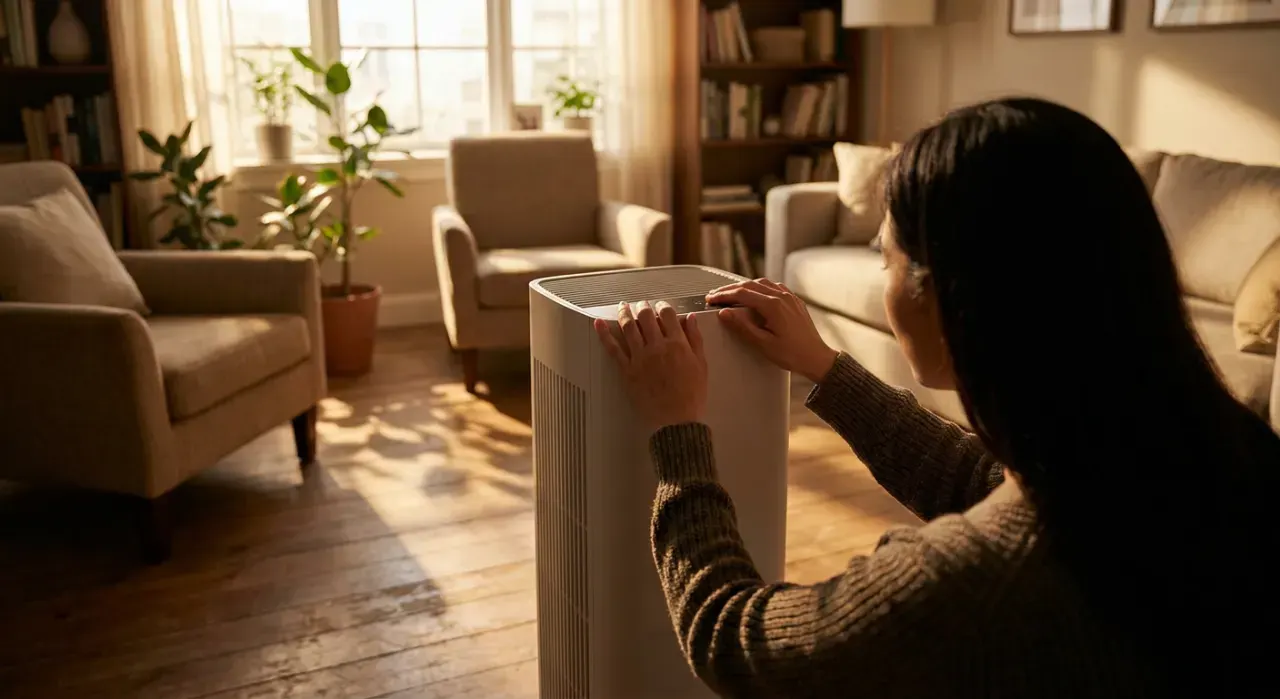
Twelve to twenty-four inches is the usual manufacturer guidance, and the reason is condensation. Floors are the coolest surface in most bedrooms, so mist released at ankle height cools and condenses before it disperses, wetting the floor and wasting output. On carpet that is worse than a nuisance — absorbed moisture in the pad is exactly the conditions mold needs, and it is invisible until it smells. Elevating the unit onto a dresser, low table or stool lets the plume mix into the warmer air above and disperse properly.
| Placement factor | Target | What goes wrong otherwise |
|---|---|---|
| Distance from bed | 3 ft minimum | Damp bedding, mineral film on surfaces |
| Height off floor | 12 to 24 in | Condensation on floor, damp carpet pad |
| Clearance from walls | 6 to 12 in | Wet drywall, peeling paint, mold behind |
| Distance from HVAC vent | 3 ft plus | Moisture swept away, false sensor reading |
| Distance from wood furniture | Off it entirely, or on a tray | Swelling, white rings, lifted veneer |
| Distance from electronics | 3 ft plus | Corrosion, dust attraction, warranty issues |
Does it matter how close it is to a wall?
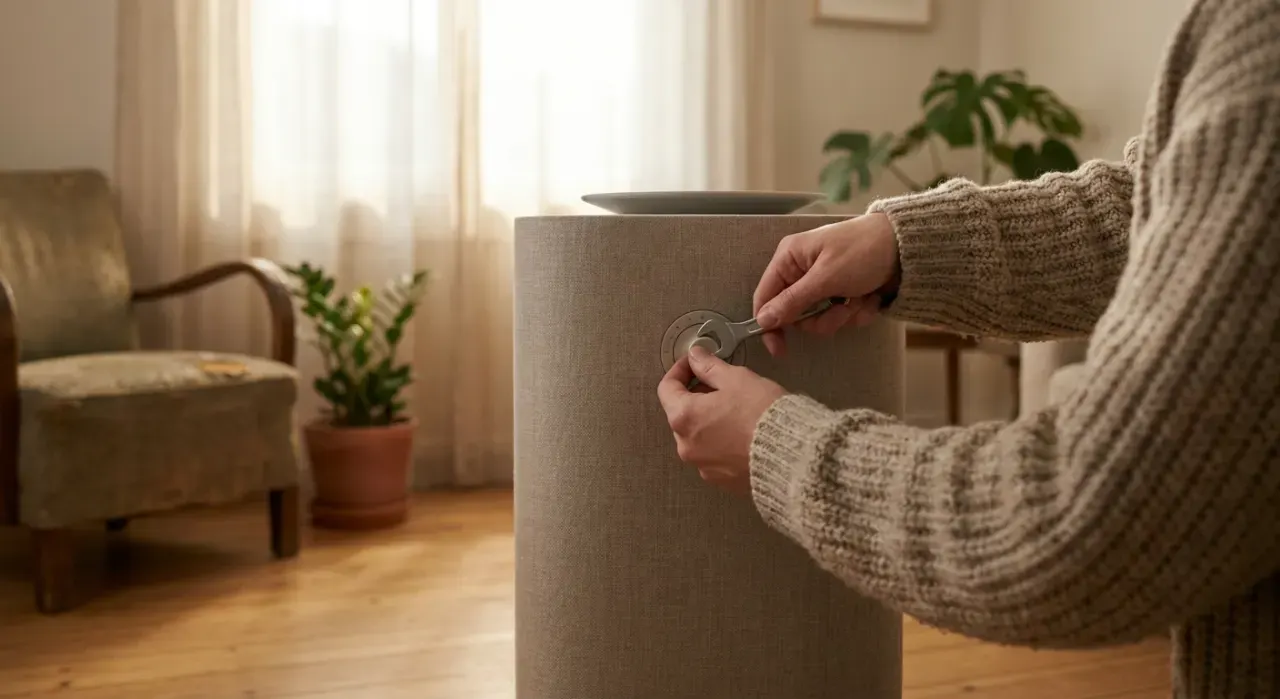
Yes, and this is the mistake that causes real damage rather than mild annoyance. Mist directed at drywall from a few inches away deposits liquid water on a surface that cannot dry quickly, and behind a bed or a dresser there is no air movement to help. Owners who tuck a unit into a corner report peeling paint and dark staining within a season, and in an exterior wall the condensation can occur inside the cavity where nothing is visible until the smell arrives. Six to twelve inches of clearance on all sides, and never aimed at a wall.
Where should the hygrometer go?
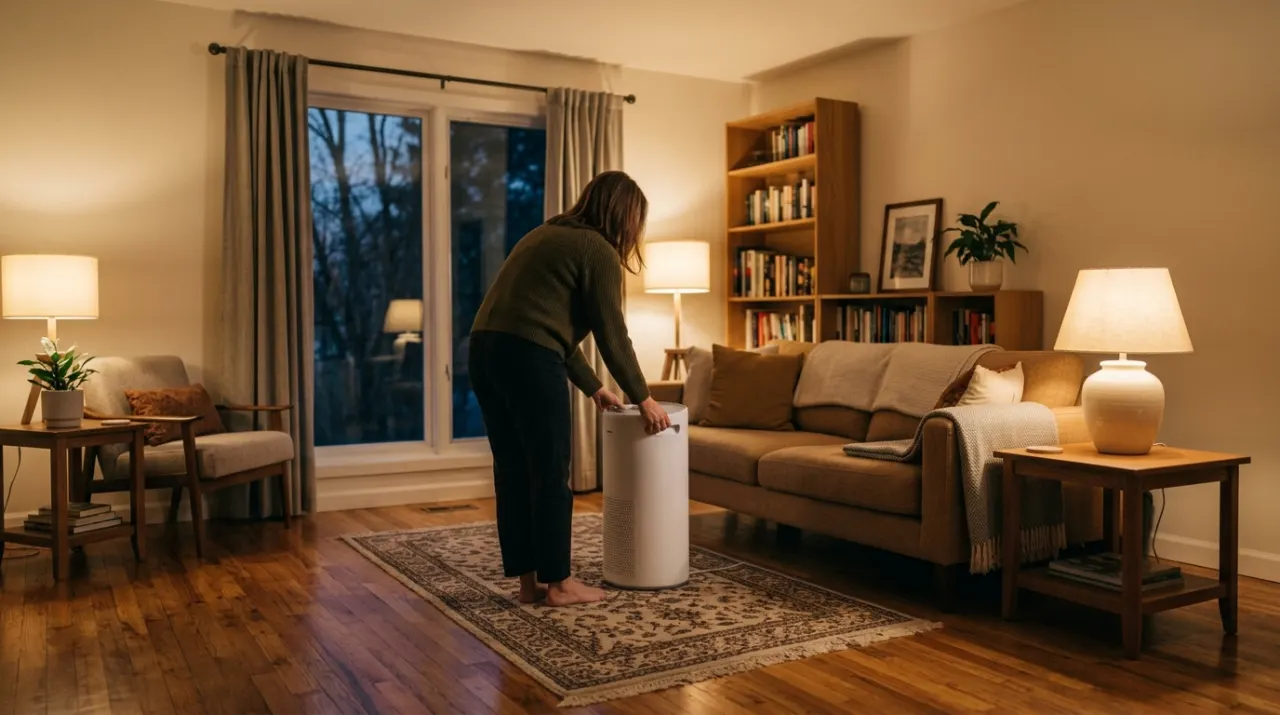
Across the room from the humidifier, at roughly bed height. A built-in humidistat sits within inches of a mist outlet and consistently reads several points above the true room figure, which is why a unit set to 45 percent can leave a bedroom at 33. Put an inexpensive separate hygrometer on the far side of the room and set the machine so that reading lands between 40 and 45 percent. The EPA recommends keeping indoor relative humidity between 30 and 50 percent, and staying inside that band is what keeps you out of dust mite and mold territory. An air quality monitor does the same job with logging.
Two related checks before you settle on a spot. If the window starts streaming, the room is at its practical limit for the outdoor temperature and the setpoint needs to come down — the winter targets are in what is the ideal indoor humidity in winter. And whichever spot you choose, the maintenance does not change: emptying and drying daily is what keeps a bedroom humidifier from aerosolizing bacteria all night, and the schedule is in how often to clean a humidifier, with the method in how to clean a humidifier. If the unit is already leaving a white film on the nightstand, that is water chemistry rather than placement — see why does my humidifier leave white dust.