 Garden

Affiliate Disclosure
Some links on this page are affiliate links. As an Amazon Associate, we earn from qualifying purchases — at no extra cost to you. We do not buy, test, or physically handle the products we cover; our rankings come from aggregated owner reviews, ratings and expert consensus. Commissions never change our verdicts. How we rank · full disclosure.
The verdict. The Aquasana shower filter is the premium option in a category full of cheap gimmicks, and its 4.3-star average is a fair reading of what that buys: a genuine two-stage carbon and KDF filter that reduces chlorine, in a housing designed to limit pressure loss. Buy it if chlorinated city water is drying your skin and hair. Skip it if your real problem is hard water or weak pressure — a filter will not fix either, and the cartridges are not cheap.

Best for chlorinated city water where skin and hair irritation is the actual complaint
- Two-stage media: activated carbon plus copper-zinc KDF
- Rated to reduce 90% of chlorine over 10,000 gallons or six months
- Upflow, dual-chamber housing designed to limit pressure loss
- Available with or without a shower head, and works with a handheld
- Filter cartridge replaces without removing the housing from the arm
Why buy it: the two-stage carbon and KDF combination is the format that actually removes chlorine at shower temperature, which single-stage vitamin C and ceramic-ball filters largely do not.
What owners consistently praise
The smell goes away. This is the most repeated positive and the easiest thing to verify at home. Owners on heavily chlorinated municipal supplies describe stepping into the shower and simply not smelling pool water any more, usually from the first shower. It is a low bar for a filter to clear and plenty of cheaper units fail it.
Skin and hair improvement over weeks. The second cluster of positives is slower and more subjective: less itching after showers, less scalp dryness, color-treated hair holding better. Dermatologists generally accept that chlorine strips sebum and aggravates eczema-prone skin, so the mechanism is plausible rather than magical, and the reviews are consistent enough to take seriously.
Pressure holds up better than expected. Because the housing is a larger dual-chamber design rather than a slim inline puck, owners report less flow loss than they feared. Reviewers who had previously tried a cheap inline filter and removed it because the shower turned into a trickle are notably positive here.
Straightforward cartridge changes. The cartridge swaps without dismounting the housing from the shower arm, which turns a twice-yearly chore into a two-minute job. Owners rate this highly, and it materially improves the odds the filter is actually maintained.
What owners actually complain about
Cartridge cost is the loudest complaint. Two replacements a year, at a price that is a large fraction of the original unit, is the running cost of this product. Over three years owners spend more on cartridges than on the filter, and plenty say they would have chosen differently had they added it up first. Cheaper filters exist with cheaper refills — they generally filter less.
Six months is optimistic in a busy household. The rating is 10,000 gallons or six months. A family of four running long showers hits the gallons figure well before the calendar does, and the tell is the chlorine smell returning. Owners who treat six months as a guarantee are the ones who report the filter stopped working.
Chloramine. A significant number of US utilities dose with chloramine, and standard shower filter media handle it far less effectively than free chlorine. Buyers on chloraminated supplies who expected the same result report disappointment, and they are not wrong — this is a chemistry limit, not a manufacturing defect. Look up your water quality report before you buy.
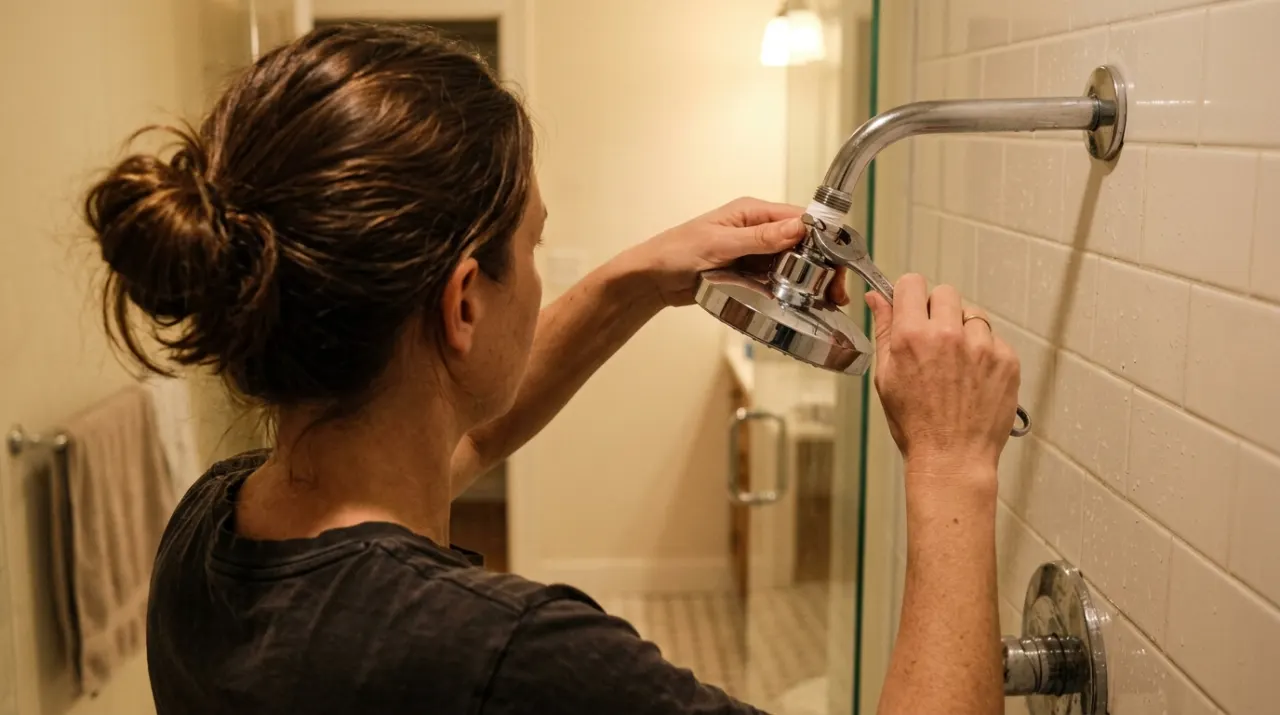
Leaks at the threads. The recurring installation complaint is water weeping from the joint between the arm, the filter and the head. It is nearly always missing or insufficient PTFE tape, or a cross-threaded start. It is fixable in five minutes but it colors a lot of first impressions.
Size and looks. The housing is chunky and it sticks out from the wall. In a small shower or on a low arm, taller users report the head sitting lower than they would like once the housing is in the stack. It is not a discreet product.
Pressure loss is still real. Better than the category, not absent. If your shower is already marginal, this will make it worse, and owners in old homes with galvanized supply lines say so plainly.
What to check before you buy any shower filter
Two free pieces of information will tell you whether this purchase makes sense. The first is your utility’s annual water quality report, which every community water system in the United States is required to publish. It tells you whether you are dosed with free chlorine or with chloramine, and that single fact decides how much a carbon and KDF filter can do for you. The second is your water hardness, usually in the same report or available from your county extension office in grains per gallon. If the report shows chloramine and high hardness, a shower cartridge is the wrong tool and you should be pricing a whole-house solution instead. If it shows free chlorine and moderate hardness — which describes a great many American cities — this is exactly the product for the problem.
Who it suits — and who should buy something else
Buy it if you are on chlorinated municipal water, you or someone in the house has dry or eczema-prone skin, and you are prepared to buy cartridges twice a year.
Buy something else if the actual problem is hardness — scale on the glass, soap that will not lather — because no shower filter softens water; see do shower filters help with hard water. If pressure is your complaint, start with increasing shower head pressure and the best heads for low pressure. If you want the same chlorine reduction for less money with cheaper refills, the alternatives are ranked in best shower filters, and do shower filters actually work covers what the evidence supports before you spend anything.
Specifications
| Spec | Aquasana Shower Filter |
|---|---|
| Filter media | Activated carbon plus copper-zinc (KDF) |
| Stages | Two, upflow dual chamber |
| Chlorine reduction | Rated 90% |
| Service life | 6 months or 10,000 gallons |
| Softens hard water | No |
| Chloramine | Partial reduction only |
| Installation | Threads onto shower arm; PTFE tape required |
| Compatibility | Fixed or handheld heads |
| Cartridge change | Without removing housing from arm |
| Running cost | Two cartridges per year |
How we reached this verdict
We never buy, install or physically handle the products on this site. This assessment comes from the aggregated owner-review record — star distribution, the specific content of critical reviews, and what owners report at the second and third cartridge change — read alongside manufacturer specifications, the chemistry of carbon and KDF media, and public water quality reporting on chlorine versus chloramine. For shower filters we weight what the media can actually remove, honest service life against household use, pressure loss, and total cost over three years rather than the sticker price. Full method on how we rank.
More from this hub: Bathroom · Best shower filters · Do shower filters remove chlorine · Do shower filters reduce pressure · How we rank
Check price on Amazon → (paid link)