 Garden
Affiliate Disclosure
Some links on this page are affiliate links. As an Amazon Associate, we earn from qualifying purchases — at no extra cost to you. We do not buy, test, or physically handle the products we cover; our rankings come from aggregated owner reviews, ratings and expert consensus. Commissions never change our verdicts. How we rank · full disclosure.
Work through these in order: clean the inlet screen, descale the nozzle face, inspect the flow restrictor, check the shower arm for debris, test the mixing valve cartridge, check the shutoff valves are fully open, verify house pressure with a gauge, and only then consider a low-flow-optimized head. The first two fix the majority of cases and cost nothing — mineral scale narrowing the nozzles is the single most common cause. If every fixture in the house is weak, stop working on the shower and look at the pressure regulator or the main supply.
We never buy or physically handle the products we rank; recommendations come from aggregated owner reviews and manufacturer specifications, described in how we rank. More at the bathroom hub.
Pressure and Flow Are Not the Same Thing
Two different numbers get called pressure, and confusing them wastes afternoons.
Pressure is force, measured in psi. Residential supply should be 40 to 60 psi, and most plumbing codes require a pressure-reducing valve where static pressure exceeds 80 psi, because sustained high pressure damages supply lines, water heaters and appliances. You measure it with a $10 threaded gauge on an outdoor hose bib — screw it on, open the valve fully, read it.
Flow is volume per unit time, measured in gallons per minute. Since 1994 the Energy Policy Act has capped new shower heads sold in the US at 2.5 gpm at 80 psi, and California, Colorado, New York and Washington have adopted stricter limits in the 1.8 to 2.0 gpm range. WaterSense-labeled heads are 2.0 gpm or less.
Measuring your actual flow takes a minute: hold a 1-gallon bucket under the running head and time how long it takes to fill. Sixty seconds means 1 gpm; 24 seconds means 2.5 gpm. If you are getting close to the rated figure, the shower head is doing its job and the sensation problem is spray design, not restriction.
The Eight Fixes, In Order
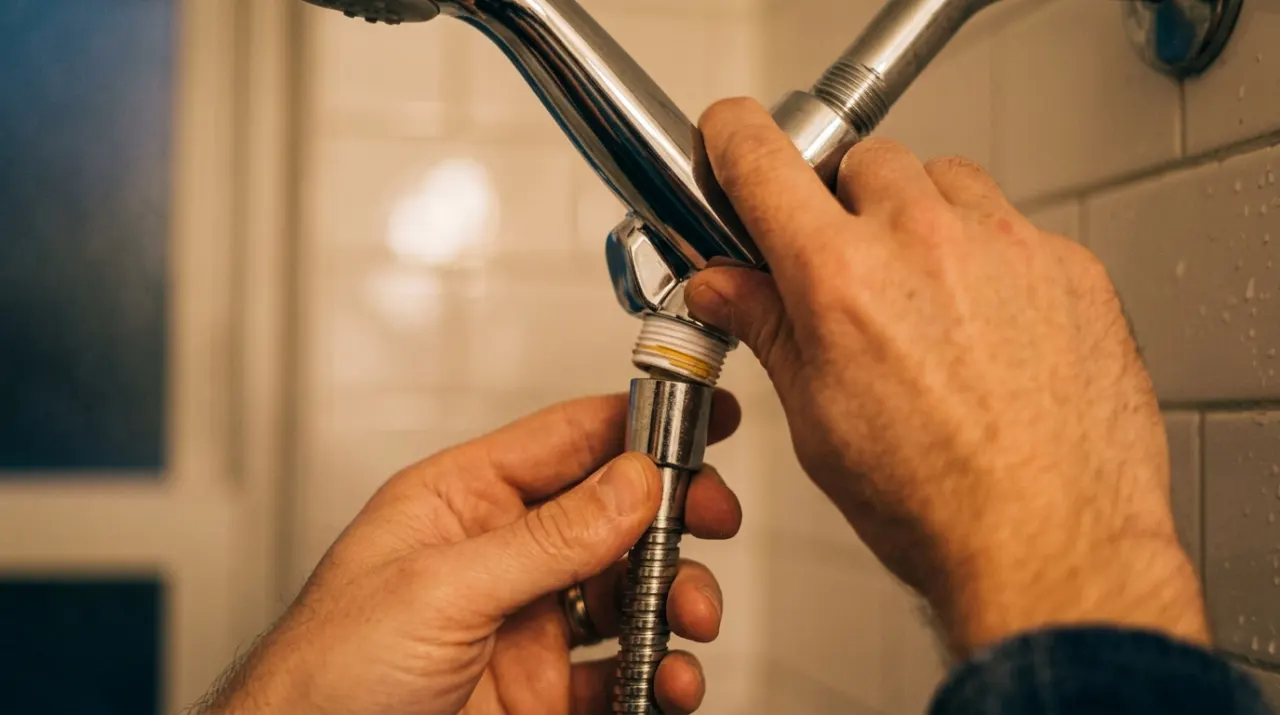
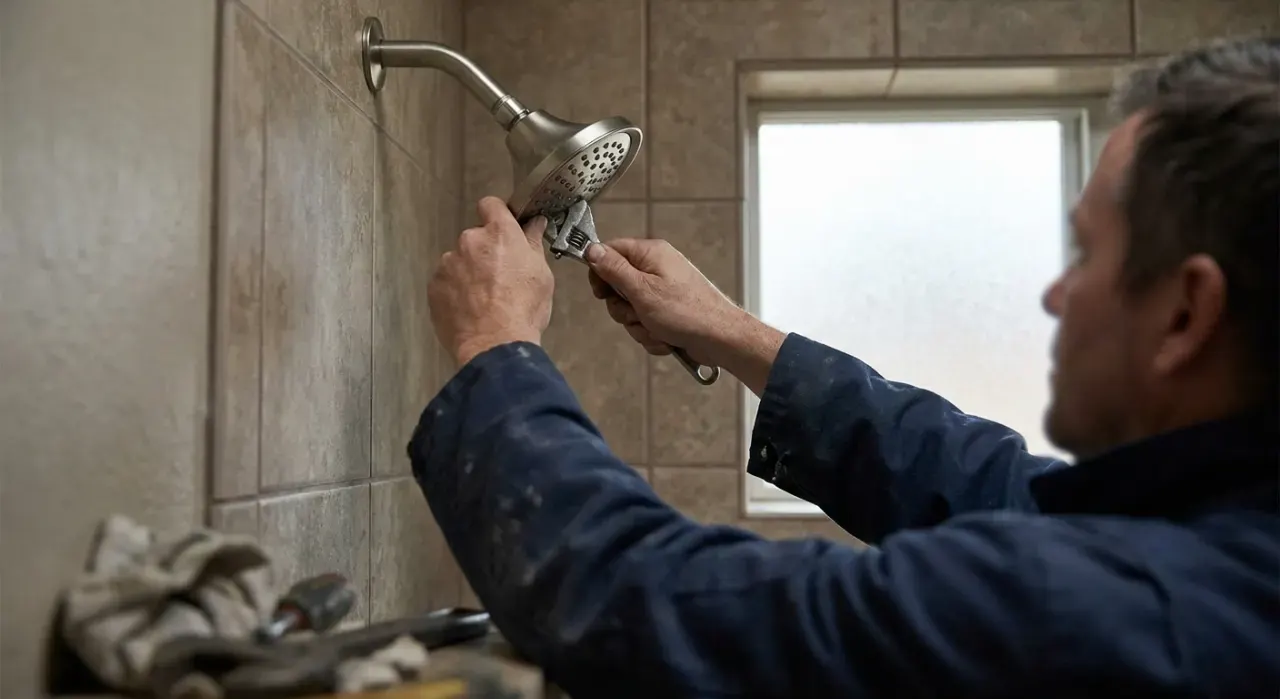
- Clean the inlet screen. Unscrew the head from the arm (counterclockwise, protect the finish with a cloth under the wrench jaws). Inside the inlet is a small mesh screen or filter washer that catches sediment. Rinse it under a tap, brush it with an old toothbrush, and reinstall. This is a five-minute job and it is the most commonly overlooked fix in homes on well water or after any municipal main work.
- Descale the nozzle face. Rubber nozzles can be rubbed with a thumb to pop scale out. For a full descale, bag white vinegar over the head for 30 minutes to 8 hours depending on buildup — step by step at how to clean a shower head without removing it and how to descale a shower head with vinegar.
- Inspect the flow restrictor. Usually a small plastic disc with a central hole, sitting just inside the inlet. Scale builds around it. Clean it — do not remove it. Removing voids the warranty, and on most modern heads it worsens the spray rather than improving it, because the nozzle pattern is engineered around a specific flow.
- Check the shower arm. With the head off, run the shower briefly into a bucket. Strong flow from the bare arm means the problem is in the head. Weak flow from the bare arm means the problem is upstream, and sometimes the arm itself is scaled or has a piece of solder or pipe debris in it.
- Replace the mixing valve cartridge. In homes over about ten years old this is the most common real fault. Cartridges accumulate scale and their internal seals swell. A replacement runs $15 to $60 and is a moderate DIY job — shut off water to the shower, remove the handle and trim, pull the cartridge (a puller tool may be needed), fit the new one with the same orientation. Get the model number from the trim or the manufacturer before buying.
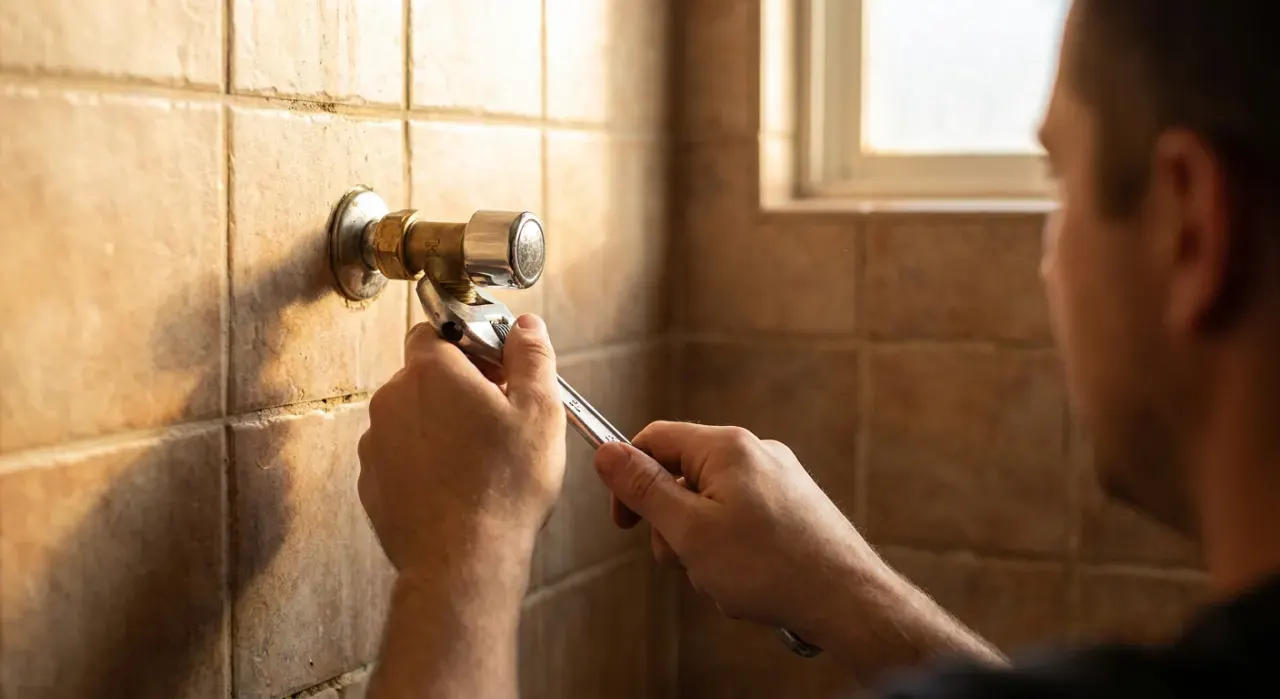
- Confirm the valves are fully open. The shower branch shutoff (if fitted), the water heater shutoff, and the main. Partially closed valves after any recent plumbing work are common and embarrassing to discover last.
- Test house pressure and check the regulator. If the gauge reads below 40 psi at the hose bib, the pressure-reducing valve on the main may have failed or be set too low. PRVs typically last 10 to 20 years. Adjusting or replacing one is main-line work.
- Change the head for a low-flow-optimized design. If pressure is genuinely low and cannot be raised, a head with fewer, smaller nozzles converts the same gpm into faster jets that feel considerably stronger. Our picks for exactly this situation are at best shower head for low water pressure.
Diagnosing by Pattern
| Symptom | Likely cause | Fix |
|---|---|---|
| Only the shower is weak | Head scale, screen, or valve cartridge | Steps 1 to 5 |
| Whole house weak | PRV, main shutoff, or supply | Steps 6 and 7; likely a plumber |
| Weak only on hot | Water heater shutoff partly closed, or sediment in the heater | Open valve fully; flush the heater |
| Gradual decline over months | Mineral scale | Descale, then a filter if hard water |
| Sudden drop after plumbing work | Debris in the screen or arm | Steps 1 and 4 |
| Weak only at certain times of day | Municipal demand, shared well, or pump cycling | Nothing at the fixture; contact the utility |
| New head feels weaker than the old one | Stricter flow rating, or a wide spray pattern | See why a new shower head has low pressure |
If the Cause Is Hard Water
The US Geological Survey classifies water above 121 mg/L as calcium carbonate as hard, and much of the Midwest, Southwest and Florida sits well above that. In those areas descaling is maintenance, not a repair — every three to six months keeps the nozzles clear.
A shower filter reduces some of the burden and helps with chlorine and skin irritation, though the marketing overstates the scale benefit — honest assessments are at do shower filters help with hard water and do shower filters reduce water pressure, which matters here because an undersized filter can itself cost you flow. Whole-house softening is the real solution and a much larger project.
What Good Looks Like Afterward
Re-run the bucket test once you have worked through the fixes. A head rated 2.5 gpm on a house at 50 to 60 psi should fill a 1-gallon bucket in roughly 25 to 30 seconds, and a 1.8 gpm head in roughly 33 to 40 seconds. Landing within about 15 percent of the rating means the fixture and the branch are clear, and any remaining dissatisfaction is about spray design rather than restriction.
If the gauge reads 40 to 60 psi at the hose bib, the bucket test matches the rating, and the shower still feels weak, the honest answer is that you have a low-flow head with a wide spray pattern doing what it was designed to do. That is a head-swap decision rather than a plumbing repair, and it is the one case where buying a new fixture genuinely fixes the complaint.
When to Stop and Call a Licensed Plumber
Handle the shower head, screen and descaling yourself without hesitation. Cartridge replacement is a reasonable DIY job if you can shut off the water and get the trim off. Stop and call a licensed plumber for:
- Anything involving the main line, the pressure-reducing valve, or the meter.
- Galvanized supply pipe that has corroded internally — a whole-house problem that only repiping fixes.
- Suspected slab or wall leaks, indicated by low pressure plus damp drywall, unexplained water bills or a running meter with everything off.
- Any work requiring soldering inside a wall cavity, or opening a wall.
- Well systems where pressure tank charge or pump control is involved.
Plumbing codes and permit requirements are jurisdiction-specific — replacing a shower head never needs a permit, while altering supply piping frequently does. Check with your local building department before opening a wall.
Related: how to fix low water pressure in a shower, standard shower head height, handheld vs fixed shower head, and our current rankings at best shower head.