 Garden

Affiliate Disclosure
Some links on this page are affiliate links. As an Amazon Associate, we earn from qualifying purchases — at no extra cost to you. We do not buy, test, or physically handle the products we cover; our rankings come from aggregated owner reviews, ratings and expert consensus. Commissions never change our verdicts. How we rank · full disclosure.
The short answer: a clean, well-designed shower filter costs roughly 1 to 3 psi, a drop most people cannot detect on a normal 40 to 60 psi supply. A clogged cartridge past its service life is a different matter and can cut flow noticeably. The design factors that matter are the housing diameter, the port size, and whether the media is granular KDF or a tightly packed carbon block, since block carbon restricts far more. If a new filter drops your pressure sharply, check for a built-in flow restrictor and confirm the flow arrow points toward the head.
The other half of the answer is that federal law already caps shower flow, so a filter is rarely the biggest constraint in the system. We do not test filters ourselves; rankings come from aggregated owner reviews and manufacturer specifications, as explained in how we rank. More fixture guidance is at the bathroom hub.
How much pressure does a shower filter actually cost you?
Pressure loss depends on media type and geometry far more than on brand. These are typical ranges reported in manufacturer specifications and consistent with owner experience.
| Filter type | Typical pressure loss, clean | When clogged | Notes |
|---|---|---|---|
| Inline KDF granular | 1 to 2 psi | 5 to 10 psi | Least restrictive common design |
| KDF plus granular carbon | 2 to 3 psi | 8 to 15 psi | Most mainstream units |
| Carbon block | 4 to 8 psi | 15 psi or more | Highest restriction |
| Vitamin C cartridge | 1 to 2 psi | 3 to 5 psi | Low media volume |
| Filtered shower head, all-in-one | 3 to 6 psi | 10 to 20 psi | Small body, packed media |
| Multi-stage with sediment pre-filter | 4 to 8 psi | 15 psi or more | Sediment stage clogs first |
For context, on a house running 50 psi, a 2 psi loss is a 4 percent reduction. What people usually describe as a big drop after adding a filter turns out to be a flow restrictor in the filter body or a supply that was already at the edge.
Why does the shower head matter more than the filter?
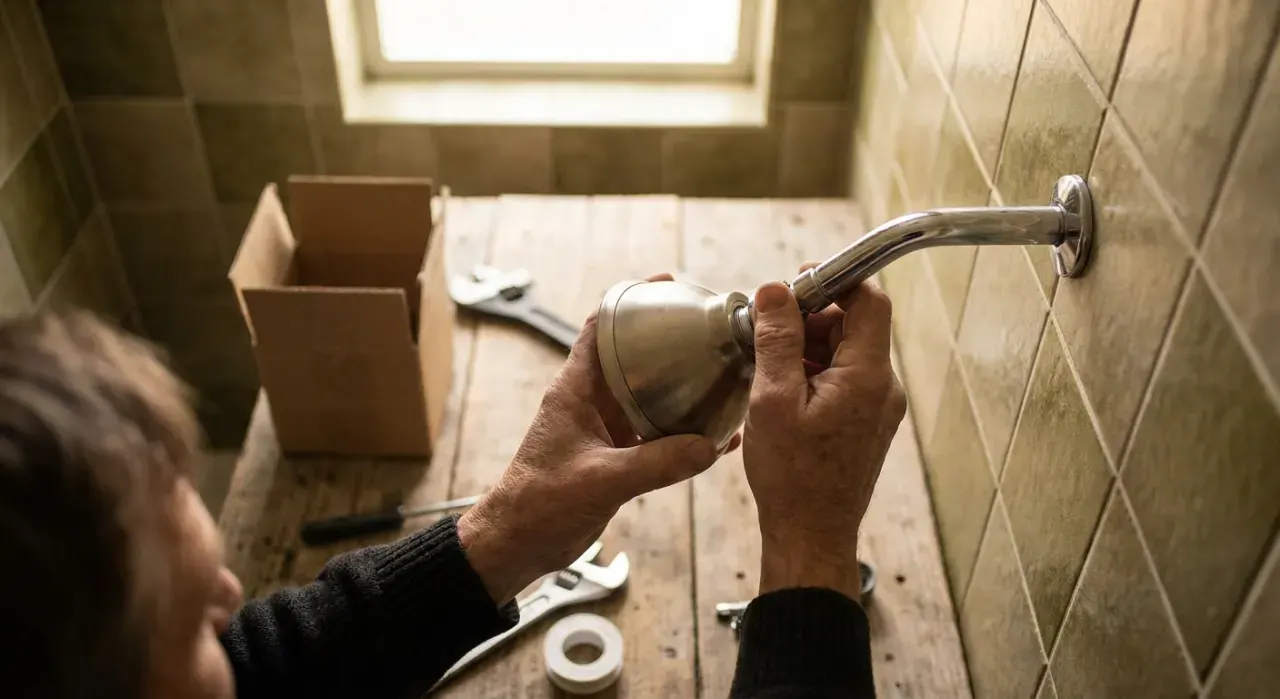
Because federal law caps it. Under the Energy Policy Act, shower heads sold in the US are limited to 2.5 gallons per minute at 80 psi, and several states including California and Colorado set stricter limits, commonly 1.8 gpm. That cap is enforced by a removable-looking plastic restrictor inside the head, and it means your flow ceiling is set by the head long before the filter enters into it. Removing a restrictor is a violation of the appliance standards and, in a shared building, can starve other fixtures, so the better route to a stronger-feeling shower is a head designed to feel powerful within the limit. Options are compared in best shower head for low water pressure.
How do you tell whether the filter is the problem?
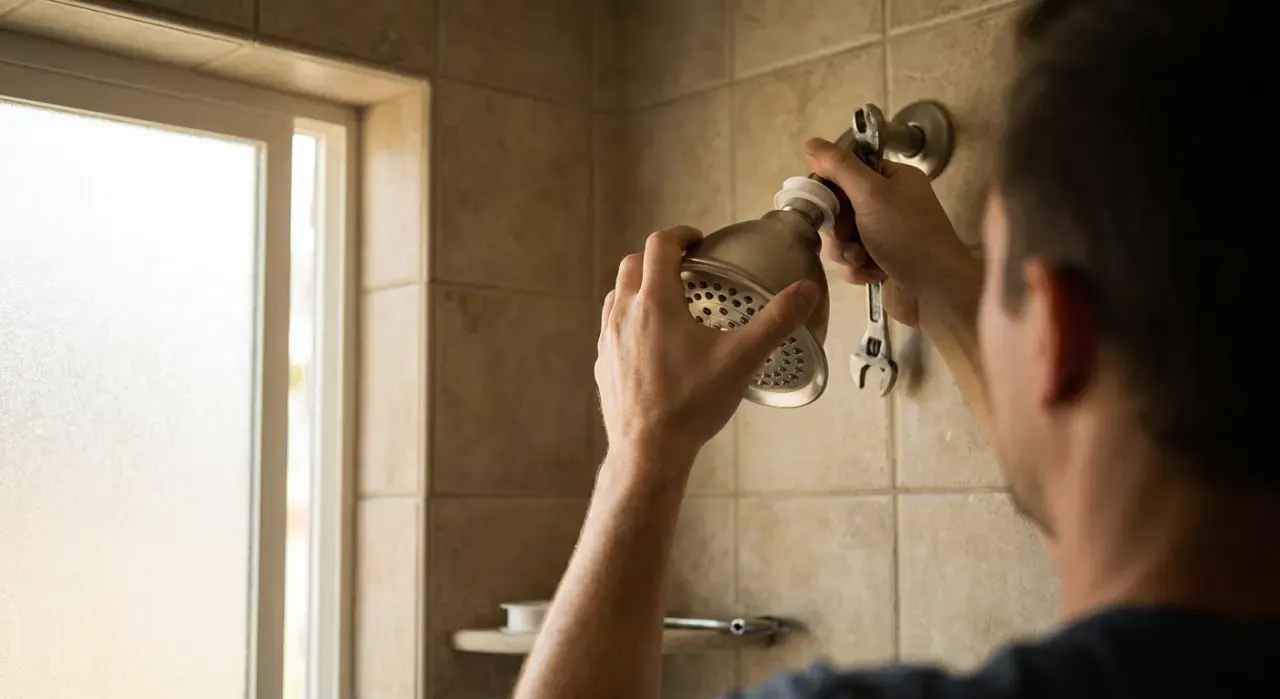
Isolate it, which takes ten minutes:
- Remove the filter and thread the head directly onto the arm. Run one shower. If flow returns, it is the filter.
- Check the flow arrow on the filter body points toward the head. Installed backwards, many units restrict heavily.
- Open the housing and confirm no shipping plug or plastic wrap was left on the cartridge, which is a surprisingly common cause.
- Look for a flow restrictor washer in the filter outlet, separate from the one in the head.
- Check cartridge age. Past 6 months or 10,000 gallons, assume it is contributing.
- Measure house pressure with a $10 gauge on an outdoor hose bib. Under 40 psi static, the filter is not your main problem.
How do you keep a filter from costing you pressure?
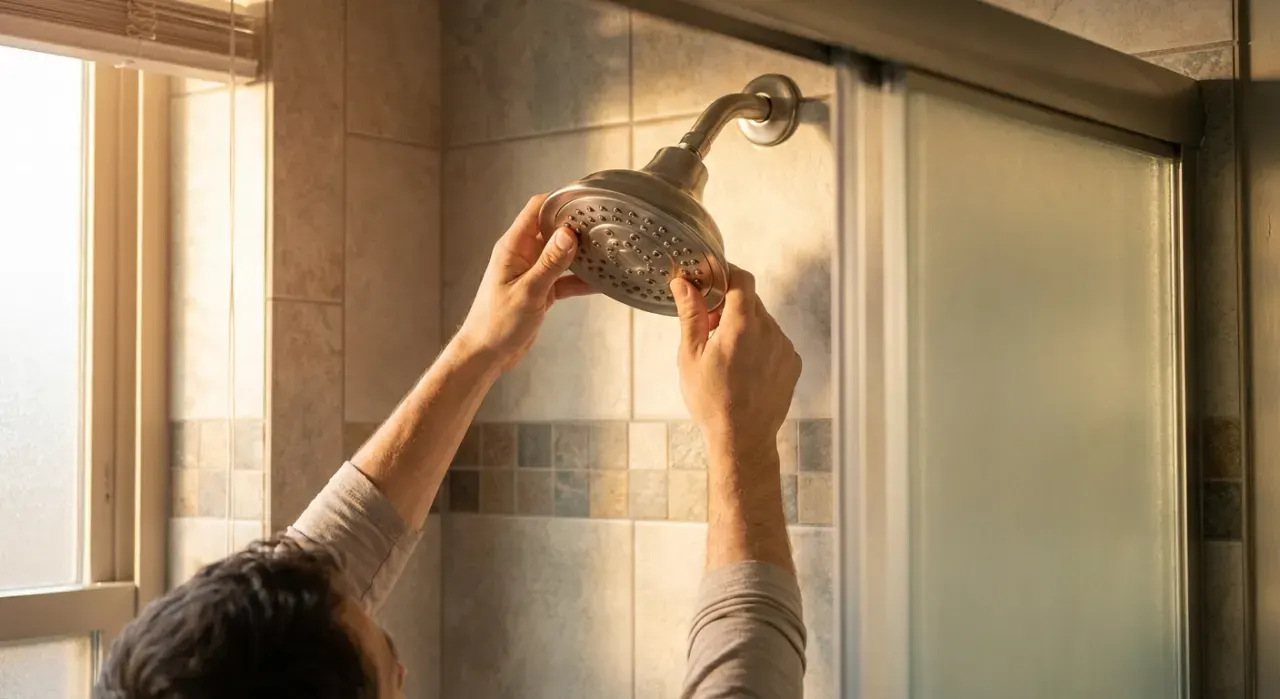
Buy for flow as well as filtration. Choose a unit with full 1/2 inch NPT ports, a housing wide enough to hold granular media loosely rather than a compressed block, and a stated flow rate at or above 2.5 gpm. Keep the run short by mounting the filter directly on the shower arm rather than in a chain of adapters, since each extra fitting adds a little loss and another place to leak. Then replace the cartridge on schedule: every 6 months, or every 3 to 4 months for a busy household or well water with sediment. The cartridge is the variable, not the housing.
What if the pressure was already low?
Then fix that before adding anything inline. The most common causes are scale-blocked nozzles on the head, a partly closed supply valve, a failing pressure-balance cartridge in the mixing valve, a clogged aerator or restrictor, and genuinely low static pressure at the meter. On hard water, mineral deposits in the head are by far the most frequent culprit, and a one-hour soak in white vinegar restores most of it. The full diagnostic sequence is in how to fix low water pressure in a shower, and new-head cases specifically in why does my new shower head have low pressure.
Related: do shower filters actually work and do shower filters remove chlorine. Current picks are in best shower filter.