 Garden
Affiliate Disclosure
Some links on this page are affiliate links. As an Amazon Associate, we earn from qualifying purchases — at no extra cost to you. We do not buy, test, or physically handle the products we cover; our rankings come from aggregated owner reviews, ratings and expert consensus. Commissions never change our verdicts. How we rank · full disclosure.
To increase water pressure in a shower, work through the fixture first: clean mineral buildup out of the shower head, check that the shower valve and the supply shutoffs are fully open, inspect or remove the flow restrictor, and replace a clogged or low-flow head with one designed for low pressure. If pressure is low everywhere in the house, the fix moves to the whole-house supply: the pressure-reducing valve, the main shutoff, or aging pipes. Measure with a gauge before spending money.
The single most useful diagnostic is to figure out whether the problem is just the shower or the whole house. If your kitchen faucet and other showers run strong and only one shower is weak, the cause is almost always in that fixture, and those fixes are cheap and quick. If everything is weak, you have a supply-side issue that a new shower head will not touch. Start there.
What counts as normal shower water pressure
Before chasing more, know the ceiling. Residential water pressure typically runs 40 to 60 psi, and code generally caps it at 80 psi. Separately, federal law limits shower head flow to 2.5 gallons per minute, with California, Colorado, and a few other states requiring 1.8 to 2.0 gpm. So there are two different limits at play: the psi in your pipes and the gpm your head is allowed to release. A gauge that screws onto an outdoor spigot costs about $10 and tells you your real psi in seconds.
Diagnose: one shower or the whole house?
| Test | If yes | Points to |
|---|---|---|
| Do other faucets run strong? | Yes | Problem is the shower fixture; go to fixture fixes |
| Is every fixture weak? | Yes | Whole-house supply; check PRV, main, pipes |
| Gauge reads under 40 psi? | Yes | Supply-side; a new head will not help |
| Only hot or only cold is weak? | Yes | Water heater shutoff or a specific valve |
Measure your shower water pressure before you spend
Guessing wastes money on parts that will not help, so measure first. A water pressure gauge with a standard hose thread costs about $10 at any hardware store. Screw it onto an outdoor spigot or the washing machine hookup, open the valve fully, and read the psi with no other water running. Then compare:
- Below 40 psi — genuinely low whole-house pressure; the fix is on the supply side, not the shower head.
- 40 to 60 psi — normal; if the shower still feels weak, the problem is the fixture (clog, valve, or head design).
- Above 80 psi — too high, and code usually requires a pressure-reducing valve; high pressure stresses fixtures and can cause its own problems.
Take the reading at different times of day too. Municipal pressure can dip during peak morning and evening demand, which explains a shower that feels strong at midday and weak at 7 a.m.
Fix 1: Clean the shower head
Mineral scale from hard water is the number-one cause of a single weak shower, and it is free to fix. Nozzles clog and the flow drops off gradually enough that you may not notice until it is bad.
- Fill a bag with white vinegar and tie it over the head so the nozzles are submerged. Leave it for 30 minutes to a few hours, or overnight for heavy buildup.
- Scrub the face with an old toothbrush and rub the rubber nozzle tips with your thumb to pop out scale.
- Remove and flush the filter screen at the base of the head where it meets the arm; this small screen catches debris and clogs.
- Run the shower to flush loosened mineral out before reattaching.
Fix 2: Check the flow restrictor and screen
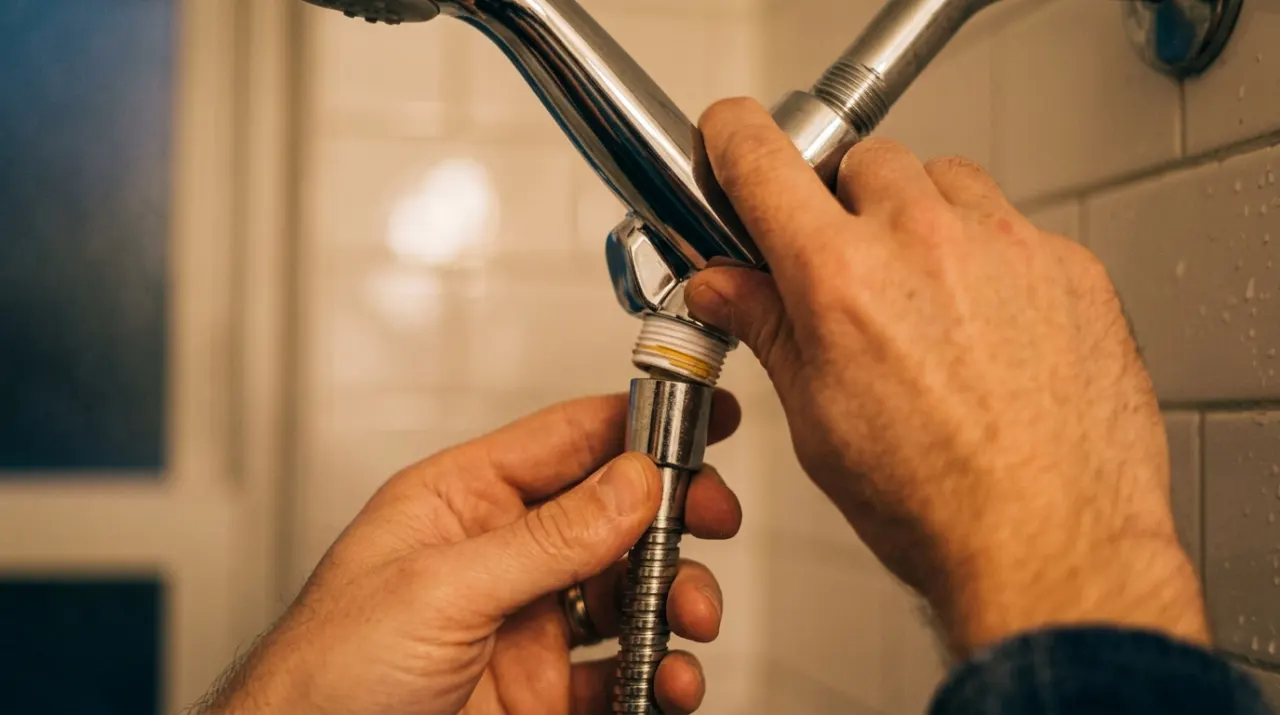
Inside most heads is a small plastic flow restrictor, usually a colored disc with a small hole. Debris can lodge in it, and removing or cleaning it increases flow. Unscrew the head from the arm, and behind the rubber washer and screen you will find the restrictor. Clean out any grit. Some owners remove the restrictor entirely to boost flow; understand that this exceeds the federal 2.5 gpm standard and raises your water and heating bills. On your own fixture that is a personal choice, but it is not without cost.
Fix 3: Verify the valves are fully open
It sounds obvious, but partly closed valves are a common and free fix:
- Shower valve: make sure the handle opens fully. Some single-handle valves have a rotational limit stop that can be misadjusted, capping how far the hot side opens.
- Fixture shutoffs: if there are individual shutoffs behind an access panel, confirm they are wide open.
- Main shutoff: if the whole house is weak, check that the main valve is fully open; a partly closed main throttles everything.
Fix 4: The pressure-balancing valve cartridge
Modern showers use a pressure-balancing or thermostatic valve with a cartridge that can clog with sediment or wear out over years of use. When it starts to fail, pressure drops and temperature may swing. Replacing the cartridge is a moderate DIY job: shut off the water, pull the handle and trim, remove the retaining clip, and swap the cartridge for the matching part number for your valve brand (Moen, Delta, Kohler, and Pfister each use their own). If you are not comfortable working inside the valve body, this is a reasonable point to call a plumber.
Fix 5: Upgrade to a low-pressure shower head
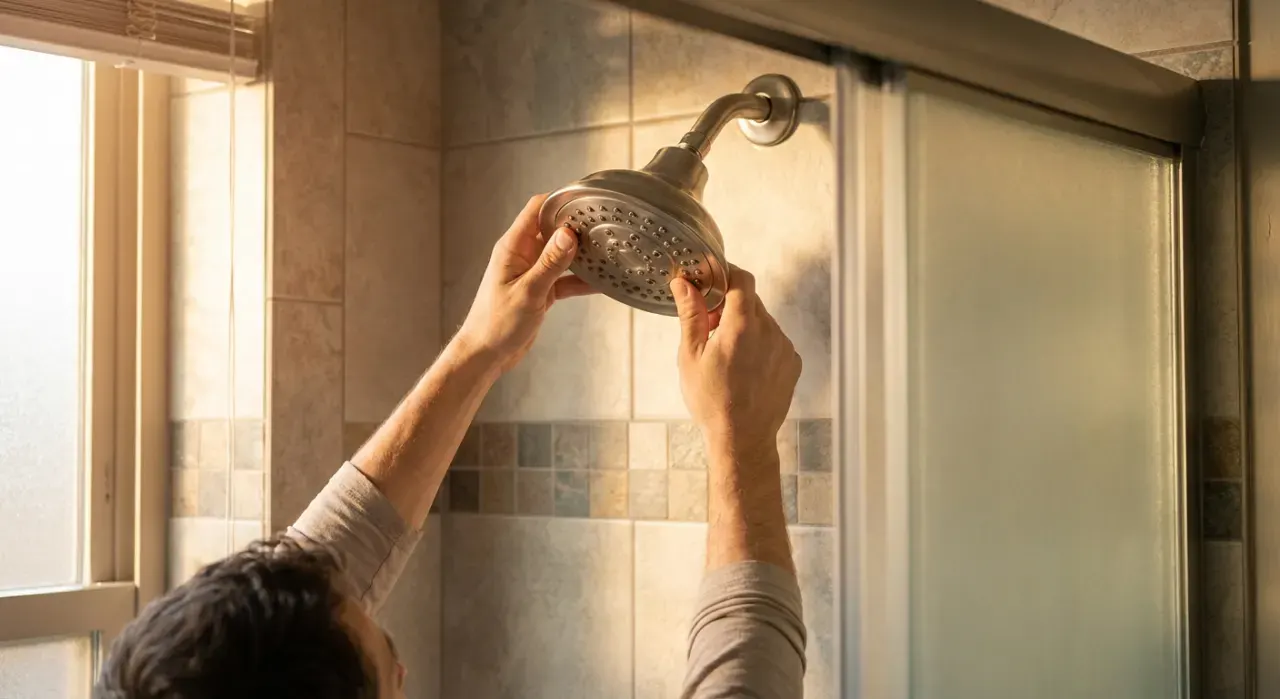
If the head is simply old and clogged, or your home pressure is modestly low and cannot be raised, a shower head engineered for low pressure makes the biggest felt difference. These use fewer, narrower nozzles and often an air-injection or pressure chamber so the same gallons per minute strike with more force. It does not raise your psi, but it changes how the water feels dramatically. Our ranked field is in best shower head for low water pressure, and for a firmer spray generally, best high pressure shower head.
Whole-house causes and when to call a pro
If a gauge confirms low pressure everywhere, the fixture fixes will not help. Look at the supply side:
| Cause | Sign | Fix |
|---|---|---|
| Pressure-reducing valve (PRV) failing or misadjusted | Gradual or sudden drop everywhere | Adjust or replace the PRV (often a plumber) |
| Corroded galvanized pipes | Old home, worsening over years | Repipe affected runs |
| Partially closed main shutoff | Recent drop after work on the system | Fully open the main |
| Hidden leak | Pressure loss plus high water bill | Locate and repair; call a plumber |
| Municipal supply issue | Neighbors affected too | Contact the water utility |
A pressure-reducing valve that has drifted low is common and often the cheapest whole-house fix. Corroded galvanized piping in older homes is the expensive one, since the pipes physically narrow with rust and only a repipe restores flow. Any suspected leak or a valve you are not confident adjusting is a job for a licensed plumber, and a booster pump is a last resort for homes on genuinely low municipal supply.
Booster pumps to increase shower water pressure
If a gauge confirms genuinely low municipal or well pressure that no fixture fix can overcome, a booster pump is the mechanical answer. A booster pump installs on the main supply line and raises pressure throughout the house, typically bringing a weak 30 psi supply up into the comfortable 45 to 60 psi range. On well systems, a properly sized pressure tank and correctly set pressure switch do the same job, and a waterlogged or failing pressure tank is a common cause of poor well-water pressure. These are meaningful installations, generally $200 to $800 in parts plus professional labor, and they are worth it only when the supply itself is the confirmed bottleneck. Do not install a booster to compensate for a clogged head or a bad cartridge; that is treating a symptom with an expensive cure. Confirm the whole-house shortfall with a gauge first, and have a plumber size the pump to your home's demand so it does not short-cycle or over-pressurize the system.
For related diagnosis see why is my shower pressure low and how do you fix low water pressure in a shower. If a new head is the answer, how to increase shower head water pressure goes deeper on the fixture. More at the bathroom hub; our sourcing is in how we rank.