 Garden

Affiliate Disclosure
Some links on this page are affiliate links. As an Amazon Associate, we earn from qualifying purchases — at no extra cost to you. We do not buy, test, or physically handle the products we cover; our rankings come from aggregated owner reviews, ratings and expert consensus. Commissions never change our verdicts. How we rank · full disclosure.
The short answer: to keep cool while sleeping, drop your bedroom to 65 to 68 degrees Fahrenheit, sleep on breathable natural-fiber sheets like cotton percale, linen, or bamboo, and switch to a low-fill or breathable comforter instead of a heavy down one. Add a cooling mattress pad if you sleep on memory foam, take a warm shower an hour before bed to trigger your body's cool-down, and wear loose natural-fiber pajamas or none at all. The room temperature and what is directly against your skin matter far more than any single gadget.
Sleeping hot is not just uncomfortable — it fragments sleep, because your core temperature has to fall for you to reach and hold deep sleep. The fixes below are ordered by impact. We do not sleep-test the bedding we rank; picks come from aggregated owner reviews and expert consensus, as explained in how we rank.
Set the room to 65 to 68F
This is the highest-impact change, and it is backed by consistent guidance from the Sleep Foundation and sleep clinicians: the ideal sleeping temperature is 65 to 68F, with 65F the most commonly cited target. Your core body temperature falls by roughly 1 to 2 degrees as you fall asleep, and a cool room lets that happen; a warm room stalls it, which is why you toss and wake in a hot bedroom.
If cooling the whole house overnight is expensive, cool the bedroom specifically: close vents elsewhere, run a bedroom air conditioner or fan, and use a programmable thermostat to drop the temperature about an hour before bed and through the night. A ceiling fan set to spin counterclockwise in summer creates a wind-chill effect on skin that lets you feel comfortable a couple of degrees warmer, saving energy. Blackout curtains during the day keep afternoon sun from heating a west-facing room you will sleep in that night.
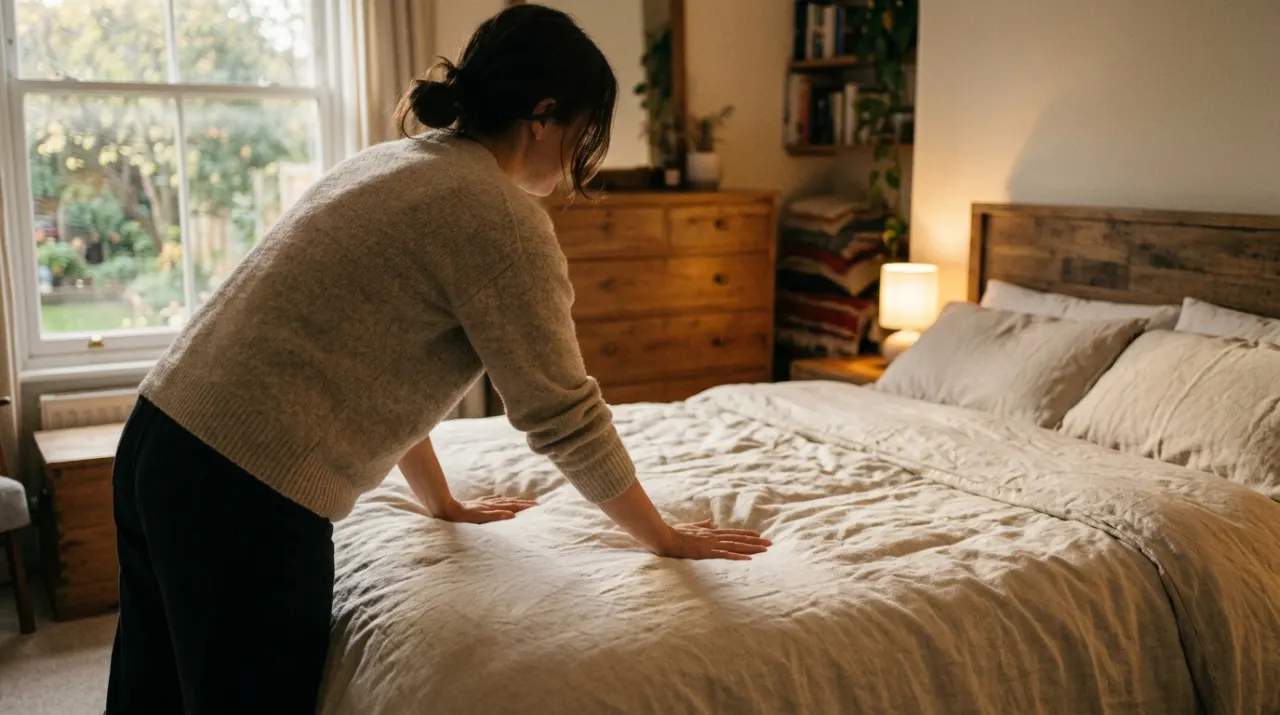
Switch to breathable sheets to sleep cool
What touches your skin all night decides how hot the bed feels. Natural fibers breathe and wick; most synthetics trap heat.
| Fabric | Coolness | Notes |
|---|---|---|
| Linen | Coolest | Most breathable, gets softer with washing, wrinkles by nature |
| Cotton percale | Very cool | Crisp, matte, breathes well, classic hotel feel |
| Bamboo (viscose) | Cool | Silky, moisture-wicking, drapes softly |
| Cotton sateen | Moderate | Silkier but denser weave, sleeps a touch warmer |
| Polyester / microfiber | Warm | Traps heat and sweat unless specifically engineered |
Avoid very high thread counts, which pack the weave dense and hold heat. A 300 thread count percale breathes better than an 800 count sateen. For the ranked options see best cooling sheets, and if night sweats are the specific problem, best cooling sheets for night sweats. For a breathable natural alternative, best bamboo sheets covers that category. Whether the marketing holds up is examined in do cooling sheets actually work.
Lighten the comforter
The comforter is where most hot sleepers lose the battle. A high-fill down or a thick synthetic comforter is designed to trap warmth, and it will hold body heat against you even in a cool room. Switch to a low-fill-power down or a lightweight down alternative, or use just a flat sheet and a light blanket in summer. Many people sleep far cooler simply by dropping from a winter-weight to a summer-weight insert.
A layered approach beats one heavy blanket: a breathable flat sheet plus a light comforter you can kick partly off gives you control through the night, and it solves the common problem of one partner running hot. Our best comforter for hot sleepers guide ranks low-fill, breathable options, and the down-versus-synthetic tradeoff is covered in down versus down alternative comforter.

Cool a hot mattress and topper
Memory foam is the usual hidden culprit. Traditional memory foam conforms by softening with body heat, and in doing so it holds warmth right where you lie. If you sleep hot on a foam mattress, the mattress itself may be the problem, not the room.
The fixes, in order of cost: add a breathable cooling mattress pad to put a layer of airflow between you and the foam, which is the single most effective upgrade for foam sleepers; choose a topper made of latex or gel-infused foam rather than dense memory foam, since latex sleeps notably cooler; or, at the top end, an active pad that circulates cooled water. Our best cooling mattress pad and best cooling mattress protector roundups cover the passive options that suit most people.
Cool your own body before and during sleep
You can lower your body temperature directly, which is often faster than changing the room.
- Take a warm shower or bath 60 to 90 minutes before bed. This sounds backward, but warming the skin sends blood to the surface and then your core temperature drops afterward, priming you for sleep. Studies on warm bathing before bed show it helps people fall asleep faster.
- Wear loose natural-fiber pajamas or sleep bare. Cotton and linen let heat and moisture escape; synthetic or tight sleepwear traps both.
- Cool the pulse points. A cool damp cloth on the wrists, neck, or ankles, or a cool pack under the pillow, lowers perceived temperature fast.
- Stick a foot out. The feet have a high density of blood vessels near the surface, so exposing them radiates heat efficiently. It is not folklore — it is thermoregulation.
- Hydrate through the day, not right before bed. Dehydration makes you run hot, but heavy fluids at bedtime cause wake-ups.

Adjust evening habits to keep cool while sleeping
Several ordinary evening choices quietly raise your body temperature and disrupt the cool-down.
| Habit | Effect | Fix |
|---|---|---|
| Alcohol before bed | Dilates blood vessels and raises skin temperature, then disrupts sleep | Stop drinking 3 hours before bed |
| Heavy or spicy late meals | Digestion raises core temperature | Eat the main meal earlier |
| Intense late workouts | Elevated body heat for hours after | Finish vigorous exercise 2 to 3 hours before bed |
| Caffeine in the afternoon | Raises metabolism and disrupts sleep | Cut off caffeine by early afternoon |
| Warm electronics in bed | Laptops and phones add local heat | Keep devices off the bed |
When cooling steps are not enough
If you have cooled the room to 65F, switched to breathable sheets and a light comforter, and still wake drenched, the cause may be medical rather than environmental. Persistent night sweats can be driven by hormonal changes such as menopause, certain medications including some antidepressants, an overactive thyroid, and other conditions. The tell is that the sweating continues even when the bed and room are demonstrably cool.
In that case, keep the breathable bedding — it makes the symptom more manageable — but raise it with a physician rather than buying more cooling gear. For a fuller comparison of whether the cooling category is worth the money at all, see are cooling sheets worth it. The rest of the category lives at the bedding and sleep hub, and keeping cooling fabrics performing is covered in how to wash cooling sheets.