 Garden


Affiliate Disclosure
Some links on this page are affiliate links. As an Amazon Associate, we earn from qualifying purchases — at no extra cost to you. We do not buy, test, or physically handle the products we cover; our rankings come from aggregated owner reviews, ratings and expert consensus. Commissions never change our verdicts. How we rank · full disclosure.
Choose memory foam if you sleep on your side, sleep alone or with a restless partner, and do not run hot. Choose a hybrid if you sleep on your back, sleep hot, weigh over about 230 lbs, share the bed, or sit on the edge often. Memory foam is an all-foam construction that contours closely and isolates motion almost completely. A hybrid puts the same kind of foam comfort layers over a pocketed coil core, trading some of that contouring for airflow, bounce, edge support and durability under load. For most buyers the deciding factors are heat and edge support, and on both the hybrid wins.
What is actually inside each one
Memory foam (all-foam) is a stack: two to four inches of viscoelastic memory foam on top, sometimes with a transitional layer, over a firmer high-density polyurethane base that provides all of the support. There is no steel in it. Memory foam responds to heat and pressure, which is why it molds to the body shape and why it takes a moment to recover.
Hybrid replaces the polyurethane base with a pocketed coil unit — individually fabric-wrapped springs, typically 700 to 1,000 in a queen — and keeps two to four inches of foam on top. The coils flex independently, so the bed still contours, but the recovery is immediate and the core is mostly open air.
Two things follow directly from that difference and explain nearly every comparison below: air moves through coils and does not move through solid foam, and steel springs back while foam takes time and eventually takes a set.
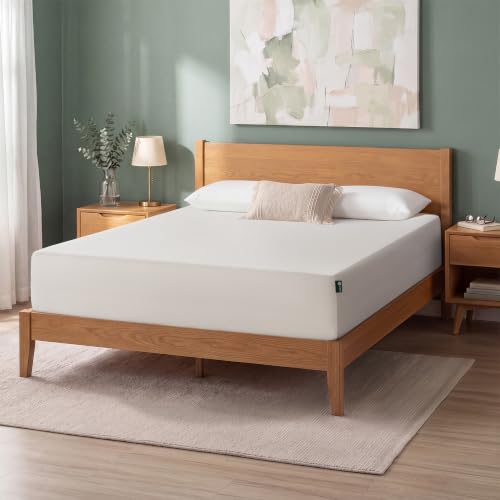
Best for lighter side sleepers, guest rooms and anyone who wants deep contouring and near-total motion isolation on a budget
- All-foam construction: memory foam over a firmer polyurethane support core
- Motion transfer is minimal, which is the strongest argument for foam
- CertiPUR-US certified foam
- Needs slats no more than about 3 inches apart or a solid platform
Why buy it: the consensus across many thousands of owner reviews is that all-foam beds win on quiet and on pressure relief, and lose on edge support and heat.

Best for back sleepers, couples, heavier bodies and anyone who sleeps hot on foam
- Pocketed coil support core under gel memory foam comfort layers
- Coil unit moves air, which is why hybrids run cooler
- Firmer perimeter than a comparable all-foam bed
- Easier to get in and out of — the surface pushes back
Why buy it: coils recover under load rather than compressing, which is why hybrids hold up better for sleepers over about 230 lbs.

Head to head
| Factor | Memory foam | Hybrid | Winner |
|---|---|---|---|
| Pressure relief at hip and shoulder | Deep, close contouring | Good, less enveloping | Foam |
| Motion isolation | Near total | Good, not total | Foam |
| Sleeping temperature | Traps heat | Airflow through the coil unit | Hybrid |
| Edge support | Collapses when sat on | Reinforced perimeter coils | Hybrid |
| Bounce and ease of moving | Slow, you sink in | Responsive | Hybrid |
| Durability over 230 lbs | Softens faster | Coils recover | Hybrid |
| Weight and handling | Lighter | Often 100+ lbs in a queen | Foam |
| Noise | Silent | Very slight | Foam |
| Entry price | Lower | Higher for equivalent quality | Foam |
| Off-gassing on unboxing | More foam, more odor | Less foam | Hybrid |
Read that table as a set of trade-offs rather than a scorecard. Foam wins the two things a light side sleeper cares most about; the hybrid wins almost everything else, and the gap widens as body weight rises.
Which one by sleeping position
Side sleepers generally do better on memory foam, because the shoulder and hip need to sink far enough for the spine to stay straight. A hybrid can do this too if its comfort layer is thick enough — look for three inches or more of foam over the coils. Firmness matters more than construction here; see the mattress firmness guide.
Back sleepers generally do better on a hybrid. The coil core holds the pelvis level and fills the lumbar gap without letting the hips drop, which is the failure mode of a soft all-foam bed. The relevant target is a medium-firm around 6 to 7.
Stomach sleepers should almost always take the hybrid. This position needs a firm surface that does not let the abdomen sink, and coils provide that push-back more reliably than foam at the same nominal firmness.
Combination sleepers want the hybrid for a different reason: slow-recovery memory foam creates a hollow you have to actively climb out of when you turn, and that is what wakes people up. Coils change shape with you instantly.

Couples, heat and edges
Three practical situations decide this purchase more often than any specification.
A partner with a different schedule. If one of you gets up at 5 a.m. and the other does not want to know about it, all-foam is the answer. Motion isolation is the one area where foam is not merely better but categorically better, and the difference is obvious from the first night.
Sleeping hot. If you currently wake up sweating, buying an all-foam bed with a gel infusion and hoping is the most common regret in this category. The coil unit is the fix. If you are committed to foam anyway, put the cooling budget into the surface instead — see cooling mattress pads and cooling sheets.
Sitting on the edge. People who sit on the bed to dress, or who share a smaller bed and need the full width, notice edge collapse within a week on an all-foam mattress. Hybrids with reinforced perimeter coils hold you up. This matters disproportionately for anyone with mobility or hip issues, because a collapsing edge makes standing up harder.
Cost, weight and the practical stuff
All-foam beds start cheaper for equivalent build quality, weigh substantially less, and are easier for one person to move, rotate and get up a staircase. A queen hybrid can pass 100 lbs, which is a genuine two-person job and worth thinking about if you move often or live upstairs.
Both arrive compressed in a box, both need 24 to 72 hours to reach full loft, and both off-gas — foam more so, simply because there is more of it. That process is explained in mattress off-gassing and how long a mattress in a box takes to expand.
Both also need the same thing underneath: slats no more than about 3 inches apart or a solid platform, with a center support leg on queen and larger, and no traditional coil box spring. Get it wrong and the bed sags early regardless of which construction you chose — the requirements are in bed frames and foundations.

The specifications worth checking on either one
Marketing pages for both constructions talk about layers and proprietary names. Four numbers tell you more than any of it.
| Specification | What to look for | Why it matters |
|---|---|---|
| Foam density (memory foam layer) | 4–5 lb/ft³ | Under 3 lb softens and pits within a few years |
| Comfort layer thickness | 3 in or more for side sleepers | Decides whether the shoulder can sink |
| Coil count (hybrid, queen) | 700–1,000+ pocketed | More, smaller coils contour more closely |
| Coil gauge (hybrid) | Lower number = thicker wire | Thicker wire is firmer and more durable |
Density is the one most often omitted, and its absence is itself informative — manufacturers using good foam tend to publish it. Where a listing gives nothing, long-term owner reviews are the substitute, weighting reports written after 18 months far above first-week impressions, because softening is invisible on night one.
Coil count above about 1,000 in a queen produces diminishing returns and mostly signals a premium build rather than a better sleep. Comfort layer thickness is the specification that quietly decides whether a hybrid works for a side sleeper: two inches of foam over coils feels quite firm regardless of what the firmness label claims.
The short verdict
If you are buying for one light side sleeper on a budget, or motion isolation is the problem you are solving, buy the all-foam bed. For everyone else — back and stomach sleepers, couples, hot sleepers, heavier bodies, and anyone who wants a mattress to still feel right in year eight — the hybrid is the lower-risk purchase and the reason it now dominates the mid-market. The ranked field is in best mattress in a box, with a back-pain-specific cut in best mattress in a box for back pain, and a closer look at one popular hybrid in our Novilla queen mattress review.
We never buy, sleep on or physically handle the products we rank. Every recommendation is drawn from aggregated owner reviews, star ratings, review volume and published expert consensus — see how we rank.
More from this hub: Bedding & Sleep · Mattress firmness guide · How long a mattress lasts · Bed frames and foundations · How we rank