 Garden

Affiliate Disclosure
Some links on this page are affiliate links. As an Amazon Associate, we earn from qualifying purchases — at no extra cost to you. We do not buy, test, or physically handle the products we cover; our rankings come from aggregated owner reviews, ratings and expert consensus. Commissions never change our verdicts. How we rank · full disclosure.
The short version: the best reverse osmosis system for most homes is the APEC ROES-50 — five certified stages, no electricity, and standard cartridges you will still be able to buy years from now. If your cabinet is crowded or you are tired of a tank that runs dry mid-pot, the tankless Waterdrop G3P600 gives full-pressure RO water and cuts the wastewater ratio roughly in half. If you rent, the countertop AquaTru delivers genuine reverse osmosis without touching the plumbing.
Two facts worth having before you spend. First, reverse osmosis wastes water — a conventional system sends around three to four gallons to the drain per gallon produced, and newer tankless units around two. Second, RO removes minerals along with contaminants, which is why plain RO water tastes flat to many people and why remineralizing cartridges exist. Neither is a reason to avoid RO. Both are reasons to be sure you need it.
How Reverse Osmosis Actually Works
Household water pressure pushes water against a semi-permeable membrane whose pores are small enough that water molecules pass and most dissolved ions do not. The rejected material has to go somewhere, so a continuous cross-flow sweeps it to the drain — that is the wastewater, and it is what keeps the membrane from fouling. Because the membrane is destroyed by chlorine, every RO system puts carbon block filters ahead of it, and because it works slowly, conventional systems store the output in a pressurized tank.
What it removes is the widest list of any home technology: dissolved solids generally, plus nitrates, arsenic, fluoride, sodium, lead, and — with an appropriate membrane and carbon stage — PFAS. What it does not do is soften water. An RO unit at the kitchen sink treats a few gallons a day; the water reaching your shower, dishwasher and water heater is untouched, so scale keeps forming. If limescale is your complaint, you need a softener, and water softener vs water filter explains why the two are not interchangeable.
Tank, Tankless or Countertop?
| Conventional (tank) | Tankless | Countertop | |
|---|---|---|---|
| Installation | Drain saddle, faucet hole, tank | Drain saddle, faucet hole, outlet | None — plug it in |
| Electricity | No | Yes | Yes |
| Cabinet space | Manifold plus a 4-gallon tank | One slim unit | None — it is on the counter |
| Flow | Trickle; limited by tank recovery | Full pressure, continuous | Dispensed from a tank you refill |
| Typical drain ratio | 3:1 to 4:1 | ~2:1 | ~3:1 (to a waste tank you empty) |
| Renter friendly | No | No | Yes |
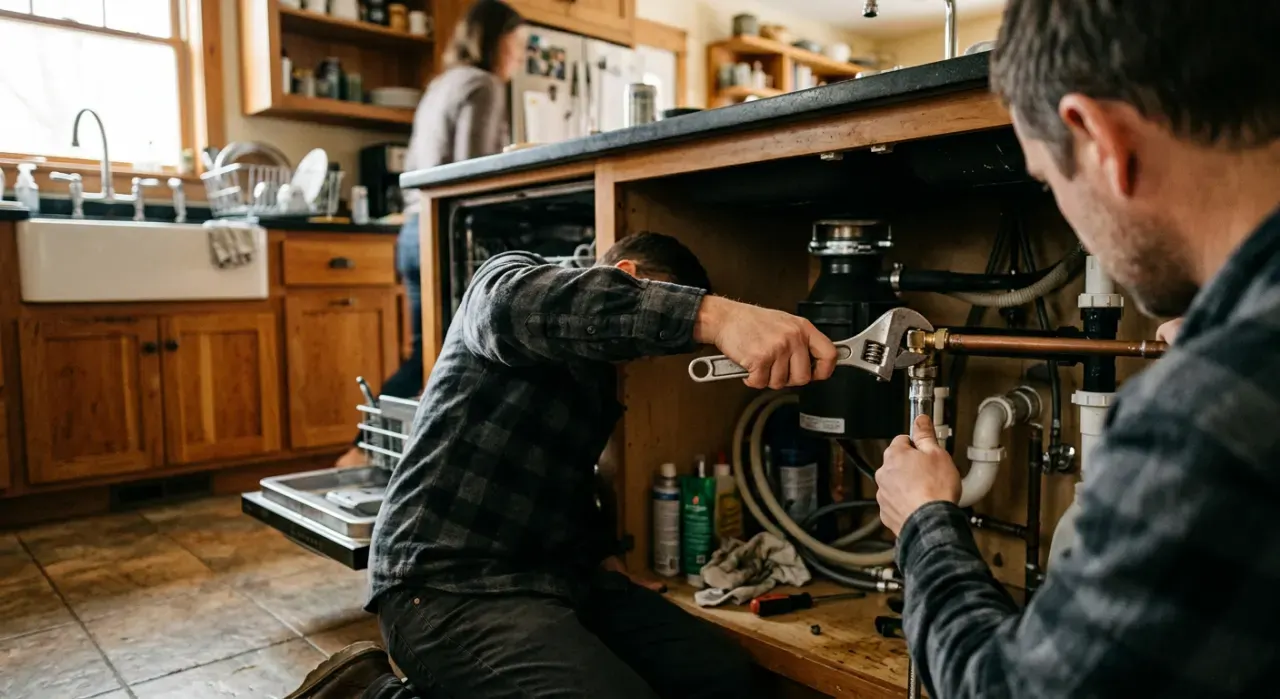
The honest guidance: if you own the house and have cabinet room, a conventional tank system is the cheapest reliable route. If the cabinet is full or you draw large volumes at once, pay for tankless. If you rent, countertop is the only option that does not involve asking a landlord about drilling granite.
Top Picks at a Glance
Our #1 Pick: APEC Water ROES-50
The ROES-50 wins for reasons that have almost nothing to do with filtration performance, because at this level every reputable five-stage system performs similarly. It wins on parts. Owners consistently report that cartridges are cheap and easy to source, that the housings still seal after several changes, and — genuinely unusual in this category — that calling the company puts you through to someone who knows the product. Those are the differences between a system still in service in year five and one bypassed after a leak.
Technically it is a conventional and well-executed layout: a sediment pre-filter, two carbon blocks protecting the membrane from chlorine, the membrane itself, and a final carbon polish on the way to the dedicated faucet. Fifty gallons per day into a 4-gallon pressurized tank is ample for drinking, coffee and cooking. It runs entirely on line pressure, which means no outlet under the sink and nothing to fail electrically.
Its limitations are the limitations of conventional RO. Fifty gallons per day refills slowly, so filling a stockpot twice in a row will outrun the tank. The tank and manifold together take a real bite out of the cabinet. And the drain ratio is the conventional three to four gallons per gallon produced. If those matter more than parts support, buy the tankless Waterdrop.
Check price on Amazon → (paid link)
The Ranked Field

Best for the best-supported conventional RO system for a normal kitchen
- Five stages: sediment, two carbon blocks, RO membrane, carbon polish
- NSF-certified components, 50 gallons per day
- 4-gallon pressurized storage tank, runs on line pressure with no power
- Standard-size cartridges you will still be able to buy in five years
Why buy it: a plainly built system with certified parts, cheap and universally available cartridges, and a support line that answers — the three things that decide whether an RO system is still working in year four.

Best for small cabinets and households that want RO water instantly
- Tankless design reclaims the cabinet space a 4-gallon tank occupies
- 600 GPD — fills a glass at full pressure with no wait
- 2:1 pure-to-drain ratio, roughly half the waste of a conventional system
- Tool-free twist-in filters and an LED faucet that tracks filter life
Why buy it: it fixes the two things everyone hates about reverse osmosis at once — the tank hogging the cupboard, and the trickle when the tank runs dry mid-stockpot.

Best for a faster-refilling conventional RO system at a lower price
- 75 GPD membrane refills the tank noticeably faster than a 50 GPD unit
- Five stages including a final polishing carbon filter
- Top-mounted faucet design — fitted from above, not upside down under the sink
- WQA gold seal components
Why buy it: the same architecture as the top pick with a faster membrane and a genuinely easier faucet installation, for less money.

Best for people who find plain RO water tastes flat
- Sixth-stage mineral cartridge adds calcium and magnesium back after the membrane
- Raises pH, which reverse osmosis lowers
- 75 GPD membrane, same core as the RCC7
- Standard iSpring cartridge sizes
Why buy it: RO strips minerals along with contaminants and a lot of owners describe the result as empty. The remineralizing stage is the specific fix for that complaint.

Best for renters, and anyone who cannot plumb into a cabinet
- Sits on the counter — no drilling, no drain saddle, no plumbing at all
- Four stages including reverse osmosis, certified to NSF/ANSI standards
- Separate fill and dispense tanks that lift out for cleaning
- Filters twist in and out without tools
Why buy it: it delivers genuine reverse osmosis in a rental where the landlord will never let you drill the countertop, and it moves house in the back of a car.

Best for a small kitchen counter and a lower price of entry
- Compact countertop footprint with a built-in dispensing spout
- Four-stage RO at a 3:1 pure-to-drain ratio
- No installation, no drain line — you refill and empty the tanks
- Single twist-in composite filter simplifies maintenance
Why buy it: the cheapest honest way to find out whether you actually want reverse osmosis before committing to a plumbed-in system and a hole in the countertop.
Quick Comparison
| Product | Best for | Rating | Price | Buy |
|---|---|---|---|---|
| APEC Water ROES-50 5-Stage Under Sink Reverse Osmosis Water Filter System, 50 GPD | Best Overall | — | Check (paid link) | |
| Waterdrop G3P600 Tankless Reverse Osmosis System, 600 GPD, NSF/ANSI 58 Certified | Best Tankless | — | Check (paid link) | |
| iSpring RCC7-BN 5-Stage Under Sink Reverse Osmosis Water Filter System, 75 GPD | Best Value | — | Check (paid link) | |
| iSpring RCC7AK 6-Stage Alkaline Reverse Osmosis System with pH Remineralization, 75 GPD | Best for Mineral Taste | — | Check (paid link) | |
| AquaTru Classic Countertop Reverse Osmosis Water Purifier, 4-Stage, No Plumbing Required | Best Countertop | — | Check (paid link) | |
| Waterdrop K19-S Countertop Reverse Osmosis System, 4-Stage, 3:1 Pure to Drain | Best Compact Countertop | — | Check (paid link) |
Specifications Side by Side
| System | Format | Stages | Output | Tank | Power needed |
|---|---|---|---|---|---|
| APEC ROES-50 | Under sink | 5 | 50 GPD | 4 gallon | No |
| Waterdrop G3P600 | Under sink, tankless | 8 | 600 GPD | None | Yes |
| iSpring RCC7-BN | Under sink | 5 | 75 GPD | 3.2 gallon | No |
| iSpring RCC7AK | Under sink | 6 (remineralized) | 75 GPD | 3.2 gallon | No |
| AquaTru Classic | Countertop | 4 | Batch | Removable carafe | Yes |
| Waterdrop K19-S | Countertop | 4 | Batch | Removable tank | Yes |
How We Rank
We never buy or install these systems. For reverse osmosis the ranking priorities are: certification, weighted toward NSF/ANSI 58 for reverse osmosis performance and NSF/ANSI 53 for the carbon stages rather than unaudited marketing lists; drain ratio, because it is a real running cost and a real environmental cost that manufacturers bury; cartridge cost and standardization, since proprietary cartridges are how a cheap system becomes expensive; and aggregated owner reports on leaks, tank failures and membrane life, which is where RO systems actually go wrong. Ratings come from verified Amazon listing data and refresh automatically. Prices were checked at the time of writing. Full method: how we rank.
The Systems, Reviewed
1. APEC ROES-50 — Best Overall
Covered above. Owners praise: cartridge availability and price, housings that keep sealing, and support that actually helps. Owners gripe about: a 50 GPD membrane that recovers slowly after a large draw, and the space the tank demands. Check price (paid link).
2. Waterdrop G3P600 — Best Tankless
The modern answer to the two universal complaints about RO. Removing the tank frees a large chunk of cabinet, and a 600 GPD membrane means the water arrives as fast as you can pour it rather than at whatever rate a tank recovers. The 2:1 pure-to-drain ratio is a genuine improvement on the 3:1 and 4:1 of conventional systems — over a year of normal use that is thousands of gallons that do not go down the drain.
Owners praise: reclaimed cabinet space, instant full-pressure water, painless tool-free filter swaps, and the faucet that reports filter life. Owners gripe about: the price, the need for a power outlet under the sink, and a pump that is audible when it runs — a non-issue in most kitchens, noticeable in an open-plan room. Check price (paid link).
3. iSpring RCC7-BN — Best Value
The same five-stage architecture as our top pick with a faster 75 GPD membrane and a lower price. The top-mounted faucet deserves specific credit: it is fitted from above rather than by lying on your back tightening a nut you cannot see, which is the single most cursed step of an RO installation.
Owners praise: the price, the faster refill, and the easier faucet fitting. Owners gripe about: occasional weeping at the quick-connect fittings on first startup — almost always tubing that was not pushed fully home — and a smaller tank than the APEC. Check price (paid link).
4. iSpring RCC7AK — Best for Mineral Taste
Mechanically the RCC7 with a sixth cartridge on the outlet that adds a small amount of calcium and magnesium back and lifts the pH. If you have tried RO water and found it flat or slightly acidic, this is the specific remedy, and it costs very little over the standard model.
Owners praise: a noticeably rounder taste than plain RO, and standard iSpring cartridge sizes throughout. Owners gripe about: the mineral cartridge shedding fine grit into the first few glasses after a change — flush it thoroughly and it settles — and one more filter to buy each year. Check price (paid link).
5. AquaTru Classic — Best Countertop
Real reverse osmosis with no plumbing whatsoever. You fill a tank, it processes a batch, and clean water collects in a carafe you lift out. For renters this is not a compromise choice — it is the only way to get RO water without drilling something you do not own. It is also the RO system that moves house most easily.
Owners praise: the zero-install setup, certified performance, and tanks that lift out for cleaning. Owners gripe about: the counter space it occupies, the batch processing time if you need a lot of water at once, and filter costs that are higher per gallon than a plumbed-in system. Check price (paid link).
6. Waterdrop K19-S — Best Compact Countertop
A smaller and cheaper countertop RO unit with a single twist-in composite filter instead of a stack of cartridges. If you want to find out whether reverse osmosis actually solves your complaint before committing to a hole in the countertop and an afternoon under the sink, this is the low-risk way to do it.
Owners praise: the compact footprint, the single-filter simplicity, and the price relative to other countertop RO units. Owners gripe about: the manual chore of refilling the source tank and emptying the waste tank, and a smaller output than the AquaTru. Check price (paid link).
What Owners Actually Complain About
Quick-connect fittings weeping. The number one gripe across every brand, and it is nearly always installation rather than manufacturing. Tubing has to be cut square with a proper tubing cutter and pushed fully into the collet until it bottoms out. A millimeter short and it seeps a drop an hour, which announces itself weeks later as a swollen cabinet floor. Push every joint home, tug-test each one, and leave paper towel under the manifold for two nights.
The tank running dry. RO produces water at a trickle and stores it. Fill a large pot and you empty the tank, then wait an hour or more. This surprises people constantly. Go tankless or choose 75 GPD if you regularly draw a lot at once.
Wastewater. Owners who install a flow meter are often shocked. Three to four gallons to drain per gallon produced is normal for conventional RO, and on a metered municipal supply that shows up on the bill. The irrigation water cost calculator is a quick way to price a known volume of water at your local rate if you want to put a dollar figure on it.
Flat-tasting water. Not a fault — it is what happens when you strip dissolved minerals. Either accept it, add a remineralizing stage, or cook with unfiltered water.
Membranes dying early. Nearly always traced to pre-filters left in too long. Chlorine destroys a thin-film composite membrane, and the carbon blocks are the only thing standing between the two. Change the cheap filters on time and the expensive one survives.
How to Choose
Test before you buy. Read your utility's annual Consumer Confidence Report, or run a home kit for total dissolved solids, hardness, nitrates and lead. Reverse osmosis is the right answer to dissolved solids, nitrates, arsenic, fluoride and PFAS. It is an expensive and wasteful answer to chlorine taste, which a $90 carbon block solves with no drain line — see reverse osmosis vs carbon filter for the full comparison.
Then measure the cabinet, check whether the sink has a spare hole for a dedicated faucet or you will be drilling stainless or granite, and price a full set of replacement cartridges. And if your water is also hard, understand that RO at the sink does nothing for the rest of the house — scale is still forming in the water heater, which is the appliance it kills fastest. Our appliance running cost calculator and repair or replace calculator are useful for sizing that decision.
The Verdict
The APEC ROES-50 is the reverse osmosis system we would fit in most owned homes: certified, powerless, and supported by cartridges that will still exist in five years. The tankless Waterdrop G3P600 is worth its premium if your cabinet is full or you draw a lot at once, and it halves the wastewater. The iSpring RCC7-BN is the value pick, the RCC7AK fixes flat-tasting water, and for renters the countertop AquaTru and Waterdrop K19-S deliver real RO without touching the plumbing. Check price on Amazon → (paid link)
More from this hub: DIY plumbing · best under sink water filter · how often to change RO filters · does reverse osmosis remove fluoride · how to install an under sink water filter · how we rank.