 Garden


Affiliate Disclosure
Some links on this page are affiliate links. As an Amazon Associate, we earn from qualifying purchases — at no extra cost to you. We do not buy, test, or physically handle the products we cover; our rankings come from aggregated owner reviews, ratings and expert consensus. Commissions never change our verdicts. How we rank · full disclosure.
Yes. Reverse osmosis removes roughly 85 to 95 percent of the fluoride in drinking water, and it is the most effective and most widely available home method for doing so. The membrane rejects fluoride ions along with other dissolved solids, so water leaving a working RO system with a supply at the US recommended level of 0.7 mg/L typically tests somewhere around 0.03 to 0.10 mg/L. Nothing else in an ordinary kitchen comes close: carbon filters, pitcher filters and boiling do not reduce fluoride at all.
We never buy, test or physically handle the products we rank; recommendations come from aggregated owner reviews and expert consensus, described in how we rank. More at the DIY plumbing hub.
Why does reverse osmosis remove fluoride when carbon does not?
Because the two work by completely different mechanisms. Activated carbon removes contaminants by adsorption — molecules stick to the enormous internal surface area of the carbon. That works beautifully for chlorine, chloramine, volatile organic compounds and many organic chemicals, which are relatively large and readily adsorbed. Fluoride is a small, charged, chemically stable ion with essentially no affinity for a carbon surface, so it flows straight through.
Reverse osmosis works by exclusion instead. Household water pressure pushes water against a semi-permeable membrane whose effective pore size is smaller than most dissolved ions. Water molecules pass; fluoride, nitrate, sulfate, sodium, arsenic and the rest are rejected and swept to the drain by the cross-flow. That is why an RO system removes an entire class of contaminants at once and why it is the answer for fluoride, nitrates and arsenic simultaneously.
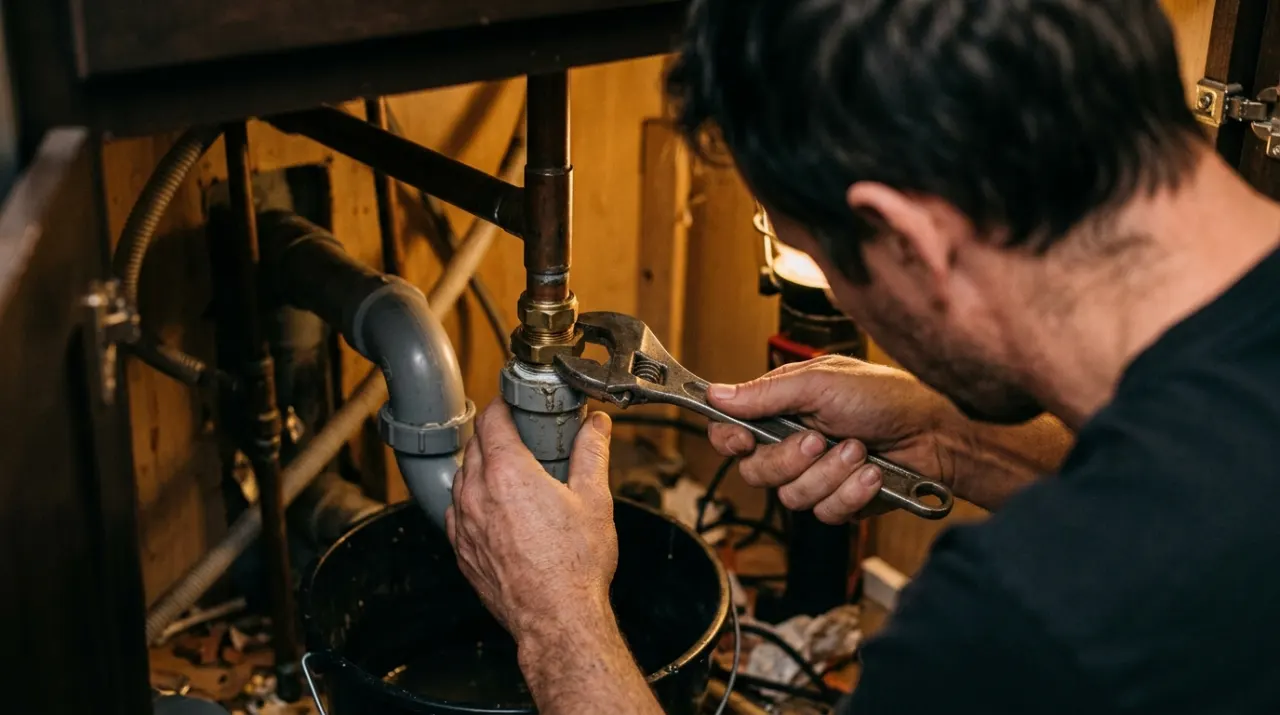
How much fluoride does it actually remove?
Manufacturers of quality residential RO systems generally state 85 to 95 percent fluoride reduction, and independent testing of well-maintained systems has repeatedly landed in that band. The variation comes from a handful of real factors:
| Factor | Effect on fluoride removal |
|---|---|
| Membrane age and condition | Largest single factor. A fouled or chlorine-damaged membrane loses rejection across the board |
| Incoming water pressure | Low pressure reduces rejection. Most systems want 40–60 psi; below about 40 psi performance drops noticeably |
| Water temperature | Cold water produces less volume but slightly better rejection |
| Total dissolved solids in the feed | Very high TDS reduces percentage rejection and shortens membrane life |
| Tank standing time | Water sitting in the storage tank slowly equalizes across the membrane, raising TDS slightly |
The practical version: a system that is neglected does not remove fluoride nearly as well as a system that is maintained. Pre-filters protect the membrane from chlorine and sediment, and a chlorine-damaged membrane is permanently degraded, not temporarily. How often to change reverse osmosis filters covers the intervals that keep rejection where it should be. If your water pressure is low, what psi should home water pressure be explains how to check it with a $12 gauge.

What else removes fluoride, if not RO?
Three technologies are genuinely effective, and a great many popular ones are not.
| Method | Removes fluoride? | Notes |
|---|---|---|
| Reverse osmosis | Yes — 85–95% | Most available and most effective home option; wastes water |
| Activated alumina | Yes — up to ~90% | Used in dedicated fluoride cartridges; needs periodic media replacement |
| Bone char carbon | Partial — variable | Used in some specialty pitchers; performance depends heavily on contact time |
| Distillation | Yes — near complete | Effective but slow and energy-hungry for household volumes |
| Standard carbon filter | No | Including whole-house carbon, faucet filters and most pitchers |
| Water softener | No | Exchanges calcium and magnesium for sodium; does nothing to fluoride |
| Boiling | No — concentrates it | Water evaporates, fluoride stays behind |
| Freezing | No | A persistent myth with no basis |
Note the softener line specifically, because it is a frequent and expensive confusion. A softener is an ion-exchange machine tuned for calcium and magnesium; it is not a filter and it removes no contaminants at all. Water softener vs water filter lays out the difference in full.
How much fluoride is in the water to begin with?
The US Public Health Service recommends 0.7 mg/L for community water fluoridation, revised down in 2015 from an older range that ran to 1.2 mg/L. The EPA enforces a maximum contaminant level of 4.0 mg/L and publishes a secondary, non-enforceable guideline of 2.0 mg/L aimed at cosmetic dental effects rather than health risk.
Naturally occurring fluoride is the part people forget. Groundwater in parts of the Southwest, the High Plains and scattered pockets elsewhere carries fluoride well above the treated level with no utility involved, and private wells are not tested by anyone unless the owner arranges it. If you are on a well and fluoride concerns you, a lab test is the only way to know your number — and if it comes back high, reverse osmosis at the kitchen sink is the standard remedy. For everything else a well can throw at you, see best well water filter system.
If you are on a municipal supply, your utility's annual Consumer Confidence Report — which the EPA requires every community water system to publish — states the fluoride level in your water. Read it before buying anything.
What are the trade-offs of using RO for fluoride?
Two, and they are worth stating plainly.
It wastes water. A conventional under-sink RO system sends roughly three to four gallons to the drain for every gallon it produces, because the membrane needs continuous cross-flow to stay clean. Newer tankless designs have improved this to around 2:1. On a metered municipal supply that is a real, if modest, cost.
It removes the good with the bad. The membrane cannot distinguish between fluoride and calcium, so RO water is stripped of dissolved minerals generally. Many people find it tastes flat as a result. The fix is a remineralizing cartridge on the outlet, which adds a controlled amount of calcium and magnesium back without reintroducing fluoride — several systems in our best reverse osmosis system roundup include one.
If reverse osmosis is more than your water needs, a carbon block is cheaper, wastes nothing and handles chlorine and lead — it simply will not touch fluoride. Reverse osmosis vs carbon filter is the honest comparison, and best under sink water filter covers both categories.