 Garden

Affiliate Disclosure
Some links on this page are affiliate links. As an Amazon Associate, we earn from qualifying purchases — at no extra cost to you. We do not buy, test, or physically handle the products we cover; our rankings come from aggregated owner reviews, ratings and expert consensus. Commissions never change our verdicts. How we rank · full disclosure.
The short version: the best sediment filter for most homes is the Pentair Pentek DGD-5005, because its dual-gradient media catches coarse and fine particles at different depths instead of clogging the outer face all at once. If you would rather rinse a cartridge than buy one, the PUREPLUS pleated is washable. For a standard slim housing, buy the Aquaboon 5 micron by the box.
And the thing that decides this category: a finer cartridge is not a better cartridge. The most common mistake in sediment filtration is fitting 1 micron where 5 belongs, then wondering why the shower has gone weak and the cartridge is brown after a month.
What a Micron Rating Actually Means
A micron is a millionth of a meter. For scale, a human hair is somewhere around 70 microns across and the naked eye stops resolving particles at about 40. Everything a sediment filter is catching is invisible in a glass of water unless it is present in quantity.
| Rating | Catches | Use it for | Cost |
|---|---|---|---|
| 50 micron | Coarse sand, gravel, scale flakes | First stage on a dirty well; whole-house pre-filter | Almost no pressure loss |
| 20–25 micron | Sand, coarse silt, rust | First stage of a two-stage setup | Minimal pressure loss |
| 5 micron | Silt, fine rust, most cloudiness and grit | The default for a single-stage whole-house filter | Modest pressure loss |
| 1 micron | Fine silt, some cysts if absolute rated | Ahead of an RO membrane; specific cyst reduction claims | Real pressure loss; clogs fast |
| 0.5 micron and finer | Cysts, very fine particulate | Point-of-use carbon blocks, not whole-house sediment | Significant flow restriction |
Nominal versus absolute is the distinction that matters and that nobody prints on the front of the box. A nominal 5 micron cartridge captures most particles at 5 microns — often quoted around 85 percent — and lets some through. An absolute 5 micron cartridge captures essentially all of them, typically 99.9 percent or better. Nearly every cheap sediment cartridge is nominal, which is entirely appropriate for removing grit and protecting appliances. It stops being appropriate the moment the rating is doing safety work, and cyst reduction claims under NSF/ANSI 53 depend on an absolute rating.
Four Kinds of Media, Four Behaviors
| Media | How it works | Strength | Weakness |
|---|---|---|---|
| Melt-blown (spun) | Depth filtration through matted polypropylene fibers | Cheapest; consistent rating | Blinds off at the surface; shortest life on dirty water |
| String wound | Yarn wound over a core, denser toward the middle | High dirt-holding capacity; tolerates heat | Bulkier; not washable |
| Pleated | Folded sheet media, large surface area in a small canister | Long life, low pressure drop, often washable | Less depth, so fine particles pass more readily |
| Dual gradient | Coarse outer layer over a fine inner core | Longest life of any single cartridge on mixed sediment | Costs more per cartridge |
The pattern behind that table is worth stating outright, because it explains most of the ranking: cartridges fail by clogging their outer surface, not by filling up. Any construction that spreads the load across depth or surface area — pleats, graded winding, dual densities — buys real service life on the same water.
Top Picks at a Glance
Our #1 Pick: Pentair Pentek DGD-5005
The DGD-5005 wins on an idea rather than on materials. It is two cartridges in one body: an outer layer rated around 50 microns and an inner core rated at 5. Water hits the coarse layer first and gives up its sand and scale flakes there, then the fine core catches the silt. Because the coarse and fine loads are held in different places, the cartridge does not blind off at the outer face while its interior is still clean — which is exactly how a single-density cartridge dies with most of its media unused.
Owners consistently report it running several times longer than the spun cartridges it replaces on the same well, and that is the whole argument. A cartridge that costs twice as much and lasts four times as long is cheaper, and it also means fewer trips to the utility room with a bucket.
Its limitations are straightforward. It is not washable, so when it is done it is done. It only comes in the Big Blue 10 x 4.5 inch format, so it is no help if you have a slim standard housing. And like every nominal cartridge it is a grit filter, not a safety device — it does nothing about chlorine, dissolved contaminants or bacteria.
Check price on Amazon → (paid link)
The Ranked Field

Best for the longest service life on genuinely dirty water
- Dual gradient density — a 50 micron outer layer over a 5 micron inner core
- Coarse particles are caught at the surface, fine ones deep in the media
- Fits any standard 10 x 4.5 inch Big Blue housing
- Pentair build quality on a commodity cartridge size
Why buy it: a single-density cartridge blinds off at the surface and stops. Grading the media so coarse and fine particles are captured at different depths is why this one lasts several times longer on the same water.

Best for wells where you would rather rinse than keep buying cartridges
- Pleated polyester media with a large surface area for the housing size
- Rinses clean and can be reused several times before replacement
- 5 micron rating in the standard Big Blue 10 x 4.5 inch size
- Lower pressure drop than a spun cartridge of the same rating
Why buy it: pleating multiplies the surface area inside the same canister, which both extends the interval and lets you hose it off and put it back — the cheapest way to run a dirty well.

Best for standard slim housings, bought by the box
- Melt-blown polypropylene depth media, 5 micron nominal
- Standard 10 x 2.5 inch size — the most common cartridge format in US homes
- Sold in multipacks, which is how sediment cartridges should be bought
- Compatible with essentially every slim under-sink and whole-house housing
Why buy it: the everyday cartridge for the everyday housing, bought several at a time so the change never gets postponed for want of a spare.
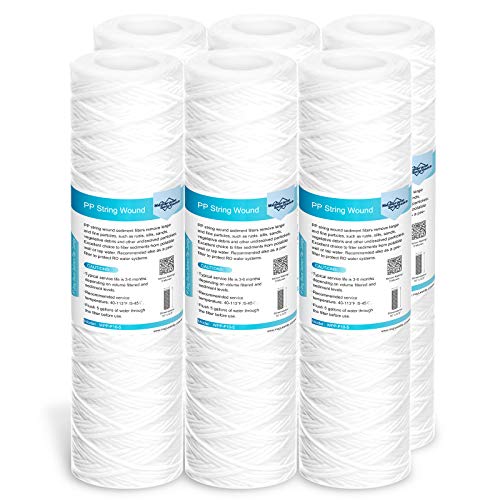
Best for high sediment loads and hot or chemically aggressive water
- String wound polypropylene over a rigid core
- Graded density from the outside in, catching coarse particles first
- Tolerates higher temperatures than melt-blown media
- Universal 10 x 2.5 inch fitment
Why buy it: string wound cartridges hold far more dirt before they blind off than a smooth spun cartridge, which on a silty well is the difference between monthly and quarterly changes.

Best for the first stage of a two-stage well setup
- 25 micron rating — deliberately coarse, as a first stage should be
- String wound construction for high dirt-holding capacity
- Big Blue 10 x 4.5 inch size for whole-house flow
- Protects the fine cartridge downstream from doing all the work
Why buy it: putting a coarse cartridge in front of a fine one is the single biggest improvement most well owners can make, and it costs less than the fine cartridges it saves.

Best for starting from nothing on a standard 3/4 inch main
- Complete standard-duty housing with 3/4 inch inlet and outlet
- Takes universal 10 x 2.5 inch cartridges from any manufacturer
- Mounting bracket and wrench included
- Pressure relief button for pressure-free cartridge changes
Why buy it: if you do not already have a housing on the main, this is the one to start with — a commodity cartridge size means you are never locked into one brand.
Quick Comparison
| Product | Best for | Rating | Price | Buy |
|---|---|---|---|---|
| Pentair Pentek DGD-5005 Big Blue Dual-Gradient Sediment Filter Cartridge, 10 Inch | Best Overall | — | Check (paid link) | |
| PUREPLUS 5 Micron 10 x 4.5 inch Whole House Pleated Sediment Filter for Well Water | Best Washable | — | Check (paid link) | |
| Aquaboon 5 Micron 10 x 2.5 inch Sediment Filter Replacement Cartridge, Compatible with Well Water Systems | Best Value | — | Check (paid link) | |
| Membrane Solutions 5 Micron 10 x 2.5 inch String Wound Whole House Sediment Filter Cartridge | Best String Wound | — | Check (paid link) | |
| PUREPLUS 25 Micron 10 x 4.5 inch Whole House String Wound Sediment Filter for Well Water | Best Coarse Pre-Filter | — | Check (paid link) | |
| Culligan WH-S200-C Whole House Water Filter Housing with 3/4 inch Inlet and Outlet, Standard Duty | Best Complete Housing | — | Check (paid link) |
Getting the Size Right
Cartridges come in a small number of standard sizes, and mixing them up is the most common return in this category. Measure the old cartridge, or measure the inside of the sump.
| Format | Dimensions | Typical use | Flow |
|---|---|---|---|
| Standard slim | 10 x 2.5 inch | Under-sink systems, small whole-house housings | Modest — restricts a whole house |
| Standard slim, tall | 20 x 2.5 inch | Double the media in a slim housing | Better than 10 inch |
| Big Blue | 10 x 4.5 inch | The residential whole-house standard | Good — suits most homes |
| Big Blue, tall | 20 x 4.5 inch | High flow, dirty wells, long intervals | Best; needs real vertical clearance |
Two practical notes. A 20-inch housing needs roughly 26 inches of clearance beneath it to withdraw the cartridge, and people discover this after mounting it. And running a slim 2.5 inch housing on a whole house is a common cause of low pressure — the media area is simply too small for household flow. If you are installing from scratch, size up.
Where the water is genuinely dirty, stage it: a coarse 20 or 25 micron cartridge first, a 5 micron second. The coarse stage costs less than the fine cartridges it saves, and the pressure drop across two staged cartridges is lower than across one fine cartridge doing all the work. Our guide to changing a whole house filter covers the swap itself, and best whole house water filter covers complete systems.
How We Rank
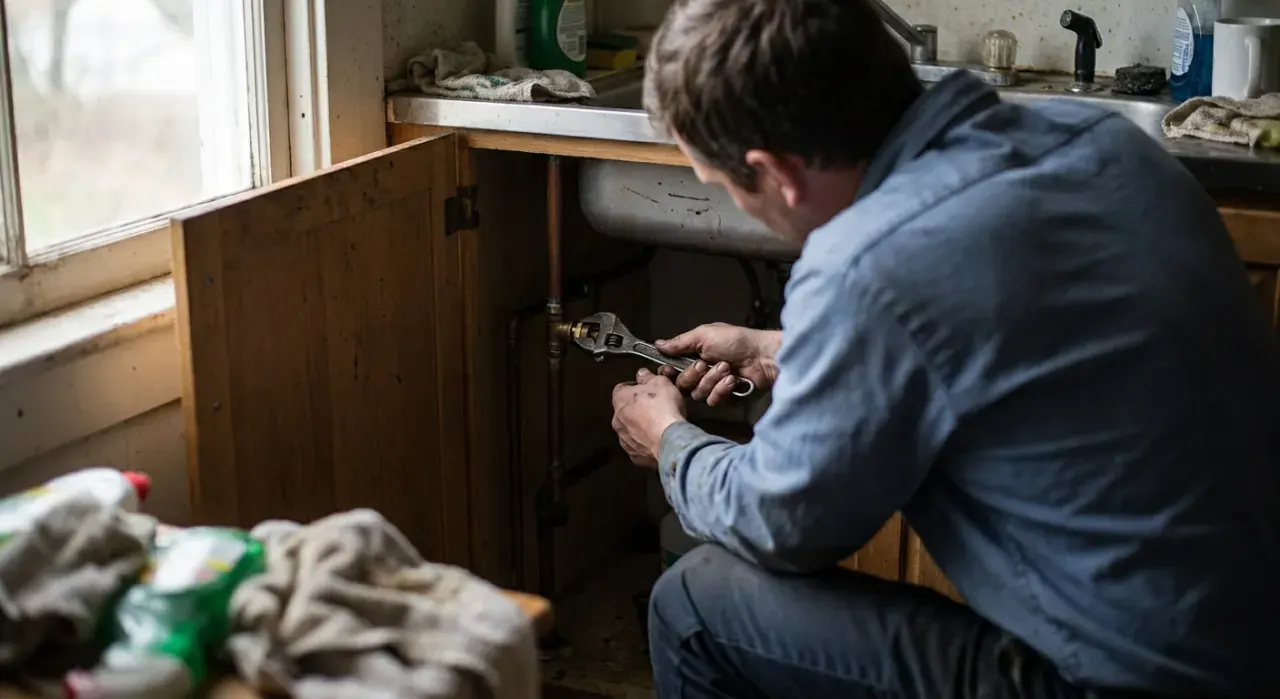
We never buy or install these filters. For sediment cartridges the ranking priorities are: dirt-holding capacity relative to price, since service life rather than filtration quality is what separates these products; media construction, weighted toward graded, pleated and dual-density designs that use the whole cartridge instead of the outer skin; honesty about the rating, including whether nominal or absolute is stated; and aggregated owner reports on real change intervals and pressure drop, which is where the specification meets the well. Ratings come from verified Amazon listing data and refresh automatically. Prices were checked at the time of writing. Full method: how we rank.
The Filters, Reviewed
1. Pentair Pentek DGD-5005 — Best Overall
Covered above. Owners praise: service life several times that of spun cartridges, low pressure drop when clean, and consistent Pentair quality. Owners gripe about: the price per cartridge, that it is Big Blue only, and that it cannot be rinsed and reused. Check price (paid link).
2. PUREPLUS Pleated 5 Micron — Best Washable
Pleating packs a large sheet of media into the same canister, which does two useful things: it extends the interval, and it makes the media accessible to a hose. On a well that produces predictable seasonal silt, rinsing a pleated cartridge two or three times before replacing it changes the running cost materially.
Owners praise: the low pressure drop, the ability to rinse and reuse, and the price. Owners gripe about: pleats that never come fully clean once fine clay has embedded, and less depth capacity than a wound cartridge on heavy loads. Check price (paid link).
3. Aquaboon 5 Micron 10 x 2.5 — Best Value
The ordinary cartridge for the ordinary housing, sold in multipacks. Melt-blown polypropylene at 5 micron nominal is what the great majority of US homes need, and buying four at a time is the single most effective way to make sure the change actually happens on schedule.
Owners praise: the price per cartridge, universal fitment, and consistent quality across a pack. Owners gripe about: the shorter life inherent to spun media on dirty water, and that a slim cartridge restricts flow if used for a whole house. Check price (paid link).
4. Membrane Solutions String Wound — Best String Wound
Yarn wound over a rigid core, denser toward the center, so particles are captured progressively through the thickness rather than all at the face. That gives it markedly more dirt-holding capacity than a spun cartridge of the same rating, and it tolerates higher temperatures, which matters on some equipment feeds.
Owners praise: genuinely longer intervals on silty water, robustness, and value in multipacks. Owners gripe about: that it cannot be washed, and that the winding sheds a few fibers on first use — flush the line for a minute after fitting. Check price (paid link).
5. PUREPLUS 25 Micron String Wound — Best Coarse Pre-Filter
Deliberately coarse, and that is the point. As the first of two stages it removes the sand and scale that would otherwise consume the fine cartridge behind it, at a fraction of the cost and with almost no pressure penalty. Well owners who add a coarse first stage typically find the fine cartridge lasts several times longer.
Owners praise: how much it extends the life of the second stage, negligible pressure loss, and the Big Blue capacity. Owners gripe about: that on its own it does very little for cloudiness — it is a first stage, not a solution. Check price (paid link).
6. Culligan WH-S200-C Housing — Best Complete Housing
Included because a cartridge is no use without somewhere to put it. A standard-duty housing with 3/4 inch ports, a mounting bracket, a wrench and a pressure relief button, taking universal 10 x 2.5 inch cartridges from any manufacturer — which is the specification that matters, because it means you are never locked to one brand of media.
Owners praise: the relief button that makes cartridge changes painless, everything needed in the box, and universal cartridge fitment. Owners gripe about: 3/4 inch ports and slim cartridges limiting flow on a large house, and a plastic sump that must not be overtightened. Check price (paid link).
What Owners Actually Complain About
Pressure loss after fitting. Usually the rating rather than the filter. A 1 micron cartridge on a whole house will restrict flow noticeably from the day it is installed and worse thereafter. Step back to 5 micron and stage it if the water is dirty.
Cartridges lasting weeks instead of months. Almost always a well with a heavy sediment load and no coarse pre-stage. Adding a 20 or 25 micron first stage is the fix, and it pays for itself quickly.
Housings that will not unscrew. Pressure that was never relieved, or a dry O-ring that has bonded over months. Both are covered in how to change a whole house water filter.
Expecting a sediment filter to fix taste. A recurring disappointment. Sediment filtration is mechanical and does nothing to dissolved chlorine — that needs a carbon stage after it.
Cloudy water that a filter did not fix. If your glass clears from the bottom upward it was dissolved air, not sediment, and no cartridge will change it — see the water clarity and odor diagnostic.
The Verdict
Fit 5 micron unless you have a reason not to, and buy the Pentair Pentek DGD-5005 if you have a Big Blue housing — dual-gradient media is the closest thing to free service life in this category. Choose the PUREPLUS pleated cartridge if you would rather rinse than replace, the Aquaboon multipack for a standard slim housing, and the Membrane Solutions string wound for heavy silt. On a dirty well, add the 25 micron coarse stage in front; it costs less than the cartridges it saves. And if you are starting from bare pipe, the Culligan WH-S200-C takes commodity cartridges, which is the only housing specification that really matters. Check price on Amazon → (paid link)
More from this hub: DIY plumbing · best whole house water filter · how to change a whole house water filter · best iron filter for well water · best well water filter system · how we rank.