 Garden
Affiliate Disclosure
Some links on this page are affiliate links. As an Amazon Associate, we earn from qualifying purchases — at no extra cost to you. We do not buy, test, or physically handle the products we cover; our rankings come from aggregated owner reviews, ratings and expert consensus. Commissions never change our verdicts. How we rank · full disclosure.
The number that decides this purchase is not on the front of the box — it is the amperage on the back. An electric tankless water heater sized for a whole house draws 100 to 112 amps at 240 volts. That is more than the entire service feeding a great many American homes. Owners discover this after the unit arrives, when an electrician quotes several thousand dollars for a panel and service upgrade to run a $500 heater.
The second number that matters is temperature rise. A tankless unit does not have a flow rating; it has a flow rating at a given temperature rise, and the same heater that delivers a comfortable four gallons a minute in Georgia delivers two and a half in Michigan in February. Both numbers are arithmetic, both are knowable before you buy, and between them they explain almost every disappointed tankless review on the internet.
Top Picks at a Glance
The two calculations to do before you shop
First: what can your panel actually feed? Divide the kilowatt rating by 240 volts to get amps.
| Unit | kW | Amps at 240V | Breakers required | Realistic on… |
|---|---|---|---|---|
| Rheem RTEX-13 | 13 | ~54 | Two 30A double-pole | Most 150A and 200A panels |
| Rheem RTEX-18 | 18 | ~75 | Three 30A double-pole | 200A panels with headroom |
| Rheem RTEX-24 | 24 | ~100 | Three 40A double-pole | 200A panels, usually with load calculation |
| EcoSmart ECO 27 | 27 | ~112.5 | Three 40A double-pole | 200A panels with little else electric |
| Stiebel Tempra 29 Plus | 28.8 | ~120 | Three 40A double-pole | 200A+ service, often needs an upgrade |
An electric range, an electric dryer, central air and an EV charger are all on that same service. A licensed electrician performs a load calculation to determine what is left, and that calculation — not the product page — is what decides whether a unit is installable. Panel and service work is permitted work in essentially every US jurisdiction, and the rules are local, so check with your city or county building department.
Second: what flow will you actually get? The formula is simple:
GPM = BTU per hour ÷ (500 × temperature rise in °F) — and 1 kW = 3,412 BTU/hr
Groundwater temperature ranges from roughly 70°F across the southern states to around 40°F in the northern tier in winter. A comfortable shower is about 105 to 110°F. So the rise you need is 35 to 40 degrees in Florida and 65 to 70 degrees in Minnesota — nearly double the work for the same shower.
| Unit | BTU/hr | GPM at 40°F rise (warm) | GPM at 70°F rise (cold) | What that means in winter |
|---|---|---|---|---|
| Rheem RTEX-13 | ~44,400 | ~2.2 | ~1.3 | One low-flow fixture only |
| Rheem RTEX-24 | ~81,900 | ~4.1 | ~2.3 | One shower, nothing else |
| EcoSmart ECO 27 | ~92,100 | ~4.6 | ~2.6 | One shower, nothing else |
| Stiebel Tempra 29 Plus | ~98,300 | ~4.9 | ~2.8 | One shower plus a trickle |
| Rheem RTG-70 (gas) | 180,000 | 7.0 (rated max) | ~5.1 | Two showers simultaneously |
Read that last row against the four above it and the whole category becomes clear. A gas burner is not a bigger electric heater — it is a different order of heat input. If your house has gas, that is the honest answer for whole-house tankless. If it does not, an electric unit is a good point-of-use heater and a compromise as a whole-house one.
Our #1 Pick: Rheem RTEX-24
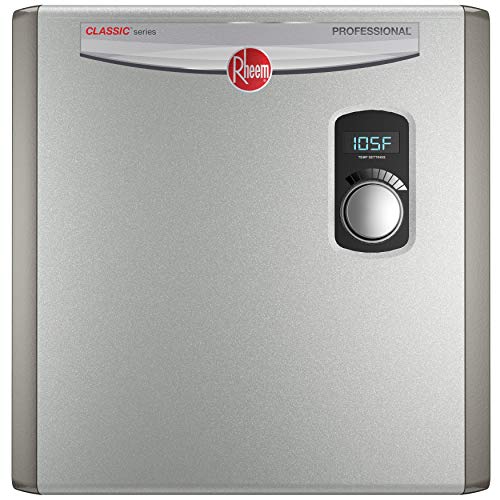
The RTEX-24 wins on being the largest electric unit a substantial number of American homes can actually install. At 24 kW it draws around 100 amps across three 40-amp double-pole breakers, which a 200-amp service can often carry after a load calculation, and it delivers a genuinely usable four gallons per minute wherever incoming water is reasonably warm.
Owners consistently report the same two things: endless hot water once it is correctly installed, and an installation that cost more than they planned. The self-modulating control is the feature doing the work — the unit fires only as hard as the flow demands, rather than running full output and mixing back down, which is where the efficiency of tankless actually comes from.
The honest limitations are the ones that apply to the whole electric category. In a cold-climate winter it is a one-shower appliance. It needs a minimum flow rate to trigger — very low flow at a faucet may not activate it, which is the "cold water sandwich" complaint. And on hard water, the heat exchanger scales and needs annual descaling through isolation valves you should insist are fitted at installation.
Check price on Amazon → (paid link)
The Ranked Field
Best for a whole-house electric install in a mild or warm climate
- 24 kW at 240V — roughly 100 amps of dedicated service
- Self-modulating power adjusts to flow rate rather than firing full output
- Digital thermostatic control in 1°F increments
- Field-serviceable heating elements and a simple threshold flow sensor
Why buy it: the sweet spot of the electric range — enough output to run a shower plus a sink in most of the country, without the near-impossible 112-amp draw of the biggest units.

Best for northern states, where 40°F incoming water defeats smaller units
- 28.8 kW at 240V with true proportional modulation
- Advanced Flow Control reduces flow rather than letting output temperature drop
- German-built with a reputation for element and control longevity
- Silent operation and a compact wall-mount body
Why buy it: the Advanced Flow Control is the genuinely different feature here — instead of giving you lukewarm water when demand exceeds capacity, it throttles the flow and keeps the temperature you asked for.
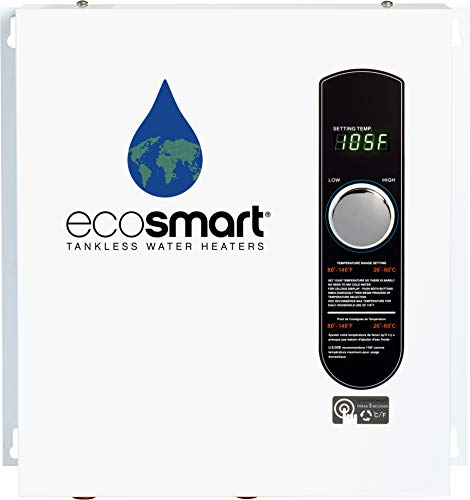
Best for maximum electric output per dollar, if your panel can genuinely feed it
- 27 kW at 240V — 112.5 amps, three 40-amp double-pole breakers
- Self-modulating technology matched to flow rate
- Digital temperature control in 1°F increments
- Copper and stainless immersion elements that can be replaced individually
Why buy it: the most electric output on this page for the money, but read the amperage line twice — this is the unit that most often turns into an unexpected electrical service upgrade.

Best for a single bathroom, a remote sink, or a garage utility fixture
- 13 kW at 240V — around 54 amps, far more realistic for an existing panel
- External digital thermostatic control with LED display
- Compact enough to mount in a vanity cabinet or utility closet
- Simple two-element design with replaceable parts
Why buy it: the honest whole-house answer for a lot of homes is "not electric" — but as a point-of-use heater for one fixture this size makes complete sense and installs without a service upgrade.

Best for genuine whole-house tankless, in a home that already has gas
- 7.0 GPM maximum flow — roughly triple a comparable electric unit
- Direct-vent indoor installation with a concentric vent kit
- Low-NOx burner and built-in freeze protection down to −30°F
- Digital remote control with temperature setting to 140°F
Why buy it: gas is where tankless actually delivers the promise, because a gas burner can produce three to four times the heat input of any electric unit an ordinary house can feed.
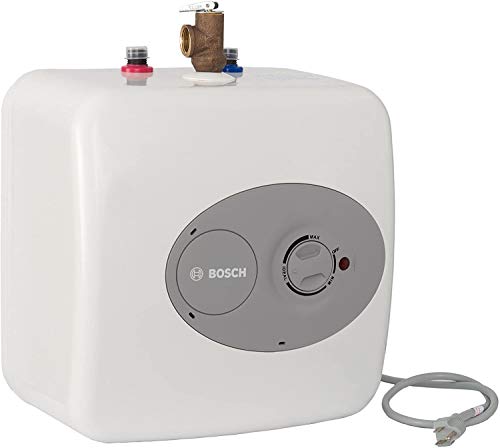
Best for the remote sink where the real complaint is waiting for hot water
- 2.5-gallon insulated mini tank on an ordinary 120V outlet
- No dedicated circuit, no service upgrade, no gas line
- Mounts on a shelf, on a wall, or under a sink
- Delivers instant hot water at the fixture it serves
Why buy it: a large share of people shopping for tankless want hot water immediately at one distant sink, and this solves that for $200 and a wall plug rather than $3,000 and an electrician.
Quick Comparison
| Product | Best for | Rating | Price | Buy |
|---|---|---|---|---|
| Rheem RTEX-24 Electric Tankless Water Heater, 24 kW at 240V, Self-Modulating | Best Overall Electric | — | Check (paid link) | |
| Stiebel Eltron Tempra 29 Plus Electric Tankless Water Heater, 28.8 kW, Advanced Flow Control | Best Cold-Climate Electric | — | Check (paid link) | |
| EcoSmart ECO 27 Electric Tankless Water Heater, 27 kW at 240V, Patented Self-Modulating Technology | Best Value Whole-House Electric | — | Check (paid link) | |
| Rheem RTEX-13 Electric Tankless Water Heater, 13 kW at 240V, Residential Heating Chamber | Best Point of Use | — | Check (paid link) | |
| Rheem RTG-70DVLN-3 High Efficiency Non-Condensing Indoor Tankless Natural Gas Water Heater, 7.0 GPM | Best Gas | — | Check (paid link) | |
| Bosch Tronic 3000 T Electric Mini-Tank Water Heater, 2.5 Gallon (ES2.5), Shelf or Wall Mount | Best Alternative to Tankless | — | Check (paid link) |
How We Rank
We never buy or install these units. For tankless heaters the ranking priorities are: whether the unit is realistically installable in a typical home, which is the single biggest predictor of owner satisfaction; output at real temperature rise rather than the best-case GPM on the carton; modulation quality, since a heater that throttles flow to hold temperature behaves very differently from one that lets the temperature sag; and aggregated owner reports on element life, scaling and control failures, which is where these units actually go wrong. Ratings come from verified Amazon listing data and refresh automatically. Prices were checked at the time of writing. Full method: how we rank.

The Field, Reviewed
1. Rheem RTEX-24 — Best Overall Electric
Covered above. Owners praise: endless hot water, precise digital temperature setting, the compact wall-mounted footprint, and replaceable elements. Owners gripe about: installation cost, a minimum activation flow that a trickling faucet will not trigger, and reduced output in winter. Check price (paid link).
2. Stiebel Eltron Tempra 29 Plus — Best Cold-Climate Electric
The unit that handles the cold-climate problem most intelligently. Where most electric tankless heaters simply deliver cooler water once demand exceeds capacity, the Tempra's Advanced Flow Control reduces the flow instead, so what comes out of the shower head is the temperature you set — just less of it. In a Minnesota February that is the difference between a short hot shower and a long lukewarm one.
Owners praise: silent operation, genuinely stable outlet temperature, build quality, and true proportional modulation rather than stepped elements. Owners gripe about: the price, roughly 120 amps of demand that often forces a service upgrade, and support that is slower than the domestic brands. Check price (paid link).
3. EcoSmart ECO 27 — Best Value Whole-House Electric
The most electric output per dollar in this list, and the unit most likely to become an electrical project. At 112.5 amps it is at the practical ceiling of residential electric water heating, and it is worth being blunt: if you do not know your service size, find out before you order.
Owners praise: the price for the output, digital control, compact size, and elements that can be replaced individually rather than scrapping the unit. Owners gripe about: the amperage, elements failing in hard-water areas where the unit was never descaled, and warranty claims that require proof of a whole-house filter in some conditions — read the terms before you buy. Check price (paid link).
4. Rheem RTEX-13 — Best Point of Use
The size that makes electric tankless make sense. Fitted under a sink, in a garage, or serving one bathroom in an addition, 13 kW is plenty for a single fixture and 54 amps is a load an existing 200-amp panel can usually absorb without drama.
Owners praise: instant hot water at a fixture that used to run cold for a minute, the small footprint, and a realistic electrical demand. Owners gripe about: buyers who expected whole-house performance from it, and the minimum flow rate needed to activate. Check price (paid link).
5. Rheem RTG-70DVLN-3 — Best Gas
The point at which tankless stops compromising. At 180,000 BTU per hour this puts out roughly double the heat of the largest electric units here, which translates to about five gallons a minute even at a 70-degree rise — two showers at once in winter. Built-in freeze protection to −30°F and a low-NOx burner make it a serious cold-climate appliance.
Owners praise: genuine whole-house performance, the digital remote, and quiet operation for a gas unit. Owners gripe about: the installation, which is the real cost — a gas tankless needs a correctly sized gas line, a dedicated direct-vent termination and, in most jurisdictions, a permit and inspection. This is not homeowner work. Check price (paid link).
6. Bosch Tronic 3000 T ES2.5 — Best Alternative to Tankless
Included because a large share of people shopping this category do not actually want tankless — they want hot water to arrive at one sink without a 60-second wait. A 2.5-gallon mini tank on a standard 120V outlet solves that completely, for $200 and no electrician.
Owners praise: instant hot water at the fixture, plug-in simplicity, and the flexibility to sit on a shelf, on a wall or under a sink. Owners gripe about: the small capacity, which is the point rather than a flaw, and a T&P discharge that needs somewhere sensible to go. Check price (paid link).
What Owners Actually Complain About
The electrical bill for the install, not the unit. The dominant complaint in the electric category, and it is almost always a surprise. Three breaker slots, three heavy cable runs, and sometimes a whole new service.
The cold water sandwich. Turn hot water off and back on within a minute and you get a slug of cold water between two hot ones, because the water sitting in the pipe cooled while the unit was idle. It is inherent to the technology, mitigated by a recirculation loop with a buffer tank, and never eliminated.
Minimum flow. Tankless heaters need a threshold flow — typically 0.4 to 0.6 GPM — before they fire. A slow trickle at a faucet stays cold. Very low-flow aerators can make this worse.
Scale. The most common cause of premature failure. Hard water deposits on the heat exchanger, output drops, and eventually elements or the exchanger fail. Annual descaling prevents it; isolation valves make descaling possible. If your water is hard, read how to test water hardness and consider a softener first.
Expecting savings that are slow to arrive. Tankless units avoid standby losses, which is real, but the purchase and installation premium is substantial. If your motivation is the utility bill rather than endless hot water, put your numbers into our appliance running cost calculator before committing.
The Verdict
If you have gas, buy gas: the Rheem RTG-70DVLN-3 is the unit that actually delivers what tankless promises, and the installation belongs to a licensed pro. On electric, the Rheem RTEX-24 is the realistic whole-house choice in a warm or mild climate, and the Stiebel Eltron Tempra 29 Plus is the one worth its premium in the north because it holds temperature by throttling flow. For one fixture, the Rheem RTEX-13. And if what you really want is hot water at a distant sink without waiting, the Bosch Tronic 3000 T does that for a fraction of everything else here. Check your panel before you check the price. Check price on Amazon → (paid link)
More from this hub: DIY plumbing · what size water heater do I need · best gas water heater · best 50 gallon electric water heater · running costs · how we rank.