 Garden

Affiliate Disclosure
Some links on this page are affiliate links. As an Amazon Associate, we earn from qualifying purchases — at no extra cost to you. We do not buy, test, or physically handle the products we cover; our rankings come from aggregated owner reviews, ratings and expert consensus. Commissions never change our verdicts. How we rank · full disclosure.
The fastest way to test water hardness at home is a strip kit: dip a test strip in a glass of cold tap water for one second, wait about 15 seconds, and match the color to the chart on the bottle. It costs about $12 and takes two minutes. The result comes in grains per gallon or parts per million — divide ppm by 17.1 to convert. Below 3 gpg is soft, 7 to 10 gpg is hard, above 10 gpg is very hard and worth treating.
We never buy, test or physically handle the products we rank; recommendations come from aggregated owner reviews and expert consensus, described in how we rank. More at the DIY plumbing hub.
Why the number matters
Hardness is the one measurement you cannot skip before buying a water softener, because softeners are sized and programmed from it. The capacity you need is straightforward arithmetic: hardness in grains per gallon × gallons used per day × days between regenerations. Get the hardness wrong and everything downstream is wrong — an undersized unit regenerates constantly and burns salt, an oversized one wastes money, and a controller programmed with a made-up number does neither job properly.
It also tells you whether you have a problem at all. Plenty of people install softeners on 5 gpg water because a salesman said their water was hard. At 5 gpg most households never notice anything.
Method 1: Test strips (the one to use)
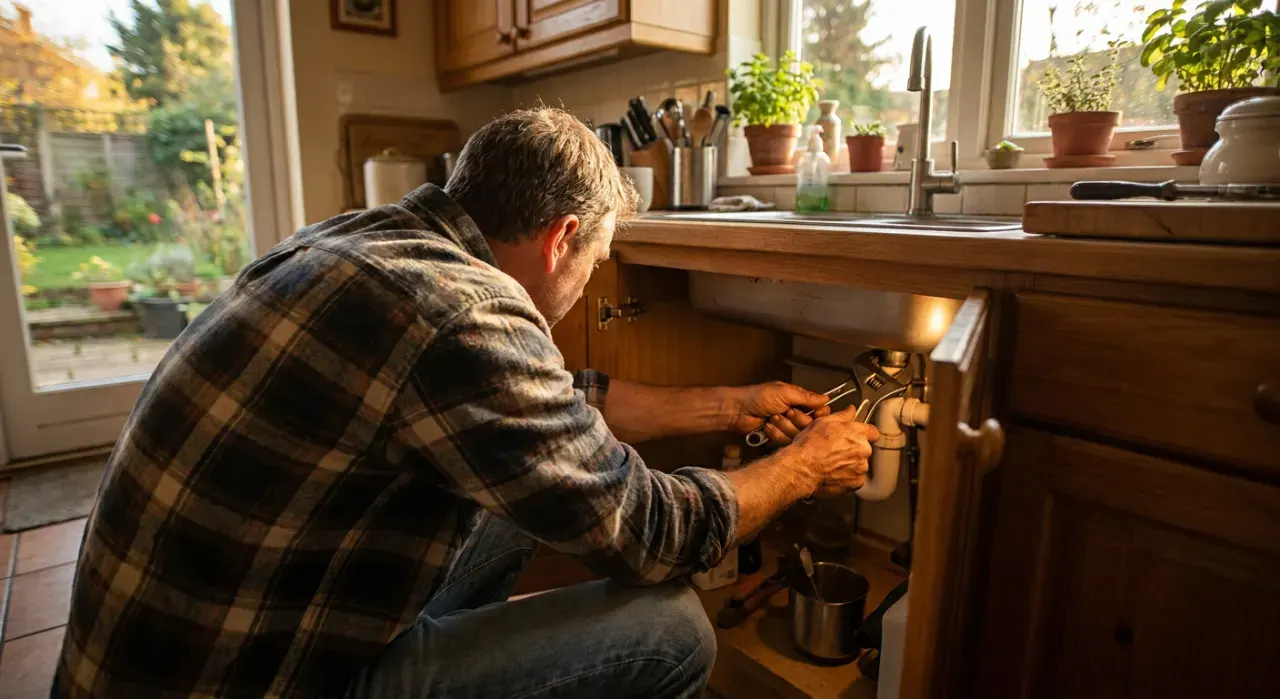
This is the method that gives you a usable number, and it takes two minutes.
- Choose the right tap. Use a cold tap upstream of any treatment — an outdoor hose bib or the laundry tub is ideal. If you already have a softener, a kitchen tap will read near zero and tell you nothing about your incoming water.
- Run the water for 30 seconds. You want water from the main, not water that has been sitting in the pipe overnight.
- Fill a clean glass with cold water. Not hot — water that has sat in a water heater has already deposited some of its hardness as scale inside the tank and reads artificially low.
- Dip the strip for one second and remove it. Do not shake off the excess; most kits specify holding it level.
- Wait 15 seconds — check your kit, some are 10, some 30 — and compare against the color chart on the bottle in good daylight. Kitchen LED lighting shifts colors enough to cost you a band.
- Write the number down along with the date and which tap you used. You will want it when programming a softener, and again in two years when you wonder whether the softener still works.
If you want to verify that an existing softener is working, take two readings on the same day: one at an outside spigot upstream of the unit and one at an indoor cold tap downstream. A working softener should show near zero on the indoor sample. If both read the same, the softener is bypassed, out of salt, or the brine tank has bridged — see how much salt does a water softener use.

Best for checking hardness before and after a softener, repeatedly
- 150 strips — enough to test before and after treatment for years
- Reads 0 to 425 ppm, roughly 0 to 25 grains per gallon
- Color chart printed on the bottle in both ppm and gpg
- Sealed pouches keep unused strips from absorbing moisture
Why buy it: hardness is a number you will want to take more than once — before buying, after installing, and any time a softener seems to have stopped working. A 150-strip bottle makes that free.
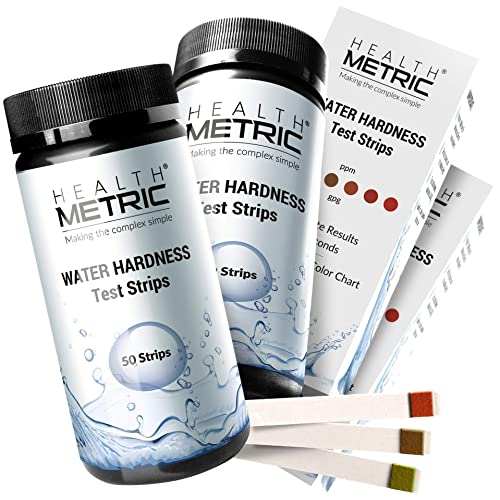
Best for a quick one-off reading before you decide anything
- 100 strips in two separately sealed packs of 50
- Measures total hardness — calcium and magnesium together
- Result in about 15 seconds against a printed color chart
- Works on tap, well, spa and dishwasher water
Why buy it: it answers the only question that matters before you spend $600 on a softener — how hard is the water, in a number — for the price of a sandwich.
Method 2: The soap shake test (free, approximate)
Useful when you want a yes-or-no answer tonight and have no kit.
- Fill a clear plastic bottle about one third with cold tap water.
- Add roughly ten drops of pure liquid soap — castile or another true soap. Do not use dish detergent, which is formulated to lather in hard water and will give you a false negative.
- Cap it and shake vigorously for a few seconds.
- Read it: a thick, persistent head of suds over clear water means soft. A thin lather that collapses quickly, over water that looks cloudy or milky, means hard.
The cloudiness is the actual chemistry on display — calcium and magnesium reacting with soap to form insoluble soap scum, which is the same film that coats your shower door and your skin. It is a real indicator, but it is qualitative. You cannot program a softener from it.
Method 3: Your utility's annual report (free, exact, and already written)
If you are on a municipal supply, your water utility publishes an annual Consumer Confidence Report — the EPA requires every community water system to produce one — and it usually states hardness along with everything else it monitors. Search your utility's name plus "water quality report". The figure will normally be in mg/L, which is the same as ppm, so divide by 17.1 for grains per gallon.
Two caveats. Utility figures are system-wide averages, and hardness can vary noticeably between wells or sources within one system and across seasons. And if you are on a private well, no such report exists — nobody tests your water unless you arrange it. The EPA's private well guidance recommends annual testing for coliform bacteria, nitrates, total dissolved solids and pH, and a hardness test is a sensible addition. See best well water filter system for what else a well needs checking for.
Reading the result
| Grains per gallon | ppm / mg/L | Classification | What to do |
|---|---|---|---|
| 0–3 | 0–51 | Soft | Nothing. A softener would be a solution without a problem |
| 3–7 | 51–120 | Moderately hard | Descale the kettle occasionally; treatment rarely justified |
| 7–10 | 120–171 | Hard | Judgment call — comfort, laundry and appliance life start to matter |
| 10–14 | 171–240 | Very hard | A softener usually pays for itself in appliance life and convenience |
| 14+ | 240+ | Extremely hard | Treat it. Scale will be shortening the water heater's life now |
Above roughly 10 gpg, the practical arguments get strong: scale insulates the heating element in your water heater and dishwasher so they run longer for the same result, faucet cartridges seize, showerheads clog, and you use noticeably more soap and detergent. Do you need a water softener works through that threshold decision honestly, and the appliance running cost calculator puts a figure on what a scaled water heater costs to run.
Why a TDS meter is the wrong tool here
TDS meters are cheap, popular and constantly misused for this job. They measure total dissolved solids by reading electrical conductivity, which responds to everything dissolved in the water — sodium, chloride, sulfate, nitrate, bicarbonate — not specifically to the calcium and magnesium that define hardness. Two supplies can show identical TDS readings and have completely different hardness.
Where a TDS meter genuinely earns its place is checking a reverse osmosis membrane: compare the feed water reading to the product water reading, and a rejection rate that has fallen off tells you the membrane is finished. A meter such as the HM Digital TDS-EZ (paid link) costs very little and is worth owning for that. Just do not size a softener from it. Related: how often to change reverse osmosis filters.
What to do with the number
If it comes back under 7 gpg, spend your money elsewhere. If it is over 10 gpg, you have a real case for a softener, and the number you just measured is the number you enter into its controller — see best water softener for sizing and picks.
And keep the two categories straight, because this is where money gets wasted. A softener addresses hardness and nothing else. A filter addresses contaminants and does nothing to hardness. If your water is hard and tastes of chlorine, you need both, at different points in the house. Water softener vs water filter spells that out, and if you are considering a no-salt system, read best salt free water softener first — a salt-free conditioner will not change the reading you just took.