 Garden

Affiliate Disclosure
Some links on this page are affiliate links. As an Amazon Associate, we earn from qualifying purchases — at no extra cost to you. We do not buy, test, or physically handle the products we cover; our rankings come from aggregated owner reviews, ratings and expert consensus. Commissions never change our verdicts. How we rank · full disclosure.
The short version: the best water softener for most American homes is the AFWFilters Fleck 5600SXT 48,000 grain system, because the Fleck valve is the most widely serviced control head in the country and it regenerates on measured water use instead of a clock. For a single cabinet and one warranty number, the Whirlpool WHES40E. For well water that is both hard and iron-stained, the Iron Pro 2. For an RV or a rental, the portable On The Go OTG4-DBLSOFT.
Before anything else: a softener is not a filter. It exchanges calcium and magnesium for sodium so that scale stops forming. It does not remove chlorine, lead, nitrates, PFAS or bacteria, and it will not make unsafe water safe. People buy the wrong machine constantly — if your complaint is taste or contaminants rather than limescale, you want a filter, and water softener vs water filter sets out which is which.
Sizing: The Only Calculation That Matters
Softeners are rated in grains of hardness removed between regenerations. Sizing one is arithmetic, not guesswork, and it has nothing to do with the square footage of the house.
Hardness (gpg) × gallons used per day × days between regenerations = grains of capacity needed.
Water use runs around 75 gallons per person per day in a typical American household. So a family of four at 15 grains per gallon needs 15 × 300 = 4,500 grains a day, or 31,500 grains over a week — a 32,000 grain unit is adequate and a 40,000 or 48,000 gives sensible headroom. If your utility reports hardness in ppm or mg/L, divide by 17.1: 1 grain per gallon = 17.1 ppm, so 250 ppm is about 14.6 gpg.
| Hardness | gpg | ppm / mg/L | What you notice |
|---|---|---|---|
| Soft | 0–3 | 0–51 | Nothing. Soap lathers, glassware is clear |
| Slightly hard | 3–7 | 51–120 | Faint spotting; a softener is hard to justify |
| Moderately hard | 7–10 | 120–171 | Soap scum, dull laundry, early scale in the kettle |
| Hard | 10–14 | 171–240 | Visible scale on faucets, spotted dishes, more soap needed |
| Very hard | 14+ | 240+ | Scale in the water heater, seized faucet cartridges, crusty showerheads |
If you do not know your number, do not guess it — how to test water hardness walks the two-minute strip test, and do you need a water softener covers the threshold question honestly.
Top Picks at a Glance
Our #1 Pick: AFWFilters Fleck 5600SXT, 48,000 Grain
Water softeners are twenty-year machines, and the thing that ends most of them is not the resin — it is a control valve nobody can get parts for. The Fleck 5600SXT is the most common residential control valve in the United States, which means seals, pistons, injectors and a technician who has rebuilt a hundred of them are available essentially anywhere. Owners consistently report rebuilding these valves rather than replacing systems, which is the single strongest argument in the category.
The 5600SXT is a digital metered valve: it counts the gallons that pass through and regenerates when the resin bed is actually approaching exhaustion, rather than at 2am on a schedule regardless of whether anyone was home. That is directly why metered softeners use less salt and less water than timer units. Forty-eight thousand grains on 1.5 cubic feet of resin covers a typical family home at moderate to high hardness with room to spare.
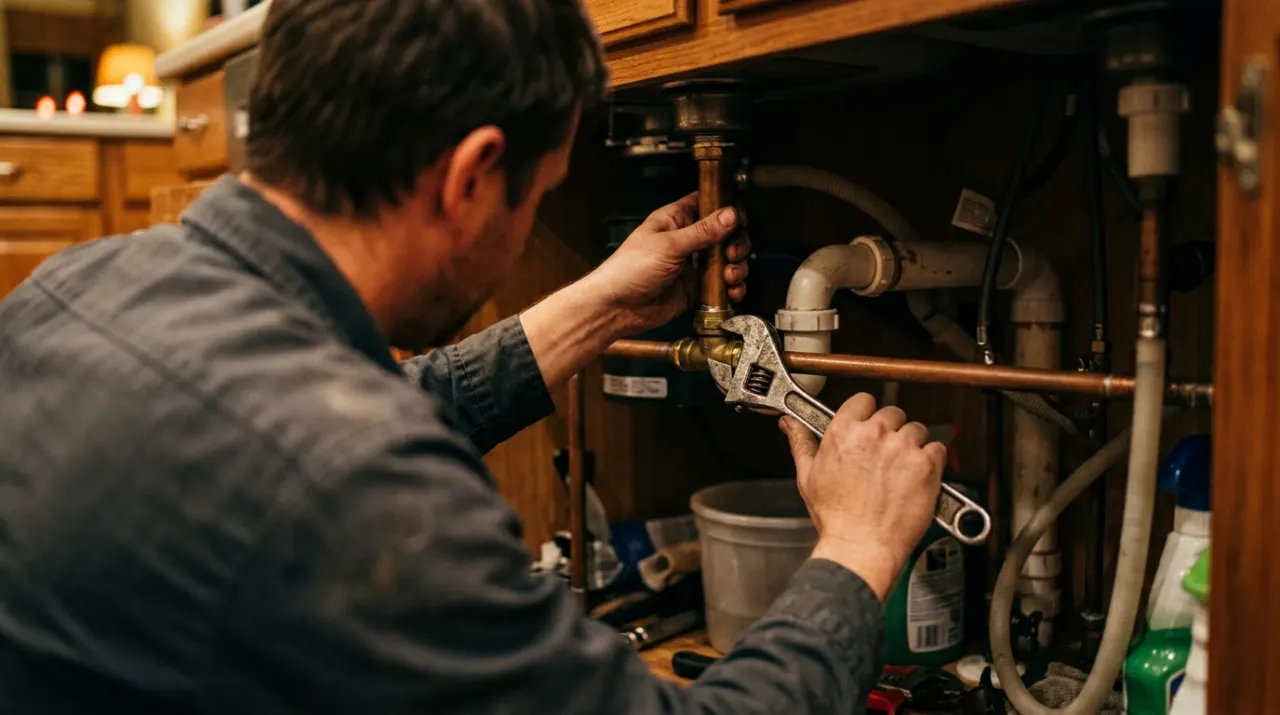
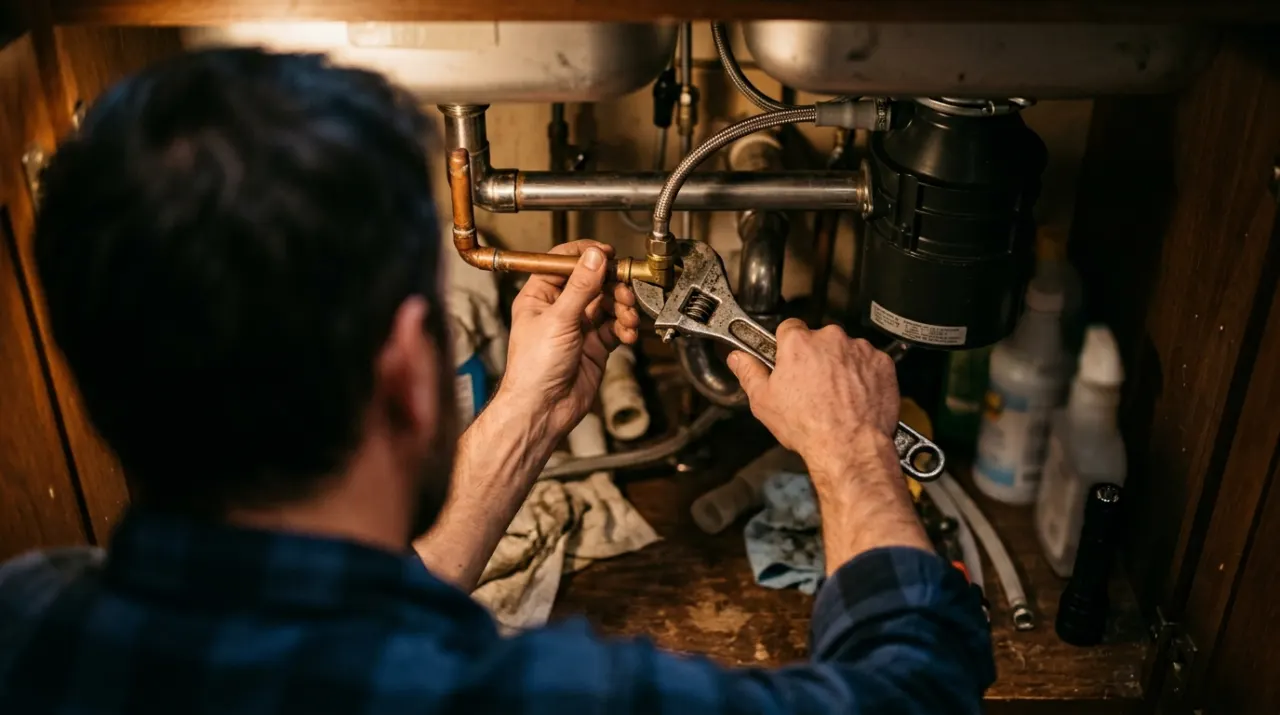
The honest limitations: this is a two-tank system, so you need floor space for a resin tank and a brine tank near a drain. Installation involves cutting into the main supply line and running a drain line to a standpipe or floor drain, which is beyond the confidence of a lot of homeowners and is exactly the point at which calling a plumber is sensible. And the programming menu is functional rather than friendly — read the manual, set your hardness, and leave it alone.
Check price on Amazon → (paid link)
The Ranked Field
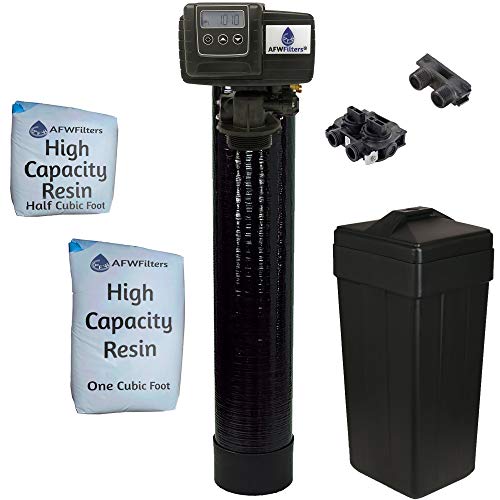
Best for the softener a plumber would put in their own house
- Fleck 5600SXT digital metered valve — regenerates on actual water use, not a timer
- 48,000 grain capacity, 1.5 cubic feet of high-capacity cation resin
- Bypass valve and 1-inch yoke included; standard 3/4 and 1-inch plumbing
- Every wear part is a commodity item available from multiple suppliers
Why buy it: the Fleck 5600SXT is the most widely serviced control valve in American residential water treatment — parts, manuals and someone who knows it are available anywhere in the country, twenty years from now.

Best for homeowners who want one cabinet, one manual and one warranty number
- Single-cabinet design — resin tank and brine tank in one housing
- Demand-initiated regeneration saves salt and water versus timed units
- NSF certified; handles up to 10 ppm of clear-water ferrous iron
- Low-salt indicator light and a straightforward setup wizard
Why buy it: a two-tank system is two things to place and plumb; this is one box against a wall, and the setup asks you for your hardness number and then gets on with it.

Best for well water that is hard AND stains everything orange
- Fine mesh resin removes hardness plus dissolved iron in a single tank
- Rated for iron up to around 6 to 8 ppm and manganese up to about 6 ppm
- 64,000 grain capacity for larger homes or very hard water
- Same Fleck 5600SXT digital metered valve as our top pick
Why buy it: on a well, hardness and iron usually arrive together, and running two separate machines to treat them is a lot of plumbing — this handles both in one tank.

Best for buyers who want a serviceable brand with parts at a big-box store
- 40,000 grain capacity suited to most three to four bathroom homes
- Up-front electronic controls with a salt-level and days-remaining display
- Self-cleaning sediment filter in the valve body
- Parts and service network of a major appliance manufacturer
Why buy it: the reason people buy GE here is not the resin, it is that in ten years the venturi assembly is a part number you can order in an afternoon.

Best for a full-size metered softener at the lowest sensible price
- 48,000 grain capacity for homes with three to four bathrooms
- Automatic digital metered control head with backwash programming
- Includes brine tank with safety float and bypass valve
- Standard tank sizes and fittings
Why buy it: a proper metered two-tank softener for meaningfully less than the Fleck-valved systems, with the trade-off being a less universally serviced control head.

Best for RVs, boats, rentals and anyone who cannot plumb a tank in
- 16,000 grain portable tank with standard garden hose fittings
- Regenerates with two boxes of ordinary table salt in about 30 minutes
- No electricity, no drain line, no installation
- Roughly 40 days of soft water for a couple in an RV
Why buy it: the only unit here that a renter can use and take with them, and the standard answer for RV owners tired of hard-water spots on the rig.
Quick Comparison
| Product | Best for | Rating | Price | Buy |
|---|---|---|---|---|
| AFWFilters Fleck 5600SXT 48,000 Grain Water Softener with Digital Metered Valve and Brine Tank | Best Overall | — | Check (paid link) | |
| Whirlpool WHES40E 40,000 Grain Water Softener with Demand-Initiated Regeneration | Best Plug-and-Play | — | Check (paid link) | |
| AFWFilters Iron Pro 2 Combination Water Softener and Iron Filter, Fleck 5600SXT, 64,000 Grain | Best for Iron and Well Water | — | Check (paid link) | |
| GE GXSH40V 40,000 Grain Water Softener with Electronic Controls and Salt Level Indicator | Best from a Major Appliance Brand | — | Check (paid link) | |
| Aquasure Harmony Series 48,000 Grain Whole House Water Softener with Digital Metered Control Head | Best Value Two-Tank | — | Check (paid link) | |
| On The Go OTG4-DBLSOFT Portable 16,000 Grain Double Standard RV Water Softener | Best Portable | — | Check (paid link) |
Specifications Side by Side
| Softener | Capacity | Format | Control | Removes iron? |
|---|---|---|---|---|
| Fleck 5600SXT | 48,000 grain | Two tank | Digital metered | Minimal |
| Whirlpool WHES40E | 40,000 grain | Single cabinet | Demand initiated | Up to ~10 ppm clear-water iron |
| Iron Pro 2 | 64,000 grain | Two tank | Digital metered | Yes — fine mesh resin |
| GE GXSH40V | 40,000 grain | Single cabinet | Electronic | Limited |
| Aquasure Harmony | 48,000 grain | Two tank | Digital metered | Limited |
| On The Go OTG4 | 16,000 grain | Portable tank | Manual regeneration | No |
How We Rank
We never buy or install these systems. For softeners the ranking priorities are: control valve serviceability, because a twenty-year machine with an orphaned valve is a five-year machine; metered rather than timed regeneration, which directly determines salt and water consumption; capacity honestly matched to hardness and household size rather than to marketing; and aggregated owner reports on resin life, valve failures and salt bridging, which is where softeners actually go wrong. Ratings come from verified Amazon listing data and refresh automatically. Prices were checked at the time of writing. Full method: how we rank.
The Softeners, Reviewed
1. AFWFilters Fleck 5600SXT — Best Overall
Covered above. Owners praise: the serviceability of the Fleck valve, real salt savings from metered regeneration, and resin beds still working after a decade. Owners gripe about: a genuinely demanding installation, a cryptic programming menu, and the floor space two tanks require. Check price (paid link).
2. Whirlpool WHES40E — Best Plug-and-Play
The single-cabinet design puts the resin tank inside the brine tank, which halves the footprint and the plumbing. Setup asks for your hardness and iron figures and programs itself from there. It is rated for up to about 10 ppm of clear-water ferrous iron, which covers a lot of mildly iron-bearing supplies without a separate iron filter.
Owners praise: the simple setup, the compact single cabinet, low-salt indicator, and a warranty backed by a name people recognize. Owners gripe about: salt bridging in humid basements — a crust forms across the brine tank and the unit silently stops regenerating properly — and a resin tank that is not separately serviceable the way a two-tank system is. Check price (paid link).
3. Iron Pro 2 — Best for Iron and Well Water
Well water rarely arrives hard and clean; it arrives hard and orange. The Iron Pro 2 uses fine mesh resin, which holds dissolved ferrous iron as well as hardness, so one tank handles both. At 64,000 grains it also has the capacity for genuinely very hard well supplies.
Owners praise: orange staining disappearing from toilets and laundry, the familiar Fleck valve, and one machine instead of two. Owners gripe about: the need for more frequent regeneration on high-iron water, resin fouling if iron levels exceed what fine mesh can handle — above roughly 6 to 8 ppm you need a dedicated iron filter ahead of it — and the size. Check price (paid link).
4. GE GXSH40V — Best from a Major Appliance Brand
A competent 40,000 grain single-cabinet softener whose real appeal is the parts network behind it. Up-front controls show salt level and days remaining, and the valve includes a self-cleaning sediment screen.
Owners praise: clear controls, easy salt-level checking, and parts availability. Owners gripe about: the venturi and nozzle assembly being the common failure point — it is a cheap part but it is the one that fails — and a bypass valve some owners find flimsy compared with a brass Fleck yoke. Check price (paid link).
5. Aquasure Harmony 48,000 Grain — Best Value Two-Tank
A full-size metered two-tank softener at a price closer to the single-cabinet units. The digital control head does the important thing — regenerating on measured use — and the package includes the brine tank with safety float and a bypass valve.
Owners praise: the price for a proper 48,000 grain metered system, clear instructions, and responsive support. Owners gripe about: a control head that is not the universally serviced Fleck, so long-term parts availability is a bet rather than a certainty, and fittings some owners replace on installation. Check price (paid link).
6. On The Go OTG4-DBLSOFT — Best Portable
Sixteen thousand grains in a tank with garden hose fittings. No electricity, no drain line, no installation — you connect it between the spigot and the hose, and when it is exhausted you regenerate it with two boxes of ordinary table salt in about half an hour. For RV owners, boat owners and renters this is the only practical softening option.
Owners praise: the genuinely portable format, spot-free rinsing, and manual regeneration that costs a couple of dollars. Owners gripe about: the modest capacity on very hard water — a couple of weeks rather than forty days — and the regeneration chore itself, which involves standing over the tank with a funnel. Check price (paid link).
What Owners Actually Complain About
Salt bridging. The most common cause of a softener that has quietly stopped working. Humidity fuses the salt into a crust that spans the brine tank, so the water underneath never reaches the salt above and the unit regenerates with plain water. Break the crust with a broom handle every couple of months and use pellets rather than fine crystals in a damp basement.
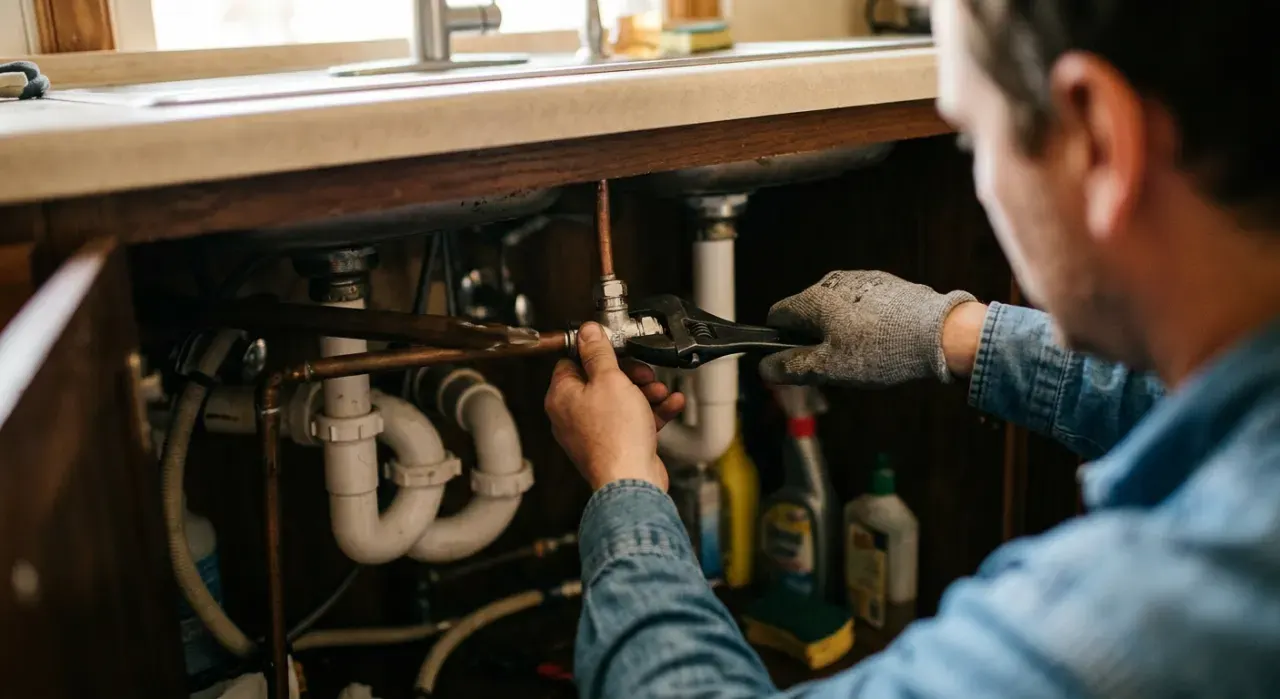
The installation. Softeners need a cut into the main supply, a bypass, a drain line to a standpipe or floor drain with an air gap, and on many units a power outlet. Local codes govern the drain connection, and an improperly made one is a cross-connection hazard. This is the point at which the honest advice is to call a licensed plumber, particularly if the main line is copper and you are not comfortable soldering.
Slippery water. Not a fault. Soft water rinses soap off completely instead of leaving a film of soap scum on your skin, and the sensation reads as slippery. Most people adapt in a week and use noticeably less soap and shampoo.
Salt in the water. A softener adds sodium in proportion to hardness removed — roughly 8 mg of sodium per liter for every grain per gallon of hardness exchanged. For most people that is small, but it is not zero and it matters on a sodium-restricted diet. The usual answers are leaving the kitchen cold tap unsoftened, using potassium chloride instead of sodium chloride, or fitting a reverse osmosis unit at the sink. Is softened water safe to drink covers this properly.
Expecting cleaner water. The recurring disappointment. A softener does not improve taste, remove chlorine, or filter anything. Households that want both end up with a softener for the house and a filter at the kitchen sink.
How to Choose
Test your hardness first and convert it to grains per gallon. Multiply by your household water use and pick a capacity with modest headroom — oversizing wastes money and undersizing means constant regeneration. Insist on metered rather than timed regeneration; it is the difference between one and two bags of salt a month.
Then think about the twenty-year horizon. Ask yourself who will service the valve. A Fleck head is a known quantity anywhere in the country; a proprietary one is a bet on the manufacturer still existing. And if your water is also iron-bearing or you are on a well, read best well water filter system before buying, because a softener facing untreated iron will foul its resin.
Finally, be realistic about payback. Scale is what kills water heaters — it insulates the heating element and forces it to run longer — so a softener buys appliance life and comfort rather than a fast return. Our appliance running cost calculator and repair or replace calculator help put numbers to that, and how long does a water heater last explains what hard water does to the tank.
The Verdict
The AFWFilters Fleck 5600SXT 48,000 grain system is the water softener we would fit in most homes, because in fifteen years it will still be repairable. The Whirlpool WHES40E is the easier machine to live with if a single cabinet and one warranty matter more than valve serviceability. Well owners fighting iron as well as hardness should go straight to the Iron Pro 2. The GE GXSH40V and Aquasure Harmony are competent alternatives on parts network and price respectively, and the On The Go OTG4-DBLSOFT is the answer when you cannot plumb anything in at all. Check price on Amazon → (paid link)
More from this hub: DIY plumbing · how to test water hardness · best salt free water softener · how much salt does a water softener use · best kitchen faucet for hard water · how we rank.