 Garden


Affiliate Disclosure
Some links on this page are affiliate links. As an Amazon Associate, we earn from qualifying purchases — at no extra cost to you. We do not buy, test, or physically handle the products we cover; our rankings come from aggregated owner reviews, ratings and expert consensus. Commissions never change our verdicts. How we rank · full disclosure.
Thermal curtains work, and they work through one simple mechanism: trapped still air. A heavy panel hung close to the glass creates a pocket of air that cannot circulate, and still air is a decent insulator. That is the whole physics. It is also why how you hang them changes the result more than which pair you buy — a panel standing two inches off the wall on rings, with a gap at the top and a hem above the sill, sets up a convection loop that carries room heat down to the cold glass and back into the room. You have added fabric and lost ground.
The second thing to hold on to is scale. Curtains help at the margin. They are the cheapest useful thing you can do to a bad window, and they are not insulation, double glazing or air sealing. Anyone promising you a transformed heating bill from a $40 pair of panels is selling a story, and we go through the actual field-study numbers below.
Top Picks at a Glance

What Actually Makes a Curtain Thermal
There is no standard behind the word, so ignore it and read the construction. Four things determine how much heat a panel holds back, in roughly this order of importance.
| Factor | Why it matters | What to look for |
|---|---|---|
| Edge sealing | Determines whether the trapped air pocket exists at all | Back tab or pinch pleat, wraparound rod, floor-length drop, valance or ceiling track |
| Number of layers | Two layers with a gap beat one thick layer of equal weight | Separate lining, or a stated triple weave |
| Mass and density | Heavier fabric resists both air movement and radiant transfer | Velvet, dense triple weave; check the stated weight or the return rate on "too thin" complaints |
| Face color and reflectivity | Controls summer performance specifically | Light or reflective outward face for sun-facing windows |
Notice that the first item is not about the curtain you buy. It is about the rod, the drop and the top treatment, all of which cost less than the panels do.
Our #1 Pick: NICETOWN High-End Thermal Curtains
These are the heavyweight version of the panel that dominates the blackout category, and the extra fabric weight is what earns the recommendation. Owners consistently describe the difference in the hand as obvious against a standard panel, and describe the effect at a cold window as a noticeable reduction in the draft that used to fall off the glass in winter.
That is worth being precise about, because it is a real physical thing and it gets misdescribed. A cold window does not blow air at you; it chills the air touching it, which then sinks and slides across the floor. It reads as a draft even with the window perfectly sealed. A heavy panel that reaches the floor intercepts that falling air, which is why floor-length matters so much more here than in a purely decorative install.
The complaints are the standard ones for the construction: hard shipping creases that take a few days or a steamer to drop out, light scalloping over the grommets, and enough weight that a light tension rod will bow. Buy them long — floor-length or several inches below the sill — and wide enough to wrap the ends toward the wall, and this is the panel that does the most for the least money.
Check price on Amazon → (paid link)
The Ranked Field
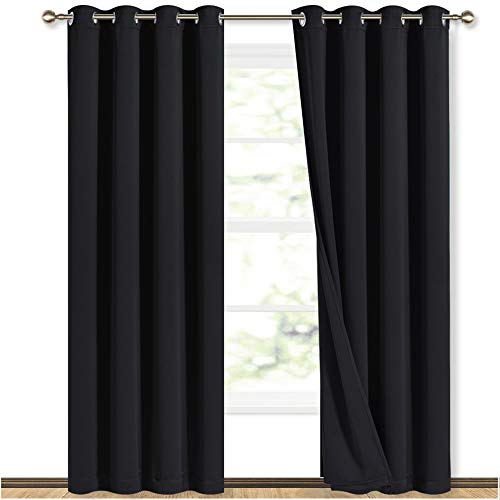
Best for a drafty bedroom or living room window you want to stop losing heat through
- Heavyweight triple-weave with a dense light-blocking core
- Substantial hand and weight — the mass is what does the work
- 84 and 96 inch drops for floor-length coverage
- Grommet top on a standard rod
Why buy it: the highest-rated thermal panel with a genuinely large ownership record, and heavy enough that the still-air layer it traps at the glass is a real effect rather than a listing claim.

Best for insulating several windows without spending much per opening
- Triple-weave thermal construction at an entry price
- 63 and 84 inch drops, wide color range
- Grommet top, machine washable
- Consistently among the cheapest panels with real weight to them
Why buy it: the sensible choice when the goal is covering every window in the house, because a whole-house job is where curtain insulation actually shows up on a bill.

Best for the coldest window in the house
- Two distinct layers — linen-look face plus a separate blackout backing
- Back tab and rod pocket top, so the panel hangs flat to the wall
- Heavy enough to hang without gaps at the edges
- 84 inch drop for floor-length installs
Why buy it: two layers with an air gap between them insulate better than one thick layer of the same total weight, and the back-tab top closes the edge gap where warm room air escapes to the glass.

Best for an old house with single glazing and a cold, echoey room
- Dense velvet pile — the most mass per square foot in this list
- Full blackout and strongly light-absorbing
- Also the best acoustic absorber here, though no curtain soundproofs a room
- Rich color range that reads as furnishing, not hardware
Why buy it: velvet is where curtains stop being decoration and start being a physical barrier — heavy, deeply light-absorbing and the closest a fabric panel gets to a real thermal layer.
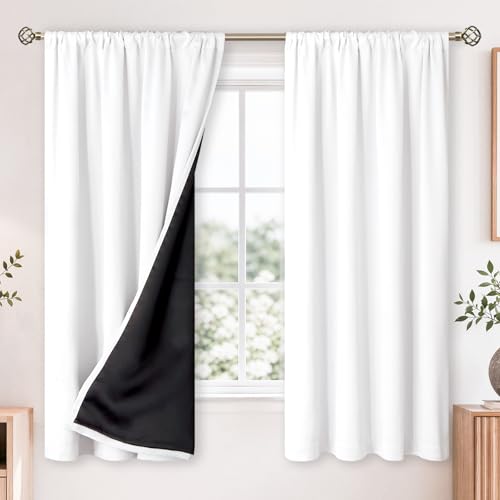
Best for a room that has to stay bright by day and warm at night
- Pale face fabric with a dark inner blocking layer
- Reflects summer sun on the outward face rather than absorbing it
- 63 and 84 inch drops
- Grommet top, machine washable
Why buy it: the useful trick of a light-colored panel: it reflects solar heat away in summer while the inner layer still traps room air in winter.

Best for a room where full blackout would be too dark
- Room-darkening rather than total blackout, with thermal backing
- Substantial weight without going fully opaque
- Long ownership record and consistently strong ratings
- Grommet top, 84 inch drop
Why buy it: the panel for a living room or home office — it cuts drafts and glare without turning the room into a cave at two in the afternoon.

Quick Comparison
| Product | Best for | Rating | Price | Buy |
|---|---|---|---|---|
| NICETOWN High-End Thermal Curtains, Full Blackout, 84 in | Best Overall | — | Check (paid link) | |
| H.VERSAILTEX Blackout Thermal Insulated Room Darkening Curtains, 63 in | Best Value | — | Check (paid link) | |
| Linen Textured Dual-Layer Total Blackout Curtains, 84 in, Cream | Best Insulating Construction | — | Check (paid link) | |
| MIULEE Velvet Thermal Insulated Curtains, 52 × 84 in, Olive Green | Heaviest Fabric | — | Check (paid link) | |
| BGment White Blackout Thermal Insulated Curtains, 63 in | Best Light Color | — | Check (paid link) | |
| Yakamok Room Darkening Thermal Insulated Curtains, 52 × 84 in, Gray | Best Mid-Weight | — | Check (paid link) |
The Savings, With the Actual Numbers
Here is the honest version, sourced. The Department of Energy's Building America Solution Center summarizes field studies of window attachments and reports "whole home summertime cooling savings ranging from 15% to 25% from the optimized use of high-efficiency shades (both interior and exterior)" and "wintertime heating savings of about 12% to 14%."
Three qualifications that the listings never include:
- "High-efficiency shades" is not a curtain. That range covers insulating cellular shades and exterior shading, which outperform fabric drapes. A heavy lined curtain lands at the low end.
- "Optimized use" is doing heavy lifting. The savings assume the coverings are closed before the sun hits the glass in summer and closed at night in winter, every day. Real households forget.
- Windows are a fraction of the envelope. A percentage saving on window heat transfer is not the same as that percentage off your bill, and it will be swamped by attic insulation and air leakage if those are poor.
The same source reports one figure that genuinely deserves attention, because it is about safety rather than money. Modeling a 2021 heat wave in a house without air conditioning, interior roller shades reduced dangerous indoor hours by about 18%, insulating interior shades by about 23%, and exterior shades by about 55%. In a heat event, closing your coverings is not a comfort tweak — it is one of the few levers available to someone without cooling. More on that in how to cool a room without AC.
Hanging Them So They Actually Insulate
- Hang flat to the wall. Back tabs or pinch pleats bring the panel in against the wall. Rings and grommets stand it off, which lets air circulate behind it.
- Wraparound rod. The bent return closes the vertical gap at each end. This is the single cheapest upgrade in this whole category.
- Floor-length, or well below the sill. You are intercepting cold air that sinks. A hem at sill height lets it straight out onto the floor.
- Close the top. A valance, a cornice board or a ceiling-mounted track stops warm room air rolling over the rod and down the glass.
- Then seal the window itself. Caulk the frame and weatherstrip the sash first if there is real air leakage. Curtains slow heat transfer; they do nothing about air actually moving through a gap. Our guides on weatherstripping and window insulation film cover the cheaper fixes that come first.

How We Rank
We do not buy, hang or physically handle these curtains. Rankings come from aggregated owner ratings across the most-owned thermal and insulated panels in the US market, weighted toward reviews written after a full heating season, and cross-checked against each listing's stated construction. Four things carry the weight: fabric mass and layer count, because that is where the insulating effect comes from; the top treatment, since back tabs and pleats close the edge gap that grommets leave open; durability in sun, where a woven core outlasts a sprayed coating; and value at the drop you actually need, because a short panel cannot do this job at any price. Prices were checked at the time of writing. Full method: how we rank.
The Field, Reviewed
1. NICETOWN High-End Thermal Curtains — Best Overall
Covered above. Owners praise: obvious weight in the hand, a warmer-feeling room at a cold window, the color range, and washability. Owners gripe about: shipping creases, light over the grommets, and weight that needs a properly anchored rod. Check price (paid link).
2. H.VERSAILTEX Thermal Insulated Curtains — Best Value
The whole-house option. Real triple-weave construction at a price that makes covering six windows a reasonable weekend project rather than a budget decision.
Owners praise: the weight for the money, wide sizing, and that pale colors still darken. Owners gripe about: thinner than the NICETOWN in a direct comparison, occasional color variation between orders, and hems that can arrive slightly off. Check price (paid link).
3. Linen Textured Dual-Layer Total Blackout — Best Insulating Construction
Two separate layers rather than one thick weave, plus a back-tab top. That combination — an air gap inside the panel and an edge that sits against the wall — is the best insulating geometry available in an off-the-shelf curtain.
Owners praise: genuine darkness, a noticeably warmer window, and a face fabric that looks like furnishing rather than hardware. Owners gripe about: back tabs being slower to draw, real weight on the rod, and cream reading slightly warmer in person than in photos. Check price (paid link).
4. MIULEE Velvet Thermal Curtains — Heaviest Fabric
The most mass per square foot here, and the pick for a single-glazed window in an old house. Velvet is also the best acoustic absorber in this list, which softens an echoey room — though as we say plainly elsewhere, no curtain soundproofs anything.
Owners praise: the weight and the drape, deep color, total darkness, and a room that feels warmer and quieter. Owners gripe about: the price, the weight against light hardware, that velvet shows dust and needs vacuuming, and that it cannot go in a normal wash cycle. Check price (paid link).
5. BGment White Thermal Insulated Curtains — Best Light Color
A pale face with the blocking layer inside. The useful property is summer behavior: a light outward face reflects solar energy instead of absorbing it and re-radiating some of it into the room.
Owners praise: a bright room by day, a dark one at night, and that it does not yellow quickly. Owners gripe about: pale fabric showing marks, needing washing more often, and inner-layer shadowing visible at the seams in hard sun. Check price (paid link).
6. Yakamok Room Darkening Thermal Curtains — Best Mid-Weight
Thermal backing without full opacity, which is the right answer for a living room or a home office where you want the draft stopped but not the daylight.
Owners praise: a long track record, good weight for the price, and useful glare control on a TV wall. Owners gripe about: it is not blackout and some buyers expected it to be, and the gray shades vary between batches. Check price (paid link).
What Owners Actually Complain About
"Thinner than expected." The most common complaint, and it is a labeling problem rather than a defect — the word thermal sets an expectation the fabric cannot always meet. Buy on weight and layer count, not the word.
Creases out of the packet. Universal in this category. Steam them or tumble them low with a damp cloth.
Light over the grommets. Grommet tops scallop, and each scallop is a gap. A valance or a ceiling track fixes it; a back-tab panel avoids it.
Rod sag. Heavy lined panels on a wide span will bow a light rod. Use a center support bracket, and anchor into studs where you can.
Condensation at the glass. A tightly sealed panel over a cold single-glazed window can leave moisture sitting on the sill, and moisture on a wooden sill is where mold starts. Open the coverings during the day in cold weather and wipe the sill.
The Verdict
Buy the NICETOWN heavyweight thermal panels if you want the most effect for the least money, the dual-layer linen-look panels if you want the best insulating geometry available off the shelf, and the MIULEE velvet for a cold, echoey room in an old house. Then spend twenty dollars on a wraparound rod and order the drop long, because how you hang them decides more than which pair you chose. And keep the expectation honest: this is the cheapest useful thing you can do to a bad window, not a replacement for insulation. Check price on Amazon → (paid link)
More from this hub: furniture & decor · best blackout curtains · do blackout curtains help with heat · how to hang curtains · how we rank.