 Garden

Affiliate Disclosure
Some links on this page are affiliate links. As an Amazon Associate, we earn from qualifying purchases — at no extra cost to you. We do not buy, test, or physically handle the products we cover; our rankings come from aggregated owner reviews, ratings and expert consensus. Commissions never change our verdicts. How we rank · full disclosure.
A garden spade is for cutting into soil rather than scooping it: digging straight-sided planting holes and trenches, slicing clean edges along beds and lawns, cutting through roots and sod, dividing perennials, and turning over soil in a bed. Its flat blade with a squared cutting edge sits nearly in line with a short D-handled shaft, which gives precision and downward force. That is exactly what a shovel, with its curved angled scoop and long handle, is bad at — and vice versa.
What jobs does a spade do best?
| Job | Why a spade |
|---|---|
| Planting holes for shrubs and trees | Straight sides, flat bottom, easy to rough up the walls |
| Edging beds and lawn margins | Square edge cuts a crisp vertical line through turf |
| Cutting sod and lifting turf | Slices roots cleanly at a consistent depth |
| Dividing perennials | Cuts through a root clump in one push |
| Trenching for edging or cable | Narrow, parallel-sided trench |
| Turning a bed over | Blade slices, then lifts and inverts a spit of soil |
What it is not for is moving loose material. Shifting a pile of mulch, gravel or compost with a spade is slow and hard on your back — that is a shovel job, and the full comparison is in spade versus shovel for digging.
Why does the flat blade matter so much?
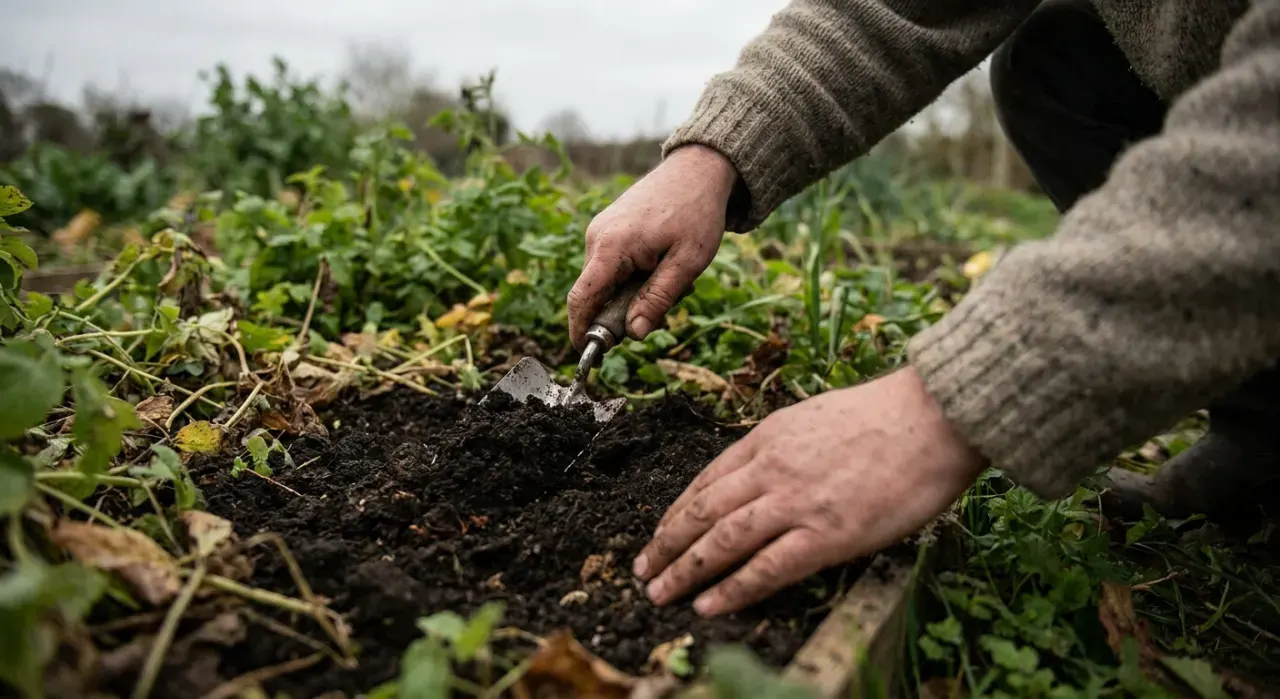
Because cutting and scooping are different mechanical problems. A spade blade is flat or only slightly dished, squared off at the tip, and set roughly in line with the shaft — so when you step on the tread, your body weight drives straight down through the edge into the soil. Nothing is wasted. A shovel blade curves into a scoop, comes to a point, and sits at an angle to a long straight handle, all of which is optimized for getting under a heap and lifting it. Try to edge a lawn with a shovel and the curved point wanders and leaves a ragged line; try to move a cubic yard of bark with a spade and you will be there all afternoon.
Which size should you own?
A full digging spade has a blade around 7 to 8 inches wide and 11 to 12 inches deep, with a shaft giving a total length near 38 to 42 inches. A border spade is narrower, roughly 5 to 6 inches wide, and lighter — designed for working among established plants where a full blade would slice into neighbors, and much easier to drive through heavy clay because there is less blade area to force down. Many gardeners who buy one as a secondary tool end up reaching for it first. The trade-offs are laid out in border spade versus digging spade, and our picks are in the best garden spades.
How do you use one without hurting your back?
- Stand the blade vertical on the soil, not angled — vertical is what gives you a clean cut and full depth.
- Step on the tread at the top of the blade and drive down with your leg. Your leg is far stronger than your lower back and this is where most spade injuries are avoided.
- Rock the handle back to break the soil free before lifting anything.
- Lift with your knees, keep the load close to your body, and turn your feet rather than twisting at the waist.
- Take smaller bites in heavy clay. A half-width cut twice beats a full-width cut you have to wrestle.
If kneeling and bending are the harder part of the job, a garden kneeler and the ergonomic tool options are worth reading.
Keeping it working
A spade is a cutting tool, and a dull one makes every job harder. Run a mill file along the cutting edge a few times a season, working from the top face down at the factory bevel — you are not making a knife edge, just restoring a bite. Scrape soil off the blade after use and dry it before storing, since a wet blade left in a shed corner is how carbon steel rusts. A wipe of oil on the blade before winter storage is worth the thirty seconds; details are in what oil to use on garden tools, with sharpening in how to sharpen garden tools and material choice in stainless versus carbon steel.
We do not buy, test or physically handle any product on this site. Recommendations come from aggregated owner reviews and expert consensus — our method is on how we rank.
More from this hub: Garden Hand Tools · Beginner garden tools · Storing garden tools · How we rank