 Garden
Affiliate Disclosure
Some links on this page are affiliate links. As an Amazon Associate, we earn from qualifying purchases — at no extra cost to you. We do not buy, test, or physically handle the products we cover; our rankings come from aggregated owner reviews, ratings and expert consensus. Commissions never change our verdicts. How we rank · full disclosure.
The short version: row cover is the cheapest season extension in the garden — a roll of spunbond fabric that costs less than a flat of transplants and buys you weeks at each end of the year, plus insect protection no spray can match. After weighing six of the most-reviewed covers on the US market against owner ratings, review volume, published fabric weights and extension guidance, Agribon AG-19 is the roll we would buy first. It is the weight commercial growers standardized on, it transmits about 85 percent of light, and it is light enough to float straight over a crop with no hoops. Below is the full ranked field, the consensus score behind each placement, and what owners genuinely complain about.
Think of this page and best cold frames as the two cheap alternatives to a structure. A cold frame is a fixed box that protects a few square feet permanently; row cover is fabric that protects any bed, any shape, for a fraction of the cost, and rolls up when it is not needed. Between them they cover almost everything a home gardener wants season extension for — University of Minnesota Extension treats cold frames, row covers and hoop houses as the standard ways to start earlier and finish later. The full structure — and when it is genuinely worth it — is in our ranked backyard greenhouses.
Top Picks at a Glance
Our #1 Pick: Agribon AG-19
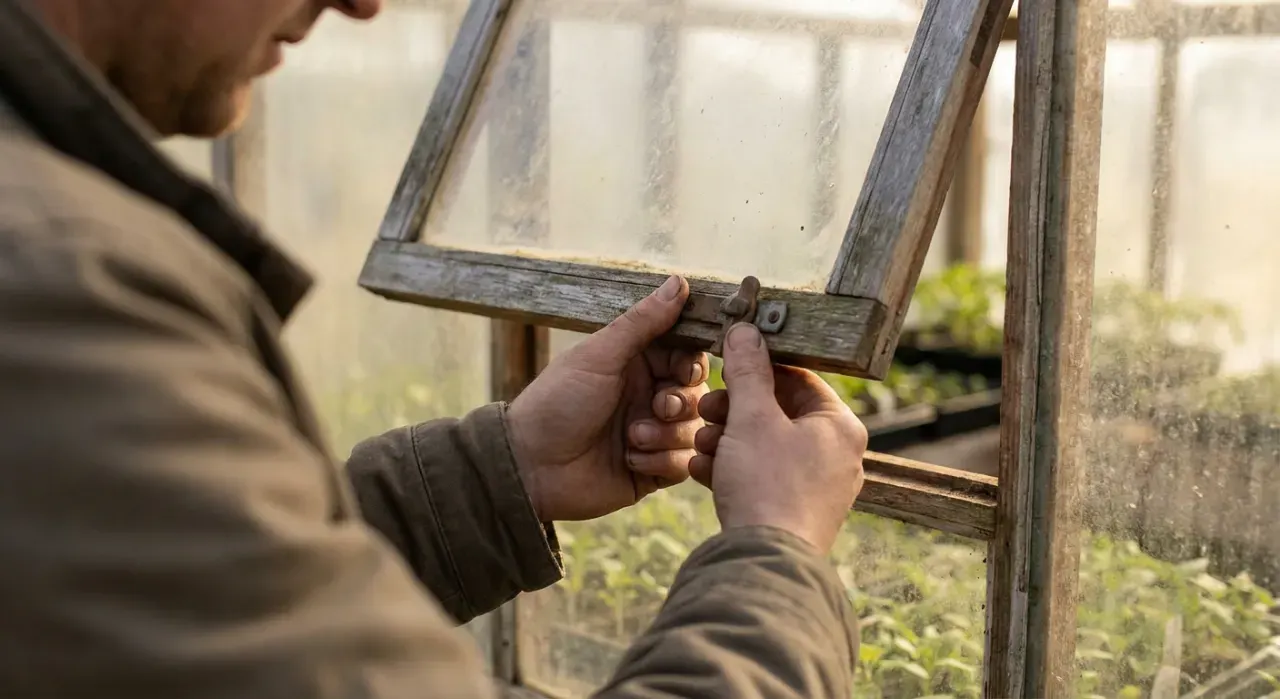
Agribon is the fabric that market growers name when you ask, and AG-19 is the weight they name most. At 0.55 ounces per square yard it sits at the exact point where the trade-off works: light enough to lay directly on top of a crop without hoops — the plants simply push it up as they grow, which is what "floating" row cover means — while still giving about four degrees of frost protection and excluding every common insect pest.
The number that matters alongside weight is light transmission, and at roughly 85 percent this is about as transparent as protective fabric gets. That is what lets a bed stay covered for weeks at a time without the crop stretching and paling. Heavier fabrics protect better against cold and shade more; leave a 1.5-ounce blanket on for a fortnight in spring and you will see the difference in the plants.
It is also permeable in both directions — UW-Madison Extension describes floating row cover as spun polyester or polypropylene that is permeable to light, water and air and laid directly over the plants. Rain and overhead irrigation pass straight through, so a covered bed does not need uncovering to water, and moisture escapes rather than condensing on the leaves. Owner reports focus on durability more than anything else — carefully handled and stored dry, a roll of AG-19 lasts several seasons, and it is cheap enough that replacing it is not a decision.
Consensus Score █████████░░░ 9.1 — from the aggregated owner-review consensus
Check price on Amazon → (paid link)
The Ranked Field

Best for the all-purpose weight most vegetable gardens need
- 0.55 oz per sq. yd. spunbond polypropylene
- About 85% light transmission
- Roughly 4°F of frost protection
- Light enough to float directly on the crop
Why buy it: the weight commercial growers standardized on, light enough to lay straight over plants with no hoops at all.
Best for shoulder-season frost that actually threatens the crop
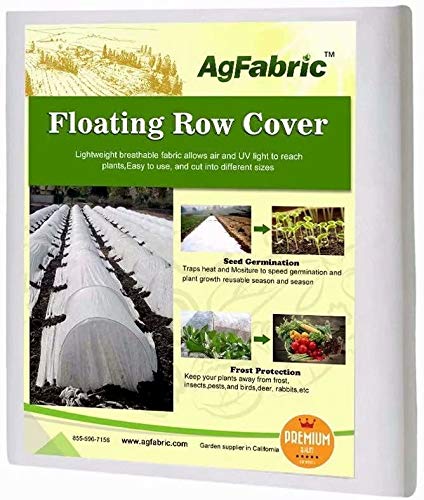
- 1.2 oz per sq. yd. medium-heavy fabric
- Roughly 6–8°F of frost protection
- UV-treated for multi-season reuse
- Permeable to water and air
Why buy it: the weight that turns a killing frost into a shrug, while still letting rain and light through to the plants.

Best for a hard freeze, and covering shrubs or citrus overnight
- 1.5 oz per sq. yd. — the heaviest here
- Protects roughly 8–10°F below freezing
- UV-treated, permeable, reusable
- Sold in a wide 12 ft. width
Why buy it: a genuine hard-freeze blanket from a US horticultural fabric maker, in the width that actually covers a shrub.
Best for a first roll for a couple of raised beds
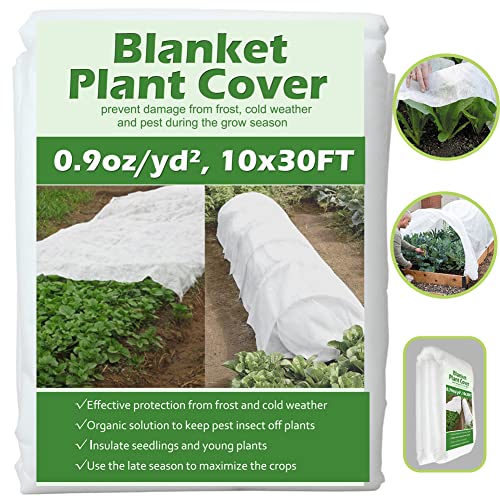
- 0.9 oz per sq. yd. floating row cover
- Covers roughly 300 sq. ft.
- Frost and sun protection, insect exclusion
- Cuts to size with scissors
Why buy it: the cheapest usable roll here, at a middle weight that handles both light frost and summer sun scald.

Best for cabbage moths, squash vine borer and flea beetles
- Ultra-fine mesh, roughly 0.03 in. openings
- Near-full light transmission — no shading
- Excludes insects without trapping heat
- Reusable for many seasons
Why buy it: blocks the pests a fabric cover blocks, without the heat build-up that makes fabric unusable in July.

Best for a single shrub, a young citrus or a potted tender plant
- Pre-sewn bag with a drawstring base
- 0.9 oz per sq. yd. fabric
- Slips over a plant in seconds
- Breathable — can stay on for days
Why buy it: a shaped bag rather than a sheet, which is the difference between protecting a shrub in one minute and in fifteen.
Quick Comparison
| Product | Best for | Rating | Price | Buy |
|---|---|---|---|---|
| Agribon AG-19 Floating Row Cover, 0.55 oz | Best Overall | — | Check (paid link) | |
| Agfabric Frost Blanket 1.2 oz, 10 ft × 50 ft | Best Mid-Weight | — | Check (paid link) | |
| DeWitt N-Sulate 1.5 oz Frost Cloth, 12 ft × 10 ft | Best Heavy Frost Blanket | — | Check (paid link) | |
| Valibe Plant Covers 0.9 oz, 10 ft × 30 ft | Best Value | — | Check (paid link) | |
| Agfabric Garden Insect Netting, 10 ft × 25 ft | Best Insect Netting | — | Check (paid link) | |
| Agfabric Drawstring Plant Cover Bag, 40″ H × 60″ W, 0.9 oz | Best for Shrubs | — | Check (paid link) |

How We Rank
We never buy, test or physically handle the products we rank. Instead we aggregate what the owner base already knows: star ratings weighted by review volume, the shape of the one- and two-star distribution, published fabric weights, light transmission and frost-protection figures, and the consensus of horticultural and university extension guidance. For row covers we weight four things — fabric weight against light transmission, which is the whole trade in this category, tear resistance, since a cover that snags on a tomato cage and shreds is a one-season purchase, UV stability, because untreated polypropylene degrades noticeably in a single strong summer, and honest sizing, as short-measured rolls are a persistent complaint across cheaper brands. Prices move constantly and were accurate at the time of writing. The full method is on our how we rank page.
Which Weight for Which Job
Very light, around 0.5 oz — roughly 85 percent light, about 4°F of protection. This is the insect-exclusion and shoulder-season weight, and the only one genuinely light enough to float on the crop unsupported. Use it over brassicas and cucurbits from planting, and over salad beds in spring and fall.
Medium, 0.9 to 1.2 oz — roughly 70 percent light, 6 to 8°F. The weight for real frost nights, and Penn State Extension makes the same point — row covers keep covered plants several degrees warmer, and heavier weights give more frost protection. It shades enough that you would not leave it on for a month in spring, but it turns a 26°F night into a survivable one for hardy crops. Best supported on low hoops so it is not resting on frozen foliage.
Heavy, 1.5 oz and above — roughly half the light, 8 to 10°F. A freeze blanket rather than a growing cover. Throw it over shrubs, a young citrus tree or a bed of half-hardy plants before a hard freeze and take it off in the morning.
Insect netting is a separate material — a fine mesh rather than a fabric. It transmits almost all available light and traps almost no heat, so it is the right choice for summer pest exclusion when fabric would cook the bed. It offers essentially no frost protection.
Whatever the weight, the installation rule is the same: the cover must reach the ground on every side and be sealed with soil, boards, pins or rocks. The warmth under a row cover is radiant heat rising out of the soil, and an open edge lets it out. Half the disappointed reviews in this category describe a cover that was pinned at two corners.
The Covers, Reviewed
1. Agribon AG-19 — Best Overall
Covered above. Consensus Score █████████░░░ 9.1. What owners like: the light weight, high light transmission, that it floats without hoops, and the professional-grower pedigree. What owners complain about: it is delicate — it snags and tears on stakes, cages and rough hands, and once torn it runs; wind is its enemy and an unpinned edge will shred; several owners report the roll arriving creased and hard to spread evenly; and at only about 4°F of protection, buyers expecting a freeze blanket are disappointed. Handle it as a consumable and it is excellent. Check price (paid link).
2. Agfabric Frost Blanket 1.2 oz — Best Mid-Weight
Twice the weight of AG-19 and roughly twice the frost protection, in a wide roll that covers a full bed. This is the fabric to reach for when the forecast says 28°F and the tomatoes are still ripening, or when fall greens need to hold through a cold snap. It is UV-treated, permeable, and substantial enough to be reused for several seasons rather than one. Consensus Score ████████░░░░ 8.8. Complaints: it shades the crop noticeably, so leaving it on for weeks slows growth; it is heavy enough that it needs hoops rather than floating, and left resting on foliage in a freeze the contact points still get damaged; owners report edges fraying where they are pinned repeatedly; and stated dimensions run slightly short in some reviews. Check price (paid link).
3. DeWitt N-Sulate 1.5 oz — Best Heavy Frost Blanket
DeWitt is an American horticultural fabric manufacturer and N-Sulate is their frost blanket: 1.5 ounces per square yard, UV-treated, permeable, and rated for something in the region of 8 to 10 degrees of protection. The 12-foot width is the practical detail — it is wide enough to drape a whole shrub or a young citrus without seaming two pieces together, which is exactly the job most people buy heavy frost cloth for. Consensus Score █████████░░░ 8.9. Complaints: it blocks around half the available light, so it is strictly an overnight or short-term cover and crops left under it decline; it is bulky to store; it is heavy enough to flatten soft foliage where it rests; and it is sold in fixed widths that suit shrubs better than long vegetable rows. Check price (paid link).
4. Valibe Plant Covers 0.9 oz — Best Value
Ten feet by thirty at a mid-weight for around twenty-five dollars is the cheapest genuinely useful entry into this category. At 0.9 ounces it sits between the insect-exclusion weight and the frost-blanket weight, which makes it a reasonable single roll for someone who wants one product to cover a couple of raised beds through spring frosts and summer sun scald. Consensus Score ████████░░░░ 8.5. Complaints: quality control is the recurring theme — some rolls arrive with thin patches or small holes; it is less UV-stable than the Agribon or DeWitt fabrics and owners report degradation after a strong summer; the fabric is not the most tear-resistant here; and, being mid-weight, it is a compromise at both ends rather than optimal at either. Check price (paid link).
5. Agfabric Garden Insect Netting — Best Insect Netting
A different material for a different problem. Ultra-fine mesh with openings around three hundredths of an inch excludes cabbage moths, flea beetles, cucumber beetles and squash vine borer while transmitting nearly all available light and trapping almost no heat. That last point is the whole argument: fabric row cover over a summer brassica bed cooks it, and netting does not. It also keeps birds off fruit. Consensus Score ████████░░░░ 8.6. Complaints: it offers essentially no frost protection, which surprises buyers who conflate it with row cover; it must be sealed at the ground or moths simply walk under it; it needs hoops, as resting mesh on leaves lets insects lay through it; and owners report the mesh snagging and laddering on velcro, cages and rough bark. Check price (paid link).
6. Agfabric Drawstring Plant Cover Bag — Best for Shrubs
Pre-sewn into a bag with a drawstring at the base, forty inches tall by sixty around. The value here is entirely in the shape: dropping a bag over a shrub and pulling the cord takes under a minute, where wrapping a sheet around the same plant in the dark before a freeze takes fifteen and never seals properly. It is breathable, so it can stay on for several days during a cold spell without smothering the plant. Consensus Score ███████░░░░░ 8.2. Complaints: at 0.9 ounces the protection is moderate, not extreme, so a severe freeze will still get through; the fixed size fits a specific range of plants and is useless outside it; owners report the drawstring channel tearing out with repeated use; and buying enough bags for a row of shrubs costs far more than a roll of fabric. Check price (paid link).

What Owners Actually Complain About
Across all six, four themes dominate the negative reviews.
It tore. Spunbond fabric is not woven, so a snag does not stop at the snag — it runs. Stakes, tomato cages, rose thorns and rough handling all start tears, and wind finishes them. Hoops that hold the fabric off sharp objects, and pins rather than rocks along the edges, extend a roll’s life dramatically. Treat the very light fabrics as consumables.
It did not protect against the freeze. Almost always one of two causes: the wrong weight for the temperature, or an unsealed edge. A cover that does not touch the ground all the way around loses the soil heat it is supposed to trap, and no fabric weight compensates for that.
The plants cooked. The spring version of the same mistake people make with cold frames. Fabric that holds warmth at 3am also holds it at noon, and a covered bed on a bright 70°F day can climb into the 90s. Take covers off, or switch to netting, once the days warm up.
It was smaller than advertised. A persistent complaint against the cheaper brands. Roll dimensions are sometimes measured generously, and fabric can shrink slightly. Buy a size up from what you calculate, and remember that a cover has to reach the ground on both sides — a four-foot bed needs closer to seven feet of width, not four.
How to Choose Between Them
If you are buying one roll, make it Agribon AG-19: it floats without hoops, excludes insects, handles light frost, and does not shade the crop. If your frosts are real, add a mid-weight Agfabric 1.2 oz on low hoops for the nights that matter. If you are protecting shrubs or a young citrus from a hard freeze, DeWitt N-Sulate in the wide width is the right tool. If you are testing the idea, the Valibe roll costs less than a tray of seedlings. If your problem is cabbage moths in July rather than frost in April, buy insect netting instead of fabric — it is the mistake people most often make in this category. If it is one prized shrub, a drawstring bag will get used, where a sheet will not.
Then buy hoops. Nine-gauge wire hoops or half-inch PVC bent over a bed cost a few dollars and change how well every fabric here performs, because fabric held off the foliage protects better, tears less and lets the crop grow. And seal the edges properly — with soil, boards, sandbags or landscape pins — because an unsealed cover is a sail rather than a blanket. If you find yourself covering and uncovering beds every week, that is the point at which a cold frame or a small structure starts to earn its keep.
The Verdict
Agribon AG-19 wins because it is the weight that does the most jobs well: insect exclusion from planting, a few degrees of frost margin in spring and fall, and enough light transmission to leave in place for weeks. Add Agfabric 1.2 oz for the genuinely cold nights and DeWitt N-Sulate if you have shrubs or citrus to protect from a hard freeze. Use insect netting rather than fabric for summer pests. All of it together costs less than the cheapest cold frame on our ranked cold frames page, and a fraction of a backyard greenhouse — which is exactly why row cover is where most gardeners should start. More at greenhouses and season extension. Check price on Amazon → (paid link)