 Garden
Affiliate Disclosure
Some links on this page are affiliate links. As an Amazon Associate, we earn from qualifying purchases — at no extra cost to you. We do not buy, test, or physically handle the products we cover; our rankings come from aggregated owner reviews, ratings and expert consensus. Commissions never change our verdicts. How we rank · full disclosure.
The short version: after weighing six popular backyard greenhouses on aggregated owner ratings, review volume and the complaints that repeat across every listing, our #1 pick is the Palram–Canopia Hybrid 6 ft × 8 ft. It is the smallest structure that genuinely works as a walk-in workspace, its twin-wall polycarbonate roof insulates far better than single glazing, and owners are still reporting it standing and square a decade after assembly. Below is the ranked field, the real gripes, and a comparison table.
Before you buy anything, check your site. Sun, level ground and wind exposure decide more about your results than the brand does — the checks are in greenhouse sizing and siting.
Top Picks at a Glance
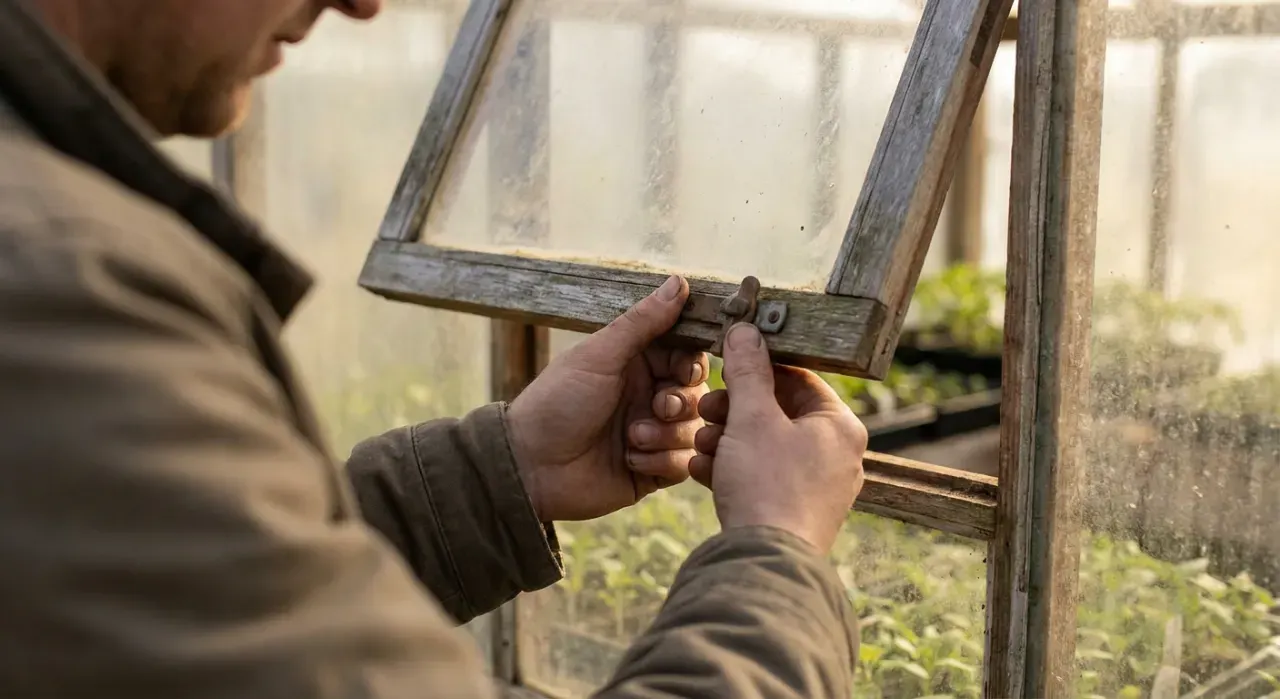
Our #1 Pick: Palram–Canopia Hybrid 6 ft × 8 ft
The Hybrid earns the top spot by being the cheapest greenhouse on this list that you buy once. Its roof panels are twin-wall polycarbonate — two skins with an air gap between them — which roughly doubles the insulation of a single-layer cover and diffuses light so plants on the bench get even coverage rather than bright stripes and dark corners. The side panels are clear single-wall, so you can still see in and out, and the whole thing sits on a galvanized steel base with an aluminum frame that does not rust.
Across more than 849 owner ratings the consensus is that it is a genuine long-term structure rather than a seasonal one. Reviewers repeatedly describe surviving multiple winters, hail that would have shredded a plastic film cover, and doors that still slide true after years. The lockable door, roof vent and rain gutters are the sort of details cheap kits leave out and that turn out to matter constantly.
Consensus Score █████████░░░ 8.4 — from 849 owner ratings.
The honest caveats: assembly is a genuine project — most owners report six to ten hours and strongly recommend two people — and the single roof vent is not enough ventilation on its own for a hot climate. Budget for a second vent or an automatic opener. And it must go on a level, anchored base; several critical reviews trace panel and door problems back to a slightly out-of-square foundation.
Check price on Amazon → (paid link)
Best Backyard Greenhouses 2026: The Ranked Field

Best for a permanent, year-after-year backyard greenhouse
- Twin-wall polycarbonate roof, clear side panels
- Rust-resistant aluminum frame
- Lockable door and adjustable roof vent
- Galvanized steel base and rain gutters
Why buy it: the best mix of insulation, light and lifespan at a price that is still within reach — the kit owners are still using a decade later.

Best for a large growing space on a small budget
- Heavy-duty powder-coated steel frame
- Reinforced PE cover with 6 screen windows
- Zippered screen door
- Assembles in an afternoon, no foundation
Why buy it: roughly 66 square feet of covered growing space for the price of a couple of nursery flats — nothing here comes close on cost per square foot.
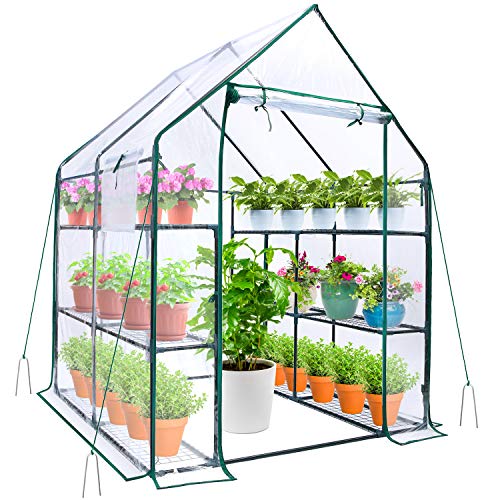
Best for seedlings, overwintering pots and first-time owners
- 4.9 ft × 4.7 ft × 6.4 ft walk-in footprint
- 12 shelves across 3 tiers
- Transparent PVC cover with roll-up door
- Ground pegs and guy ropes included
Why buy it: the cheapest structure you can actually walk into, with more shelf space than its footprint suggests.
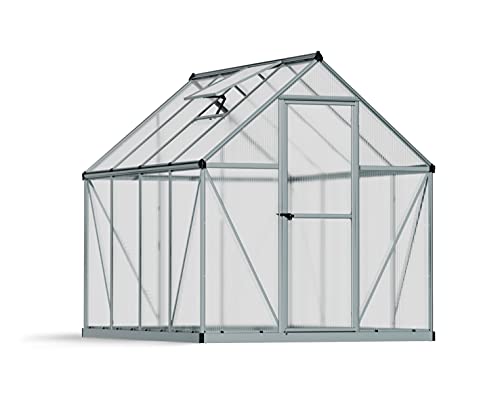
Best for cold climates and year-round growing
- Twin-wall polycarbonate throughout, walls and roof
- Heavy-duty aluminum frame
- Lockable hinged door, adjustable roof vent
- Galvanized steel base included
Why buy it: twin-wall glazing on every panel rather than just the roof — the version to buy if winter is the reason you want a greenhouse.

Best for growing crops to maturity, not just starting them
- 200 sq ft of covered growing space
- Galvanized steel frame, Oxford-seam PE cover
- 2 zippered screen doors, 8 screen windows
- Lockable door option
Why buy it: a genuine market-garden footprint for the price of a good lawnmower — the one on this list you can actually farm in.
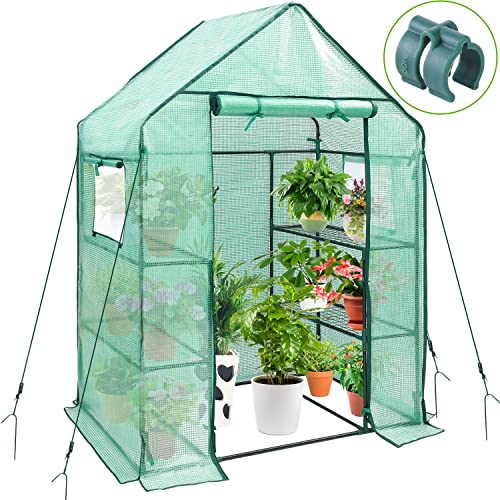
Best for patios, decks and tight side yards
- Slim 4.8 ft × 2.5 ft × 6.4 ft footprint
- 4 shelves across 3 tiers
- Mesh side windows for airflow
- Roll-up zippered front
Why buy it: a real season-extension structure that fits against a wall where nothing bigger would go.
Quick Comparison
| Product | Best for | Rating | Price | Buy |
|---|---|---|---|---|
| Palram–Canopia Hybrid 6 ft × 8 ft Greenhouse | Best Overall | — | Check (paid link) | |
| Quictent Premium Greenhouse, 10 ft × 6.6 ft × 6.6 ft | Best Value Walk-In | — | Check (paid link) | |
| Ohuhu Walk-In Greenhouse, 3 Tiers / 12 Shelves | Best Cheap Starter | — | Check (paid link) | |
| Canopia Mythos 6 ft × 8 ft Polycarbonate Greenhouse | Best Premium | — | Check (paid link) | |
| Quictent 20 ft × 10 ft × 6.6 ft Walk-In Greenhouse | Best Large Tunnel | — | Check (paid link) | |
| Ohuhu Greenhouse with Mesh Side Windows, 4.8 ft × 2.5 ft | Best Mini / Patio | — | Check (paid link) |
The Numbers Side by Side
| Greenhouse | Footprint | Glazing | Frame | Vents | Expected life |
|---|---|---|---|---|---|
| Canopia Hybrid 6×8 | 6 ft × 8 ft | Twin-wall roof, clear sides | Aluminum + steel base | 1 adjustable roof vent | 10+ years |
| Quictent Premium 10×6.6 | 10 ft × 6.6 ft | Reinforced PE film | Powder-coated steel | 6 screen windows + door | 2–3 seasons (cover) |
| Ohuhu 3-Tier Walk-In | 4.9 ft × 4.7 ft | Transparent PVC | Powder-coated steel | Roll-up door | 1–2 seasons (cover) |
| Canopia Mythos 6×8 | 6 ft × 8 ft | Twin-wall throughout | Heavy-duty aluminum | 1 adjustable roof vent | 10+ years |
| Quictent 20×10 Tunnel | 20 ft × 10 ft | Oxford-seam PE film | Galvanized steel | 8 windows + 2 doors | 2–3 seasons (cover) |
| Ohuhu Mini 4.8×2.5 | 4.8 ft × 2.5 ft | PE cover | Powder-coated steel | Mesh side windows | 1–2 seasons (cover) |
How We Rank
We do not buy, test or physically handle these greenhouses. A structure like this takes a season in a real yard to judge honestly, and we would rather be plain about that than pretend otherwise. What we do is aggregate star ratings and review volume across each listing, then read the critical reviews closely — with outdoor structures, the failures show up in month nine, not week one, so long-term reviews carry the most weight in our ranking.
We weight four things. Durability under weather — wind, hail, snow load, and how covers and panels hold up over multiple seasons. Assembly experience — hours required, instruction quality, and whether parts arrive damaged or mismatched, which is a persistent theme in this category. Growing performance — light transmission, insulation and, above all, ventilation capacity. And value for the growing space you get, judged against realistic lifespan rather than sticker price. Prices were checked at time of writing and move constantly. Full method: how we rank.
What Owners Actually Complain About
Greenhouses generate more critical reviews than almost any garden product, and the same five themes come up again and again.
Wind destroying under-anchored structures. The most common serious complaint across the film models — Quictent and Ohuhu both — is a greenhouse that flipped, folded or tore in a storm. Almost every account involves the supplied ground pegs used in soft soil and no additional ratchet straps. Owners who anchored properly and kept the door zipped in wind report years of service from the same covers.
Assembly time and instructions. The Palram–Canopia kits draw consistent criticism here: many small parts, diagram-only instructions and six to ten hours of work. Reviewers who assembled on a windy day describe panels blowing out mid-build. Two people and a calm forecast solve most of it.
Covers degrading in UV. On the film greenhouses, owners repeatedly report the plastic clouding, stiffening and tearing after one to three summers, particularly in high-sun states. Replacement covers are available and relatively cheap, but factor that into the real cost.
Zippers failing. A specific, frequent gripe on walk-in film models: the door zipper is the first thing to go, usually within a year. Owners who keep it clean and avoid forcing it in cold weather do noticeably better.
Overheating and inadequate venting. Across every hard-sided kit, reviewers note that a single roof vent cannot cope with a sunny spring afternoon. Adding a second vent, an automatic opener or shade cloth is treated as a necessary upgrade rather than a luxury — see greenhouse ventilation and overheating.
How to Choose a Backyard Greenhouse
Decide what job you are buying it for. Starting seedlings and overwintering pots? A cheap walk-in like the Ohuhu does that job perfectly well and leaves money for lights and trays. Growing crops to maturity? You need floor area, and the 20 ft × 10 ft Quictent tunnel buys more of it per dollar than anything hard-sided. Want a permanent structure that looks like part of the garden? That is the Canopia Hybrid, and if you live somewhere genuinely cold, the fully twin-walled Mythos is the version to stretch for — though Texas A&M AgriLife is blunt that solar gain only goes so far and supplemental heat is a necessity for year-round production. No space at all? The Ohuhu mini fits against a wall.
Then budget for the three things kits under-specify: a level, solid base; real ground anchors or ballast; and ventilation beyond what comes in the box. Those three decide whether your greenhouse is still standing and still useful in three years. If the whole project is starting to look expensive, it is worth reading greenhouse vs hoop house vs cold frame before committing — a good cold frame delivers a surprising share of the benefit for a tenth of the money.
What Separates a Good Greenhouse From a Cheap One
Two greenhouses can look nearly identical in a listing photo and behave completely differently after one winter. Four things account for most of the gap.
Frame material and joint design. Extruded aluminum with bolted joints holds square for years; thin-wall powder-coated steel with push-fit connectors does not, and the connectors are where film structures fail first. On the budget models, owner reviews consistently describe joints working loose in wind long before the cover itself gives out. If a frame relies entirely on friction fit, plan on adding screws or self-tapping fasteners at the joints yourself.
Glazing construction, not just material. "Polycarbonate" covers a wide range. Twin-wall panels have two skins with an air gap, which roughly doubles insulation and diffuses light so plants get even coverage rather than scorching stripes; single-wall corrugated polycarbonate is much cheaper and does neither. Texas A&M AgriLife frames the same trade at the material level: glass gives the best light transmission but needs a costlier structure to carry it, while double-layer plastic is cheaper up front and needs replacing every three to five years. On film greenhouses, the equivalent distinction is reinforced PE with a woven scrim versus plain sheeting — the scrim is what stops a small tear becoming a shredded cover in the next gust.
Ventilation capacity designed in. A greenhouse without adequate venting is a solar oven, and it is the specification manufacturers understate most consistently. As a working rule you want vent area equal to roughly a fifth of the floor area, split between a high roof vent and low side vents so hot air can exhaust upward while cool air is drawn in below. A single small roof vent on a 6 ft × 8 ft structure is not enough for a sunny climate — treat an automatic opener or a second vent as part of the purchase price.
Base and anchoring provision. Kits that include a galvanized base rail and proper anchor points are telling you they expect to stand in weather. Kits supplied with four thin tent pegs are telling you something too. Anchoring is the single most-cited reason greenhouses in this category are destroyed, and it is entirely within your control.
What matters less than the listings suggest: shelf count (they are usually flimsy and easily replaced), included accessories, and headline square footage measured at the base rather than at working height.
Mistakes That Ruin a Good Greenhouse
Five errors account for most of the disappointment. Buying too small — the near-universal regret; a greenhouse fills up within one season. Skipping the base — an aluminum kit assembled out of square never closes properly again. Under-anchoring — the pegs in the box are not enough on their own for a windy site. Under-venting — plan cooling before heating, because spring cooks more plants than winter freezes. And siting under trees — shade in the season you need light, plus falling branches and a roof of leaf litter every autumn. Get the site and the base right and even a budget structure outlives its rating.
The Verdict
For a greenhouse you buy once, the Palram–Canopia Hybrid 6 ft × 8 ft is the pick the owner consensus supports most strongly — insulated where it counts, genuinely durable, and the smallest size that works as a real workspace. If your budget is in the hundreds rather than the thousands, the Quictent Premium 10 ft × 6.6 ft gives you more covered ground than anything else here and accepts that you will replace the cover every couple of years. Anchor whatever you buy properly, and vent it harder than you think you need to.
Next: plan the site with sizing and siting, work out winter running costs in how to heat a greenhouse in winter alongside Penn State Extension on greenhouse energy efficiency, or head back to the greenhouses hub for the full map.
Check the current price of our top pick on Amazon → (paid link)