 Garden

Affiliate Disclosure
Some links on this page are affiliate links. As an Amazon Associate, we earn from qualifying purchases — at no extra cost to you. We do not buy, test, or physically handle the products we cover; our rankings come from aggregated owner reviews, ratings and expert consensus. Commissions never change our verdicts. How we rank · full disclosure.
Short answer: buy a cold frame if you want four to six extra weeks at each end of the season and winter greens for under $150 — this covers most home gardeners. Buy a hoop house if you want the largest possible growing area for the money and accept recovering it every few years. Buy a hard-sided greenhouse if you want a permanent, insulated space you can work in and potentially heat.
These are three different tools rather than three price points of the same tool, and the most common expensive mistake is buying the biggest one when the smallest would have done the job.
The Comparison
| Cold frame | Hoop house / film tunnel | Hard-sided greenhouse | |
|---|---|---|---|
| Typical purchase price | $85–$400 | $130–$700 | $400–$3,000+ |
| Growing area | 4–15 sq ft | 40–200 sq ft | 36–120 sq ft |
| Cost per sq ft of growing space | Moderate | Lowest by far | Highest |
| Setup time | Under an hour | Half a day, two people | A full day or two, plus base preparation |
| Base / foundation | None — sits on soil | Ground anchors, no base | Level, drained, rigid perimeter required |
| Lifespan | 3–15 years by material | Frame 10+ years; cover 1–4 years | 10–25+ years |
| Insulation | Minimal, but small volume banks soil heat well | Minimal — a wind and rain shelter | Best; twin-wall polycarbonate roughly halves heat loss vs film |
| Can be heated? | Only with a soil cable | Impractical — losses too high | Yes, and sensibly |
| Wind risk | Low; lid can blow off | High — the main failure mode | Moderate if anchored, high if not |
| Permit likely? | No | Sometimes | Often above 120–200 sq ft |
| Work inside it? | No — you reach in | Yes | Yes, comfortably |
| Best at | Hardening off, winter greens, overwintering pots | Volume growing, early and late crops, in-ground beds | Propagation, tender crops, year-round working space |
The Cold Frame: Most People's Right Answer
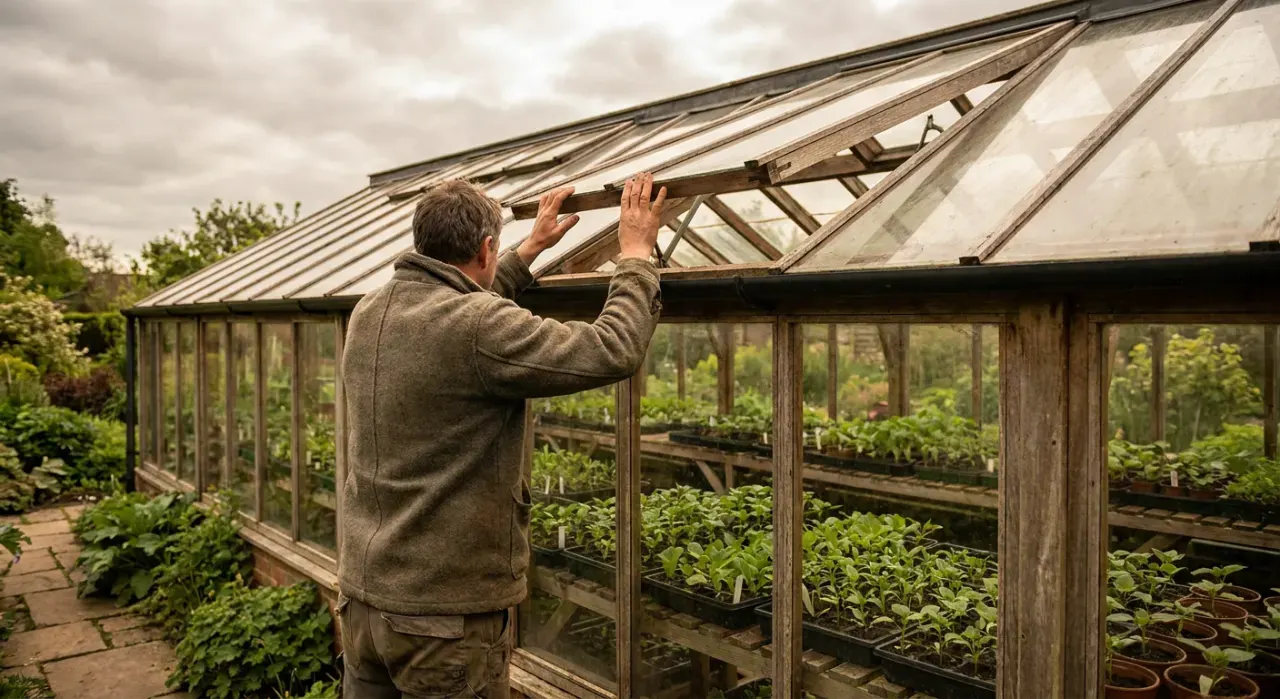
A cold frame is a bottomless box with a transparent lid, set directly on soil. That is the whole design, and its simplicity is the point: no foundation, no anchoring survey, no permit, no siting compromise, and an hour from box to planted.
What it does well is specific and valuable. It hardens off spring seedlings over a week or two, preventing the transplant shock that stalls plants for a fortnight. It keeps hardy greens — spinach, mache, arugula, kale, scallions — producing right through winter in most of the country. And it overwinters dormant potted perennials out of the freeze-thaw cycle that kills more container plants than cold ever does.
Because it sits on soil and encloses a small volume, it banks ground heat surprisingly well — better, in the very coldest hours, than a large unheated greenhouse with far more air to lose. The catch is the same as the benefit: small. You cannot work inside it, you cannot grow anything tall, and one frame holds a modest crop. Many owners end up with two or three, which is still cheaper than a greenhouse.
Overheating is the failure to watch. A closed frame on a clear 50°F March day passes 90°F within a couple of hours. Prop the lid whenever outside air is above about 45°F, or fit a wax-piston automatic opener for $30 to $50 and stop thinking about it. Ranked options are in best cold frames.
The Hoop House: Area Per Dollar
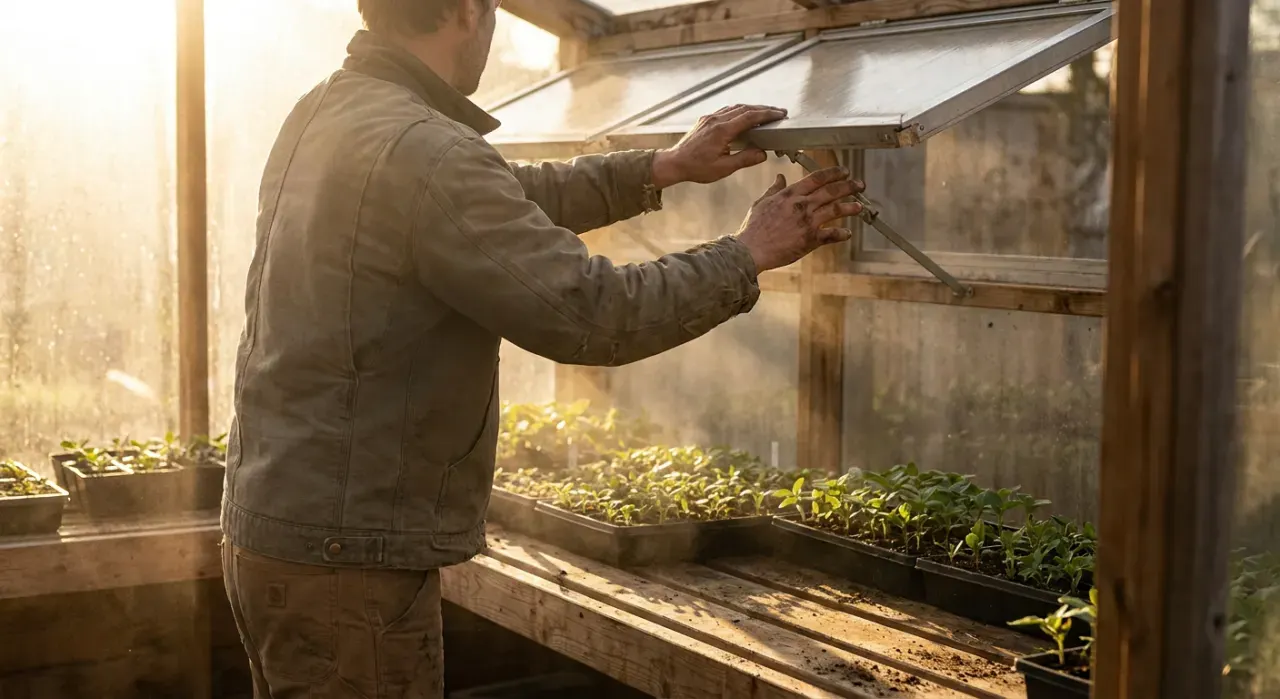
A hoop house is bent tube or pipe covered in polyethylene film. It offers something neither rigid structure can match: growing area per dollar. For the price of a small polycarbonate kit you can cover several times the ground, and you can plant directly into the soil beneath rather than into benches and pots.
That changes what is possible. In-ground beds under a tunnel grow crops to full size, hold moisture better than containers, and let you rotate. For anyone who wants to grow food in volume rather than tend a display, the tunnel is the efficient choice, and it is why market gardeners in cold states use them by the acre.
The honest costs are three. Cover replacement — hardware-store sheeting lasts one to two seasons; proper 6 mil UV-stabilized film gives three to four years, less in high-UV states. Wind — this is the main failure mode. An unanchored tunnel travels, a loose cover flogs itself to shreds, and an open door at one end pressurizes the whole structure like a balloon. Anchor every leg, strap over the top, bury or weight the skirt, and keep the doors shut in wind; the method is in anchoring a greenhouse against wind. Insulation — a single film layer is barely better than nothing, so treat a tunnel as a wind-and-rain shelter with a good daytime gain rather than a warm space.
One underrated advantage: because the cover is cheap and light, you can take it off. Removing it for the windiest months, or through high summer, extends its life and removes the storm risk entirely.
The Hard-Sided Greenhouse: Permanence and Control
A rigid greenhouse glazed with twin-wall polycarbonate or glass is the most expensive option and the only one that gives you a genuine working space: bench height, storage, shelter in bad weather, and enough insulation that heating is a reasonable proposition rather than an exercise in warming the outdoors.
Twin-wall polycarbonate insulates roughly twice as well as single glass or single film — about U-0.65 against U-1.13 and U-1.2 — which is exactly why it is the only one of the three structures worth heating. Holding 40°F inside an 8 ft × 10 ft polycarbonate house on a 0°F night takes around 7,500 BTU/hr; the same target in single film would need more than 10,000 BTU/hr in a structure half the size. The full arithmetic is in how to heat a greenhouse in winter, and the glazing comparison in polycarbonate vs glass vs film.
The costs are commitment costs. It needs a level, drained, rigid base. It needs anchoring. It may need a permit and it will need to respect setbacks. It takes a day or two to assemble, and the siting decision is effectively permanent. In exchange you get a structure that will still be working in a decade and a place to be in March when the yard is unusable. Ranked options are in best backyard greenhouses, and the sizing and siting decisions come first in greenhouse sizing and siting.
The Fourth Option Nobody Counts
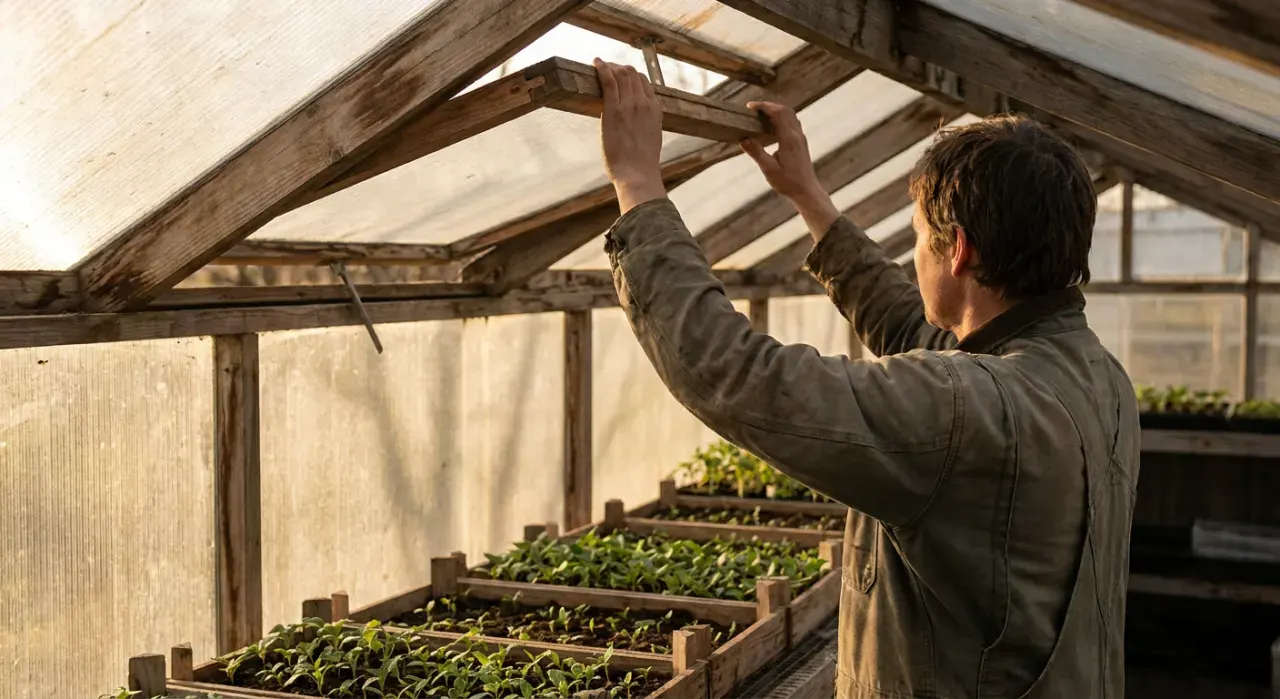
Before any structure at all, there is fabric. Floating row cover and frost cloth over wire hoops costs a few tens of dollars, stores in a bag, and protects to several degrees below freezing depending on weight. It doubles as insect netting in summer, it needs no siting, and it can be laid over a bed in ten minutes.
For a great many gardeners, row cover plus one cold frame delivers most of the practical benefit of season extension. It is worth trying that combination for a season before committing several hundred dollars and a permanent corner of the yard to a structure.
How to Choose
| If your main goal is… | Buy |
|---|---|
| Hardening off seedlings each spring | Cold frame |
| Fresh salad through winter for a household | Cold frame, or two |
| Overwintering dormant potted plants | Cold frame, or an unheated greenhouse if there are many |
| Growing a serious volume of vegetables earlier and later | Hoop house |
| Ripening peppers, melons or tomatoes in a cool climate | Hard-sided greenhouse |
| Keeping tender plants alive through a cold winter | Hard-sided greenhouse with heat |
| A dry place to pot up and work in bad weather | Hard-sided greenhouse |
| Trying season extension before committing | Row cover, then a cold frame |
The one recommendation that applies to all three: whatever you buy, sort out venting before you sort out anything else. Every structure on this page overheats badly in spring, and cooked seedlings in March are far more common than frozen ones in January — see greenhouse ventilation and overheating. What each structure will actually grow through winter is set out in unheated greenhouse winter crops. More at greenhouses and season extension, and our research method is on how we rank.