 Garden


Affiliate Disclosure
Some links on this page are affiliate links. As an Amazon Associate, we earn from qualifying purchases — at no extra cost to you. We do not buy, test, or physically handle the products we cover; our rankings come from aggregated owner reviews, ratings and expert consensus. Commissions never change our verdicts. How we rank · full disclosure.
The short answer: a DC ceiling fan wins for a fan that runs long hours — it uses roughly 60 to 70 percent less electricity for the same airflow, runs quieter, offers more speeds and smoother reverse, and pays back part of its higher price over years of use. Choose an AC ceiling fan for a room where the fan runs occasionally, where you want a standard wall switch instead of a remote, or where the lower upfront price simply matters more. The efficiency gap is real; whether it pays off depends entirely on how many hours the fan actually spins.
Both move air the same way; the difference is the motor and how it is powered. We never buy or physically handle the fans we cover; rankings come from aggregated owner reviews and star ratings, explained in how we rank. The full field lives at the heating and cooling hub.
DC vs AC Motor at a Glance
| Dimension | AC Motor | DC Motor |
|---|---|---|
| Energy use | Baseline | ~60 to 70% less for same airflow |
| Speeds | Usually 3 | Usually 6, plus smooth reverse |
| Noise | Low to moderate hum | Quieter, especially on low |
| Weight | Heavier | Lighter, slimmer housing |
| Control | Wall switch or remote | Remote or smart control |
| Startup | Firmer step between speeds | Soft ramp up and down |
| Upfront price | Lower | Higher |
| Best for | Occasional-use rooms | All-day living areas |

Which one costs less to run?
The DC motor, clearly. A DC fan uses an electronically commutated motor that draws far less power for the same air movement — commonly cited at 60 to 70 percent lower consumption than a comparable AC fan. On a fan that runs eight or more hours a day through a warm season, that difference adds up and offsets part of the higher purchase price over the fan's life. On a fan you switch on a few times a month, the electricity saving is pennies and will never repay the premium. The math is entirely about run hours — see how much it costs to run a ceiling fan for 24 hours to size the saving for your own use.
Speeds, noise and control
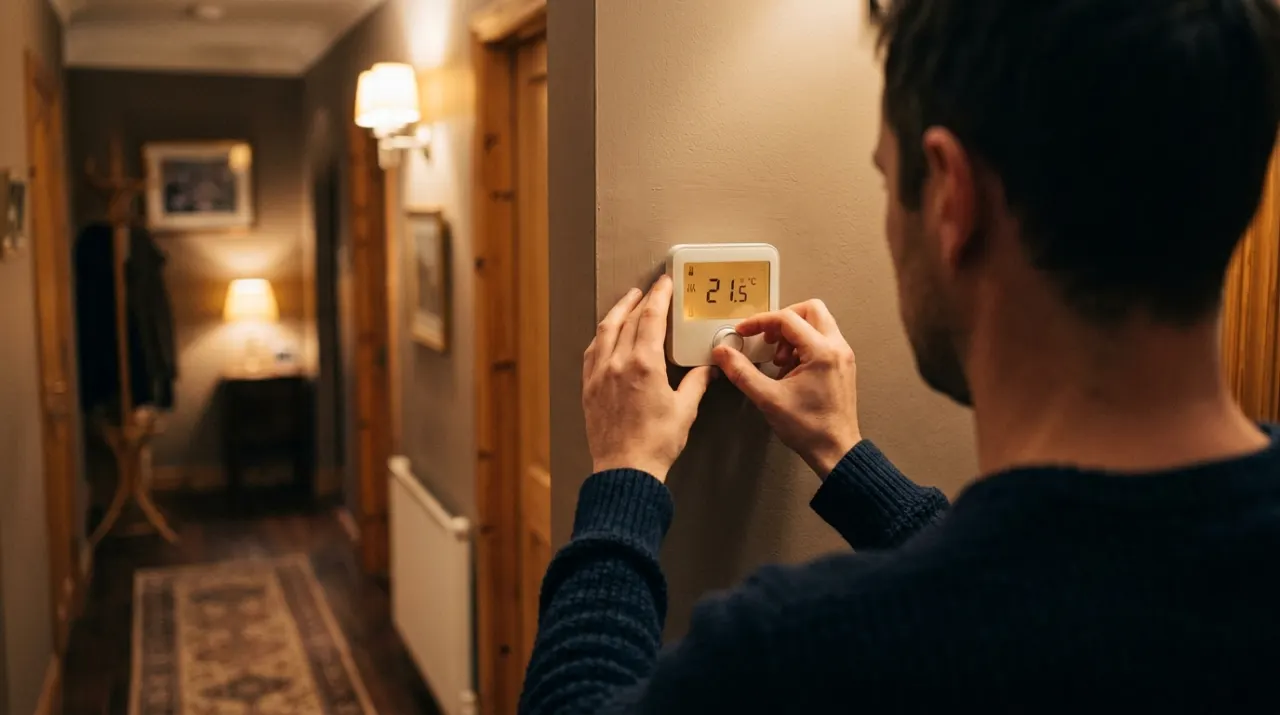
Beyond efficiency, DC fans generally offer six speeds against the typical three on an AC fan, a softer ramp between them, and a reverse button on the remote instead of a manual slider on the motor housing. Owners repeatedly mention DC fans run quieter, particularly on the low overnight setting, which is why they show up so often in bedrooms. The catch is control: most DC fans rely on their remote rather than a hardwired wall switch, so if you prefer a wall control or tend to misplace remotes, check for a wall-mount option. Getting the direction right in each season is the same for both — see which way a ceiling fan should spin in winter.
When an AC fan is the sensible choice
An AC ceiling fan is far from obsolete. For a guest room, a covered porch, a laundry, or any space where the fan runs occasionally, the lower price wins and the efficiency gap never matters. AC fans also pair naturally with a standard wall speed control, which suits homes where a remote would just get lost. A quality AC fan with balanced blades runs quietly and lasts for years. And whether a fan cools you at all comes down to using it correctly, not the motor — a fan cools people, not rooms, as covered in do ceiling fans actually cool a room.
Which should you buy?
Buy DC for a main bedroom or living room where the fan runs long hours and you value quiet, more speeds, and a lower running cost that offsets the premium over time. Buy AC for occasional-use rooms, for a lower upfront price, or where you want a simple wall switch instead of relying on a remote. Either way, blade span and correct mounting matter more to comfort than motor type — match the fan size to the room, and for tall rooms see our best ceiling fans for high ceilings, or the broader field in best ceiling fans.