 Garden

Affiliate Disclosure
Some links on this page are affiliate links. As an Amazon Associate, we earn from qualifying purchases — at no extra cost to you. We do not buy, test, or physically handle the products we cover; our rankings come from aggregated owner reviews, ratings and expert consensus. Commissions never change our verdicts. How we rank · full disclosure.
Brown spots on monstera leaves almost always trace back to one of four causes: overwatering (soft, dark spots with yellow halos), low humidity or underwatering (crispy brown edges and tips), direct sun (pale tan, dry patches on the most exposed leaves), or fungal and bacterial disease (spreading dark spots, often water-soaked). The single most common culprit in a typical home is overwatering. Read the shape, color, and texture of the spots first — that tells you which problem you have — then match the fix below. Guessing wrong and, say, watering more when the real issue is root rot, is how a saveable plant is lost.
We do not physically test or handle the plants and products we write about; our guidance is drawn from horticultural extension research and the aggregated experience recorded in thousands of owner reviews, as explained in how we rank. For the day-to-day routine that prevents most of these problems, start with how to care for a monstera.
Read the Brown Spots on Monstera Leaves First
The texture and pattern of the browning is the diagnosis. Handle a spotted leaf and note whether it is soft or crisp, then check where on the plant the damage sits.
| What you see | Likely cause | First move |
|---|---|---|
| Soft dark brown spots, yellow halos, lower leaves first | Overwatering / early root rot | Stop watering, check roots, repot if mushy |
| Crispy brown tips and edges, papery texture | Low humidity or underwatering | Raise humidity, check watering rhythm |
| Pale tan or bleached dry patches on sun-facing leaves | Direct sun scorch | Move out of direct rays |
| Dark spots with yellow rings, spreading, wet-looking | Fungal or bacterial leaf spot | Isolate, remove worst leaves, keep dry |
| Small brown flecks with fine webbing or stippling | Spider mites | Rinse, treat with insecticidal soap |
Location matters as much as appearance. Damage confined to the oldest, lowest leaves points to watering or age; damage that keeps appearing on brand-new leaves points to an active, ongoing problem such as disease, pests, or a persistent care fault.
Overwatering and root rot — the top cause
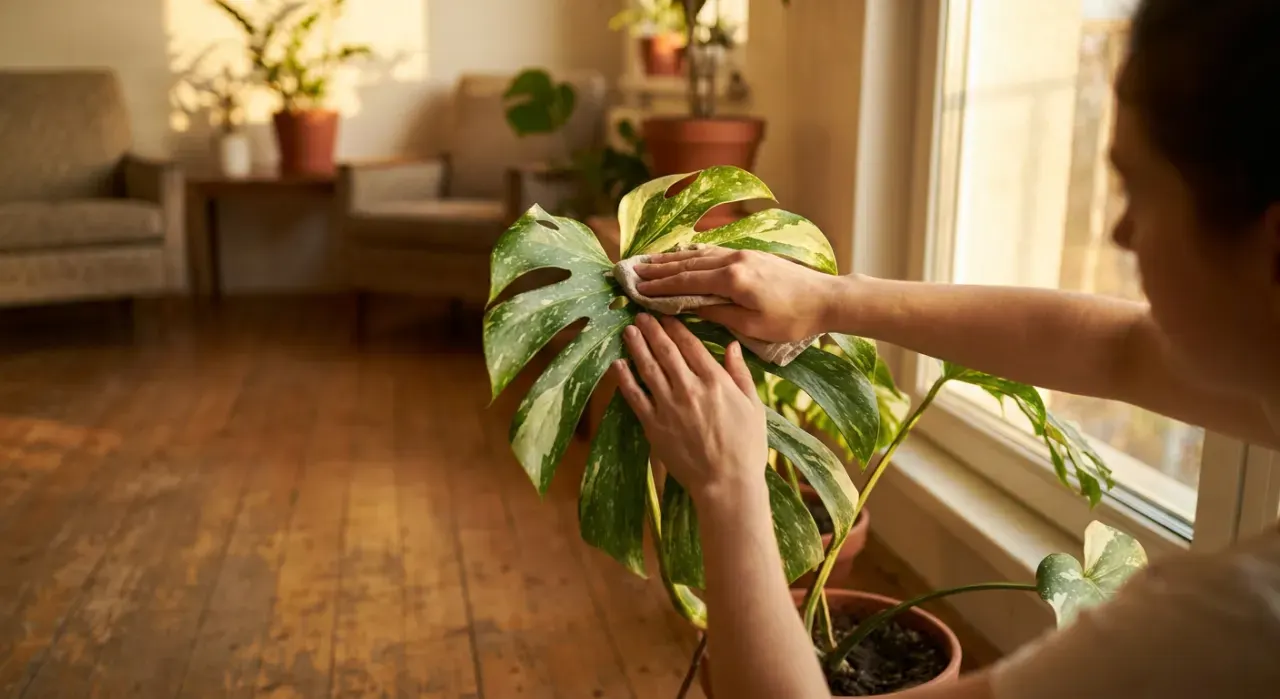
Soft brown spots, often with a yellow ring, that start on the lower leaves are the classic signature of overwatering. When the potting mix stays saturated, roots suffocate and begin to rot, and the plant can no longer move water and nutrients — so leaves brown even though the soil is wet. Owners repeatedly describe watering more in response, which accelerates the decline.
Check the roots. Slide the plant from its pot: healthy monstera roots are firm and pale; rotting roots are brown, mushy, and smell sour. Trim any soft roots back to firm tissue with sterile shears, repot into fresh, chunky aroid mix, and water only when the top 2 to 3 inches of mix are dry. A monstera in a 10-inch pot in average indoor conditions typically wants water every 7 to 14 days, less in winter. If you suspect you have already gone too far, our guide on how to save an overwatered plant walks through the recovery step by step, and how often to water a monstera sets the baseline rhythm.
Drainage is non-negotiable. A pot with no drainage hole, or a decorative cover pot that traps runoff, keeps roots standing in water no matter how carefully you water. Always empty the saucer or cover pot within 30 minutes of watering.
Dry air and underwatering — crispy edges
If the browning is on the leaf tips and margins and feels dry and papery rather than soft, the cause is moisture stress: air that is too dry, watering that comes too late, or both. Monsteras evolved in the humid understory of Central American forests and are happiest above 60 percent relative humidity. In a heated winter home, indoor humidity often falls below 30 percent, and the leaf edges pay the price.
Raise humidity by grouping plants, running a small humidifier near the plant, or keeping it in a naturally humid room such as a bright bathroom. Misting gives only a brief, minor bump and can encourage fungal spots if leaves stay wet, so a humidifier is the more dependable route. At the same time, confirm you are not letting the mix go bone-dry between waterings — a monstera that dries out completely will crisp at the edges even in decent humidity.
Sunburn: Bleached Brown Spots on Monstera Leaves
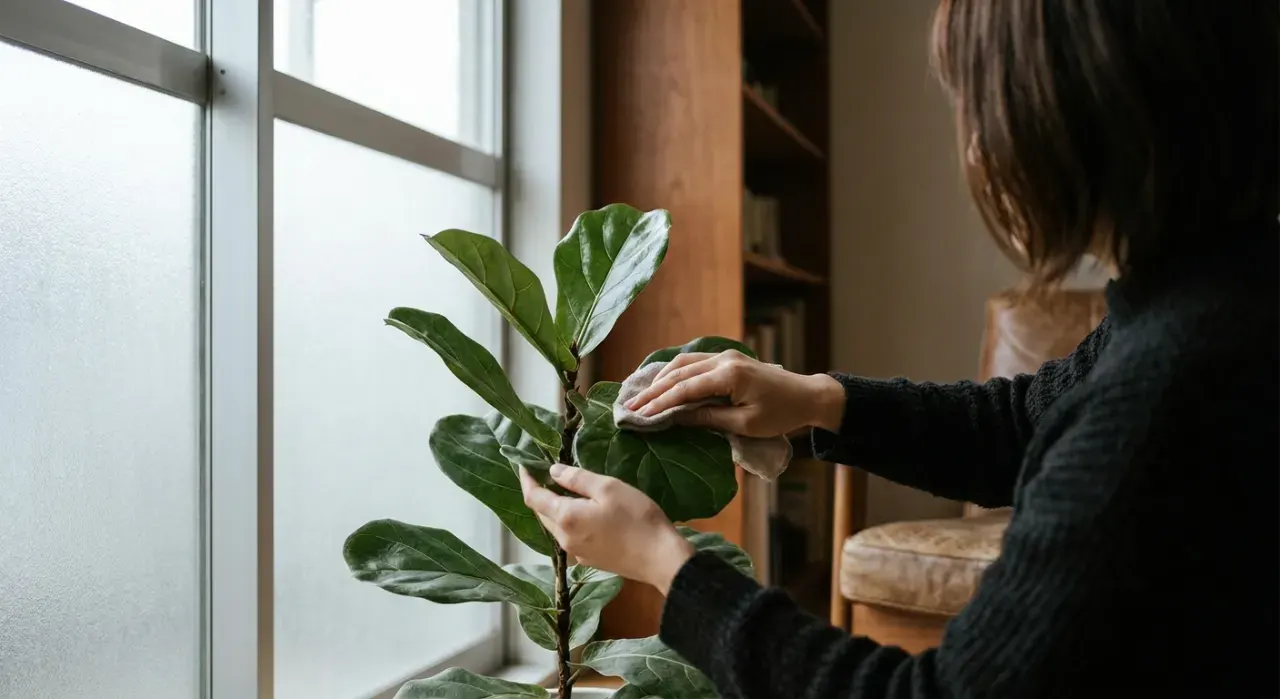
Pale tan, cream, or bleached brown patches that appear only on the leaves or leaf sections facing a window are sunburn. Monsteras want bright, indirect light; a few hours of direct summer sun through unshaded glass will scorch the tissue, and the damaged patches never turn green again. Move the plant back from the window or filter the light with a sheer curtain. East-facing windows are usually safe; unobstructed south- and west-facing windows in summer are the common offenders. New growth will come in clean once the light is right.
Fungal and bacterial leaf spot
Dark brown or black spots, frequently ringed with yellow and looking wet or greasy at the edges, that spread from leaf to leaf are infectious disease. The most common are fungal leaf-spot pathogens and bacterial leaf spot; university extension programs, including those documented by the Missouri Botanical Garden and various state extension services, note that both thrive in warm, wet, stagnant conditions.
Treat it as follows:
- Isolate the plant from your other houseplants immediately.
- Remove the worst-affected leaves at the base with sterile shears, and discard them in the trash, not the compost.
- Keep foliage dry — stop misting, water at the soil line, and never leave water sitting in the crown.
- Improve airflow with spacing or a gentle fan; still, humid air is what the pathogen needs.
- Only if it keeps advancing, apply a copper-based fungicide labeled for houseplants, following the label rate.
Bacterial spot in particular does not respond to most fungicides, so sanitation and dryness do the real work. If more than half the plant is affected, take cuttings from clean growth and start over.
Pests that mimic disease
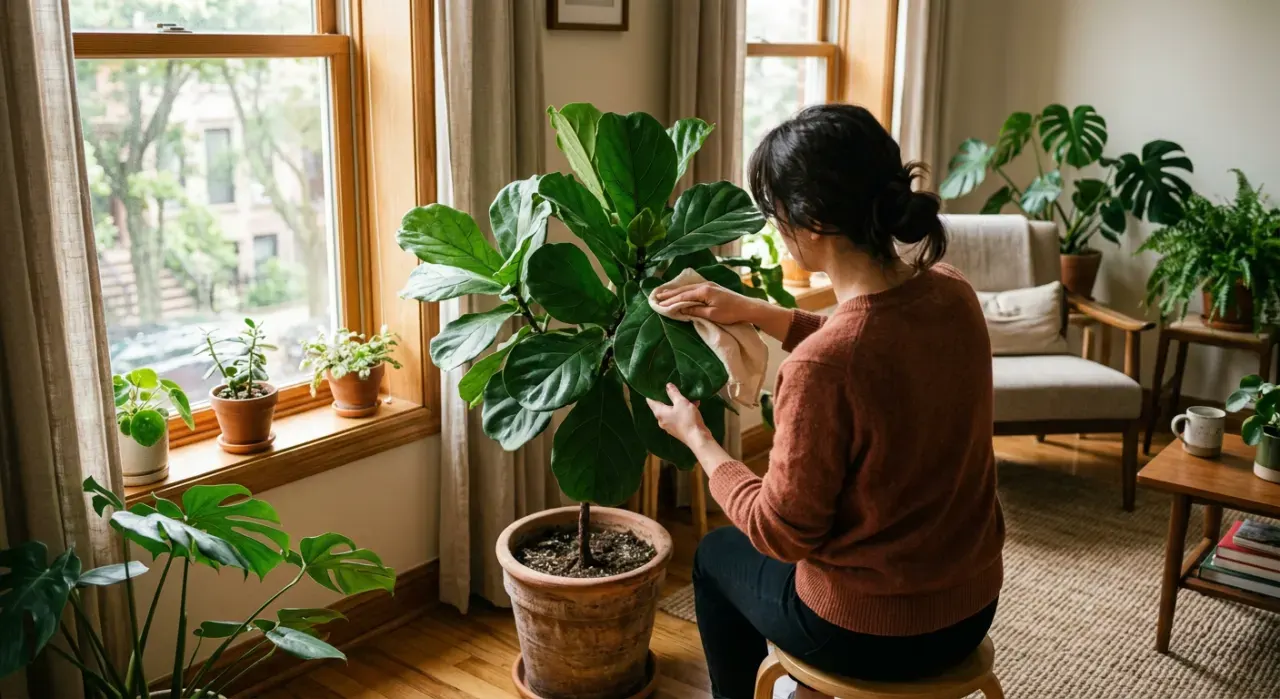
Fine brown stippling or tiny brown flecks, especially with faint webbing on the undersides of leaves, is spider mite damage rather than a watering or disease issue. Mites flourish in dry indoor air — the same conditions that cause crispy edges — so the two often show up together. Rinse the foliage in the shower, then treat with insecticidal soap or a diluted neem solution every 5 to 7 days for three cycles to break the life cycle. Wipe leaves periodically and inspect new growth, since mite populations rebound quickly in warm rooms.
Preventing brown spots for good
Most monstera browning is preventable with a stable routine:
- Water by the soil, not the calendar. Check the top 2 to 3 inches and water only when they are dry.
- Use a chunky, well-draining aroid mix — bark, perlite, and coco coir — in a pot with a drainage hole.
- Give bright, indirect light, away from scorching midday sun.
- Keep humidity above 50 to 60 percent, especially in winter.
- Feed lightly during the growing season and flush the soil occasionally to prevent salt buildup, which also browns leaf tips.
Related monstera troubleshooting is close by: if leaves are yellowing rather than spotting, see why is my monstera turning yellow; if they are curling, see why are my monstera leaves curling. For the wider pattern across all your plants, yellow leaves on houseplants covers the shared causes. Everything else lives at the houseplants and indoor greenery hub.