 Garden

Affiliate Disclosure
Some links on this page are affiliate links. As an Amazon Associate, we earn from qualifying purchases — at no extra cost to you. We do not buy, test, or physically handle the products we cover; our rankings come from aggregated owner reviews, ratings and expert consensus. Commissions never change our verdicts. How we rank · full disclosure.
The short answer: most common houseplants want bright indirect light — roughly 800 to 2,000 foot-candles for six or more hours a day. Succulents, cacti and citrus want 2,000 or more with some direct sun. Genuine low-light survivors get by on 100 to 500; Illinois Extension puts the practical thresholds at about 75 foot-candles for low light, 150 for medium and 300 for bright. Below about 50 foot-candles nothing grows, and a typical room three feet away from any window is often exactly there.
The reason so much houseplant advice fails is that human eyes are superb at compensating for dim conditions and terrible at estimating them. A corner ten feet from a window feels perfectly bright and delivers a tiny fraction of what the glass does. Plants do not grade on that curve, which is why the single highest-value habit in indoor gardening is learning to judge light in numbers rather than impressions.
We never buy or physically handle the products mentioned here — recommendations come from aggregated owner reviews and horticultural consensus, set out in how we rank. The wider picture is at the houseplants and indoor greenery hub.
The Four Light Levels, in Real Numbers
Plant labels use four vague words. Here is what each one means as a measurement, and what happens to a plant that lands in the wrong band.
| Label | Foot-candles | Where that is | Suits |
|---|---|---|---|
| Direct / full sun | 2,000–8,000+ | In the beam at a south or west window | Cacti, most succulents, citrus, herbs, jade |
| Bright indirect | 800–2,000 | Within 2–3 ft of an east window; sheer-curtained south window | Monstera, fiddle leaf fig, rubber plant, hoya, alocasia, most aroids |
| Medium | 250–800 | At a north window; 4–6 ft back from a bright one | Peace lily, pothos, philodendron, calathea, ferns, dracaena |
| Low | 50–250 | Interior walls, far corners, north-facing hallway | ZZ plant, snake plant, cast iron plant, aglaonema — tolerating, not thriving |
For scale: a bright overcast day outdoors is around 1,000 to 2,000 foot-candles, full summer sun is roughly 10,000, and a well-lit office desk is only about 30 to 50. That last number is the one worth sitting with. Rooms lit to a comfortable human standard are, botanically speaking, caves. Everything green that survives in one is running on the light that leaks in from a window.
Distance Does More Damage Than Direction
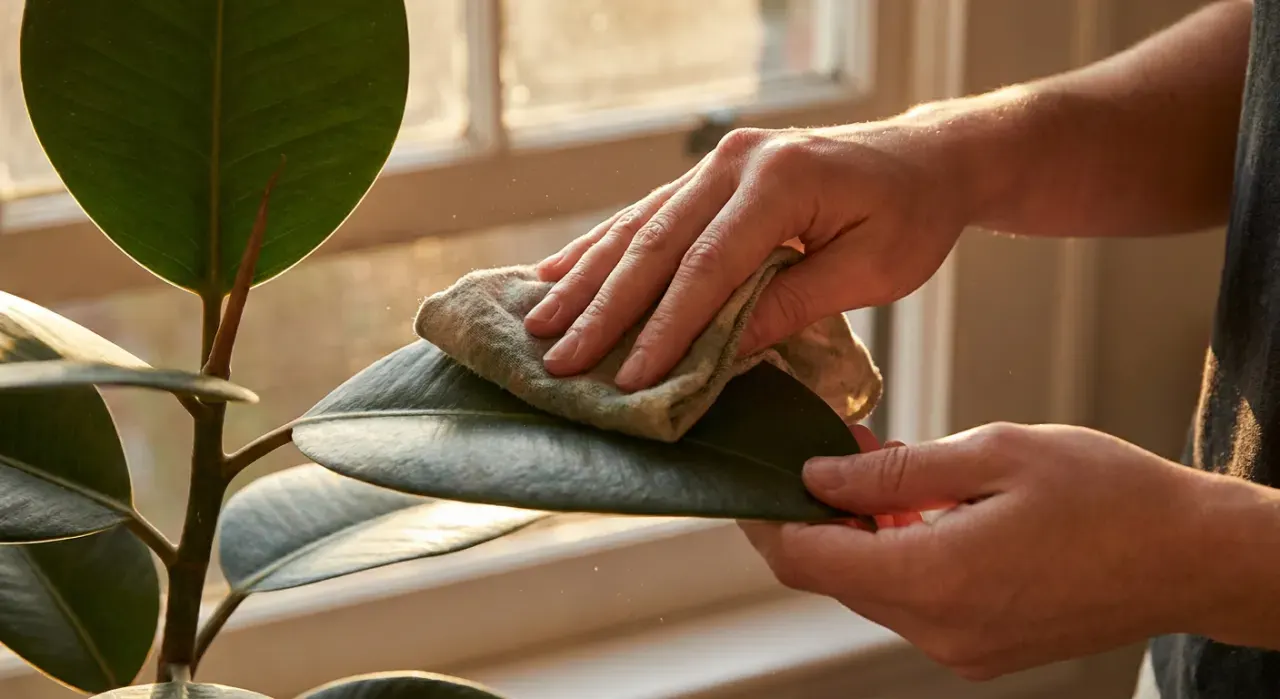
People agonize over which window a plant should face and then put it on a shelf eight feet away, which undoes the decision entirely. Light intensity falls away steeply as you move back from the glass. Typical indoor measurements land somewhere around half the window-side value at three feet, a quarter or less at six to eight feet, and single-digit percentages by the time you reach an interior wall.
Two practical consequences follow. First, moving a struggling plant two feet closer to a window is often a bigger intervention than changing rooms. Second, the honest test of a location is whether the plant can see sky. Crouch down to pot height and look toward the window: if a good patch of open sky is visible, the spot is bright. If the view is a wall, a fence or the underside of a soffit, it is not, whatever the label on the plant said.
Obstructions outside the glass matter as much as the window. A mature tree, a neighboring building, a deep porch roof or a north-facing balcony overhead can cut a nominally excellent south window down to medium light. So can the glass itself — modern low-E and tinted glazing reduces transmitted light noticeably, and a dirty window in a city apartment can cost another slice on top of that. Washing the inside of the glass twice a year is not a joke; it is a measurable improvement.
Window Direction, US Orientation
| Window | Direct sun | Character | Best use |
|---|---|---|---|
| South | 4–6 hrs, midday | The brightest and hottest position in the house | Succulents, cacti, citrus, herbs at the glass; foliage plants 3–5 ft back or behind a sheer |
| East | 2–4 hrs, morning | Bright but gentle; the most forgiving window there is | Almost everything — monstera, calathea, ferns, most aroids right at the sill |
| West | 3–5 hrs, afternoon | As bright as south but hotter, with intense late-day beams | Sun lovers; foliage plants set back or filtered, and never against hot glass |
| North | None | Even, cool, unchanging; the dimmest usable window | Pothos, ZZ, snake plant, ferns, philodendron — at the glass, not across the room |
East wins for most collections. Morning sun arrives at a low angle and low intensity, so plants get several hours of genuinely direct light without the leaf scorch that a west window delivers at 4pm in August. If you have exactly one good window and a mixed collection, an east one is the easiest to work with.
Reading the Plant Instead of the Room
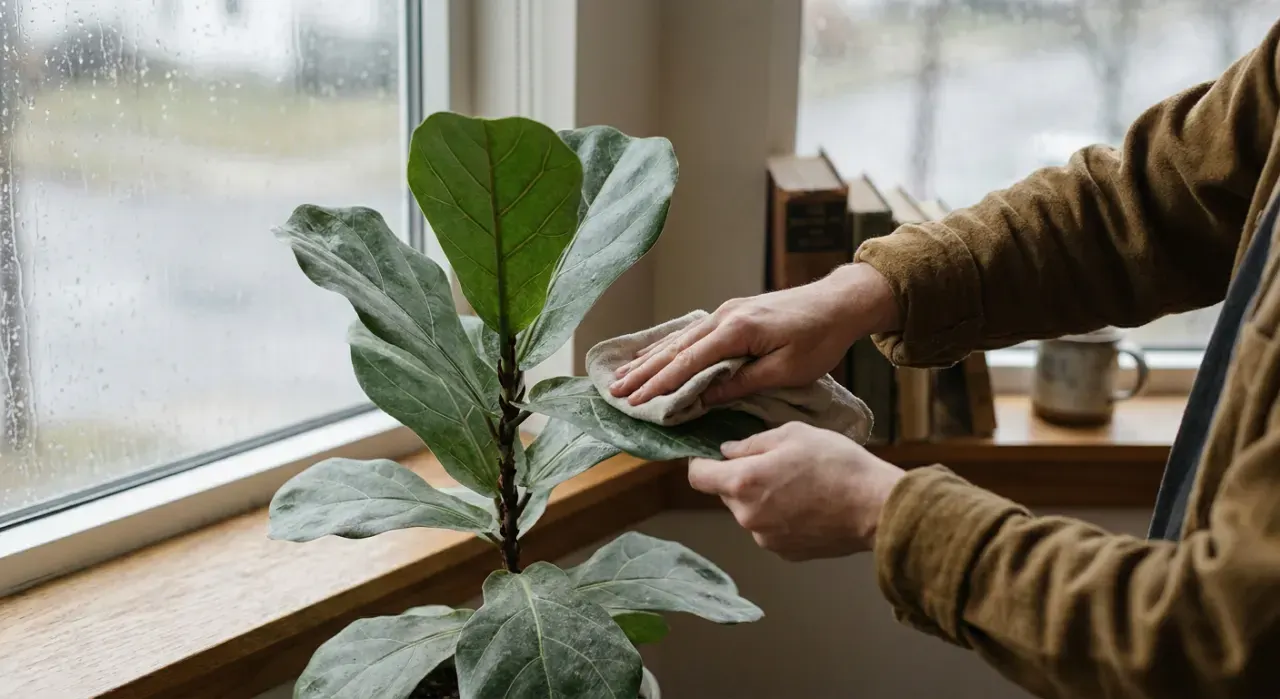
Plants report their light situation clearly if you know the vocabulary. Too little light shows as stretched stems with long gaps between leaves, new leaves noticeably smaller than old ones, variegated plants reverting to plain green, growth leaning hard toward the window, and — the sign people miss — soil that stays wet for a week or more, because a plant in dim light barely transpires. That last symptom is why light problems so often present as root rot.
Every one of those is a slow signal. A plant in a dim corner does not collapse; it coasts for months on stored energy, drops a leaf every few weeks and ends up as a bare stem in permanently damp soil. If that describes something on your shelf, the problem was diagnosed correctly as overwatering and then treated in the wrong place. More on that pattern in yellow leaves on houseplants.
Too much light is faster and more obvious: bleached pale patches on the leaves facing the window, dry tan or white scorch marks with a crisp texture, red or purple flushing on succulents, and wilting in the afternoon that recovers overnight. Sunburn happens in a single afternoon, which is why a plant moved straight from a shaded store shelf to a south sill can be damaged the first day. Acclimate over two weeks by moving it a foot closer each few days.
Duration Counts as Much as Intensity
Intensity is only half of the equation. What a plant actually banks is the total light it receives over a day — growers call it the daily light integral, and it is why four hours of bright light does not equal ten hours of medium. Most foliage houseplants sit comfortably in the range that ten to twelve hours of decent indirect light provides; flowering and fruiting plants want considerably more.
This is the practical case for grow lights. A window gives you whatever the season provides, and the seasonal swing indoors is brutal: in the northern half of the US, a December window can deliver a small fraction of what the same window gave in June, and the day is five hours shorter on top of that. A fixture on a timer removes the variable entirely, which is why owners who add one so consistently report their plants looking the same in January as in July. Our ranked field is at best grow lights for indoor plants.
If you do add a light, remember that the same distance rule applies to the fixture: 6 to 18 inches above the foliage for most LED panels and bulbs, on a timer for 12 to 14 hours. Illinois Extension puts the supplemental range at 14 to 16 hours and warns against exceeding 16, since plants need a rest period too. A powerful light on the ceiling is a room light, not a grow light.
A Practical Placement Method
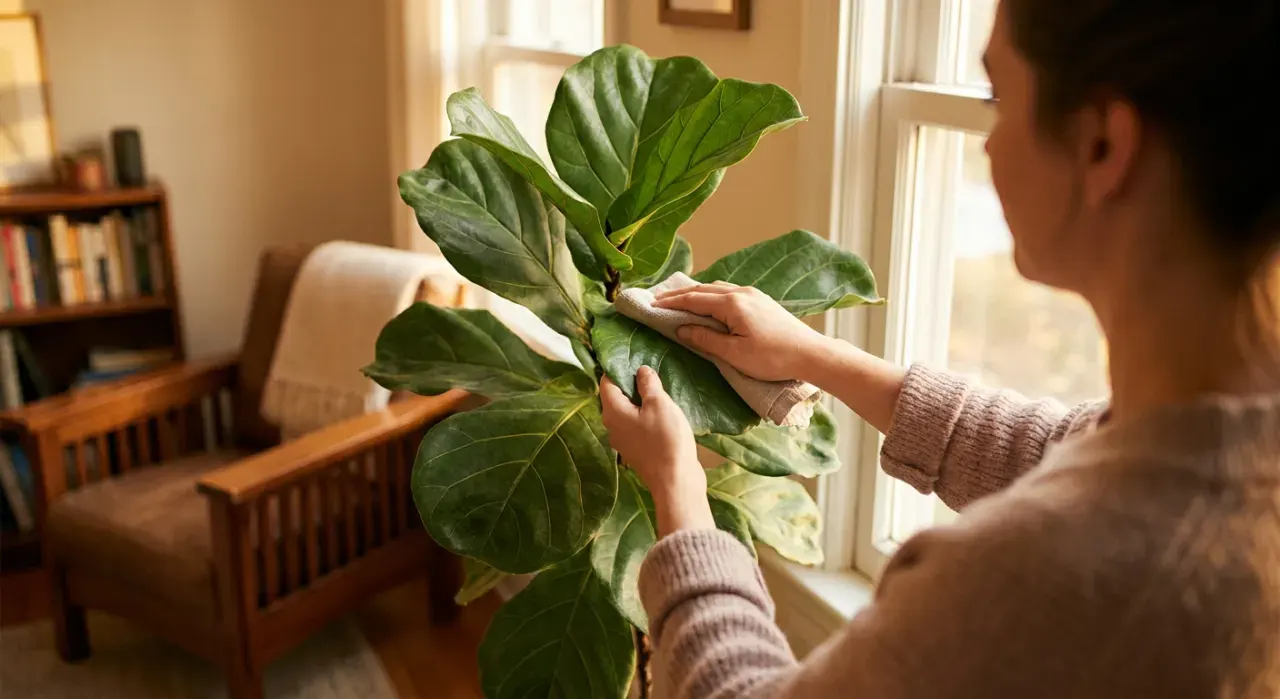
- Map the room before you buy the plant. Walk around with a light meter app at midday and note the readings at the sill, three feet back and six feet back from each window. It takes five minutes and it settles every future placement argument.
- Match the plant to the highest band it can fill. Nothing suffers from being at the bright end of its range if it is acclimated gradually; almost everything suffers at the dim end.
- Rotate a quarter turn every watering. Indoor light is directional in a way outdoor light is not, and unrotated plants grow permanently lopsided.
- Re-check in November. Winter is a different room. Plants that were happy three feet back in July often need to move to the sill by Thanksgiving, and back again in March.
- Adjust watering when you adjust light. A plant moved brighter will dry out faster; one moved dimmer will stay wet far longer and needs less water immediately, not on the old schedule. The method is in how often to water houseplants.
When the Room Simply Cannot Do It
Some rooms have no answer. A basement apartment, a north-facing hallway, an office with one small window — these are not fixable by moving furniture. You have two honest options, and misting, fertilizer and better pots are not among them.
The first is to choose plants that genuinely tolerate the conditions rather than plants marketed as tolerant. The realistic list is shorter than most articles suggest and is set out in low-light houseplants that survive. The second is to supply the light yourself. Between a $25 clip lamp and a plug-in timer, a dim corner becomes a medium-light spot for about the cost of one mid-size plant — which is a better use of the money than replacing the plants that keep dying in it.
One last note on soil: a plant in a low-light spot needs a mix that drains fast, because it will use water slowly and the difference between damp and waterlogged gets very thin. Adding perlite or bark to a dense bagged soil is the cheap insurance, and the bagged options are compared in best potting mix for houseplants.