 Garden

Affiliate Disclosure
Some links on this page are affiliate links. As an Amazon Associate, we earn from qualifying purchases — at no extra cost to you. We do not buy, test, or physically handle the products we cover; our rankings come from aggregated owner reviews, ratings and expert consensus. Commissions never change our verdicts. How we rank · full disclosure.
To prune a rubber plant, cut the stem cleanly just above a node using sterilized tools, and the plant will branch out from the nodes below the cut — this is how you control height and turn a leggy single stem into a full, bushy plant. Rubber plants (Ficus elastica) naturally grow tall on one stem, so pruning is the main tool for shaping them, encouraging branching, and keeping an indoor tree at a manageable size. The two things to get right are cutting in the right place (above a node) and handling the milky sap safely.
This guide covers why and when to prune, exactly where to cut, how to force branching, and aftercare. Our advice reflects the consensus of experienced growers and extension resources, not first-hand trials; see how we rank.
Why prune a rubber plant
Pruning serves several purposes, and most owners prune for more than one:
- Control height — keep a plant that wants to reach the ceiling at a size that fits your space.
- Encourage branching and bushiness — remove the growing tip to force new branches lower down.
- Fix legginess — restore fullness to a plant that has stretched and lost its lower leaves.
- Remove damaged growth — take off dead, yellowing or diseased leaves and stems.
- Propagate — the trimmings can become new plants; see how to propagate a rubber plant.
When to prune a rubber plant
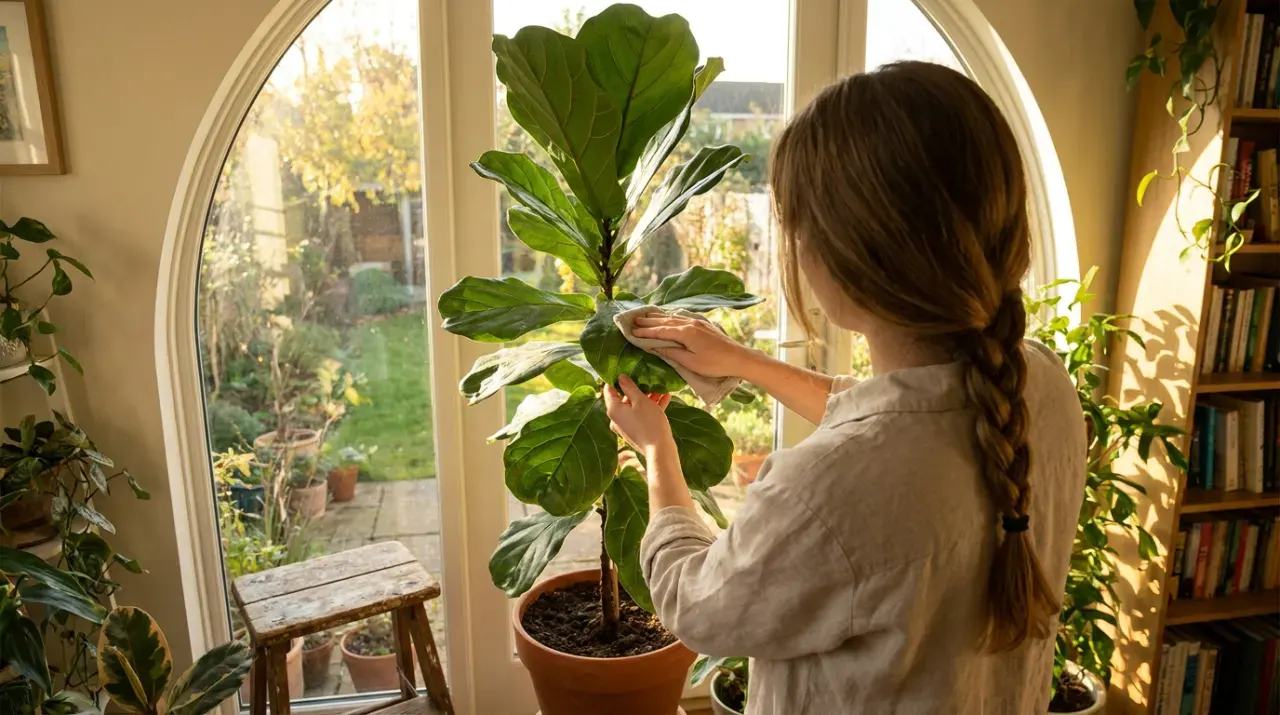
The best time for shaping and height reduction is spring or early summer, at the start of active growth, when the plant has the daylight and vigor to seal the cut and push new branches quickly. You can remove dead or damaged leaves at any time, but avoid major pruning in fall and winter, when growth slows and recovery is sluggish. Pruning right before the growing season means you see fresh branches within weeks rather than waiting months.
Tools and safety prep
- Sharp, sterilized pruners or scissors — wipe the blades with rubbing alcohol before and after to avoid spreading disease.
- Gloves to protect against the latex sap.
- A drop cloth or newspaper under the plant to catch drips.
- A damp cloth to blot the sap from cut ends.
The sap is an irritant to skin and eyes, can trouble people with latex sensitivities, and is mildly toxic to pets, so glove up, work over a wipeable surface, and wash up afterward. Blotting the cut with a damp cloth both stops the mess and helps the wound seal.
Where to cut a rubber plant
This is the detail that determines whether pruning works. New branches emerge from the nodes just below your cut, so:
- Find a node — the point on the stem where a leaf attaches or a leaf scar shows, often with a small bump.
- Cut about a quarter inch above the node, making a clean, slightly angled cut. The plant will branch from that node and usually the one below it.
- Decide the height first. Cut the main stem at the height you ultimately want the plant to branch, since new growth appears just below the cut.
- Blot the sap from both the plant and the cutting.
Cutting in the middle of a bare internode, far from any node, leaves a stub that dies back — always cut just above a node.
Making it bushier
To transform a tall, sparse rubber plant into a full one:
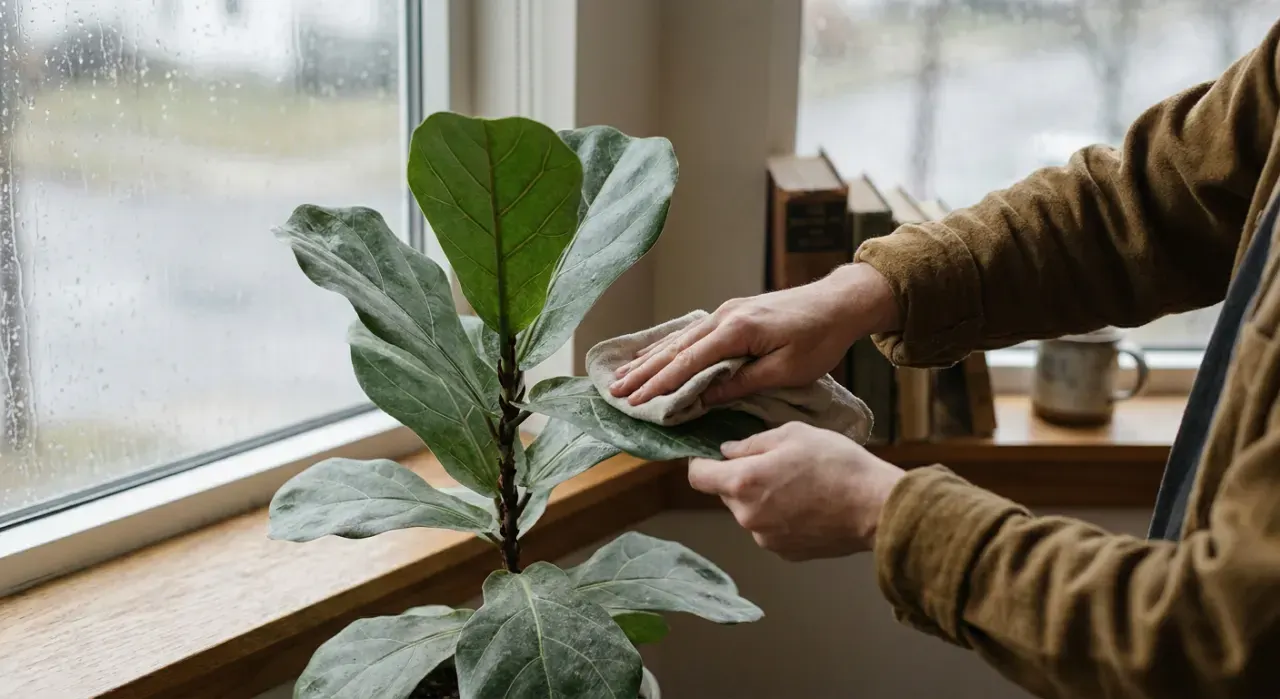
- Top the main stem at your chosen height, cutting above a node. Within a few weeks the plant sends out one or more new branches below the cut.
- Let the branches grow out for a season.
- Pinch or prune the branch tips to make each of them branch again, multiplying the fullness.
- Provide bright indirect light throughout — new growth on an under-lit plant comes in leggy and sparse, undoing the point of pruning. See how much light do houseplants need.
You can also notch above a dormant bud (a shallow cut just above a node) to prompt a branch there without removing the top, useful for filling a bare spot on the stem.
How much to remove
Be conservative in any one session. A rough guide:
| Goal | How much to take |
|---|---|
| Tidy up dead/damaged leaves | Only the affected leaves, any time |
| Encourage branching | Cut the top back to a node, one main stem |
| Reduce height significantly | Up to about a third of the plant, in spring |
| Reshape a leggy plant | Stage it over two seasons rather than all at once |
Never remove more than roughly a third of the plant at once, which would stress it and slow recovery.
Reining in a plant that has hit the ceiling
The most common reason people finally prune a rubber plant is that it has grown too tall for the room. A healthy Ficus elastica can add a foot or more a year and will happily reach the ceiling on a single bare stem. The fix is a hard cut, but done thoughtfully:
- Decide the final height and find a node an inch or two below it, since the plant branches just under the cut.
- Make the cut in spring so the plant recovers fast, removing no more than about a third of its total height in one session.
- Root the top. The piece you removed is a large cutting — root it in water or soil, or air-layer it before cutting for the highest success. See how to propagate a rubber plant.
- Expect the stump to resprout. Within a few weeks the remaining stem pushes new branches from the nodes below the cut, giving you a shorter, fuller plant.
If the plant is very tall and you want to avoid the shock of one big cut, air layering lets you root the top while it is still attached, so you never have a rootless cutting to nurse and the parent keeps most of its foliage until the last moment.
Removing damaged, dead and crossing growth
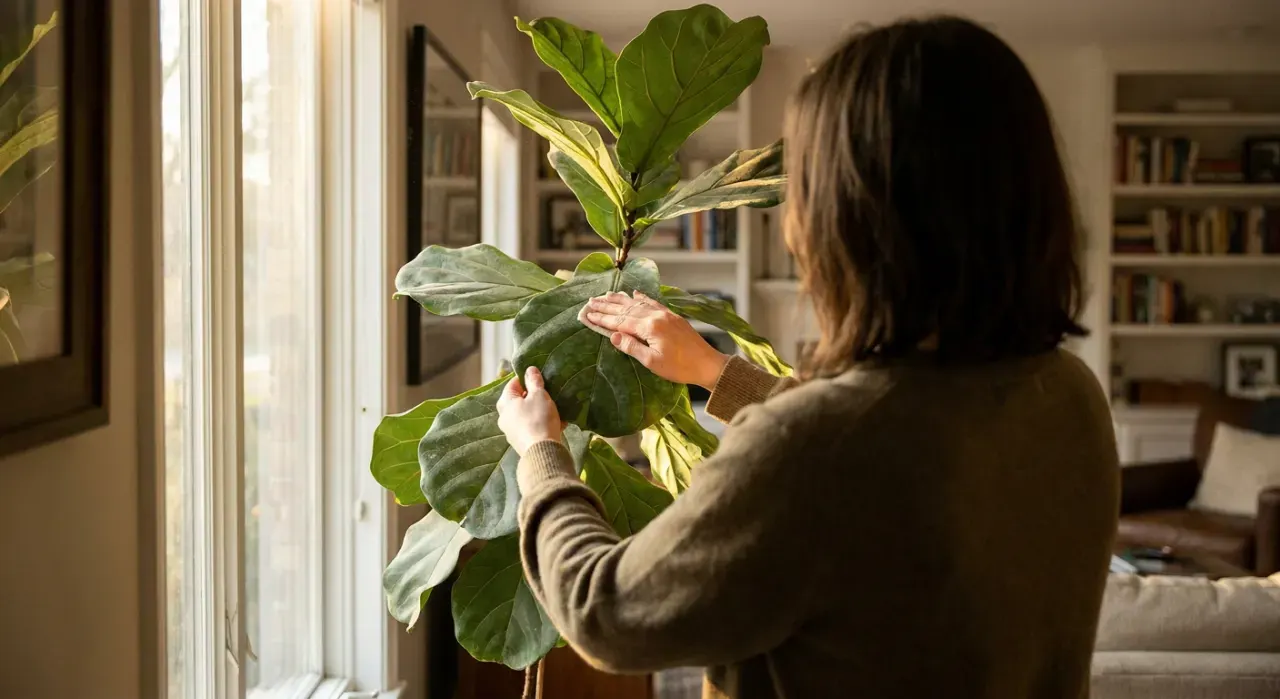
Beyond shaping, routine pruning keeps a rubber plant healthy. Unlike major height reduction, this maintenance can be done any time of year:
- Dead or yellowing leaves — remove them at the base of the leaf stalk so the plant stops spending energy on them and the canopy looks clean.
- Damaged or diseased leaves — cut these out promptly with sterilized tools to stop any problem spreading, and disinfect the blades afterward.
- Crossing or inward-growing branches — on a branched plant, thin out stems that rub against each other or crowd the center, which improves airflow and light penetration.
- Weak, spindly shoots — remove thin, etiolated growth so the plant channels energy into strong branches.
Because you will make several cuts, keep a damp cloth handy for the sap and wipe your blades with rubbing alcohol between plants to avoid carrying disease. A tidy, well-thinned rubber plant not only looks better but is less prone to the pest and fungal problems that hide in dense, stagnant growth.
Aftercare
After pruning, put the plant in bright indirect light and keep to its normal watering — let the top inch or two of soil dry between drinks — while it channels energy into new branches. Do not overwater a freshly pruned plant, since it has less foliage drawing up water. New growth typically appears within a few weeks in the growing season. If you feed, resume light feeding once new growth is underway. For overall care, see how to care for a rubber plant.
Troubleshooting
| Problem | Cause | Fix |
|---|---|---|
| No new branches after cutting | Cut too far from a node, or cold/dim conditions | Cut just above a node next time; give warmth and bright light |
| Stub dies back below the cut | Cut in the middle of a bare internode | Recut cleanly just above the next healthy node |
| New growth is leggy and sparse | Too little light | Move to brighter indirect light |
| Cut oozes a lot of sap | Normal for Ficus | Blot with a damp cloth; it seals over |
Pruning is the single most effective way to shape a rubber plant, and because every cut both controls the plant and yields a potential cutting, it is one of the more satisfying jobs in houseplant care.
If you are nervous about cutting into a plant you have grown for years, start small: remove a single leggy branch tip and watch how the plant responds over the following weeks. Seeing new branches push from just below your cut builds the confidence to prune more decisively next season. Rubber plants are vigorous and forgiving — a healthy, well-lit plant recovers from pruning quickly and comes back fuller than before, so the bigger risk is usually leaving a plant unpruned until it is a bare, unwieldy pole than trimming it too enthusiastically. Keep a light hand in any single session, always cut just above a node, work in spring when growth is strongest, and let the plant's response guide how much you take next time. Combined with good light and consistent watering, regular pruning is what keeps a rubber plant looking like a lush, full specimen rather than a leggy survivor. Everything else is at the houseplants and indoor greenery hub.