 Garden

Affiliate Disclosure
Some links on this page are affiliate links. As an Amazon Associate, we earn from qualifying purchases — at no extra cost to you. We do not buy, test, or physically handle the products we cover; our rankings come from aggregated owner reviews, ratings and expert consensus. Commissions never change our verdicts. How we rank · full disclosure.
Monstera leaves curl mostly because the plant is losing water faster than it can take it up. The leading causes are underwatering (dry soil, curling with crispy edges), low humidity (inward curl, worst in winter), heat or too much direct sun (curl with scorched edges near hot glass), and — less often but more serious — root rot from overwatering (curling on soggy soil, with soft yellowing lower leaves). Pests and normal new-leaf development can also curl foliage. Check the soil moisture and the roots first: that one step separates the two opposite watering problems, which look nearly identical on the leaves but need opposite fixes.
We do not test or physically handle the plants and products we cover; our guidance draws on horticultural extension research and the aggregated experience in thousands of owner reviews, as explained in how we rank. The prevention routine lives in how to care for a monstera.
Feel the soil, then read the leaves
Before changing anything, push a finger into the top 2 to 3 inches of mix and look at the leaf edges. Those two clues resolve most cases.
| Soil | Leaves | Likely cause |
|---|---|---|
| Dry, pulling from the pot | Curling with crispy edges, drooping | Underwatering |
| Feels normal | Curl inward, edges crisp, worse in winter | Low humidity |
| Dry, near hot glass or vent | Curl with scorched edges | Heat / sun stress |
| Constantly wet | Curling with soft yellow lower leaves | Overwatering / root rot |
| Any | Fine stippling, webbing under leaves | Spider mites |
Also note which leaves are affected. Uniform curling across the plant points to watering or humidity; curling only near a window points to light and heat; curling only on new leaves is often normal development or a temporary growth-stage stress.
Underwatering — the most common cause
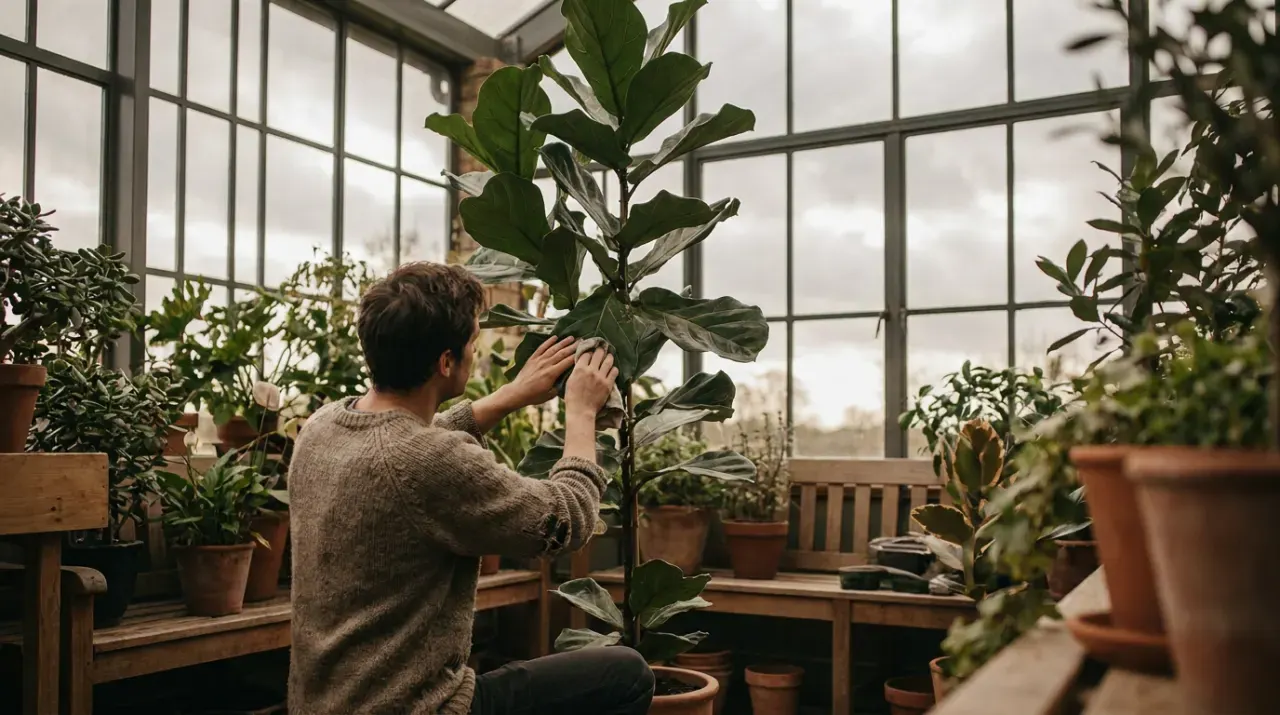
A thirsty monstera curls its leaves inward and lets the stems droop to cut water loss. The soil will be dry well below the surface, and the leaf edges often crisp at the same time. Water thoroughly until it runs from the drainage hole, let it drain completely, and the leaves should begin to relax within a day. Going forward, water when the top 2 to 3 inches of mix are dry — roughly every 7 to 14 days for a plant in a 10-inch pot, less in winter. If the mix has become hydrophobic and water runs straight through without wetting it, bottom-water by standing the pot in a tray for 20 to 30 minutes. See how often to water a monstera for the full schedule.
Low humidity — the winter culprit
Monsteras thrive above 60 percent humidity, and heated winter homes often sit below 30 percent. In dry air the leaves curl inward and the margins turn papery and brown. A small humidifier running near the plant is the most reliable fix; grouping plants and moving the monstera to a brighter bathroom also help. Misting raises humidity only for minutes and, if leaves stay wet, can trigger fungal spots, so lean on a humidifier instead. Aim to keep local humidity at 50 percent or higher, especially from late fall through early spring.
Heat and direct sun curling monstera leaves
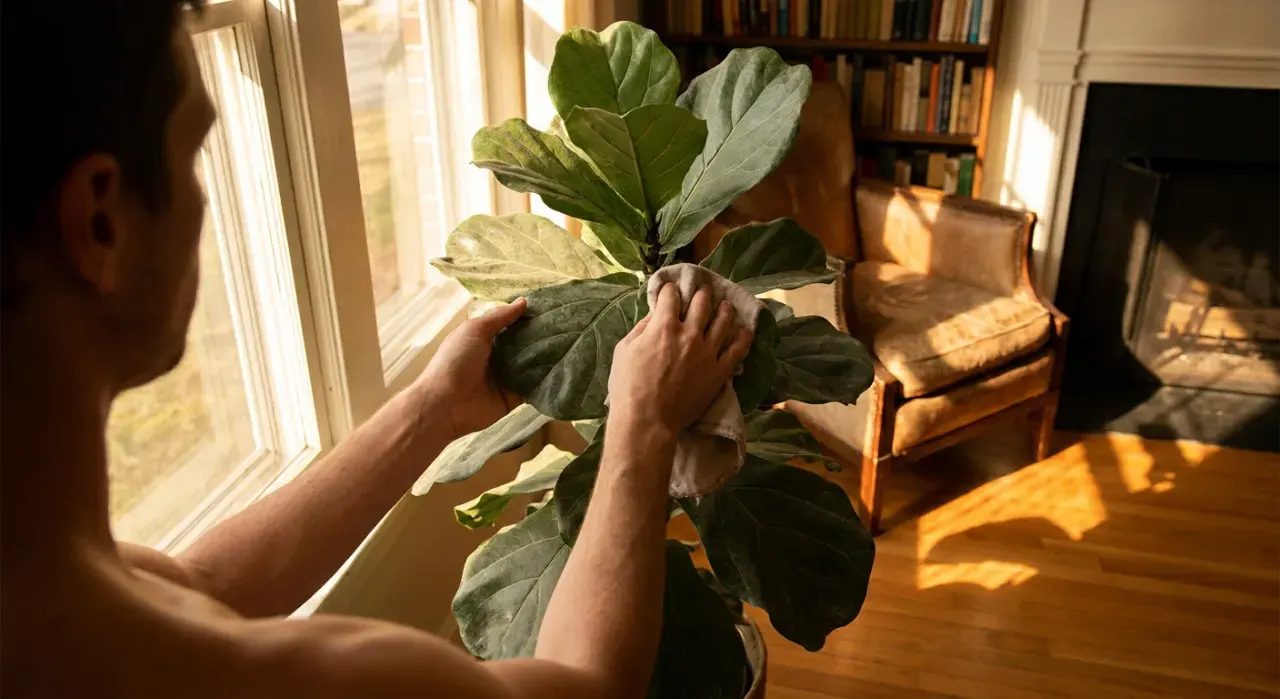
Bright, indirect light is ideal; harsh direct sun and heat are not. A monstera pressed against hot summer glass, or sitting beside a heating vent or radiator, loses water quickly and curls its leaves defensively, often scorching the edges. Move it back from the window or filter the light with a sheer curtain, and keep it away from vents and drafts. Comfortable temperatures run about 65 to 85 degrees Fahrenheit; sudden swings and hot, dry drafts are what the plant dislikes most.
Root rot from overwatering
When curling appears on soil that is always wet, and the lower leaves are yellowing and soft, suspect root rot. Waterlogged roots suffocate and rot, losing the ability to absorb water, so the plant dehydrates and curls despite the wet mix. Slide the plant out and inspect: healthy roots are firm and pale, rotting roots are brown and mushy and smell sour. Trim the rot back to firm tissue with sterile shears, repot into fresh, chunky aroid mix in a pot with drainage, and water sparingly until it recovers. Our guide to saving an overwatered plant covers the recovery in detail.
Pests that curl monstera leaves and new-leaf development
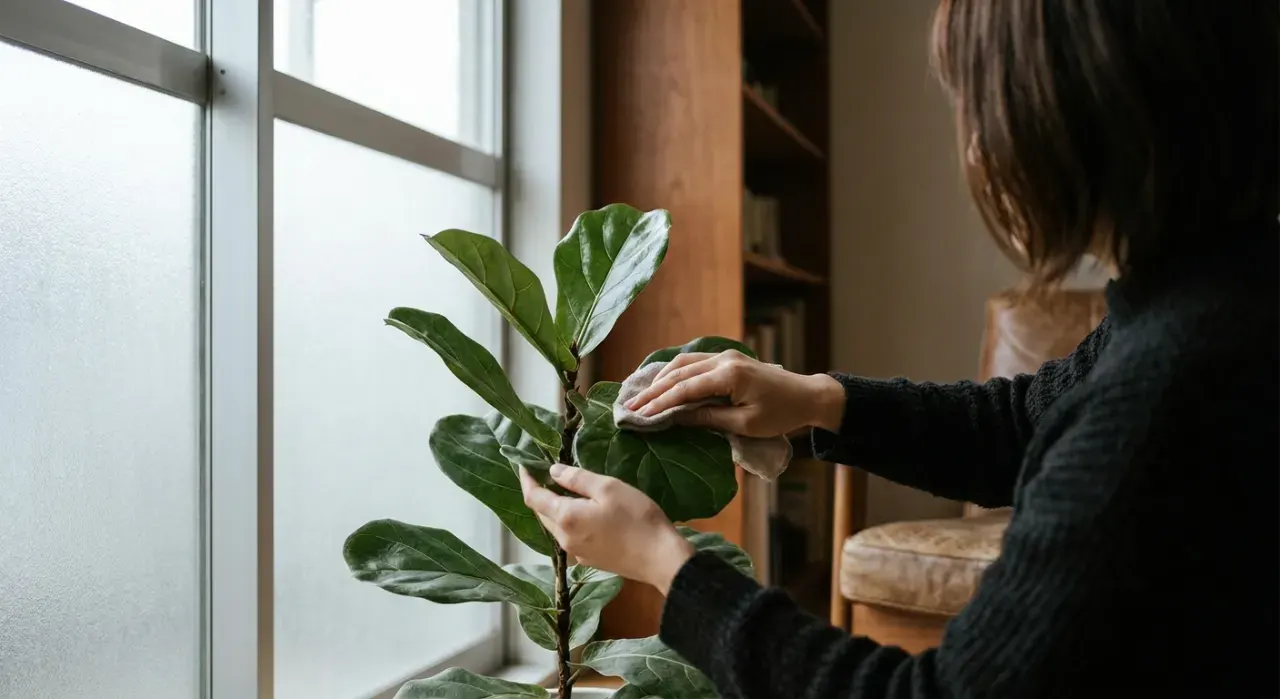
Spider mites cause fine stippling and faint webbing on leaf undersides, and their feeding can distort and curl leaves; they thrive in the same dry air that causes humidity curl. Rinse the foliage and treat with insecticidal soap every 5 to 7 days for three cycles. Separately, remember that new monstera leaves emerge tightly rolled and unfurl as they mature — a curled brand-new leaf is normal. Only worry if new leaves unfurl and then re-curl, or fail to open, which points back to humidity, watering, or light.
Preventing curling monstera leaves
- Water on a check, not a calendar — top 2 to 3 inches dry, then soak and drain.
- Keep humidity above 50 to 60 percent, using a humidifier in winter.
- Bright, indirect light, away from scorching sun, vents, and drafts.
- Chunky aroid mix and a drainage hole to prevent soggy roots.
- Inspect new growth for mites and support steady conditions while leaves unfurl.
For related monstera issues, see brown spots on monstera leaves and why is my monstera turning yellow. The shared causes across your collection are in yellow leaves on houseplants, and everything else is at the houseplants and indoor greenery hub.