 Garden

Affiliate Disclosure
Some links on this page are affiliate links. As an Amazon Associate, we earn from qualifying purchases — at no extra cost to you. We do not buy, test, or physically handle the products we cover; our rankings come from aggregated owner reviews, ratings and expert consensus. Commissions never change our verdicts. How we rank · full disclosure.
Yes on the baking pan, no almost everywhere else. A piece of foil smaller than the pan, with a clear border around it, is fine for catching drips. What manufacturers warn against is lining the crumb tray, the cavity floor or the walls, covering the whole rack, or letting foil come near a heating element — all of which trap heat where the appliance is not built to hold it. Toaster oven elements sit only a few inches from the food, so there is far less margin than in a full-size oven.
Where can foil safely go?
On the pan, under the food, with room to spare. The safe test is whether the foil is held flat by something heavier than the fan or convection currents, and whether hot air can still reach the food from all sides. A sheet cut an inch smaller than the baking pan on every edge satisfies both. A sheet draped over the rack, folded up the sides, or tucked around the tray does not.
| Placement | Verdict | Why |
|---|---|---|
| Small piece on the baking pan | Fine | Flat, contained, airflow preserved |
| Wrapped around food (potato, fish) | Fine | Sealed package, no contact with elements |
| Covering the entire rack | Avoid | Blocks circulation, food steams underneath |
| Lining the crumb tray | Do not | Reflects heat at the lower element; fire risk |
| Lining the floor or walls | Do not | Traps heat, damages the finish, may block vents |
| Loose tent near the top element | Do not | Can contact the element and scorch or arc |
Why is the crumb tray the biggest mistake?
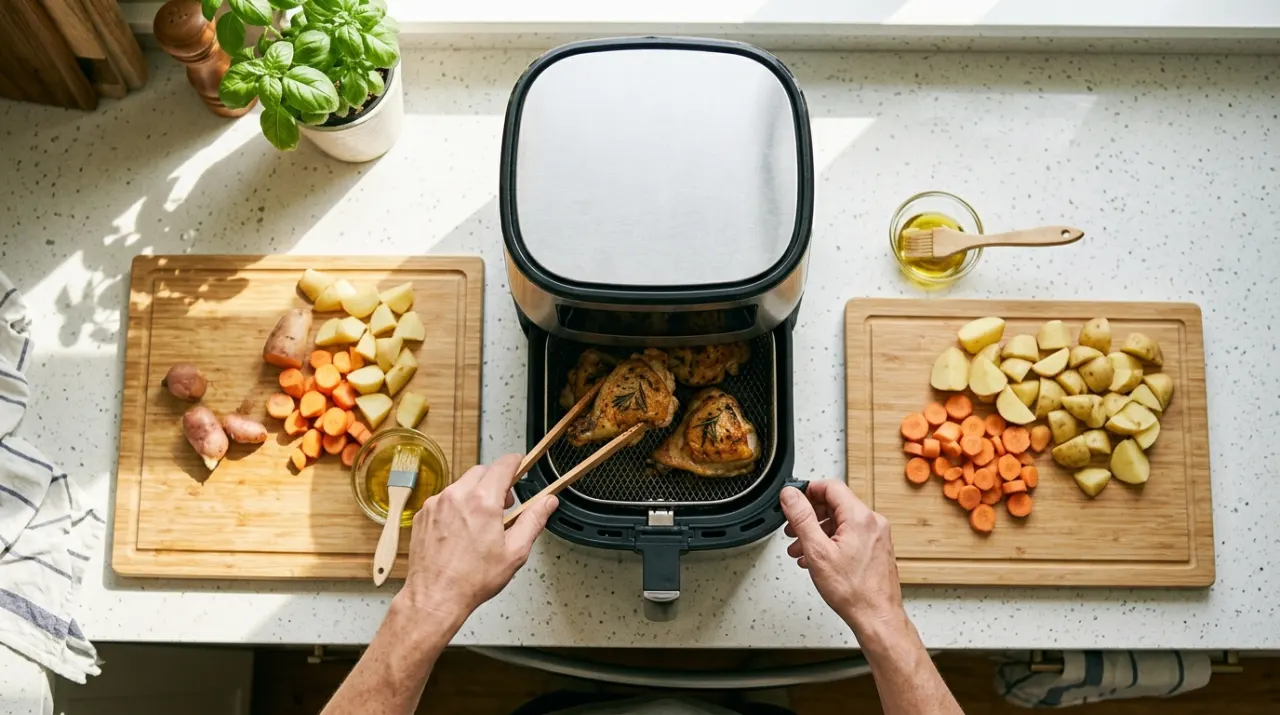
Because it looks like the most sensible place to put foil and is the worst. The tray sits directly beneath the lower heating element, and covering it does two harmful things at once: it reflects radiant heat back into the element instead of letting it pass into the cavity, and it collects grease on a surface that gets extremely hot. Manufacturers including Breville, Cuisinart and Hamilton Beach state in their manuals that the crumb tray and interior surfaces must not be lined with foil. Owner complaints about warped trays and scorched cavity floors trace back to this habit more than any other. Slide the tray out and wash it weekly instead.

How close is too close to the element?
Keep an inch of clearance, and treat the top rack position as the danger zone. In a compact toaster oven the upper element can sit two to three inches above the top rack, which is close enough that a loose corner of foil standing up will touch it. Aluminum does not melt at those temperatures, but it conducts heat straight into whatever is against it and any grease film on the surface will burn. If a recipe calls for tenting to slow browning, move the rack down a level rather than raising the foil toward the element.
What should you use instead?
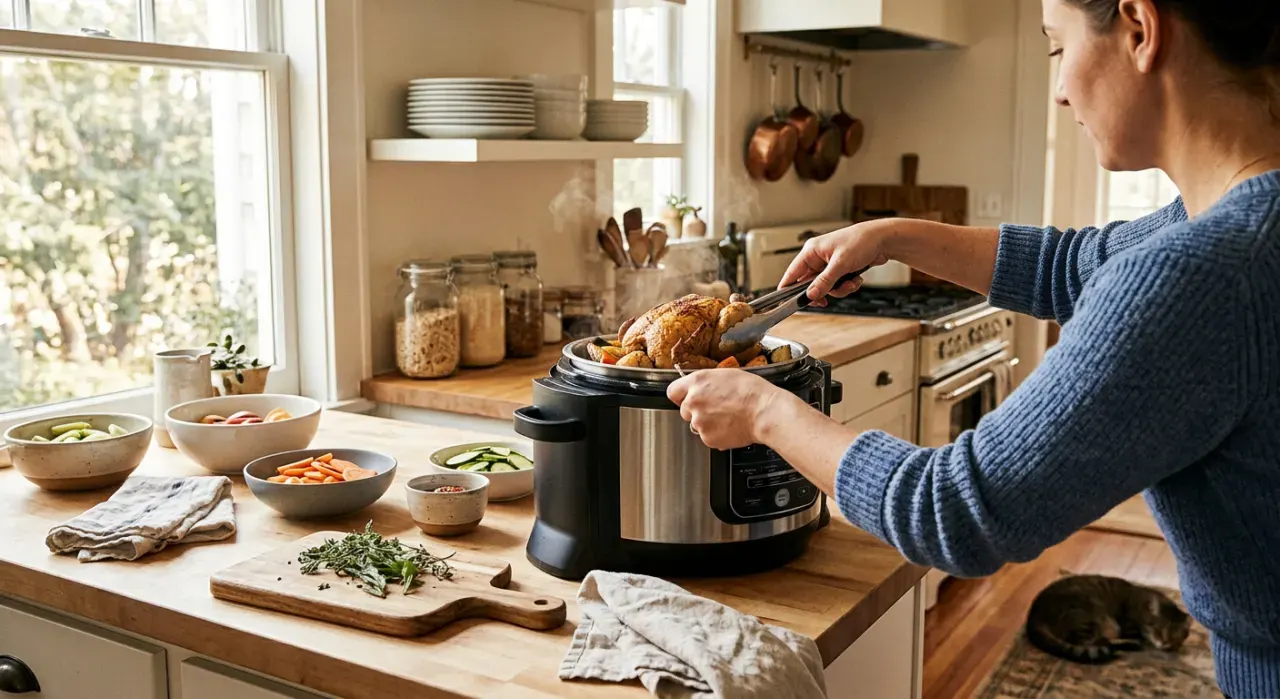
The pan that came with the oven, in most cases. Toaster oven pans are sized to leave the correct airflow gap on all sides, and washing one is a two-minute job. Where a liner genuinely helps — sticky glazes, melted cheese, anything that will weld itself to metal — a correctly sized piece of foil on that pan is the right answer. Parchment works for moderate-temperature baking, but check the box: many papers are rated only to about 420°F to 450°F, and in a small cavity there is little distance between the paper and an element that will scorch it.
Where to go next
Foil is usually a cleaning shortcut, so start with how to clean a toaster oven. The same question comes up for air fryers, where the rules differ — see can you put aluminum foil in an air fryer. If you bake in yours, baking a cake in a toaster oven covers pan sizes and clearances. Shopping? The best toaster ovens ranks models on aggregated owner ratings, inside the small kitchen appliances hub.
We never buy or physically handle the products we rank — our picks come from aggregated owner reviews and expert consensus, explained on how we rank. Your model manual is the final authority on liners.