 Garden

Affiliate Disclosure
Some links on this page are affiliate links. As an Amazon Associate, we earn from qualifying purchases — at no extra cost to you. We do not buy, test, or physically handle the products we cover; our rankings come from aggregated owner reviews, ratings and expert consensus. Commissions never change our verdicts. How we rank · full disclosure.
A moka pot uses steam pressure of about 1 to 1.5 bar to push water up through medium-fine coffee on a stovetop. An espresso machine uses a pump to force water through finely ground, tamped coffee at roughly 9 bar. That six-fold pressure gap is the whole difference: it is why espresso has crema, a syrupy body and roughly double the concentration, and why it costs ten times as much to get started. A moka pot makes strong, concentrated coffee for about $35. An espresso machine makes espresso — and lattes — from about $500 including a grinder.
What is the actual difference?
A moka pot is three chambers. Water goes in the bottom, ground coffee in the middle basket, and as the base heats, steam pressure above the water forces liquid up the funnel, through the coffee, and out into the top chamber. The pressure comes from steam expanding and it peaks at roughly 1 to 1.5 bar — about one and a half times atmospheric.
An espresso machine uses a pump. Water is heated in a boiler or thermoblock and driven through a compressed puck of very finely ground coffee at around 9 bar. That pressure is what makes espresso espresso: it forces water through a bed so fine that gravity or steam pressure could never pass it, and it emulsifies coffee oils and dissolved CO2 into the crema layer on top.
One caveat worth carrying into any showroom: espresso machines advertising "15 bar" or "20 bar" are quoting the maximum a vibratory pump can produce into a blocked line. The coffee sees about 9 bar on a well-designed machine, and a bigger number on the box does not mean a better machine.
Moka pot vs espresso machine at a glance
| Moka pot | Espresso machine | |
|---|---|---|
| Pressure | ~1–1.5 bar (steam) | ~9 bar at the puck (pump) |
| Brew time | 4–5 minutes on the stove | 25–30 seconds |
| Grind | Medium-fine, like granulated sugar | Very fine, like powdered sugar |
| Crema | None (except the Brikka) | Yes |
| Concentration | Between strong drip and diluted espresso | ~8–12% dissolved solids |
| Grinder required | Helpful; pre-ground works | Burr grinder, non-negotiable |
| Milk steaming | No — separate frother needed | Yes, on almost every machine |
| Entry cost | ~$28–$85 | ~$400+ machine, plus $150+ grinder |
| Counter space | None — it lives in a cupboard | 8–14 inches, permanently |
| Maintenance | Rinse; replace the gasket yearly | Descale every 1–3 months, backflush, clean |
| Power | Stovetop only | 1,000–1,600 W |
Which tastes better?
They taste different, and which you prefer depends on what you drink. Espresso concentrates everything — sweetness, acidity, body, and any defect in the beans. It is intense, syrupy and short, and it is the only one of the two that can stand up to six ounces of steamed milk without vanishing.
Moka coffee is heavier and more roasty, with a thicker mouthfeel than drip but none of espresso's lift or clarity. It flatters medium and dark roasts, which is why the traditional Italian pairing is with a dark Italian blend. It also tends toward bitterness if brewed carelessly — high heat is the usual culprit, and the fix is a medium-low flame and taking the pot off at the first sputter rather than letting it hiss dry. Our moka pot ranking covers the technique in detail.
Where an espresso machine clearly wins is range. It makes espresso, Americano, latte, cappuccino, flat white and cortado. A moka pot makes one thing.
The real cost gap is the grinder
The pots and machines are only part of it. A moka pot brews at low pressure through a relatively coarse bed, so an uneven grind does not cause the channeling that destroys an espresso shot — supermarket pre-ground coffee labeled for espresso or moka works perfectly well.
An espresso machine with a non-pressurised basket does not have that tolerance. Under 9 bar, water finds any weak spot in the puck and races through it, and a blade grinder's mix of dust and boulders guarantees weak spots. A burr grinder is part of the purchase, not an upgrade, and that is what turns a $400 machine into a $600 setup. Burr vs blade grinder covers why.
Running costs are similar per cup — 15 to 18 grams of coffee either way — and the electricity is minor for both. If you want to price the machine's draw against your own utility rate, use the appliance running cost calculator.
If you drink lattes, this is not a close call
A latte is one to two ounces of very concentrated coffee under six or more ounces of steamed milk. Espresso survives that. Moka coffee, which is roughly half the concentration, largely does not — you get a milky coffee rather than a latte.
You can improve the odds: brew the moka pot with a slightly higher dose, use less milk, and froth properly. But there is no steam wand on a stovetop pot, so you also need a separate milk frother. That combination costs about $85 and makes a pleasant milky coffee. It does not make a flat white. See how to steam milk at home for the methods that work without a machine.
One of each, worth buying
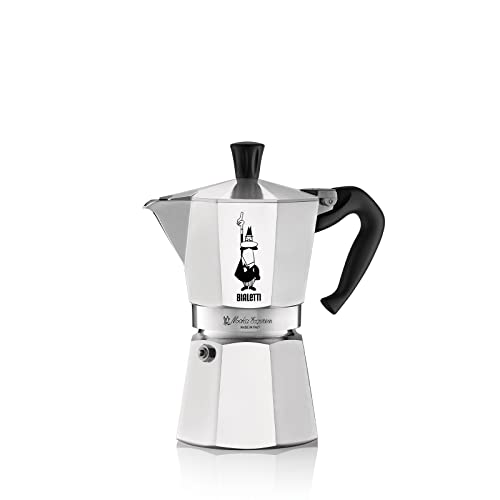
Best for strong, concentrated coffee for about thirty-five dollars
- Cast aluminum, made in Italy since 1933
- Brews six 2-oz servings in 4–5 minutes
- Replaceable gasket, filter plate and safety valve
- Gas and electric coil; needs an adapter on induction
Why buy it: ninety years of production means every consumable part costs a few dollars and is stocked everywhere — this is a brewer you keep for decades.

Best for real 9-bar espresso and steamed milk at home
- PID temperature control, ThermoJet 3-second heat-up
- Automatic milk texturing to a set temperature
- Both pressurised and non-pressurised baskets
- 7.7 inches wide
Why buy it: the smallest machine that delivers genuine espresso pressure and steam strong enough to make microfoam, rather than approximating either.
Our rankings come from aggregated owner reviews, star ratings and published expert consensus rather than first-hand use — the method is on how we rank.
Maintenance is wildly different
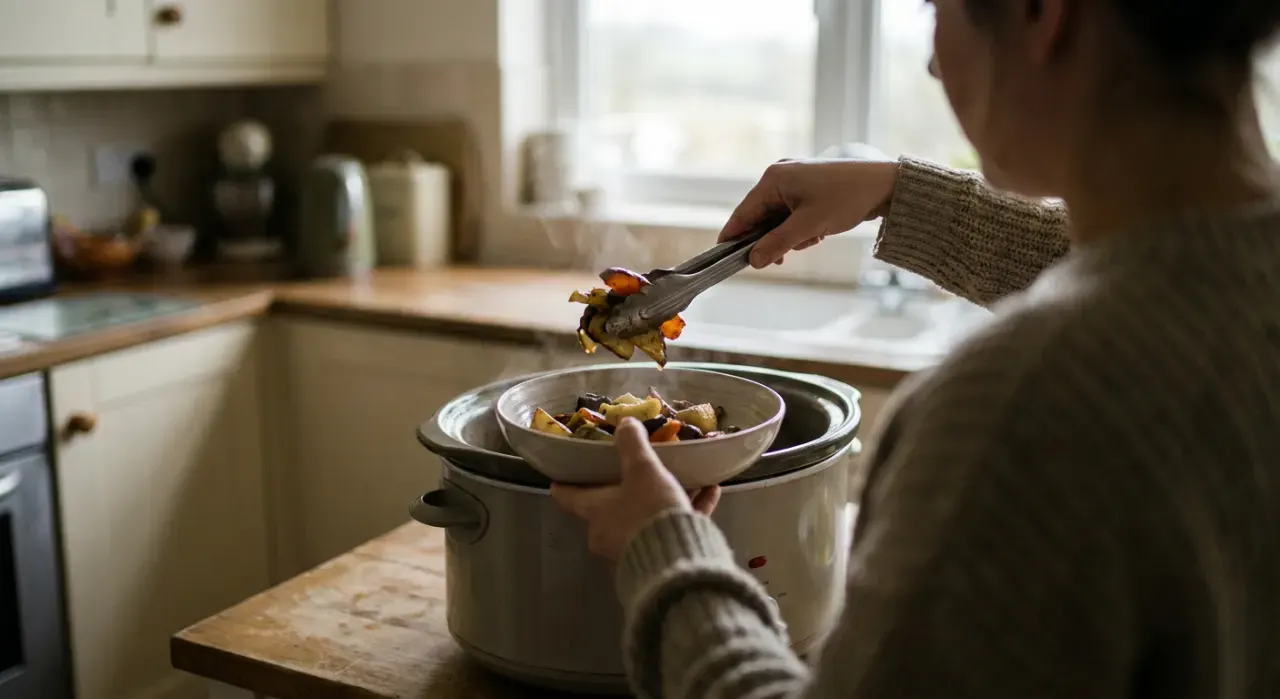
A moka pot needs rinsing with hot water — never detergent, which strips the seasoning aluminum builds up — and a new rubber gasket roughly once a year with daily use, for a couple of dollars. It has no boiler, so it never needs descaling. In a hard-water home that is a genuine advantage.
An espresso machine heats small volumes of water constantly through narrow passages, which makes it the most scale-sensitive appliance in a kitchen. Descale every one to three months depending on hardness, backflush machines with a three-way valve weekly, purge and wipe the steam wand after every drink, and replace group gaskets every year or two. Skip the descaling and the machine will die well before its time — see how to descale an espresso machine and how long espresso machines last.
Which should you buy?
- You drink small, strong black coffee. Moka pot. It gets you most of the way there for under forty dollars.
- You drink lattes, cappuccinos or flat whites. Espresso machine. Nothing else makes a base concentrated enough.
- You are not sure espresso is for you. Buy a moka pot first. It is the cheapest honest test of whether you enjoy small, intense coffee.
- You have hard water and hate maintenance. Moka pot. No boiler, no descaling, one consumable part.
- You have no counter space. Moka pot lives in a cupboard; an espresso machine does not.
- You want to make coffee for four people quickly. Neither — a drip brewer is the right tool.
- You want real pressure but not a machine. A manual lever espresso maker reaches a genuine 9 bar for around $150.
Where to go next
Ready to buy? The best moka pots or the best espresso machines. Weighing other formats? Espresso vs drip coffee and Nespresso vs Keurig. Everything sits under the small kitchen appliances hub.