 Garden
Affiliate Disclosure
Some links on this page are affiliate links. As an Amazon Associate, we earn from qualifying purchases — at no extra cost to you. We do not buy, test, or physically handle the products we cover; our rankings come from aggregated owner reviews, ratings and expert consensus. Commissions never change our verdicts. How we rank · full disclosure.
A 6 quart slow cooker is the right size for a family of four. The reason is the fill rule rather than the headline volume: slow cookers heat through elements wrapped around the sides of the housing, so the crock has to be between one-half and two-thirds full to cook safely and evenly. That leaves a 6-quart pot with about 3 to 4 quarts of working capacity, which is four generous portions of stew, chili or braised meat with a little left over. Five quarts is the minimum, and 7 to 8 quarts suits batch cooking and large roasts.
What does each size actually feed?
Read every capacity as roughly two-thirds of its rating in practical terms. A 4-quart cooker is a three-person appliance, not a four-person one, once you subtract the headroom the fill rule requires.
| Capacity | Working volume | Feeds | Suits |
|---|---|---|---|
| 1.5 to 2 qt | ~1 qt | 1 to 2 | Dips, sides, single portions |
| 3 to 4 qt | ~2 to 2.5 qt | 2 to 3 | Couples, small chickens |
| 5 qt | ~2.5 to 3.5 qt | 3 to 4 | Family meals, no leftovers |
| 6 qt | ~3 to 4 qt | 4 to 5 | The family default, 4 lb roast |
| 7 to 8 qt | ~3.5 to 5.5 qt | 6 to 8 | Batch cooking, brisket, entertaining |
Why does the fill level decide the size?
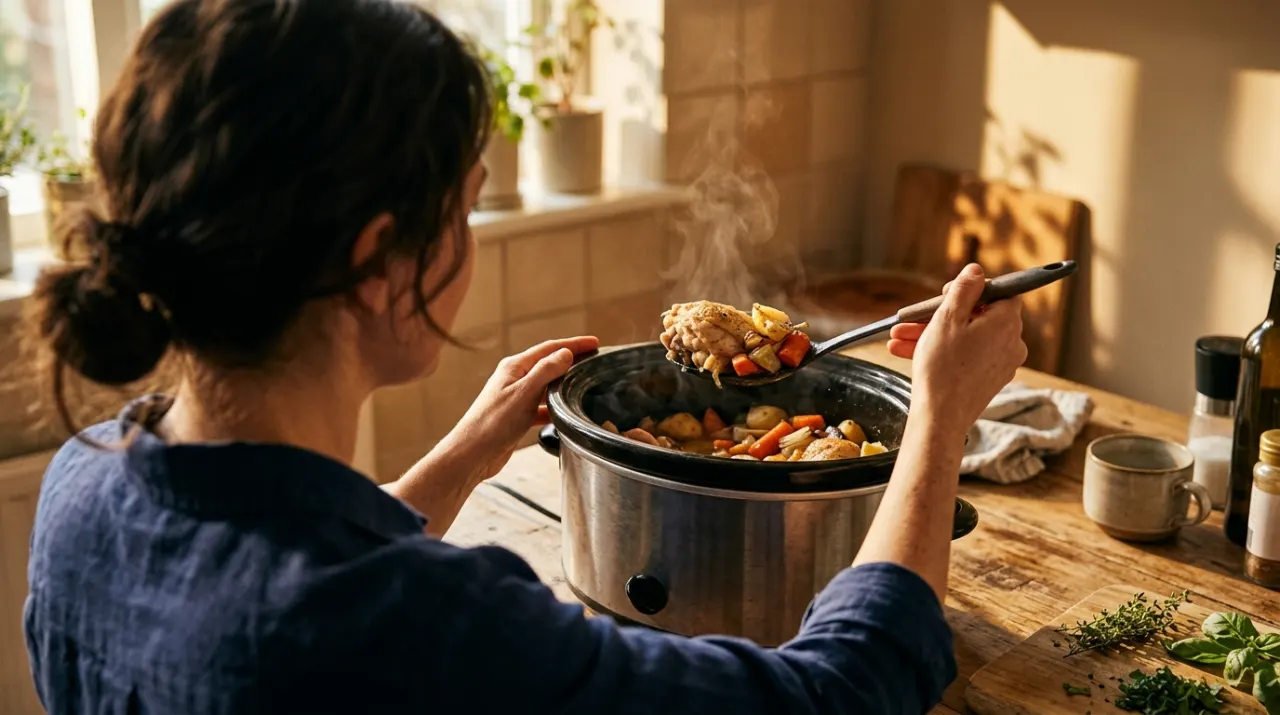
Because of where the heat comes from. Unlike a saucepan heated from below, a slow cooker has resistance elements wrapped around the outside of the metal housing that the ceramic crock sits inside. Heat travels sideways into the food. If the contents sit below the heated band, the lower portion scorches against the wall while the rest of the pot barely warms, and the food spends too long in the range the USDA Food Safety and Inspection Service identifies as the danger zone, 40 to 140 degrees Fahrenheit, where bacteria multiply fastest.
Overfilling causes the opposite failure. A full crock takes far longer for the center of the mass to reach a safe temperature, condensation cannot recirculate properly, and expanding liquid lifts the lid and breaks the steam seal that a slow cooker relies on for even heat. Half to two-thirds is the band nearly every manufacturer specifies, and it is the reason capacity shopping is not a straight portion calculation.
Does the shape matter as much as the size?
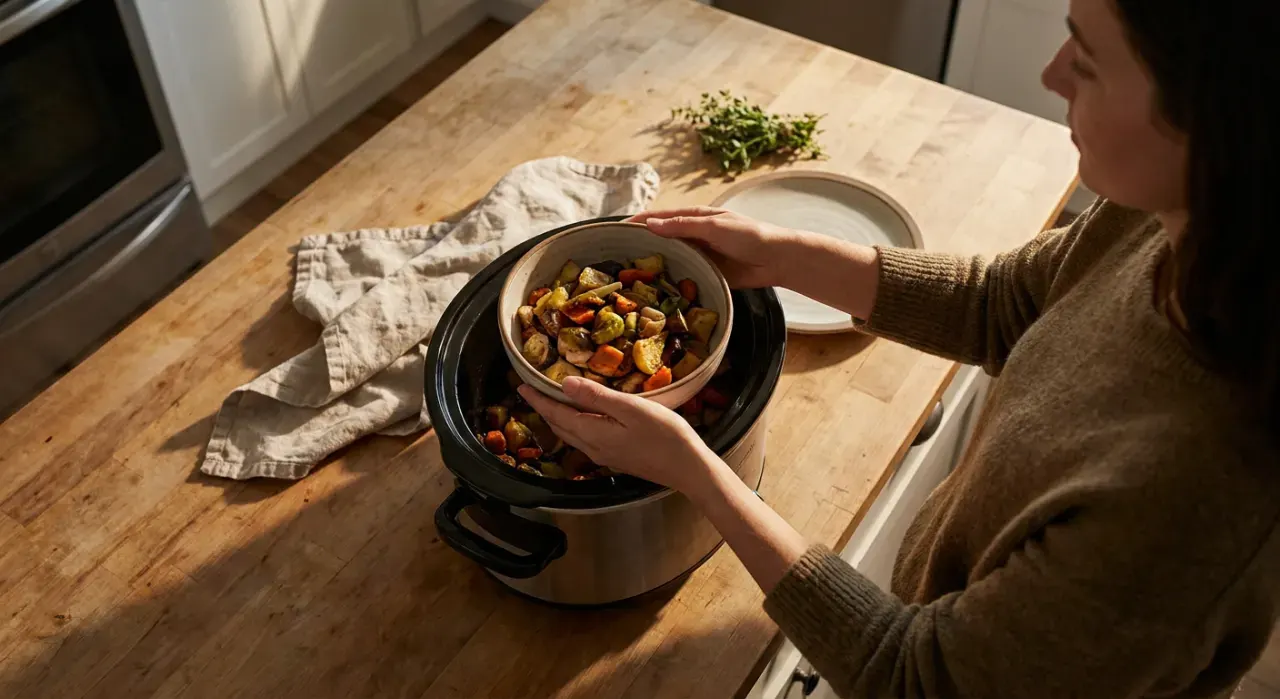
For some cooking, more. An oval crock lets a 4 to 5 pound chicken, a pork loin or a rack of ribs lie flat without being cut down, which is the difference between a recipe working and not. A round crock is easier to stir, easier to clean and slightly more even in the corners, which suits chili, soups, beans, shredded chicken and anything you serve with a ladle. At the 6-quart size both shapes are widely available, so choose by what you cook most rather than by what is on sale.
One practical detail: check whether the crock is dishwasher-safe and whether the unit has a removable, oven-safe insert. That single feature changes how often a slow cooker gets used, because browning meat in the same vessel and washing it without wrestling a 12-pound housing is what removes the friction.
Is one cooker enough, or do you need two?
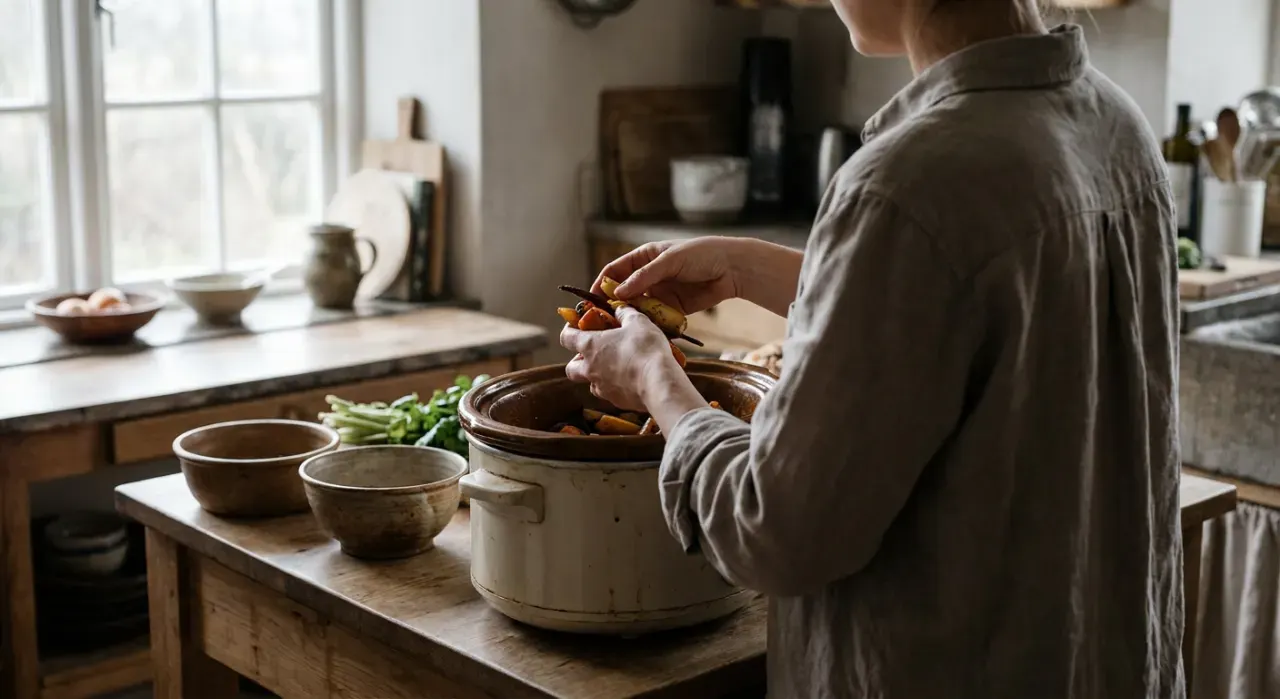
Households that cook in a slow cooker weekly often end up with two, and it is a rational outcome rather than clutter. A 6-quart handles main meals; a 2 to 3 quart handles a side dish, a dip, or a small batch for one or two people without the scorching that a nearly empty large crock produces. The alternative to a second cooker is a heatproof dish set inside the large crock with an inch of water around it, which works but is fiddly.
If you buy only one, buy the 6-quart. It is easier to cook a slightly generous recipe in a family cooker than to cook a family meal in a small one, and leftovers freeze.
Where to go next
Fill level and liquid are the two rules that decide whether a slow cooker recipe works — see how full a slow cooker should be and whether you need liquid in a slow cooker. On timing, can you overcook meat in a slow cooker and leaving one on all day cover the questions that follow. Deciding between appliances? Slow cooker versus Instant Pot helps, and the best slow cookers ranks models on aggregated owner ratings, inside the small kitchen appliances hub.
We never buy or physically handle the products we rank — our picks come from aggregated owner reviews and expert consensus, explained on how we rank.