 Garden

Affiliate Disclosure
Some links on this page are affiliate links. As an Amazon Associate, we earn from qualifying purchases — at no extra cost to you. We do not buy, test, or physically handle the products we cover; our rankings come from aggregated owner reviews, ratings and expert consensus. Commissions never change our verdicts. How we rank · full disclosure.
Installed correctly over a solid, well-draining base, polymeric sand lasts about 10 to 15 years before it needs a full refresh. That lifespan depends almost entirely on water: joints that stay dry and pavers that do not move keep their sand for the long end of the range, while standing water, a shifting base or poor drainage can break it down in just a few years. The binders that make polymeric sand harden and resist washout are also what fail when water sits in the joint, so drainage and a good base matter more than the product itself.
What decides whether it lasts 5 years or 15?
The difference is almost never the sand and almost always the conditions under and around it. A patio that drains well and does not flex keeps its joints intact; one that puddles or moves loses them fast.
| Lasts longer when | Fails sooner when |
|---|---|
| Base is compacted, properly sloped | Water pools or infiltrates the joints |
| Pavers are set tight and do not shift | Pavers rock, settle or move |
| Good surface runoff, no standing water | Poor drainage, chronic wet spots |
| Sand activated with the correct water amount | Over-watered or under-cured at install |
| Swept and refreshed as needed | Pressure-washed into joints, harsh chemicals, heavy de-icing salt |
The through-line is water management: keep water moving off and away, and the sand keeps its integrity.
How do you know it is failing?
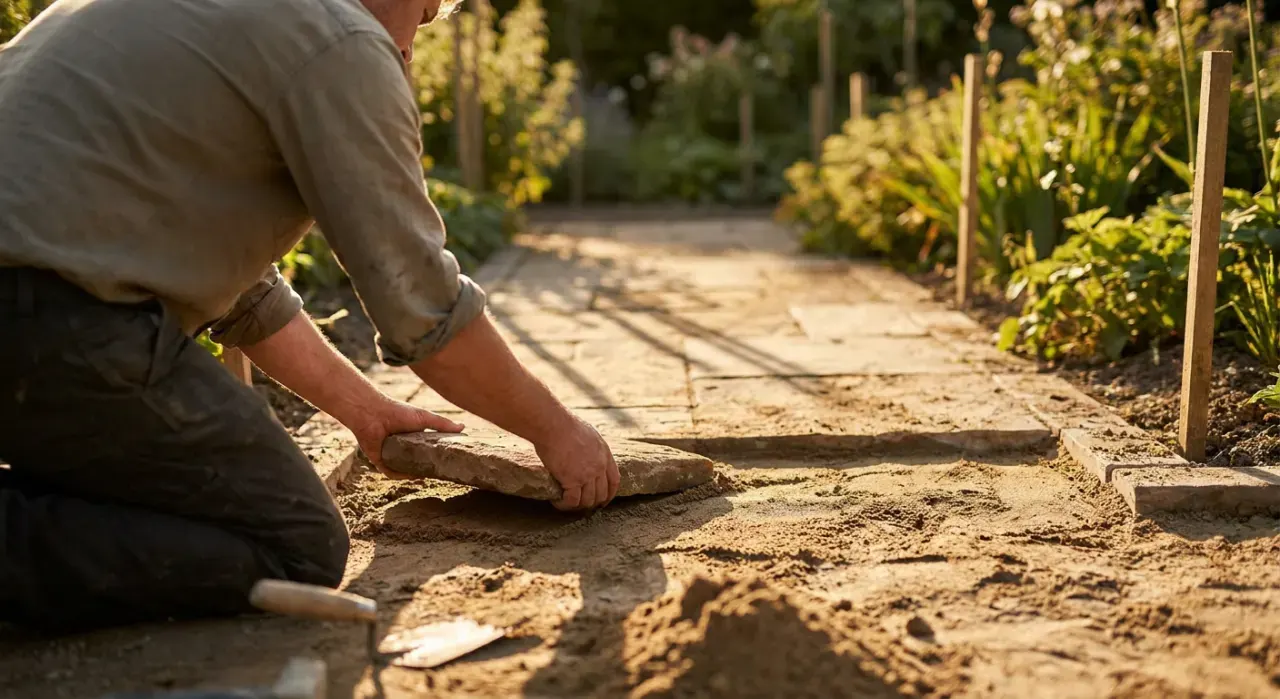
The joints tell you. Watch for sand that looks hollow or has sunk below the paver surface, bare patches where sand has washed out, joints that feel soft rather than firm, and weeds returning where there were none. A little settling in the first season is normal and just needs a top-up. Widespread washout, especially concentrated where water flows across the patio, means the sand is breaking down and the underlying drainage deserves a look before you re-sand — otherwise the fresh sand meets the same fate.
How do you refresh it?
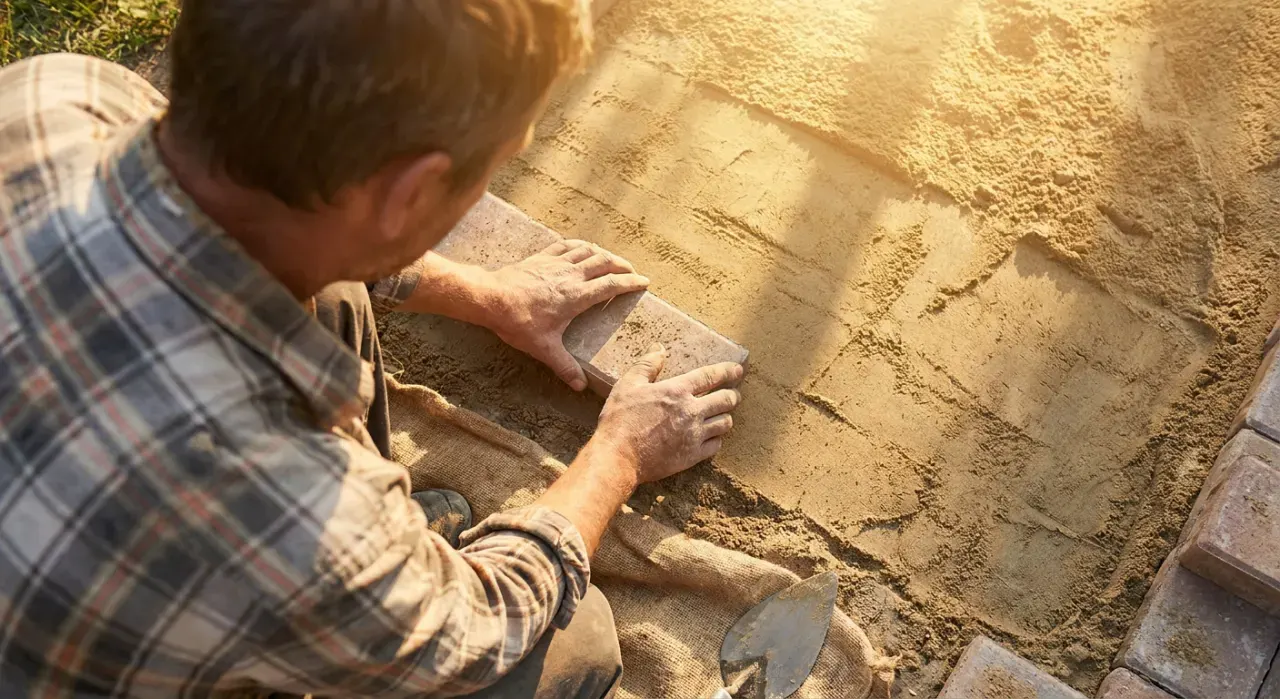
Re-sanding is a straightforward weekend job and does not require lifting pavers. Clear the loose, degraded sand from the top of the joints by sweeping or blowing — you only need to remove the failed surface layer down to sound sand, not excavate the whole joint. Let everything dry completely; polymeric sand hazes and cures poorly on damp pavers. Sweep in fresh sand, compact it, and re-sweep so joints fill fully. Blow or sweep every grain of sand off the paver faces before you add water, because activated haze is nearly impossible to remove. Then mist lightly per the product instructions — the amount of water is the step most people get wrong. Getting the base and drainage right first is what makes the refresh last another decade.
Installing it right the first time
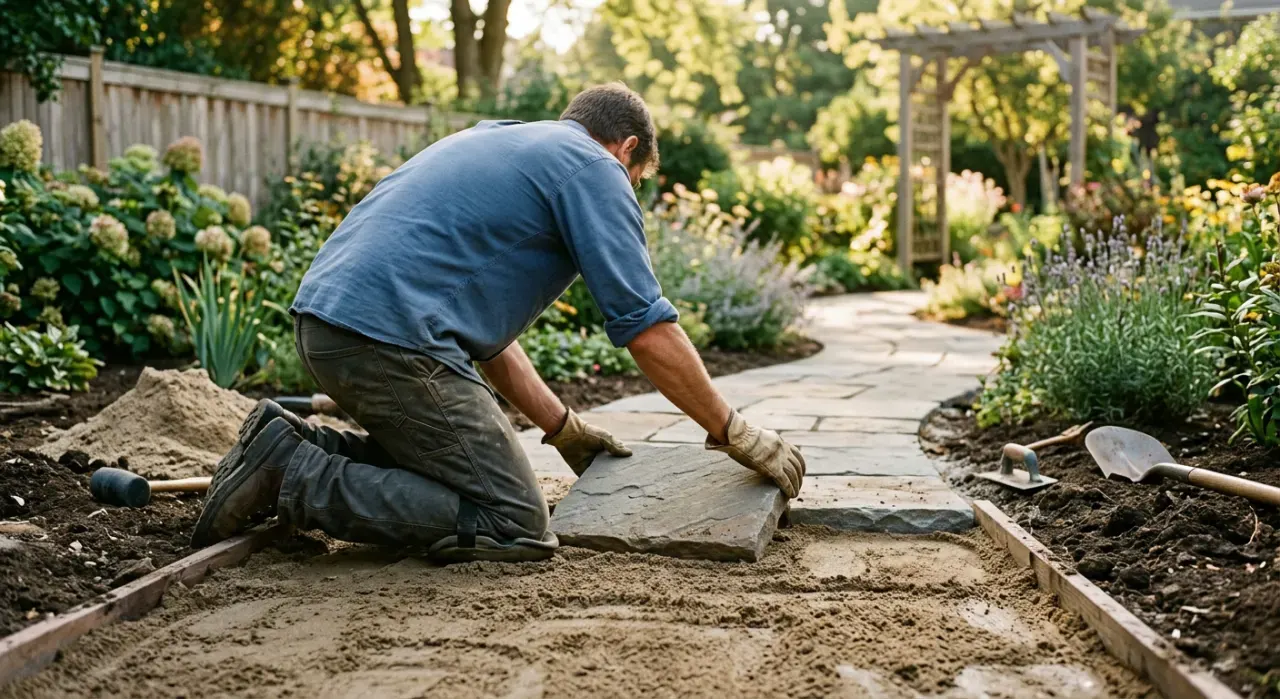
Most early failures start at installation. The binders need the right amount of water to cure — too little and the joints never harden, too much and the binder flushes out or hazes the surface. Sweep the sand fully into the joints and off the paver faces before activating, apply water as a gentle mist in stages rather than a flood, and let it cure fully before foot traffic. And none of it matters without the base: polymeric sand is a joint filler, not a structural fix, so it can only perform over a properly compacted base with good runoff. If pavers move, no sand will hold.
The bottom line
Expect 10 to 15 years from polymeric sand over a good base, less where water sits or pavers shift — and refresh the joints when they hollow out or wash. Because it all rests on the base, the real durability decisions happen underneath, covered in how to lay a paver patio and can you lay pavers directly on dirt. Keeping edges locked helps too — see best landscape edging.
We never buy, test or physically handle the products we rank. Recommendations come from aggregated owner reviews, star ratings, review volume and expert consensus — see how we rank.
More from this hub: Landscaping & Hardscaping · How to lay a paver patio · Pavers on dirt · Best landscape edging · How we rank