 Garden

Affiliate Disclosure
Some links on this page are affiliate links. As an Amazon Associate, we earn from qualifying purchases — at no extra cost to you. We do not buy, test, or physically handle the products we cover; our rankings come from aggregated owner reviews, ratings and expert consensus. Commissions never change our verdicts. How we rank · full disclosure.
The short answer: if your yard is under about a third of an acre and mostly flat, battery wins — instant start, no maintenance, half the noise, and enough power for normal weekly growth. If you are cutting over half an acre, regularly mowing tall or wet grass, or working slopes, gas still wins on sustained power and unlimited runtime. Between those, buy battery and a second pack.
Battery has become the default for good reason, but the marketing on both sides oversells. What follows is the comparison by the four things that actually decide it: runtime, power, noise and cost over five years.
We never buy or physically handle the mowers we rank; the rankings come from aggregated owner reviews, star ratings and review volume, described in how we rank. The wider routine is at the lawn care hub.
Quick Decision by Yard
| Yard | Best choice | Why |
|---|---|---|
| Under 1/8 acre, flat | Battery 16 to 20 in, or corded | One pack covers it twice over; storage and start-up matter more than power |
| 1/8 to 1/3 acre | Battery 20 to 21 in, two packs | The sweet spot; owners rarely report running short |
| 1/3 to 1/2 acre | Battery with 2 to 3 packs, or gas | Genuinely close; charging discipline decides it |
| Over 1/2 acre | Gas self-propelled, or a rider | Pack cost and swap time stop making sense |
| Steep slopes | Gas self-propelled | Sustained load on hills is where battery mowers heat up and throttle back |
| Tall, wet, weedy growth | Gas | An engine holds torque under load in a way most battery motors do not |
| Small urban lot, close neighbors | Battery or reel | Noise is the deciding factor, not cutting ability |
Runtime, Honestly
Runtime claims on the box are measured in ideal conditions: short, dry, light grass, no bag, no self-propel. Reality is different, and owners are consistent about the gap.
The number worth comparing is watt-hours: volts multiplied by amp-hours. A 40V 5Ah pack stores 200Wh. A 60V 4Ah pack stores 240Wh. An 80V 2.5Ah pack stores 200Wh. That figure is comparable across brands and voltages in a way the headline voltage is not, and it is why an 80V mower with a small pack can run out sooner than a 40V mower with a big one.
As a working figure, expect 30 to 45 minutes of real cutting per 5Ah pack on a 40V or 60V mower, covering roughly a quarter to a third of an acre. Four things eat into that: tall or damp grass, bagging rather than mulching, using self-propel drive, and running the mower in its high-power mode. Combine all four and you can halve it.
The practical answer is not a bigger mower but a second battery. Charging a 5Ah pack takes 45 to 90 minutes on a standard charger, which is longer than the mowing break most people want, so anyone over a quarter acre should budget for two packs from the start. Gas, by contrast, has no runtime ceiling at all — a two-minute refill and you continue, which is the whole argument for it on larger properties.
Power Under Load
On a normal weekly cut of dry grass, a modern 40V or higher battery mower and a 150cc gas mower are indistinguishable. The difference shows only when the load stays high.
Gas engines hold torque under sustained load and simply get louder. Battery motors draw more current, which generates heat, and both the motor and the pack have thermal protections that reduce output or shut down to protect themselves. In practice that means the situations owners repeatedly flag: grass that got away to 8 inches after a rainy week, damp morning cutting, thick seed-headed patches, and long climbs on a slope with self-propel engaged.
Brushless motors, which are now standard on anything mid-range or better, closed a lot of this gap by running cooler and more efficiently than the brushed motors on early battery mowers. Higher-voltage platforms — 60V, 80V and 82V — also cope better because they move the same power at lower current and therefore less heat. If you cut demanding grass with a battery mower, the practical adjustments are to raise the deck a notch, slow your walking pace, and mulch rather than bag.

Noise
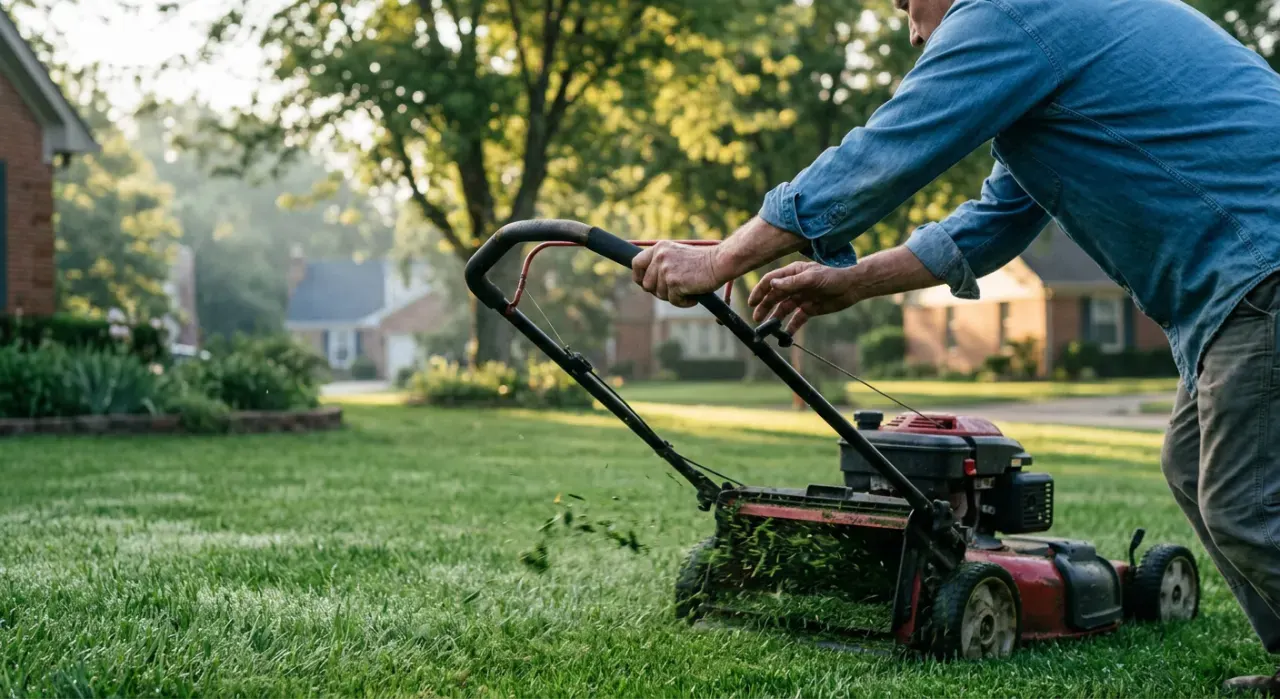
A gas walk-behind runs roughly 90 to 96 dB at the operator’s ear. A battery mower typically runs 75 to 85 dB. Because decibels are logarithmic, a 15 dB difference is far larger than it reads — it is the difference between needing hearing protection and holding a conversation while you mow.
This turns out to be one of the strongest themes in owner reviews of battery mowers, and it changes behavior rather than just comfort. Reviewers repeatedly mention mowing at 7am or 8pm because it no longer irritates anyone, which in turn means they mow more often and never break the one-third rule — and mowing frequency does more for a lawn than mower brand ever will. The full case for that is in how often to mow.
Five-Year Cost of Ownership
| Item | Gas push mower | Battery push mower |
|---|---|---|
| Purchase | Lower for equivalent deck width | Higher, especially with two packs |
| Fuel or power | $25 to $50 a year in gas and stabilizer | A few dollars a year in electricity |
| Routine service | Oil, spark plug, air filter — $20 to $40 a year | None |
| Blade | Sharpen or replace, same either way | Sharpen or replace, same either way |
| Likely repair | Carburetor cleaning or rebuild after a bad winter | Battery pack replacement at 3 to 5 years |
| Winter storage | Drain fuel or add stabilizer | Store packs at partial charge above freezing |
| Startup | Pull cord, occasional stubbornness | Push button, no seasonal ritual |
Over five years the totals land closer than either camp admits. Gas costs more each year in consumables and time; battery costs more up front and then hits you once when packs fade. The genuine tiebreaker is the platform: if you already own batteries for a trimmer, blower or hedge trimmer in the same brand, buying a bare-tool mower on that platform is decisively the cheapest path, and that single factor probably decides more purchases than any spec.
Two failure modes are worth knowing. Gas mowers die of ethanol-related carburetor gumming after being stored with fuel in them — the fix is prevention, either running the tank dry or using stabilizer. Battery packs degrade with heat and with being stored at full or empty charge; owners who leave packs in a hot garage or on the charger all winter report noticeably shorter life. Stored around half charge in a cool place, packs commonly last well past five years.

Corded and Reel Mowers Still Make Sense
Corded electric is the forgotten option and it is the cheapest way to mow a small lot. Unlimited runtime, no batteries to degrade, low noise, very low price. The cord is genuinely annoying above about 4,000 square feet and rules out anything with obstacles, but for a small flat yard it is hard to argue with.
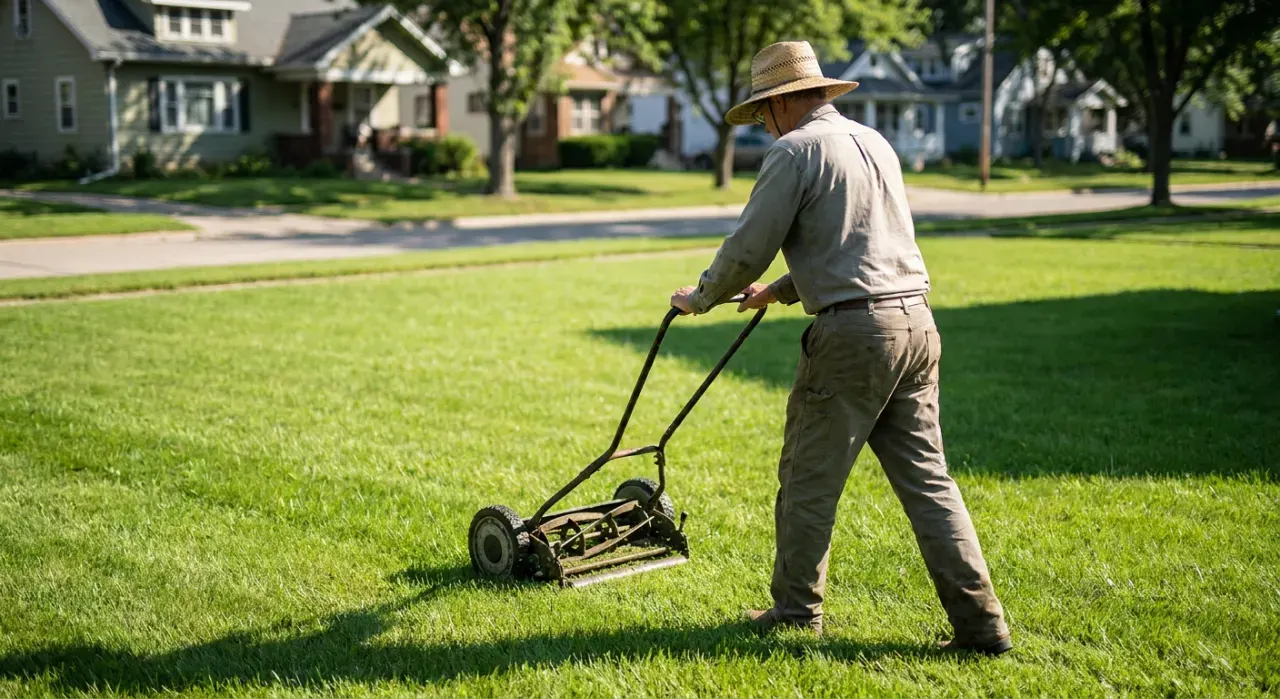
Reel mowers cut with a scissoring action that is cleaner than any rotary blade, cost almost nothing to own, and make no noise at all. They need short, even turf cut frequently — they are excellent on a small, level, well-maintained lawn and frustrating on anything long, weedy or bumpy. They are also the correct tool if you keep hybrid Bermuda or zoysia below an inch, where a rotary mower scalps every high spot.
Which to Buy
Buy battery if your yard is under a third of an acre, you value quiet and instant starting, you already own compatible packs, or you are the person who dreads pull-starting a cold engine in April. Add a second pack and stop worrying about runtime.
Buy gas if you mow over half an acre, work real slopes, routinely cut tall or wet grass, or want the widest self-propelled deck for the least money. On a large or hilly property, self-propelled drive stops being a luxury within one season — owners of big yards who bought push mowers are one of the most consistent regret categories in mower reviews.
Whichever you choose, keep the blade sharp and the deck set to the right height for your grass; those two things affect the result more than the power source. The ranked field across both types is in best lawn mowers, and the drive systems owners say hold up past season three are in best self-propelled mowers. For the height your species actually wants, see mowing height by grass type.