 Garden

Affiliate Disclosure
Some links on this page are affiliate links. As an Amazon Associate, we earn from qualifying purchases — at no extra cost to you. We do not buy, test, or physically handle the products we cover; our rankings come from aggregated owner reviews, ratings and expert consensus. Commissions never change our verdicts. How we rank · full disclosure.
The short answer: a mower that starts and then dies is fuel-starved in most cases. The three causes that resolve the majority of stalling complaints are a blocked fuel-cap vent, a clogged carburetor jet from stale fuel, and a dirty air filter. Diagnose by timing: dying within seconds points to the carburetor bowl running dry, dying after a consistent 5 to 20 minutes points to the cap vent, and dying only under load points to the air filter, a dull blade, or a packed deck. All four checks are free or under $25.
The pattern of the stall is the diagnosis, so pay attention to when it quits rather than just that it quits. Our mower rankings come from aggregated owner reviews and reliability reports rather than first-hand testing, as set out in how we rank. More maintenance guides live at the lawn care hub.
What does the timing of the stall tell you?
Each failure mode starves the engine at a characteristic point. Use this table to jump straight to the likely cause rather than pulling the carburetor first.
| When it dies | Most likely cause | Quick test | Fix |
|---|---|---|---|
| Within 2 to 10 seconds | Carburetor jet blocked; running only on primer charge | Does a squirt of fuel in the plug hole extend the run? | Clean bowl and jet, $10 to $25 kit |
| After a consistent 5 to 20 min | Blocked fuel-cap vent | Loosen cap and restart | New cap, $10 to $20 |
| Only under load or in tall grass | Air filter, dull blade, packed deck | Try one notch higher on a clean deck | Filter $8 to $15, blade $15 to $30 |
| Randomly, with surging | Lean running, air leak or partial blockage | Look for surging at steady throttle | Carburetor clean, gasket check |
| When hot, restarts when cool | Failing ignition coil or vapor lock | Spark test on a hot engine | Coil $20 to $50 |
| On slopes only | Low oil sensor or fuel pickup uncovered | Check dipstick on level ground | Correct oil level |
How do you fix fuel starvation on a mower?
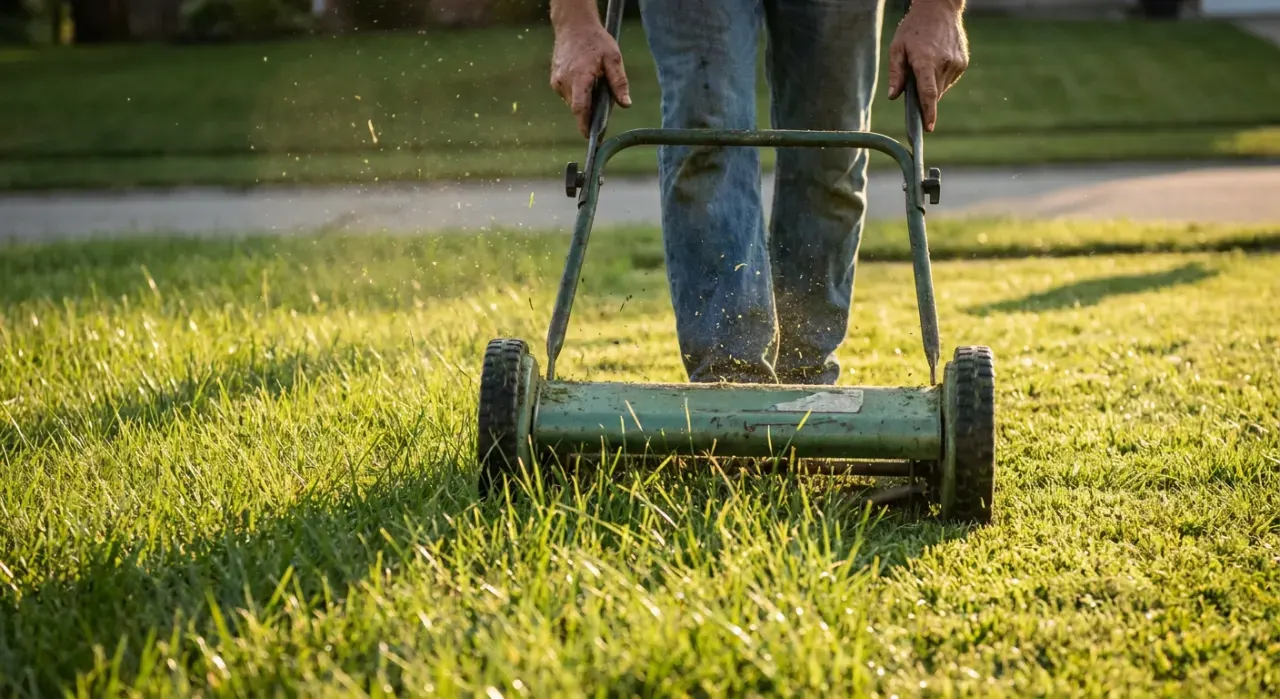
Start with the fuel itself. Gasoline older than about 30 days oxidizes, and ethanol-blended pump gas draws in moisture, which is why the US Department of Energy and small-engine manufacturers advise treating or draining fuel before storage. Drain the tank, refill with fresh 87 octane at no more than 10 percent ethanol, and add stabilizer. If the stall persists, work down the fuel path: cap vent, fuel valve, in-line filter, fuel line for kinks or cracks, then the carburetor bowl and the tiny jet through the bowl nut. Carburetor cleaner and a single strand of wire clears most jets in ten minutes.
How do the air filter and deck cause stalling?
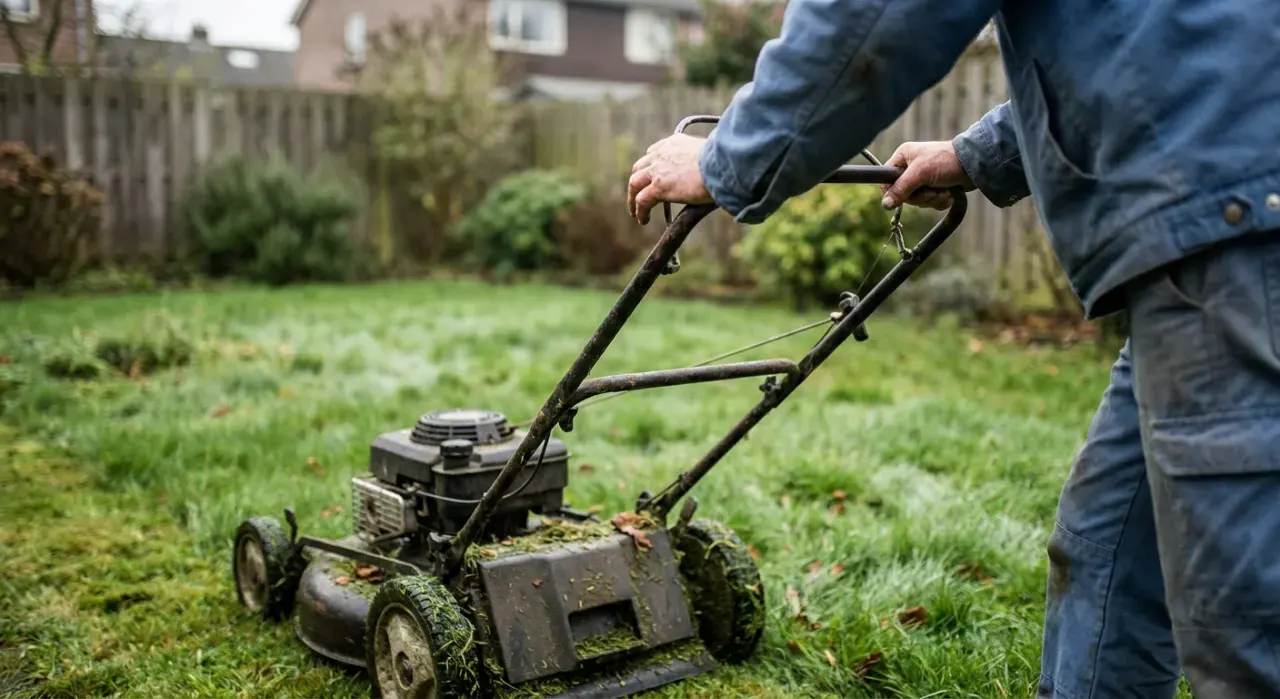
A clogged filter enriches the mixture until the engine cannot make power, and the failure shows up as a mower that idles happily then dies the moment it meets thick grass. Paper filters should be replaced yearly or sooner in dusty conditions; foam filters can be washed in warm soapy water, dried fully, and lightly oiled. At the same time, tip the mower with the air filter side up, disconnect the spark plug wire first, and scrape the caked clippings off the underside of the deck. Packed grass restricts airflow under the deck and forces the engine to push a heavy mat of clippings, and it is a frequent cause of stalling in wet conditions, which is one reason mowing wet grass is best avoided.
When is the problem ignition rather than fuel?
Suspect ignition when the mower dies once hot and restarts after cooling for 20 to 30 minutes. A failing coil breaks down as its windings heat and expand, so the engine loses spark at operating temperature and recovers as it cools. Confirm by removing the plug when the engine dies hot, grounding it against the block, and pulling: no spark on a hot engine but good spark cold points to the coil. Also check that the safety bail cable is not binding and grounding the ignition intermittently, and confirm the flywheel key is not partially sheared, which throws timing off after an impact with a rock or root.
How do you stop a mower stalling in the first place?
Three habits prevent nearly all of it. Use fuel stabilizer at every fill or run the tank dry before storage. Replace the air filter and spark plug once a year. Keep the blade sharp and the deck clean so the engine is never asked for more power than it has. Beyond that, follow the oil schedule in how often to change mower oil, and replace the plug per how often to change a mower spark plug.
If the mower will not even fire, start at why my lawn mower will not start. If it is repeatedly failing on an old machine, weigh it against how long lawn mowers last, and see current replacements in best lawn mower.