 Garden

Affiliate Disclosure
Some links on this page are affiliate links. As an Amazon Associate, we earn from qualifying purchases — at no extra cost to you. We do not buy, test, or physically handle the products we cover; our rankings come from aggregated owner reviews, ratings and expert consensus. Commissions never change our verdicts. How we rank · full disclosure.
The question that decides how long a gas pressure washer lasts is not the PSI on the carton — it is what kind of pump is bolted to the engine. Almost every gas washer under about $600 uses an axial cam pump: driven straight off the crankshaft, spinning at full engine speed, sealed, and effectively disposable at somewhere between 200 and 500 hours. Spend more and you get a triplex plunger pump: gear- or belt-reduced to about half that speed, with seals, valves and packings you can replace on a bench for a small fraction of the machine price.
That single distinction explains most of what people find confusing about this category — why a $400 machine and a $1,400 machine can quote almost the same pressure, and why the cheap one dies in season three while the expensive one gets rebuilt and keeps going. Both are legitimate purchases. They are simply not the same product.
Top Picks at a Glance
Read Cleaning Units, Not PSI
Pressure loosens dirt; water volume carries it away. Multiply PSI by GPM and you get cleaning units, the only figure that compares two machines honestly — and it is the one manufacturers rarely print, because it flattens the gap they are selling.
| Machine | PSI | GPM | Cleaning units | Pump type |
|---|---|---|---|---|
| Good electric (for reference) | 2300 | 1.76 | ~4,050 | Axial, sealed |
| Westinghouse WPX3200 | 3200 | 2.5 | ~8,000 | Axial |
| Simpson Clean Machine 3400 | 3400 | 2.5 | ~8,500 | Axial, serviceable |
| Westinghouse WPX3400 | 3400 | 2.6 | ~8,840 | Axial |
| DeWalt DXPW3300-S | 3300 | 2.4 | ~7,920 | Axial |
| Simpson PowerShot 3500 | 3500 | 2.5 | ~8,750 | Triplex |
| Simpson Aluminum 4200 | 4200 | 2.5 | ~10,500 | Triplex |
Notice how tightly the homeowner machines cluster. Between the WPX3200 and the Simpson Clean Machine there is a 6% difference in real throughput, which you will never feel. Between any of them and a good electric there is a doubling, which you absolutely will. That is the honest case for going gas — and the honest case against paying for the last 400 PSI.
Our #1 Pick: Westinghouse WPX3200
The WPX3200 sits at the point where the category makes sense for a household. At 3200 PSI and 2.5 GPM it produces roughly double the throughput of a good electric, it arrives with pump oil already installed rather than in a bottle taped to the frame, and the ownership record across thousands of reviews is the cleanest of any mainstream gas machine we looked at.
It is an axial-pump machine, so treat it accordingly. Owners who get many seasons out of one do the same three things: they never run it dry, they never let it idle in bypass for more than a minute or two with the trigger released, and they winterise it with pump antifreeze rather than hoping. Owners who report a dead pump in year two almost always describe one of those three failures in the review itself.
The other honest limitation is the same one every 212cc machine shares: it is loud, it needs fresh fuel, and it will not start in March on gas you left in it in November. None of that is a defect. It is what an engine is.
Check price on Amazon → (paid link)
The Ranked Field

Best for the homeowner who wants gas throughput without pro-grade weight or price
- 3200 PSI at 2.5 GPM — about 8,000 cleaning units
- 212cc four-stroke engine with an axial cam pump
- Onboard soap tank, five quick-connect nozzles, 25-foot hose
- 12-inch never-flat wheels and a folding handle
Why buy it: the best-rated gas machine in the mainstream homeowner class, and the one whose ownership record shows the fewest first-season surprises.

Best for long driveways, big patios and anyone who wants the fastest cheap gas machine
- 3400 PSI at 2.6 GPM — roughly 8,840 cleaning units
- Same 212cc engine family as the WPX3200, retuned
- Soap tank, five nozzles, onboard storage
- Ships with pump oil already installed
Why buy it: about 10% more throughput than the WPX3200 for a modest premium, which on a 900-square-foot driveway is a real chunk of an afternoon.

Best for buyers who intend to still own the machine in ten years
- 3400 PSI at 2.5 GPM with a Simpson CRX 190cc engine
- Welded steel frame instead of moulded plastic
- 25-foot MorFlex hose that stays supple in the cold
- Serviceable axial pump with replaceable seals and an accessible unloader
Why buy it: the frame and the pump are the parts you cannot upgrade later, and Simpson build both to a standard the budget machines do not attempt.

Best for people who have been burned by a no-name engine that would not restart in spring
- Honda GX200 commercial engine with a cast-iron sleeve
- 3500 PSI at 2.5 GPM through an AAA triplex plunger pump
- Welded steel frame, 50-foot steel-braided hose
- Triplex pump — rebuildable rather than disposable
Why buy it: a triplex plunger pump behind a Honda GX is the combination that separates a machine you maintain from one you replace, and both parts have dealer support in every US county.

Best for buyers who want a service network and parts availability over raw specs
- 3300 PSI at 2.4 GPM, residential-duty rating
- Honda GC engine on most build runs
- Steel frame with a 25-foot hose and five nozzles
- Serviced through the DeWalt dealer network
Why buy it: the specs are ordinary and the support is not — for anyone who would rather hand a machine to a local service center than diagnose it, that is worth the premium.

Best for contractors, farms and anyone running the machine several hours a day
- 4200 PSI at 2.5 GPM from a Honda GX390 commercial engine
- AAA triplex plunger pump with a thermal relief valve
- Corrosion-resistant aluminum frame for coastal and salt use
- 50-foot steel-braided hose rated to the full working pressure
Why buy it: built for continuous duty rather than a Saturday morning — the aluminum frame and triplex pump are what a rental yard specifies, and they survive accordingly.

Quick Comparison
| Product | Best for | Rating | Price | Buy |
|---|---|---|---|---|
| Westinghouse WPX3200 Gas Pressure Washer, 3200 PSI, 2.5 GPM | Best Overall | — | Check (paid link) | |
| Westinghouse WPX3400 Gas Pressure Washer, 3400 PSI, 2.6 GPM | Most Output for the Money | — | Check (paid link) | |
| Simpson Clean Machine 3400 PSI Gas Pressure Washer, 2.5 GPM, CRX engine | Best Build Quality | — | Check (paid link) | |
| Simpson PowerShot 3500 PSI Gas Pressure Washer, 2.5 GPM, Honda GX200 | Best Engine | — | Check (paid link) | |
| DeWalt DXPW3300-S Gas Pressure Washer, 3300 PSI, 2.4 GPM | Best Widely-Serviced Brand | — | Check (paid link) | |
| Simpson Aluminum Series 4200 PSI Gas Pressure Washer, 2.5 GPM, Honda GX390 | Best Pro-Grade | — | Check (paid link) |
Axial vs Triplex: Which One You Actually Need
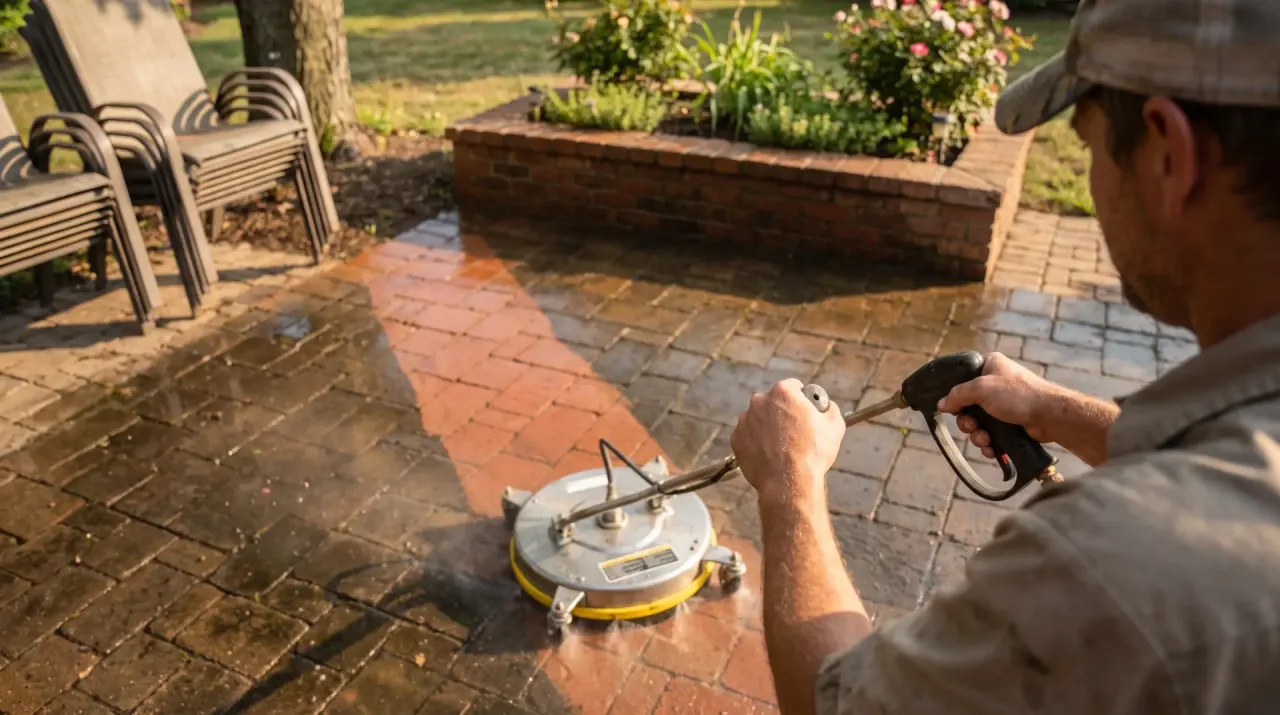
The rule of thumb used across the pressure-washing trade is straightforward. Under roughly two hours a month, an axial pump is the sensible purchase and the money is better spent elsewhere — on a surface cleaner, say. Above that, the arithmetic reverses fast.
| Axial cam | Triplex plunger | |
|---|---|---|
| Drive | Direct off the crankshaft | Gear or belt reduced |
| Pump speed | Engine speed (~3400 rpm) | About half (~1700 rpm) |
| Typical life | 200–500 hours | 2,000–5,000 hours |
| Rebuildable | Rarely worth it | Yes — seals and valves are stock items |
| Runs cooler in bypass | No — heats fast | Yes, but still not indefinitely |
| Found on | Almost everything under $600 | Honda GX and pro-frame machines |
The bypass problem is the one that kills axial pumps. When you release the trigger, the unloader valve sends water in a loop back through the pump instead of out of the wand. That water has nowhere to shed heat, and in an axial pump it can reach scalding temperatures in a couple of minutes, cooking the seals. If you are going to stop for more than a minute, shut the engine off. Half the "the pump failed after one season" reviews in this category describe a machine left idling on bypass while the owner moved a ladder.
Safety: Two Hazards, Both Underestimated
High-pressure injection injury. A stream from a narrow nozzle can break skin and drive water, grit and bacteria into the tissue underneath through a puncture that looks trivial. Mississippi State University Extension's safety guidance puts it plainly in its pressure washer safety bulletin: the injuries are avoidable, and the most serious of them come straight from the nozzle. Never point a wand at a person, never brace a hand in front of the tip, and treat any puncture from the spray as a surgical emergency rather than a cut to bandage — the CDC's pressure washer safety guidance says the same. Avoid ladders entirely; the kickback will move you.
Carbon monoxide. This is the hazard specific to gas. The engine produces carbon monoxide you cannot see or smell, and it accumulates in garages, sheds, breezeways and under decks far faster than people expect. The CPSC's tracking of engine-driven equipment continues to record deaths in spaces the victims believed were ventilated. Run the machine fully outdoors, away from open windows and air intakes, and never start it under cover to "warm it up".
Before you open any fitting — changing a nozzle, chasing a leak, swapping a hose — kill the engine, disconnect the garden hose, and squeeze the trigger to bleed the pressure trapped in the line. There is enough stored energy in a charged hose to injure you after the engine has stopped.

How We Rank
We do not buy, run or test these machines. Rankings come from aggregated owner ratings across the most-owned gas pressure washers, weighted toward long-ownership reviews where pump failure and hard starting surface, and cross-checked against published engine and pump specifications. Four things carry weight: real throughput, computed as cleaning units rather than read off the PSI badge; pump architecture and serviceability, which is the single strongest predictor of how long the machine lives; engine support, meaning whether parts and service exist near you; and frame and hose quality, because those are the components you cannot economically replace. Prices were checked at the time of writing. Full method: how we rank.
The Field, Reviewed
1. Westinghouse WPX3200 — Best Overall
Covered above. Owners praise: fast assembly, oil already in the pump, genuine speed on concrete, and never-flat wheels that survive gravel. Owners gripe about: hard starting after winter on old fuel, a soap siphon that only draws at low pressure with the black nozzle fitted, and noise that will annoy a close neighbor. Check price (paid link).
2. Westinghouse WPX3400 — Most Output for the Money
The same platform tuned harder. About 10% more cleaning units than the WPX3200, which on a large driveway is a genuine time saving rather than a spec-sheet one.
Owners praise: speed on old concrete, easy nozzle changes, and value against branded machines at the same output. Owners gripe about: the identical starting complaints, a 25-foot hose most people immediately want to extend, and an axial pump that punishes bypass idling. Check price (paid link).
3. Simpson Clean Machine 3400 — Best Build Quality
Marginally slower on paper than the WPX3400 and built to a visibly higher standard. The welded steel frame does not flex when you drag it, the MorFlex hose stays supple in cold weather instead of coiling like a spring, and the pump has an accessible unloader and replaceable seals.
Owners praise: frame rigidity, hose quality, and a pump that can be serviced rather than binned. Owners gripe about: weight, price against the Westinghouse pair, and assembly that takes longer than the box suggests. Check price (paid link).
4. Simpson PowerShot 3500 (Honda GX200) — Best Engine
The first machine in this list that is a different class rather than a different trim. A Honda GX200 with a cast-iron cylinder sleeve, an AAA triplex plunger pump, a welded frame and a 50-foot steel-braided hose. It costs roughly twice the homeowner machines and will outlive three of them.
Owners praise: starting on the first or second pull every time, the triplex pump running cool, and parts availability through Honda and Simpson dealers. Owners gripe about: the price, the weight, and that at 3500 PSI it is genuinely too much machine for washing a car. Check price (paid link).
5. DeWalt DXPW3300-S — Best Widely-Serviced Brand
The specification is unremarkable for the money. What you are buying is a dealer network — if the machine stops, there is a counter you can carry it to, which is not true of most direct-import brands.
Owners praise: engine reliability, a solid steel frame, and the reassurance of a service path. Owners gripe about: paying a brand premium for mid-pack specs, and a lower average rating than the Westinghouse machines it competes with. Check price (paid link).
6. Simpson Aluminum Series 4200 (Honda GX390) — Best Pro-Grade
A contractor machine. The aluminum frame exists because steel frames corrode in coastal and chemical service; the GX390 and triplex pump exist because rental fleets need machines that survive being run all day by people who do not own them.
Owners praise: continuous-duty stamina, corrosion resistance, and a pump that is rebuilt rather than replaced. Owners gripe about: the price, the weight on a slope, and — legitimately — that 4200 PSI will destroy anything softer than concrete if you fit the wrong tip. Check price (paid link).
What Owners Actually Complain About
It will not start in spring. The single most common gas complaint, and it is almost always stale fuel. Ethanol-blended gasoline begins degrading in about 30 days and separates in the tank, leaving varnish in the carburetor jets. Run the tank dry or add stabiliser before storage and the complaint disappears. See how to store a pressure washer.
Pump failure in year two or three. Nearly always bypass heat or a freeze. Both are preventable and neither is covered by warranty.
Surging and pulsing. A machine that hunts up and down under load is usually telling you the unloader valve is sticking or the inlet is starved. It is a cheap fix if you catch it early — see why a pressure washer surges.
The soap will not draw. Not a fault. Detergent siphons only work at low pressure, which means fitting the black soap nozzle. A large share of one-star reviews are this.
Noise. Gas machines run in the mid-80s to low-90s dB(A) at the operator. If your neighbors are close, this is a real consideration and an electric may keep the peace.
The Verdict
For nearly every household the Westinghouse WPX3200 is the right gas machine: enough throughput to justify the fuel and the noise, the best owner record in its class, and a price that does not pretend to be professional equipment. Take the WPX3400 if you have a genuinely large area of concrete, the Simpson Clean Machine 3400 if frame and hose quality matter more to you than the last 100 PSI, and step up to the Simpson PowerShot 3500 only if you will run the machine hard enough to need a rebuildable pump. Whatever you buy, shop on cleaning units, never idle it on bypass, and winterise it. Check price on Amazon → (paid link)
More from this hub: leaf blowers & yard cleanup · best pressure washer overall · best commercial pressure washer · best surface cleaner · storing a pressure washer · how we rank.