 Garden


Affiliate Disclosure
Some links on this page are affiliate links. As an Amazon Associate, we earn from qualifying purchases — at no extra cost to you. We do not buy, test, or physically handle the products we cover; our rankings come from aggregated owner reviews, ratings and expert consensus. Commissions never change our verdicts. How we rank · full disclosure.
Half the brands on a pressure washer shelf do not build pressure washers. Several of the best-known names in the category license their branding to an outside manufacturer, which is not automatically bad — but it means the badge tells you nothing about the pump inside, and two machines wearing different logos can share a factory. What actually distinguishes brands is narrower and more useful: motor or engine sourcing, whether the pump is serviceable, how long spares stay available, and where you have to go when something fails.
Below is the brand landscape as the ownership record actually shows it, including the two brands most people ask about that you cannot buy on a marketplace at all.
Top Picks at a Glance
What Actually Separates One Brand From Another
Ignore marketing tiers and look at four things.
| Factor | Why it decides ownership | Brands that do it well |
|---|---|---|
| Motor type (electric) | Universal motors burn out; induction and brushless do not | Westinghouse, Kärcher |
| Pump serviceability | A sealed axial pump makes the whole machine disposable | Simpson, Generac |
| Parts availability | Determines whether year four is a repair or a replacement | Sun Joe, Simpson |
| Certified performance figures | CETA-certified numbers are measured, not taken at bypass | Kärcher, Simpson, Greenworks (selected models) |
| Where you buy and service it | Single-retailer exclusives concentrate all support in one place | Open channel: Westinghouse, Sun Joe, Simpson |
The Brands, Ranked
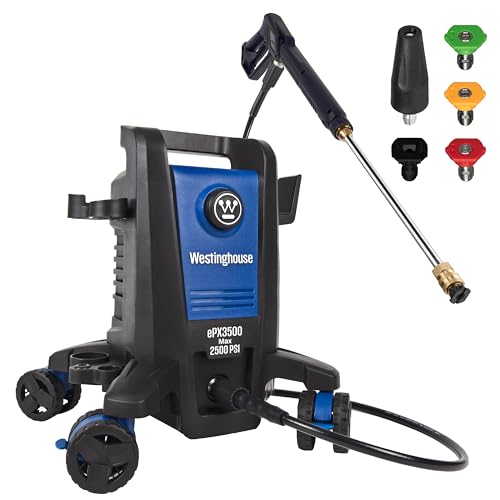
Best for the buyer who wants the strongest ratings record in the category
- Induction motor rather than a universal motor
- 2500 max PSI at 1.76 max GPM
- Anti-tip base, five nozzles, onboard soap tank
- Consistent parts availability across the ePX and WPX lines
Why buy it: Westinghouse has quietly become the brand with the best ratings-to-volume record in home pressure washers, largely because it specifies induction and brushless motors where rivals still fit universal ones.

Best for a first machine with the deepest ownership record in America
- Two onboard detergent tanks
- Five quick-connect nozzles
- Total-stop system
- Enormous aftermarket and spare parts supply
Why buy it: Sun Joe’s advantage is not engineering, it is scale — this is the most-owned pressure washer in the country, so every quirk, part number and failure mode is public knowledge.

Best for buyers who expect to still own the machine in ten years
- Welded steel frame rather than moulded plastic
- 3400 PSI at 2.5 GPM with a Simpson CRX engine
- 25-foot MorFlex hose
- Serviceable pump with replaceable parts
Why buy it: Simpson is the one consumer-facing brand that also sells into the contractor market, and the frame and pump reflect it — this is a repairable machine rather than a disposable one.

Best for buyers who want measured, certified performance figures
- CETA-certified performance rating
- Water-cooled induction motor
- Upright body with telescoping handle
- Onboard hose and cord storage
Why buy it: Kärcher invented the category and is one of the few brands publishing CETA-certified numbers instead of bypass maximums — its ratings look low precisely because they are honest.

Best for households already invested in Greenworks batteries and light-duty jobs
- 1600 PSI at 1.2 GPM — light-duty by design
- Compact, easy to store and carry
- 25-foot high-pressure hose
- Part of a broad Greenworks outdoor-power range
Why buy it: Greenworks competes on breadth and price rather than raw output, and its pressure washers are best understood as light-duty tools bought alongside the rest of the range.

Best for trade buyers who already run DeWalt on site
- 3300 PSI at 2.4 GPM
- Axial cam pump on a steel frame
- Four quick-connect nozzles
- Widely stocked service parts through trade channels
Why buy it: DeWalt licenses its pressure washer line rather than building it in-house, so judge the machine on its pump and frame, not on the yellow paint — on those terms it is solid rather than exceptional.
Quick Comparison
| Product | Best for | Rating | Price | Buy |
|---|---|---|---|---|
| Westinghouse ePX3500 Electric Pressure Washer, 2500 Max PSI, 1.76 Max GPM | Best Overall Brand | — | Check (paid link) | |
| Sun Joe SPX3000 Electric Pressure Washer, 2030 Max PSI, 1.76 GPM | Best Value Brand | — | Check (paid link) | |
| Simpson Clean Machine 3400 PSI Gas Pressure Washer, 2.5 GPM, CRX Engine | Best Premium Build | — | Check (paid link) | |
| Kärcher Pressure Washer K1700, CETA Certified, 3 Spray Nozzles, Detergent Tank | Best Engineering Pedigree | — | Check (paid link) | |
| Greenworks 1600 PSI (1.2 GPM) Electric Pressure Washer | Best Battery Ecosystem | — | Check (paid link) | |
| DeWalt 3300 PSI Gas Pressure Washer, 2.4 GPM, Residential Model DXPW3300-S | Best Contractor Crossover | — | Check (paid link) |
Sun Joe vs Ryobi
This is the most-asked matchup in the category, and it is really a question about distribution rather than engineering. Ryobi is a Techtronic Industries brand sold exclusively through The Home Depot in North America. Sun Joe sells across general retail and marketplaces. That single difference drives most of what follows.
On the machines themselves, Ryobi generally builds the tidier product — better cord management, a more considered chassis, and a battery-platform option that Sun Joe does not match. Sun Joe wins on evidence and on parts: because it is the most-owned pressure washer line in the United States, its ownership record is deep enough that you can predict how a unit behaves in year three, and third-party hoses, guns and fittings are everywhere.
One material fact belongs in this comparison. On 28 August 2025 the Consumer Product Safety Commission announced a recall of about 764,000 Ryobi brushless electric pressure washers — models RY142300, RY142300VNM and RY142711VNM — because the capacitor could overheat and burst, ejecting parts. The CPSC notice records 135 reports of overheating capacitors including 41 explosions, and 32 injuries or fractures to fingers, hands, face and eyes. TTI supplied a free repair kit through ryobitools.com/recall.
We do not treat a recall as proof a brand is bad — a recall handled properly is a company doing the right thing, and Ryobi's remedy was free and straightforward. But if you are buying used, or you already own one of those model numbers, check it before you plug it in.
Verdict: Ryobi if you shop at Home Depot and want the nicer object. Sun Joe (paid link) if you want the biggest evidence base, cheapest spares and the widest choice of accessories.
Simpson vs Ryobi
These two barely compete. Simpson is a professional-lineage brand that also sells to homeowners; Ryobi is a homeowner brand that occasionally reaches toward professional output. The tell is the frame and the pump. Simpson builds welded steel frames and fits pumps with replaceable unloaders, valves and seal kits, and it supports them for years because contractors demand it. Ryobi's gas machines are built to a homeowner price and serviced through one retailer.
For a machine that runs a few hours a year, that difference costs you nothing and Ryobi is the cheaper, more convenient purchase. For a machine that runs a few hours a week, or that you intend to keep for a decade, Simpson is a straightforwardly better long-term proposition — a Simpson Clean Machine (paid link) can be rebuilt; most homeowner machines cannot.
Generac vs Simpson
The genuinely close matchup on this page, and the answer depends on which half of the machine you care about.
| Generac | Simpson | |
|---|---|---|
| Engine | Builds its own OHV engines in-house | Mixes its own CRX engines with Honda and Kohler |
| Frame | Steel, well braced | Welded steel, contractor-grade on upper models |
| Pump | Axial cam on residential models | Axial cam residential, triplex on professional models |
| Service network | Strong dealer network from the generator business | Strong parts supply through trade channels |
| Where you buy it | Home improvement retailers and outdoor-power dealers | Broad retail plus marketplaces |
| Best for | Engine support and a dealer you can drive to | A repairable pump and a frame that survives abuse |
If you already own Generac equipment and have a dealer nearby, that relationship is worth real money when something goes wrong; Generac's engine expertise is genuine and its own-brand engines are well regarded. If you are buying on the merits of the whole machine and want the widest parts availability, Simpson edges it. Neither choice is a mistake, and both comfortably outlast a budget-brand gas washer.
The Brands to Be Careful With
The fastest-growing segment of this category is unbranded and near-unbranded imports sold through online marketplaces, and it has a documented safety problem. Through 2026 the CPSC issued a long run of recalls and stop-use warnings against imported electric pressure washers for lacking an integral ground-fault circuit interrupter, describing a serious risk of shock and electrocution. The affected names — mostly invented-sounding brands with no service presence — change constantly.
The practical filter is simple. Look at the listing photos for a GFCI module moulded into the power cord near the plug, with TEST and RESET buttons. Look for a stated warranty with a US service address. And treat implausible specifications as a warning rather than a bargain: a 4800 PSI electric machine at a hundred and fifty dollars is not a discovery.
How We Rank
We never buy, run or dismantle these machines. Brand assessments are built from aggregated owner ratings across each brand's most-owned models, weighted toward reviews written after a season or more, and cross-checked against published specifications, CETA certification where held, and the public CPSC recall record. Four things carry the weight: motor and pump specification; serviceability and parts availability; the accuracy of published performance figures; and safety record, including how a brand handled recalls when it had them. Prices were checked at the time of writing. Full method: how we rank.
The Verdict
Buy Westinghouse if you want an electric machine and care about it lasting — the induction and brushless motors are the reason its ratings sit where they do. Buy Sun Joe if you want the cheapest sensible entry and the deepest pool of spares and evidence. Buy Simpson if it is gas and you intend to keep it. Kärcher is the honest-numbers choice and worth more than its modest PSI ratings suggest, Generac is a genuine alternative to Simpson if you value the dealer network, and Ryobi is a perfectly good Home Depot purchase provided you check the 2025 recall list. What you should not buy is a nameless import without a GFCI on the cord.
More from this hub: leaf blowers & yard cleanup · best pressure washer · best electric pressure washer · Ryobi vs Greenworks · best pressure washer pump · how we rank.