 Garden


Affiliate Disclosure
Some links on this page are affiliate links. As an Amazon Associate, we earn from qualifying purchases — at no extra cost to you. We do not buy, test, or physically handle the products we cover; our rankings come from aggregated owner reviews, ratings and expert consensus. Commissions never change our verdicts. How we rank · full disclosure.
On concrete, a hundred-dollar attachment beats two hundred dollars of extra PSI. The two things that actually determine how a driveway turns out are flow rate and whether you use a surface cleaner. Pressure loosens the dirt; water volume carries it away, and a shrouded spinning-bar head applies that water evenly at the right distance instead of in overlapping arcs. Freehand wand work on a large slab produces the zebra-stripe pattern that is the single most common regret in the ownership record for this job.
So this list ranks machines and attachments together, because buying the machine without the attachment is the mistake. If you already own a pressure washer, skip to the surface cleaners — that is probably the purchase you need.
Top Picks at a Glance
Why flow rate decides the afternoon
Cleaning units are PSI multiplied by GPM. Manufacturers know the figure and rarely lead with it, because it flattens the gap their marketing depends on. Here is what the difference looks like on the surface you actually care about:
| Machine class | PSI | GPM | Cleaning units | 600 sq ft driveway, freehand | With surface cleaner |
|---|---|---|---|---|---|
| Standard electric | 2100 | 1.76 | ~3,700 | 3–4 hours | 1.5–2 hours |
| Premium electric | 3400 | 2.0 | ~6,800 | 2–2.5 hours | ~1 hour |
| Consumer gas | 3200 | 2.5 | ~8,000 | 1.5–2 hours | 40–60 minutes |
| Prosumer gas | 4200 | 4.0 | ~16,800 | ~1 hour | 25–35 minutes |
Times are indicative rather than precise — slab condition, staining and how fussy you are all move them. But the shape is right, and note which column does more work. Adding a surface cleaner to a standard electric gets you closer to consumer-gas performance than upgrading to a premium electric does, for a third of the money.
Our #1 Pick: Westinghouse WPX3200
3200 PSI at 2.5 GPM is the sweet spot for domestic concrete: enough flow to spin a 15-inch surface cleaner properly, enough pressure for weathered slabs, and not so much that a moment of inattention with a narrow tip etches the surface. The 212cc engine and axial cam pump are the standard consumer arrangement, which matters mostly because parts and service are easy to find.
The never-flat wheels earn a mention that sounds trivial and is not. A gas pressure washer weighs 60 to 70 pounds and you drag it over gravel, curbs and lawn; pneumatic tires on this class of machine go flat in storage and owners complain about it constantly. This one avoids the issue entirely.
What the ownership record shows, consistently, is that the machine performs and the fuel system is where the trouble is. Owners report spring no-starts after storage with untreated gasoline, which is a maintenance issue rather than a defect — ethanol-blended pump fuel absorbs water and varnishes the carburetor jets over a winter. Stabilizer or draining the tank prevents it. The second recurring theme is that owners who bought it without a surface cleaner went back and bought one.
Check price on Amazon → (paid link)
The Ranked Field

Best for driveways, patios and paths cleaned more than once a year
- 3200 PSI at 2.5 GPM — about 8,000 cleaning units
- Axial cam pump with a 212cc engine
- Five quick-connect nozzles plus a soap applicator
- 12-inch never-flat wheels and onboard storage
Why buy it: the flow rate is the point: 2.5 GPM is what turns an all-day driveway into a morning, and no amount of extra PSI on a low-flow machine substitutes for it.
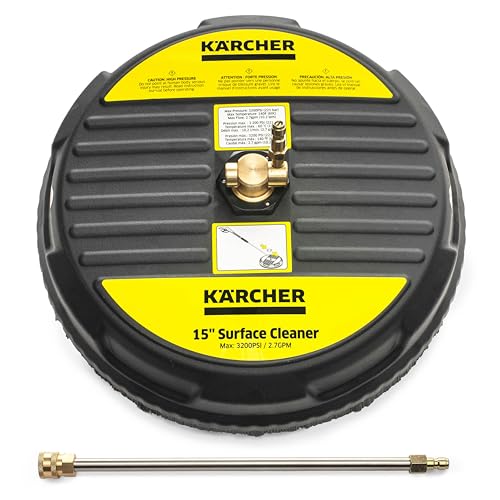
Best for anyone cleaning concrete freehand and wondering why it looks striped
- 15-inch shrouded head with two spinning jets
- Rated for 2600 to 3200 PSI machines
- Splash guard keeps the slurry off siding and shoes
- Standard 1/4-inch quick-connect wand fitting
Why buy it: the single highest-value concrete purchase there is — it applies water evenly at the right standoff, kills the zebra-stripe pattern and roughly halves the time on any machine.
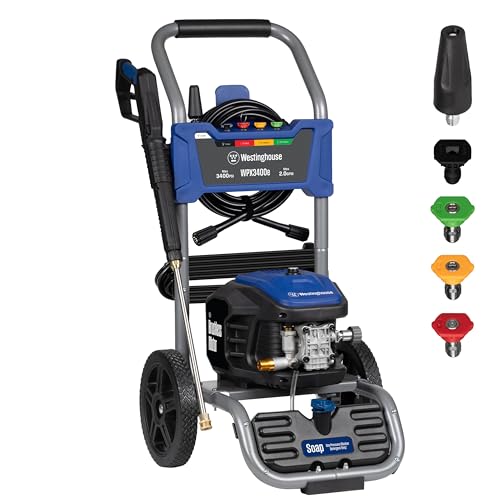
Best for concrete work without fuel, exhaust or a pull cord
- 3400 max PSI at 2.0 max GPM — the top of the electric class
- Brushless motor rather than a universal motor
- 2.0 GPM is enough to drive a 15-inch surface cleaner
- Starts on a switch; no fuel system to winterize
Why buy it: the first electric class with enough flow to run a full-size surface cleaner properly, which is what previously forced concrete buyers onto gas.

Best for buyers who want the machine and the attachment matched, and want to keep both
- 3400 PSI at 2.5 GPM with a Simpson CRX engine
- 15-inch surface cleaner included and correctly matched
- Welded steel frame rather than molded plastic
- Serviceable pump with replaceable parts
Why buy it: a welded frame and a rebuildable pump are the difference between a machine you own for a decade and one that is landfill when the pump goes.
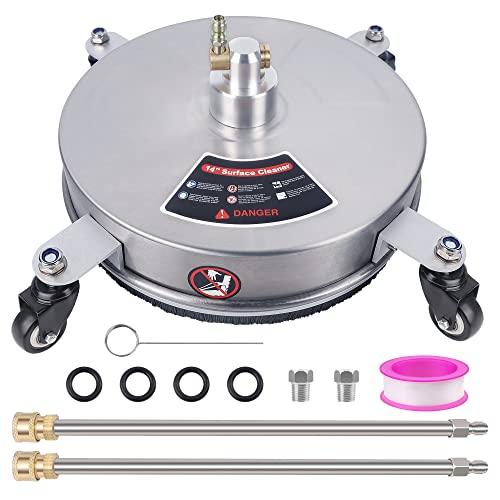
Best for adding surface-cleaner capability to a 1.8–2.2 GPM machine
- 14-inch head — the right size for lower-flow machines
- Stainless steel housing with four caster wheels
- Two extension wands included
- 1/4-inch quick-connect plug fits most consumer machines
Why buy it: the diameter matters more than the brand: a 14-inch head spins properly on a 1.8 GPM machine where a 20-inch head would crawl and clean badly.

Best for oil shadows, tire marks and the gray film pressure alone leaves behind
- Oxygenated concentrate formulated for pressure washer injectors
- EPA Safer Choice recognized formulation
- Concentrate dilutes to cover a large driveway
- Rinses without the residue that attracts new dirt
Why buy it: concrete is porous, so a lot of what looks like dirt is absorbed staining that water alone will not lift — a dwell-and-agitate detergent step does more than another 500 PSI.
Quick Comparison
| Product | Best for | Rating | Price | Buy |
|---|---|---|---|---|
| Westinghouse WPX3200 Gas Pressure Washer, 3200 PSI, 2.5 GPM, Onboard Soap Tank | Best Overall for Concrete | — | Check (paid link) | |
| Kärcher 15-Inch Pressure Washer Surface Cleaner, for 2600–3200 PSI Machines | Best Surface Cleaner | — | Check (paid link) | |
| Westinghouse WPX3400e Electric Pressure Washer, 3400 Max PSI, 2.0 Max GPM, Brushless Motor | Best Electric | — | Check (paid link) | |
| Simpson Clean Machine 3400 PSI Gas Pressure Washer with 15-Inch Surface Cleaner | Best Build Quality | — | Check (paid link) | |
| Biswing 14-Inch Pressure Washer Surface Cleaner, Stainless Steel, 4 Wheels | Best Value Surface Cleaner | — | Check (paid link) | |
| Simple Green Oxy Solve Concrete and Driveway Pressure Washer Cleaner, 128 fl oz | Best Concrete Cleaner | — | Check (paid link) |
Sizing a surface cleaner to your machine
This is where most of the disappointment in this category comes from. A surface cleaner's bar is spun by the reaction force of its own jets, so a head that is too large for the machine's flow spins slowly, cleans unevenly and feels worse than a wand. Bigger is not better; matched is better.
| Your machine's GPM | Head diameter | Typical machine |
|---|---|---|
| 1.2–1.6 GPM | Not recommended — use a wand | Compact electrics |
| 1.6–2.0 GPM | 12–14 inches | Standard electric (Sun Joe, ePX range) |
| 2.0–2.5 GPM | 15–16 inches | Premium electric, entry gas |
| 2.5–3.0 GPM | 16–20 inches | Consumer gas |
| 3.0 GPM and above | 20 inches and up | Prosumer and commercial gas |
Also check the pressure rating and the coupler. Most consumer machines use a 1/4-inch quick-connect; larger gas machines often use 3/8-inch, and an adapter is a two-dollar part that people discover they need on a Saturday afternoon.
Doing it properly
- Sweep and pre-wet. Blow or sweep the loose debris off first, then wet the slab. Dry concrete absorbs detergent unevenly and stains lift worse.
- Protect the surroundings. Wet plant beds with clean water before and after — detergent runoff is far harder on plants than water is. Move vehicles well clear; the slurry travels further than you expect.
- Apply cleaner and let it dwell. Through the soap injector at low pressure, worked in with a stiff broom on stained areas, five to ten minutes without drying out. Reapply rather than letting it dry, especially in sun.
- Surface-clean in overlapping passes. Move at a steady walking pace with about 20% overlap. Consistent speed matters more than slow speed — inconsistent speed is what produces visible banding.
- Wand the edges. A surface cleaner cannot reach the last inch against a wall or a garage door. Use a 25-degree tip there, at the same distance, or the perimeter reads as a dark border.
- Rinse the whole slab. Rinse the released slurry off in one direction with a wide tip, or it dries back into the surface in patches.
- Re-sand pavers. If you cleaned pavers, sweep polymeric jointing sand back in and activate it per the instructions. Skipping this is why cleaned pavers shift and grow weeds.
One environmental note that is also often a legal one: washwater carrying detergent, oil or sediment into a storm drain goes to surface water, not to a treatment plant. The EPA's municipal stormwater program is the framework, and many municipalities have local ordinances restricting it. Divert to a lawn or gravel where you can, and check your city's rules before doing a large slab with degreaser.
The injury nobody warns you about
Concrete work is where people reach for the red 0-degree nozzle, and it is the tip most often involved in both damage and injury. A high-pressure injection injury forces water, grit and bacteria into the tissue under the skin through a puncture that can look trivial, and it is a surgical emergency — the visible wound badly understates the internal damage. A 2023 analysis in the journal Hand of a decade of US emergency-department data found that pressure washers accounted for roughly 90% of high-pressure injection hand injuries recorded, with a seasonal peak in late spring and summer. Never point a wand at a person or pet, never brace a hand in front of the tip, wear closed shoes and eye protection because grit comes back at you, and bleed the pressure before changing a nozzle. More: pressure washer injection injuries.
Gas machines add carbon monoxide. Never run one in a garage, a carport or any partly enclosed space, including with the door open.

How We Rank
We do not buy, run or test this equipment. Rankings come from aggregated owner ratings across the most-owned pressure washers, surface cleaners and concrete detergents, weighted toward long-ownership reviews where pump and engine failures appear, and cross-checked against published specifications. For concrete four things carry the weight: flow rate, because it is what determines how long the job takes; attachment compatibility, since a mismatched surface cleaner ruins the result; durability and serviceability, especially pumps; and finish quality, meaning whether owners report even results or striping. Prices were checked at the time of writing. Full method: how we rank.
The Field, Reviewed
1. Westinghouse WPX3200 — Best Overall for Concrete
Covered above. Owners praise: genuine speed on large slabs, never-flat wheels that survive gravel, and easy starting when the fuel is fresh. Owners gripe about: noise, spring no-starts after storage with untreated fuel, and the oil-change routine electric owners never think about. Check price (paid link).
2. Kärcher 15-Inch Surface Cleaner — Best Surface Cleaner
The attachment that changes the job. Rated for 2600 to 3200 PSI machines, which covers entry and consumer gas and the top of the electric class, and the splash guard is better than most at keeping slurry off siding and shoes.
Owners praise: the even finish, the time saved, and build quality that survives being dragged across concrete. Owners gripe about: it is too large for lower-flow electrics — the recurring complaint is a slow-spinning bar on an under-specified machine — and the seals need occasional replacement. Check price (paid link).
3. Westinghouse WPX3400e — Best Electric
The first electric class with enough flow to run a full-size surface cleaner properly. 2.0 GPM is not gas territory, but it clears the threshold that previously forced serious concrete buyers onto a fuel-powered machine, and it does it with a brushless motor, no exhaust and no winterizing beyond draining the pump.
Owners praise: quiet operation, instant starting, and results on concrete that surprised people who expected electric to disappoint. Owners gripe about: the price, weight for an electric, and the usual short power cord. Check price (paid link).
4. Simpson Clean Machine 3400 with 15-Inch Surface Cleaner — Best Build Quality
The matched-set answer, and built to a visibly higher standard than most consumer gas machines. A welded steel frame and a pump with replaceable parts are what separate a ten-season machine from one that becomes scrap when the pump fails.
Owners praise: frame rigidity, a hose that stays flexible in cold weather, and a surface cleaner correctly sized to the machine. Owners gripe about: weight, price, and assembly that takes longer than expected. Check price (paid link).
5. Biswing 14-Inch Surface Cleaner — Best Value Surface Cleaner
The right head for a standard electric, which is the machine most people already own. Fourteen inches spins properly at 1.8 GPM where a 20-inch head would crawl, and the stainless housing and caster wheels handle rough concrete.
Owners praise: the price, that it works on modest machines, and the included extension wands. Owners gripe about: lighter construction than the Kärcher, and wheels that pick up grit and need rinsing. Check price (paid link).
6. Simple Green Oxy Solve Concrete and Driveway — Best Concrete Cleaner
The step most people skip. Concrete is porous, so a lot of what looks like dirt is absorbed staining that water at any pressure will not lift. An oxygenated concentrate applied through the injector and left to dwell does work no amount of extra pressure will.
Owners praise: real progress on oil shadows and tire marks, EPA Safer Choice recognition, and that a concentrate covers a large driveway. Owners gripe about: old, deeply set oil stains still need a dedicated degreaser and a second pass, and it must not be allowed to dry on the slab. Check price (paid link).
What Owners Actually Complain About
The surface cleaner is the wrong size. By a distance the most common concrete-specific complaint, and it presents as "the bar barely spins" or "it cleans in patches". Match the diameter to the flow rate.
Striping from freehand work. Second most common, and it is a technique problem rather than a machine problem. Only a surface cleaner or a very patient overlapping pattern avoids it.
The clean patch problem. Cleaning half a driveway makes the other half look filthy, and cleaning one section of a path makes the joins obvious. Do whole surfaces to a natural boundary.
Spring no-starts on gas. Untreated ethanol fuel over winter. See how to winterize a pressure washer.
Etched or lined concrete. Almost always a 0-degree or turbo nozzle held close on soft or older concrete. It does not come out.
The Verdict
If you have real concrete to clean and you are buying fresh, the Westinghouse WPX3200 plus a 15-inch surface cleaner is the combination that does the job in a morning. If you want to skip the fuel, the WPX3400e is now genuinely capable. And if you already own a standard electric, do not upgrade the machine — buy a 14-inch surface cleaner and a bottle of concrete cleaner, and you will get most of the improvement for a fraction of the cost. Check price on Amazon → (paid link)
More from this hub: leaf blowers & yard cleanup · best pressure washer overall · best surface cleaners · how to clean a driveway · should you seal concrete afterward · how we rank.