 Garden


Affiliate Disclosure
Some links on this page are affiliate links. As an Amazon Associate, we earn from qualifying purchases — at no extra cost to you. We do not buy, test, or physically handle the products we cover; our rankings come from aggregated owner reviews, ratings and expert consensus. Commissions never change our verdicts. How we rank · full disclosure.
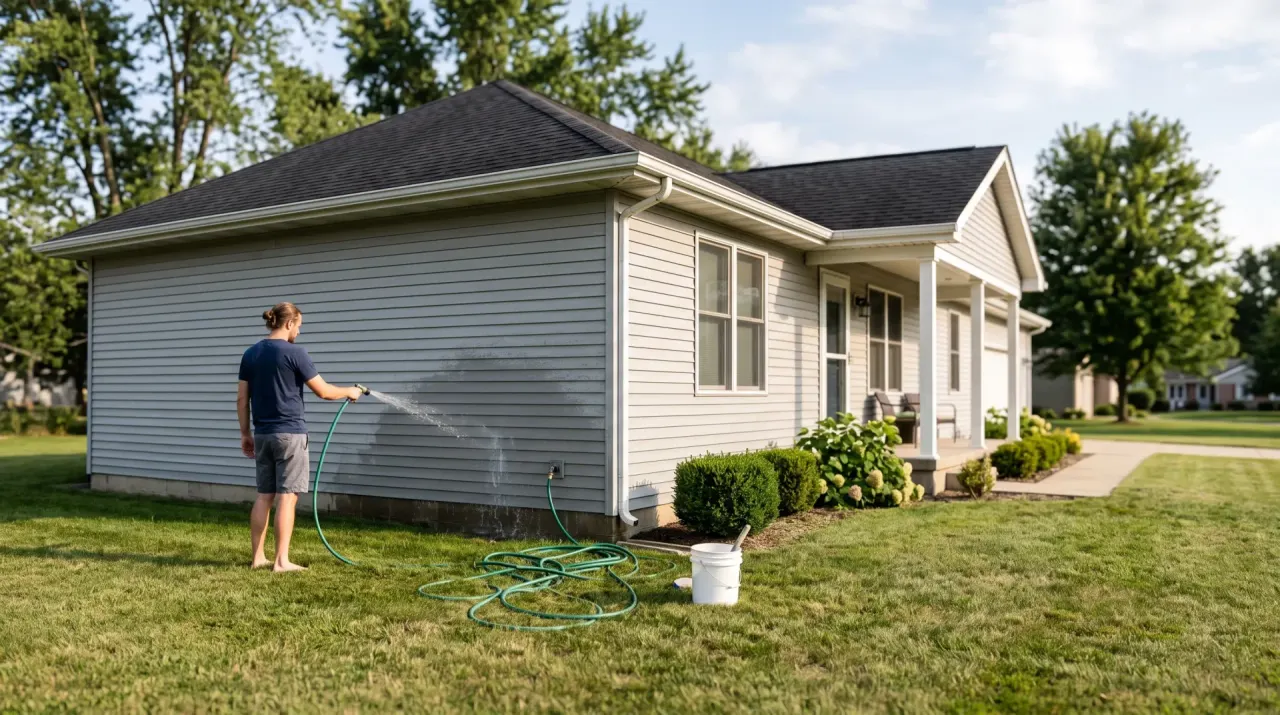
Siding is the one job where buying a bigger pressure washer makes the outcome worse. A wall of overlapping vinyl or painted panels is designed to shed rain running downward. It is not designed to resist water arriving from underneath, and every extra hundred PSI is an extra temptation to move closer and push harder on a surface that wanted a rinse. The correct machine here is a mid-range electric; the correct nozzle is the widest one you own; and the thing that actually removes the green is a chemical, not a jet.
So the ranking below is not a hunt for power. It is a hunt for the right shape of machine: full flow rate so rinsing a large wall is quick, moderate pressure so the surface is never at risk, an induction motor that tolerates an hour or two of continuous running, and a soap circuit that works properly — because that is the part doing the cleaning.
Top Picks at a Glance

What actually matters on a wall
| Factor | Why it matters on siding | What to look for |
|---|---|---|
| Flow rate (GPM) | Rinsing a two-story elevation is a lot of surface; flow decides how long it takes | 1.76 GPM, the standard household figure |
| Pressure (PSI) | More is a liability, not a feature | 1700–2300 max is ample |
| Motor type | A house wash runs continuously for an hour or more | Induction or brushless, not universal |
| Soap circuit | The chemical does the cleaning | Onboard tank or reliable siphon, plus a soap tip |
| Weight | You will move it around the house three or four times | Carry handle, upright body |
| Nozzle set | The 40-degree tip is the one you need | Confirm a white tip is in the box |
| Cord length | Reaching the far elevation from the garage outlet | Budget for an outdoor-rated extension |
Our #1 Pick: Westinghouse ePX3100
This is the machine that fits the job description without exceeding it. Full 1.76 GPM flow means a large wall rinses quickly, which is the only place throughput matters here. Its 2300 PSI maximum is comfortably enough for the 1300 to 1600 PSI you actually want at the surface once a 40-degree tip and three feet of air are between you and the panel.
The induction motor is the part worth paying for. Washing a house is not the ten-minute burst most electrics are designed around — it is an hour or two of continuous running, and that duty cycle is precisely what cooks the universal motors used in cheaper machines. Owners consistently report this chassis family running season after season with nothing more than a pump drain before winter.
The onboard soap tank matters more than it sounds too. A house wash is a chemical job with a rinse attached, and a machine that siphons detergent reliably at low pressure is doing the important half of the work. Fit the black soap tip, apply from the bottom up, wait, then rinse from the top down on the white tip.
Check price on Amazon → (paid link)
The Ranked Field

Best for a full house wash with enough flow to rinse fast and not enough pressure to do harm
- 2300 max PSI at 1.76 max GPM
- Induction motor rather than a universal motor
- Onboard soap tank plus four quick-connect nozzles
- Compact upright body for shelf storage
Why buy it: the right shape of machine for wall work — full flow so rinsing is quick, moderate pressure so you are not tempted to get close, and a soap circuit that does the actual cleaning.

Best for carrying around the house between elevations
- 2100 max PSI at 1.76 max GPM
- Built-in carry handle on an upright chassis
- Induction motor
- Onboard detergent tank
Why buy it: house washing means moving the machine four times, and a unit you can carry with one hand turns that from a chore into an afterthought.

Best for buyers who want the deepest ownership record in the category
- 2030 max PSI at 1.76 GPM
- Two onboard detergent tanks
- Five quick-connect nozzles including a soap tip
- Total stop system
Why buy it: two detergent tanks is a genuine advantage on a house wash, letting you keep a siding cleaner and a general degreaser loaded without swapping bottles halfway up a wall.

Best for anyone who wants the number on the box to mean something
- CETA-certified performance rather than a marketing max figure
- Three spray nozzles and an onboard detergent tank
- Telescoping handle on a compact chassis
- Widely available parts and hoses
Why buy it: a certified 1700 PSI is a more honest figure than an uncertified 2300, and for siding the lower number is the right end of the range anyway.
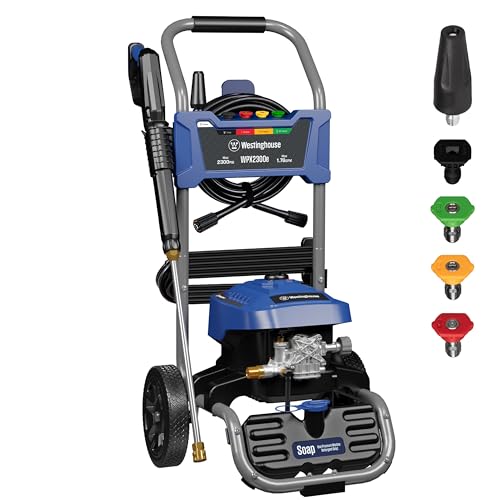
Best for a machine expected to wash a whole house every year for a decade
- 2300 max PSI at 1.76 max GPM
- Induction motor built for sustained running
- Onboard soap tank and nozzle storage
- Anti-tipping base
Why buy it: a house wash is an hour or two of continuous running, which is precisely the duty cycle that kills universal motors and that an induction motor shrugs off.

Best for the mold and algae that pressure alone leaves behind
- Peroxide-based oxygen chemistry rather than chlorine bleach
- Formulated for low-pressure application with a dwell period
- Safe for pump seals, unlike a bleach solution
- Concentrate that covers a whole house
Why buy it: the honest truth of house washing is that the chemical does the cleaning and the machine just rinses — spending an extra hundred dollars on PSI instead of twenty on this is the wrong trade.

Quick Comparison
| Product | Best for | Rating | Price | Buy |
|---|---|---|---|---|
| Westinghouse ePX3100 Electric Pressure Washer, 2300 Max PSI, 1.76 Max GPM | Best for Siding Overall | — | Check (paid link) | |
| Westinghouse ePX3100v Electric Pressure Washer, 2100 Max PSI, 1.76 Max GPM, Built-in Carry Handle | Best Lightweight | — | Check (paid link) | |
| Sun Joe SPX3000 Electric Pressure Washer, 2030 Max PSI, 1.76 GPM | Best Known Quantity | — | Check (paid link) | |
| Kärcher Pressure Washer K1700, CETA Certified, 3 Spray Nozzles, Detergent Tank | Best Verified Output | — | Check (paid link) | |
| Westinghouse WPX2300e Electric Pressure Washer, 2300 Max PSI, 1.76 Max GPM, Induction Motor | Best Induction Value | — | Check (paid link) | |
| Simple Green Oxy Solve House and Siding Pressure Washer Cleaner | The Part That Actually Cleans | — | Check (paid link) |
Siding material changes the answer
| Material | Working pressure | Nozzle and distance | The specific risk |
|---|---|---|---|
| Vinyl | 1300–1600 PSI | 40°, 3–4 ft, never upward | Water behind the laps; cracking when cold |
| Fiber cement | 1300–1600 PSI | 40°, 3–4 ft | Stripping the painted finish; open butt joints |
| Painted wood | 500–1200 PSI | 40°, 4 ft plus | Lifting sound paint; driving water into end grain |
| Stucco | Under 1500 PSI | 40°, 4 ft plus | Pitting the surface; water into hairline cracks |
| Brick and masonry | 1500–2500 PSI | 25°, 2–3 ft | Blasting out old mortar joints |
| Aluminum siding | 1300–1600 PSI | 40°, 3–4 ft | Denting; stripping chalked finish unevenly |
| Cedar shake | Under 800 PSI | 40°, 4 ft plus | Raising the grain permanently |
Two rows deserve emphasis. Anything painted before 1978 may have lead-based paint underneath, and pressure washing is an efficient way to spread it around a yard where children play — that is a job for a certified renovator, not a Saturday. And on any wall older than about fifteen years, the surface may be chalked; pressure removes chalk unevenly and leaves a blotchy patchwork that looks worse than the dirt did.
How We Rank
We do not buy, run or test these machines. Rankings come from aggregated owner ratings across the most-owned electric pressure washers, weighted toward long-ownership reviews and toward reviews that describe house washing specifically, and cross-checked against published specifications and manufacturer siding guidance. Four things carry the weight for this job: flow rate, since rinsing a wall is a volume problem; restraint on pressure, because more is a hazard here; motor type and duty cycle, since a house wash runs long; and the detergent circuit, because chemistry is what cleans siding. Prices were checked at the time of writing. Full method: how we rank.
The Field, Reviewed
1. Westinghouse ePX3100 — Best for Siding Overall
Covered above. Owners praise: quiet running, a compact body that stores upright, and results on shaded walls that had gone green. Owners gripe about: a short cord, a soap tank that is awkward to refill, and a stiff hose in cold weather. Check price (paid link).
2. Westinghouse ePX3100v — Best Lightweight
The same family with a carry handle and slightly lower maximum pressure, which for siding is not a downside. Washing a house means moving the machine between elevations several times, and this is the one that makes that trivial.
Owners praise: the handle, shelf storage, and one of the highest ratings in the electric class. Owners gripe about: the cord, and a hose length that has you repositioning often. Check price (paid link).
3. Sun Joe SPX3000 — Best Known Quantity
Two detergent tanks is a real advantage on a house wash, letting you carry a siding cleaner and a general-purpose cleaner without stopping to swap bottles. It is also the machine whose long-term behavior is best documented anywhere in the category.
Owners praise: the twin tanks, price, and spare parts that are easy to find. Owners gripe about: plastic fittings that weep, and pressure loss after a winter if it was stored undrained. Check price (paid link).
4. Kärcher K1700 — Best Verified Output
Worth a look for a reason most buyers overlook: CETA certification, meaning the pressure and flow were independently verified rather than measured at unloader bypass like the "max PSI" figures elsewhere. For siding, the lower certified number is the right end of the range anyway.
Owners praise: build quality, the telescoping handle, and easy access to replacement hoses. Owners gripe about: a plastic inlet fitting that fails first, and a headline rating that looks low beside uncertified rivals. Check price (paid link).
5. Westinghouse WPX2300e — Best Induction Value
Built around the same logic as our top pick with a slightly more substantial chassis. If you intend to wash the whole house every year for a decade, the induction motor is the specification that decides whether the machine is still there at the end of it.
Owners praise: sustained running without heat soak, a stable base, and quiet operation. Owners gripe about: price against the ePX line for identical flow, and weight. Check price (paid link).
6. Simple Green Oxy Solve House and Siding — The Part That Actually Cleans
Included in the ranking deliberately, because on this job it does more for the result than the difference between any two machines above it. Oxygen chemistry rather than chlorine, so it does not attack pump seals, and gentler on the plantings under the wall than a bleach mix.
Owners praise: visible results on north-facing walls, that the clean lasts a season rather than weeks, and low plant damage. Owners gripe about: needing more product than expected on a large house, and that heavy black mildew sometimes wants a second application. Check price (paid link).
What Owners Actually Complain About
Damage from too much pressure. Cracked panels, blotchy oxidation and water inside the wall are the regrets people report after a house wash, and every one of them is a pressure problem rather than a power shortage.
The green coming back in two months. Almost always a job done with water alone. Without a chemical and real dwell time, the algae is not killed, only rinsed.
Dead shrubs. Preventable by soaking and covering the beds before you start, and rinsing them again afterwards.
Short cords. Reaching a far elevation needs an outdoor-rated extension heavy enough for the draw; a thin household lead causes voltage drop and a laboring motor.
Streaking. Caused by applying cleaner top-down onto dry siding, or by letting a wall dry mid-elevation. Bottom-up application and finishing an elevation before you break both fix it.
Safety
The dangerous part of house washing is the ladder, not the machine. A wand recoils when you pull the trigger, and doing that one-handed from a ladder against a wall you have just made wet is genuinely how people get hurt. Use an extension wand from the ground, and treat second-story soffits you cannot reach as the point where hiring an insured contractor is the cheaper decision.
The machine deserves respect regardless. A narrow jet can force water and grit under the skin through a puncture that looks trivial and is a surgical emergency, and the CPSC has warned that power washers can cause serious injuries. Leave the 0-degree red nozzle in the box, engage the trigger lock whenever you set the gun down, and wear eye protection.
The Verdict
Buy the Westinghouse ePX3100, or the ePX3100v if you would rather carry it than wheel it. Then spend twenty dollars on a proper house and siding cleaner and give it ten minutes to work, because that is what removes the green — not the machine. Fit the 40-degree tip, stay three to four feet back, never spray upward, and read how to pressure wash vinyl siding before you start, because the technique matters far more than anything in this ranking. Check price on Amazon → (paid link)
More from this hub: leaf blowers & yard cleanup · best pressure washer · best for home use · what soap to use · how we rank.