 Garden


Affiliate Disclosure
Some links on this page are affiliate links. As an Amazon Associate, we earn from qualifying purchases — at no extra cost to you. We do not buy, test, or physically handle the products we cover; our rankings come from aggregated owner reviews, ratings and expert consensus. Commissions never change our verdicts. How we rank · full disclosure.
Buy electric unless you have a lot of concrete or nowhere to plug in. For cars, patio furniture, decks, fences, siding, garden equipment and a normal suburban driveway, a consumer electric does the work with less noise, less weight, no fuel and essentially no maintenance. Gas earns its price in three specific situations: large areas of concrete where its flow rate saves real hours, sites with no outdoor power, and machines expected to run for hours at a stretch. Everything else is detail.
The detail matters, though, because the comparison is almost always framed on the wrong number.
The comparison is about flow rate, not PSI
Pressure washers are sold on a single large PSI figure, and that figure is a max measured at unloader bypass — the pressure in the system at the moment you release the trigger, not the pressure you clean with. Worse, pressure alone does not determine how fast a surface gets clean. Pressure loosens dirt; water volume carries it away. Multiply the two and you get cleaning units, which is the only figure that compares the two categories honestly.
| Class | Typical PSI | Typical GPM | Cleaning units | Relative speed |
|---|---|---|---|---|
| Compact electric | 1600 | 1.2 | ~1,900 | 1.0× |
| Standard electric | 2100 | 1.76 | ~3,700 | 1.9× |
| Premium electric | 3000 | 1.76 | ~5,300 | 2.8× |
| Consumer gas | 3200 | 2.5 | ~8,000 | 4.2× |
| Prosumer gas | 4200 | 4.0 | ~16,800 | 8.8× |
Read that once and the category makes sense. The PSI badges suggest a consumer gas machine is about 50% stronger than a standard electric. In cleaning throughput it is closer to twice as fast, and the gap comes almost entirely from the flow rate rather than the pressure. It also explains why a premium 3000 PSI electric — a real and increasingly common product — still does not match a mid-range gas unit: the pressure caught up, the flow rate did not, because pushing more water through an electric motor and pump means a much larger, heavier, more expensive machine.
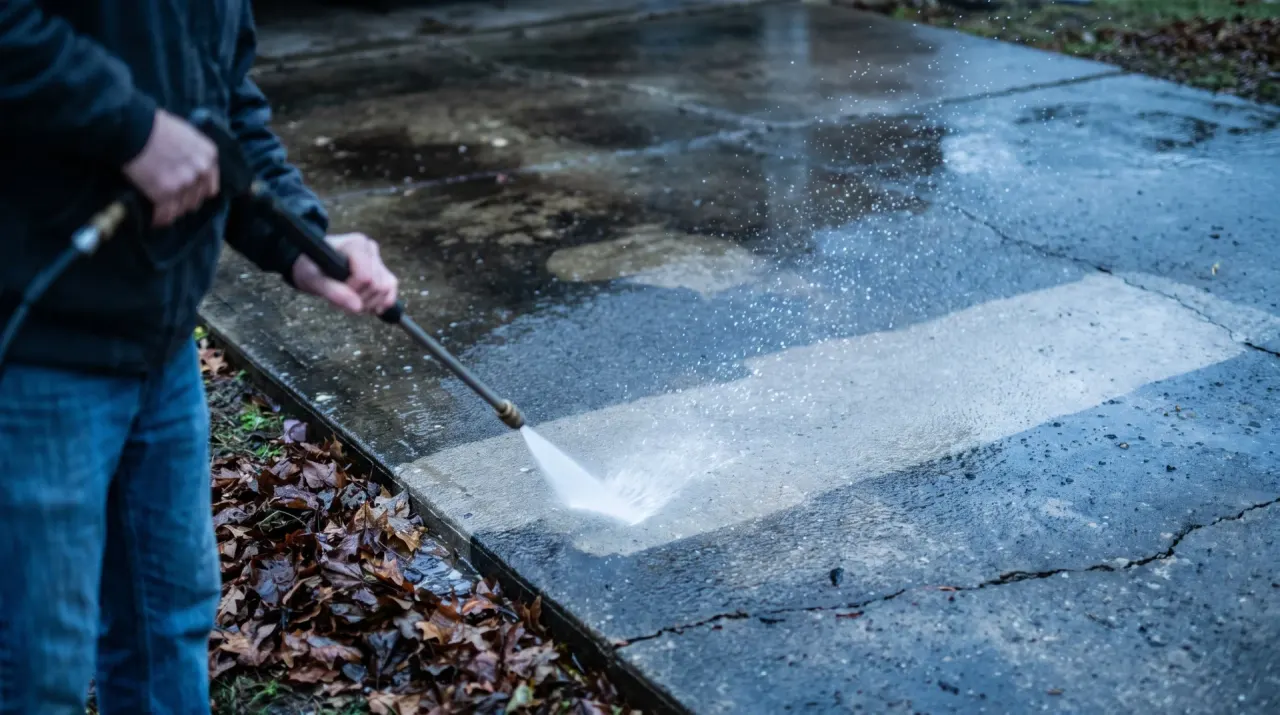
Side by side, plainly
| Electric | Gas | |
|---|---|---|
| Typical output | 1600–3000 PSI, 1.2–1.8 GPM | 2800–4200 PSI, 2.3–4.0 GPM |
| Typical price | $100–$350 | $350–$1,200 |
| Weight | 17–40 lb | 60–130 lb |
| Noise | Conversation-level; roughly a dishwasher | Roughly a gas mower; hearing protection sensible |
| Start-up | Press a switch | Pull cord, choke, sometimes a fight in spring |
| Maintenance | Drain before winter; that is all | Engine oil, pump oil, plug, filter, fuel stabilizer |
| Indoors or in a garage | Fine (ventilation for the spray, not the machine) | Never — carbon monoxide |
| Runs on a standard outlet | Yes, 15 A circuit, GFCI | No power needed at all |
| Serviceability | Often sealed; a failed pump ends the machine | Pump and engine both rebuildable |
| Realistic lifespan | 3–8 seasons of domestic use | 8–15 seasons if maintained |
Pick by the job, not by the badge
| What you actually do | Buy | Why |
|---|---|---|
| Wash cars, bikes, patio furniture | Electric, 1600–2100 PSI | You want to be under 1900 PSI at the nozzle anyway |
| Deck, fence, garden furniture | Electric | Wood wants 500–1200 PSI; gas is overkill and easy to damage with |
| Vinyl siding on a two-story house | Electric, 2000–2500 PSI | Reach matters more than power; soft washing is the correct method |
| Two-car driveway, once or twice a year | Electric + 14-inch surface cleaner | Slower, but the attachment does more than the extra PSI would |
| Long driveway, patio and paths, several times a year | Gas, 3200 PSI / 2.5 GPM | Roughly halves the time; this is where gas pays |
| Farm, acreage, no outdoor outlet | Gas | No cord, no circuit limit |
| Paint prep, graffiti, heavy equipment | Gas, 4000 PSI+ | Needs sustained output an electric cannot make |
| Apartment, small yard, limited storage | Electric, compact | Weight and storage decide whether it gets used at all |

What owners in each camp actually regret
Gas owners regret the maintenance and the noise. The recurring theme in long-ownership reviews is not power — it is a machine that would not start in April after sitting through winter with untreated fuel, an oil change nobody scheduled, and a noise level that makes a Sunday morning wash antisocial. Ethanol-blended pump gasoline is the usual culprit for the spring no-start; stabilizer or draining the carburetor solves it, and most owners learn that the hard way.
Electric owners regret the flow rate on concrete. The second theme is a buyer who read the PSI number, bought a 2300 PSI electric to replace a contractor's gas machine, and found the driveway took three hours instead of one. The machine was working exactly to specification. A surface cleaner attachment recovers most of that gap and costs a fraction of upgrading.
Both camps regret the fittings. Across every brand and both fuel types, the leading complaint in the ownership record is a leaking connection rather than a failed motor or engine. Plastic quick-connects weep first; brass replacements are a few dollars and fix most of it.
Both camps regret storing wet. Water left in a pump through a freeze cracks it, and the machine that mysteriously "lost pressure over winter" is nearly always this. See how to winterize a pressure washer; it takes ten minutes and saves the pump.
The middle ground worth knowing about
Two developments have narrowed the choice. The first is the induction-motor electric: instead of the universal motor used in cheap machines, an induction motor runs cooler and quieter and lasts considerably longer, which addresses the main way electrics die. It is the single upgrade most worth paying for and it is why 3000 PSI electrics now exist as credible products rather than marketing.
The second is the surface cleaner, which changes the driveway calculation more than any machine upgrade. A shrouded spinning bar applies the water evenly at the right standoff, eliminating wand stripes and cutting the time dramatically. Match the diameter to your flow: 12 to 14 inches for a 1.6–1.9 GPM electric, 15 to 16 inches for 2.0–2.5 GPM, 20 inches only above about 3 GPM. An oversized surface cleaner on a small machine spins slowly and cleans badly, which is a common and avoidable disappointment.

Safety applies to both, and more than owners expect
Neither type is a toy. The stream from a narrow nozzle carries enough energy to break skin, and a high-pressure injection injury forces water, grit and bacteria into the tissue underneath through a puncture that can look trivial. It is a surgical emergency, not a wound to clean at home, and the visible injury badly understates the internal damage. A 2023 analysis in Hand of US emergency-department data found that pressure washers accounted for around 90% of high-pressure injection hand injuries recorded over a decade. Never point a wand at a person, never brace a hand in front of the tip, and treat the red 0-degree nozzle as one you almost never fit. Full detail: pressure washer injection injuries.
Gas adds one hazard electric does not have. Carbon monoxide from a gas pressure washer is lethal indoors, including in an open garage, a carport, a basement or a partly enclosed porch. The engine must run outdoors in open air, always, with no exception for cold weather or a quick job.
So which should you buy?
If you are reading this as a homeowner with a car, a deck and a driveway, buy a good electric — ideally one with an induction motor — and put the money you saved into a surface cleaner and a foam cannon. That combination handles nearly every domestic job and asks nothing of you in the off-season.
Buy gas if you can name the specific large concrete job that justifies it, if there is no outdoor outlet where you need to work, or if you will genuinely run the machine for hours at a time. Then commit to the maintenance, because a gas machine that is not maintained becomes a heavy object that will not start.
Ready to shop? See the best electric pressure washers, the best gas pressure washers, or start with the overall ranking. Not sure what size you need? Work it out here. Two machines worth a look at either end of the range are the induction-motor Westinghouse WPX2300e electric (paid link) and the Westinghouse WPX3200 gas (paid link).
We never buy or physically test the machines we rank — verdicts come from aggregated owner reviews and published specifications. Method: how we rank. More from this hub: leaf blowers & yard cleanup · how long pressure washers last · how to change pressure washer oil.