 Garden


Affiliate Disclosure
Some links on this page are affiliate links. As an Amazon Associate, we earn from qualifying purchases — at no extra cost to you. We do not buy, test, or physically handle the products we cover; our rankings come from aggregated owner reviews, ratings and expert consensus. Commissions never change our verdicts. How we rank · full disclosure.
For most homes the answer is 1900 to 2300 PSI at 1.4 to 1.8 GPM — the standard consumer electric class. That handles cars, decks, fences, siding, furniture and a normal driveway. You need more only if you have a lot of concrete, and the number that tells you whether a machine has "more" is not the PSI on the box.
It is PSI × GPM, which the industry calls cleaning units. Pressure loosens dirt; water volume carries it away. Multiply them and machines that looked similar separate immediately, and machines that looked very different turn out to be close. It is the single most useful thing to understand before spending money in this category, and manufacturers almost never print it.
PSI vs GPM: what each number actually does
PSI is the impact force at the surface. It is what breaks the bond between the dirt and the concrete, the algae and the fence board, the salt and the wheel arch. Too little and the dirt stays put. Too much and you remove mortar, fur the grain of a deck, or strip paint.
GPM is the removal rate. It is what flushes the loosened material off the surface and out of the way, and it is what lets you clean a wide strip from a comfortable distance instead of inching along with the tip close to the work. Flow is also what makes a surface cleaner or a foam cannon function properly — both are flow-hungry accessories.
There is one more thing worth knowing about the PSI figure on a carton: it is usually a maximum measured at unloader bypass, meaning the pressure in the system at the instant the trigger is released rather than the pressure you clean with. Certified ratings are different. The CETA CPC-100 standard requires the measured pressure to be at least 90% of the advertised figure, and PWMA's PW101 standard has pressure and flow verified by an independent laboratory. An uncertified badge is a marketing claim; a certified one is a measurement.

Cleaning units: the honest comparison
| Class | PSI | GPM | Cleaning units | Relative speed |
|---|---|---|---|---|
| Light electric | 1600 | 1.2 | ~1,900 | 1.0× |
| Standard electric | 2100 | 1.76 | ~3,700 | 1.9× |
| Premium electric | 3000 | 1.76 | ~5,300 | 2.8× |
| Entry gas | 2800 | 2.3 | ~6,400 | 3.4× |
| Consumer gas | 3200 | 2.5 | ~8,000 | 4.2× |
| Prosumer gas | 4200 | 4.0 | ~16,800 | 8.8× |
Two things fall out of that table. First, the premium 3000 PSI electric — a real product category now — still does not match an entry gas machine, because the pressure caught up and the flow rate did not. Second, a 2100 PSI standard electric is not "half" a 4200 PSI prosumer machine; it is closer to a fifth. The PSI badge compresses a very large real difference into a small-looking one.
What each job actually needs
| Job | Working pressure | Useful GPM | Nozzle | What goes wrong |
|---|---|---|---|---|
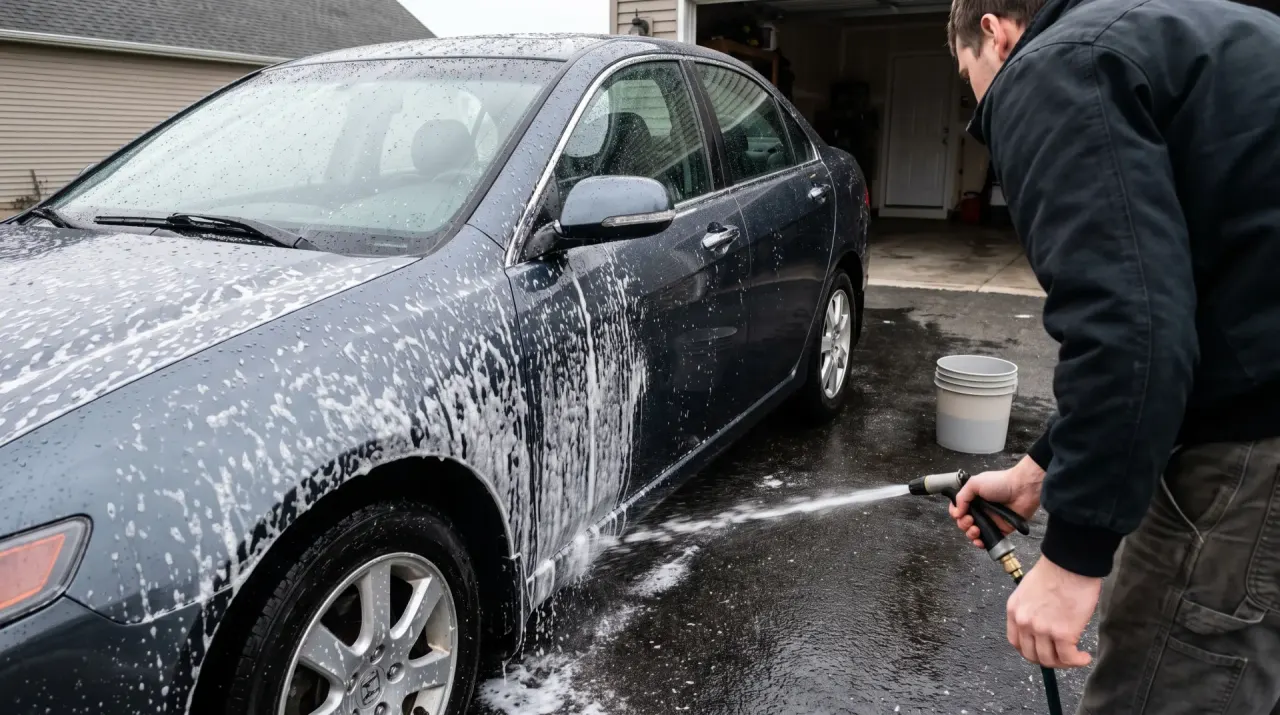
| Car, truck, motorcycle | 1200–1900 PSI | 1.2–1.8 | 40° | Narrow tip lifts badges and cuts clearcoat |
| Wood deck | 500–1200 PSI | 1.5+ | 25°–40° | Raising the grain; the fuzz is permanent |
| Wood fence | 500–1500 PSI | 1.5+ | 25° | Gouging soft cedar and pine |
| Vinyl siding | 1300–1600 PSI | 1.5+ | 40° | Spraying upward and driving water under the laps |
| Painted surfaces | Below 1200 PSI | Any | 40° | Stripping the paint you meant to wash |
| Brick and masonry | 1500–3000 PSI | 2.0+ | 25° | Blasting out old mortar joints |
| Concrete driveway | 2500–3500 PSI | 2.0+ | Surface cleaner | Wand stripes from freehand work |
| Patio pavers | 2000–3000 PSI | 2.0+ | 25° or surface cleaner | Washing out the joint sand |
| Gutters and soffits | 1500–2500 PSI | 1.5+ | 25° or gutter wand | Working off a ladder with recoil |
| Roof shingles | Do not pressure wash | — | — | Pressure removes the granules; soft wash instead |
Notice that the pressures most jobs want are lower than what a mid-range machine produces. That is fine and expected — the nozzle regulates the pressure at the surface. A 40-degree fan tip spreads the same output across a much larger area than a 25-degree tip, and standoff distance does the rest. Which is why the honest advice is to buy for the hardest job you genuinely have, and use the nozzle set for everything softer.

Sizing it in one paragraph
Write down the biggest surface you will clean and how often. If the answer is "cars, furniture, a deck and a driveway once a year", buy a standard electric — 1900 to 2300 PSI at about 1.76 GPM — and put a hundred dollars into a surface cleaner and a foam cannon. That combination beats a bigger bare machine on every job you listed. If the answer is "800 square feet of concrete, three times a year", the flow rate is the thing you cannot fake, and a 2.3 to 2.5 GPM gas machine turns an all-day job into a morning. If the answer includes paint stripping or graffiti, you are outside homeowner territory and should read the commercial machines.
Check your water supply before you buy
A pressure washer cannot deliver more water than its supply provides, and this trips up more buyers than it should. Time how long a five-gallon bucket takes to fill from your outdoor faucet with the hose attached. Divide 300 by the seconds to get GPM: a bucket that fills in 60 seconds gives 5 GPM, which is plenty. Under about 2 GPM at the tap and a 2.5 GPM machine will cavitate — it starves, the pressure pulses, and the pump wears fast.
Two related points. A long, narrow garden hose costs you flow: a 5/8-inch hose is the practical minimum and a 3/4-inch hose is better on long runs. And well water with sediment needs the machine's inlet screen checked often, because grit through a pump is the fastest way to end one.
And check the circuit
Most consumer electrics draw 13 to 15 amps, which is a full 15-amp household circuit on its own. Plug into a GFCI-protected outdoor outlet, do not share the circuit with a freezer or a compressor, and if you must use an extension cord, use 12-gauge outdoor-rated cord kept under 25 feet. A thin cord drops voltage, the motor compensates by drawing more current, and running hot is the leading way these motors die. Extending on the water side with a longer hose is nearly always the better answer.
Size does not change the safety rules
Even a modest 1600 PSI machine can break skin. A high-pressure injection injury forces water, grit and bacteria into the tissue underneath through a puncture that looks trivial, and it is a surgical emergency rather than a wound to clean at home. A 2023 analysis in the journal Hand of a decade of US emergency-department data found pressure washers accounted for roughly 90% of high-pressure injection hand injuries recorded, with the index finger the most common site. Never aim a wand at a person or pet, never brace a hand in front of the tip, and treat the red 0-degree nozzle as one you almost never fit. Full detail: pressure washer injection injuries.
Where to go next
If you have landed on a standard electric, the Westinghouse ePX3100 (paid link) is the most-recommended machine in that class; if you have landed on gas, the Westinghouse WPX3200 (paid link) at 3200 PSI and 2.5 GPM is the volume seller. The full rankings are at best pressure washer, with electric and gas broken out, and the category comparison at electric vs gas.
We never buy or physically test the machines we rank — verdicts come from aggregated owner reviews and published specifications. Method: how we rank. Hub: leaf blowers & yard cleanup.