 Garden


Affiliate Disclosure
Some links on this page are affiliate links. As an Amazon Associate, we earn from qualifying purchases — at no extra cost to you. We do not buy, test, or physically handle the products we cover; our rankings come from aggregated owner reviews, ratings and expert consensus. Commissions never change our verdicts. How we rank · full disclosure.
Use 1200 to 1900 PSI, fit the 40-degree white nozzle, and keep the tip at least 12 inches from the paint. Rinse first, then foam and let it dwell five minutes, then contact wash with two buckets, then rinse top down. Never point a 0-degree, 15-degree or turbo nozzle at a vehicle, and never hold the jet still on a badge, a seam or an existing chip. A pressure washer rinses a car extremely well; it does not, on its own, clean one.
We never buy or test the products we recommend; every verdict is drawn from aggregated owner reviews and published guidance, described in how we rank.
Pressure, nozzle and distance
| Area | Nozzle | Distance | Notes |
|---|---|---|---|
| Paint, glass, general body | 40° white | 12–18 in | Keep the tip moving, work in overlapping passes |
| Applying foam | Black soap tip or foam cannon | 2–4 ft | Low pressure by design; the injector needs it |
| Wheels and tires | 25° green | 12–18 in | Fine on alloys; keep away from center-cap decals |
| Wheel arches and underbody | 25° green | 18–24 in | The winter salt job that matters most |
| Badges, emblems, trim, seals | 40° white only | 18–24 in | Angle across, never square on |
| Convertible roofs, vinyl wrap | 40° white | 2 ft plus | Or skip the machine entirely |
| Engine bay | Do not | — | Water into connectors and modules is expensive |
The reason distance matters more than the machine's rating is that pressure falls away rapidly with distance from the tip, and a wide fan spreads the force across a much larger area. A 3000 PSI machine on a 40-degree tip at 18 inches is gentler on paint than a 1600 PSI machine on a 15-degree tip at four inches. The nozzle and your arm are the controls, not the badge on the carton.

The method, step by step
- Park in shade and let the panels cool. Detergent flashing off hot paint is where water spots and streaks come from, and hot glass is a bad place to introduce cold water.
- Rinse top down, wide tip. Roof, glass, upper panels, then down the sides, then wheels and arches last so the dirtiest area does not get re-splashed upward. This first pass removes the loose grit that would otherwise be dragged across the paint later.
- Foam the whole car. A cannon on the pressure washer or, if your machine has low flow, a pump-sprayer pre-soak. Cover every panel including the sills and the lower rear valance where road film is heaviest.
- Let it dwell four to six minutes. This is the step that does the work. Do not let it dry — re-foam anything that starts going clear.
- Rinse the foam off, top down, on the 40-degree tip. On a lightly soiled car in summer you can stop here and get a genuinely good result.
- Contact wash with two buckets. One with shampoo, one with plain rinse water and a grit guard. Wash a panel, rinse the mitt in the plain bucket, back to the shampoo. Top panels first, sills and bumpers last, with a separate mitt.
- Wheels with their own tools. Separate mitt or brush, separate bucket. Brake dust is iron and it will embed in paint if you carry it across.
- Final rinse, then a sheeting rinse. Pull the nozzle off and let water flow gently over the panels — surface tension carries most of it off and there is far less to dry.
- Dry with a large plush microfibre or a blower. Air-drying is what leaves the spots you were trying to avoid, especially with hard water.
The kit that actually matters
Three items change the result more than the machine does: a foam cannon, a shampoo that foams and does not strip protection, and a nozzle set that includes the 40-degree tip.

Best for a thick pre-soak that lifts grit before anything touches the paint
- 1 liter bottle with an adjustable foam ratio dial
- 1/4-inch quick connect that fits almost every consumer machine
- Five nozzle tips included
- Brass inlet with a stainless mesh filter
Why buy it: the foam is not cosmetic — the dwell time it buys is what floats grit off the paint so your wash mitt is not dragging it across the clear coat.
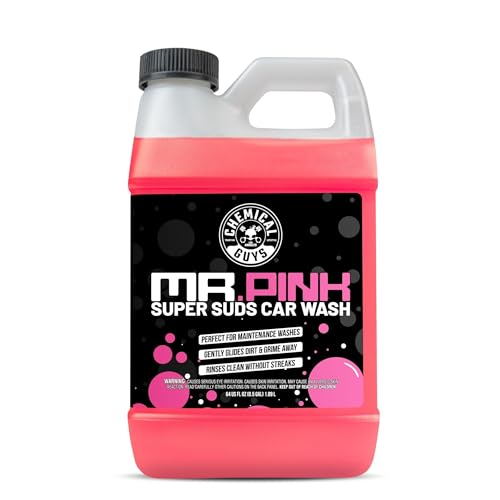
Best for foam that clings, without stripping wax, sealant or ceramic coating
- pH-balanced so it leaves protection intact
- Formulated specifically to foam in a cannon
- Very high dilution ratio, so a bottle lasts a season
- Safe on paint, glass, plastic trim and wheels
Why buy it: the difference between this and dish soap shows up in August, when the dish-soap car has no protection left and water stops beading on it.

Best for making sure you actually own a 40° white tip
- Color-coded 0°, 15°, 25°, 40° and soap tips
- 1/4-inch quick connect, universal fitment
- Stainless steel construction
- Sized for 2.5 GPM machines
Why buy it: the 40-degree white tip is the only one that belongs anywhere near a car, and a surprising number of machines ship without one.
One practical warning about foam cannons. Most need roughly 1.4 GPM or more to produce thick, clinging foam. On a 1.2 GPM compact machine the foam is thin and runs straight off, and on a battery unit it barely forms at all. If your machine is at the low-flow end, a two-gallon pump sprayer with the same shampoo gives you the dwell time at a fraction of the cost.
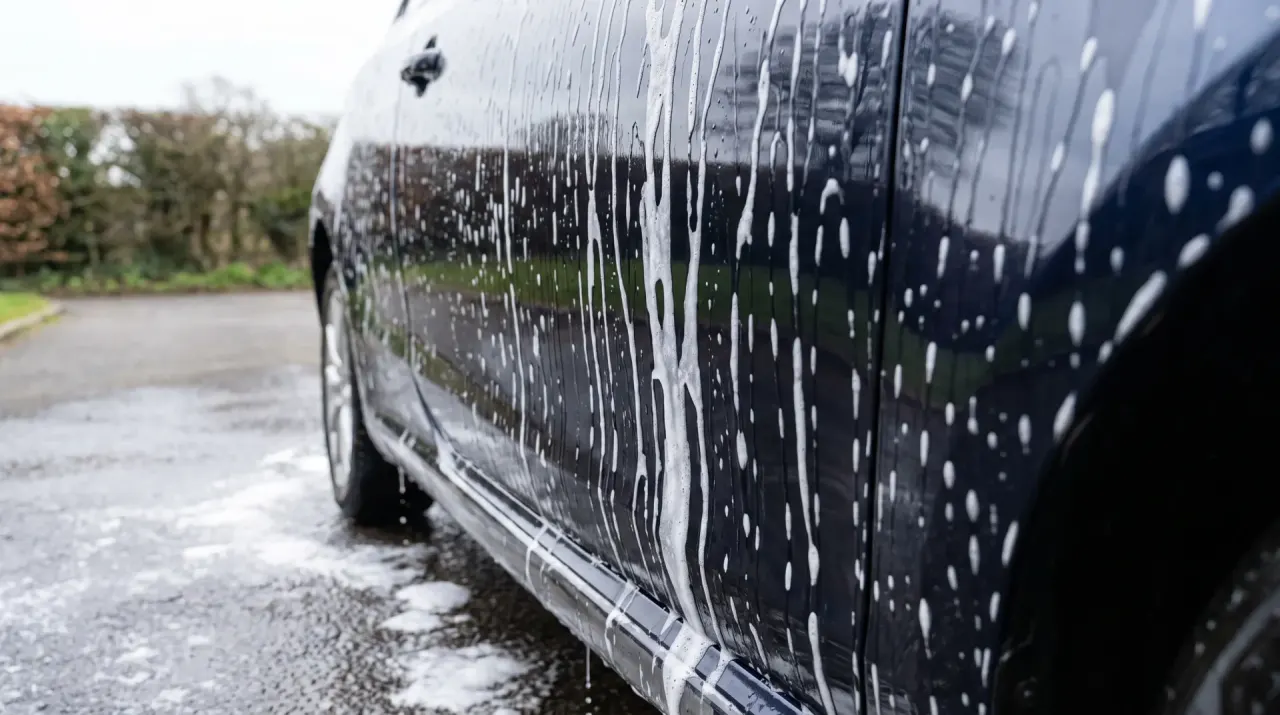
What actually gets damaged, and why
Intact factory clear coat on a sound panel is surprisingly resilient. Almost every real-world pressure washing failure is a case of pressure finding a weakness that already existed:
- Stone chips with a lifted edge. A jet gets under the lip and peels. Once it starts, it keeps going.
- Repainted panels. Aftermarket paint adhesion is rarely as good as factory, and a repair from years ago is the panel that lets go.
- Older clear coat. Sun-degraded lacquer on a car past about fifteen years old can be lifting invisibly. Test a small area at distance first.
- Badges and emblems. Adhesive-mounted, and a stationary jet at the edge will pop one off. Angle across them, never square on.
- Window and door seals. Perished rubber lets water into the cabin and the door card. Keep a wide fan and a respectful distance.
- Plastic trim and grille mesh. Brittle after a decade of UV, and thin mesh deforms permanently.
- The engine bay. Water forced into connectors, sensors and control modules is a genuinely expensive mistake. Leave it to a professional or a damp cloth.
The universal rule that prevents almost all of it: keep the tip moving. A jet held stationary for three seconds does more damage than the same jet swept across the same area for a minute.
The touchless question
It is possible to wash a car with no contact at all, and detailers who do it well rely on chemistry rather than pressure — a strong alkaline pre-soak, sometimes an acidic second step, both with proper dwell. That is not what most people mean when they say touchless, which is usually "foam and rinse".
Foam and rinse is genuinely useful, and it is the right approach for a car that is dusty rather than dirty, or between proper washes in winter when contact washing is unpleasant. What it does not do is remove bonded road film, and over a few months that film builds into a dullness no amount of foam will lift. The honest position is that touchless is a maintenance wash, and a contact wash with a clean mitt and clean water is what actually restores the finish.
Winter and road salt
This is where a pressure washer is not a luxury. Road salt and brine sit in the wheel arches, along the sills and under the floor, and a garden hose cannot reach any of it. A wide tip aimed up into the arches and along the underside, from 18 to 24 inches, flushes it out properly.
Do it on a day above freezing, dry the door shuts and the fuel filler recess, and if you can, let the car sit somewhere above freezing for an hour so water does not freeze in the locks and mechanisms. Frozen door seals tear when you pull the handle.
Safety
Standing next to a car makes a pressure washer feel domestic, and it is not. A narrow jet can drive water and grit under the skin through a puncture that looks trivial and is a surgical emergency; the CPSC has warned that power washers can cause serious injuries, and an analysis of CPSC injury-surveillance data published in 2024 found pressure washers accounted for the large majority of high-pressure injection hand injuries in the United States, concentrated on weekends and in the warm months — which is to say, exactly when and where people wash cars.
Keep the red 0° nozzle out of the box entirely. Never brace a hand in front of the tip to steady the wand, never aim it at a person or a pet, wear eye protection because grit comes back at you, and engage the trigger lock every time you set the gun down. Keep the power cord and the machine itself out of the puddle you are creating.
The five mistakes that cost paint
- Fitting a turbo nozzle because it looks like it cleans faster. It delivers 0-degree force in a spinning cone.
- Holding the jet still on a badge, a seam, a chip or a decal.
- Washing a hot car in direct sun and letting detergent flash off.
- Using dish soap, which strips the wax or sealant you paid for.
- Skipping the pre-rinse and going straight to a mitt, which grinds loose grit into the clear coat — the single biggest cause of swirl marks.
Where to go next
If you are choosing a machine for car work specifically, a compact unit is the right buy rather than a large one — see the best portable pressure washers and the best pressure washers for home use. A short gun handles a foam cannon far better than a long wand, covered in best pressure washer gun, and what soap to use in a pressure washer explains why dish soap is a bad habit.
More from this hub: leaf blowers & yard cleanup · best pressure washer · how we rank.