 Garden

Affiliate Disclosure
Some links on this page are affiliate links. As an Amazon Associate, we earn from qualifying purchases — at no extra cost to you. We do not buy, test, or physically handle the products we cover; our rankings come from aggregated owner reviews, ratings and expert consensus. Commissions never change our verdicts. How we rank · full disclosure.
For most homeowners, yes — the break-even against hiring is about one visit. A capable electric machine costs roughly $150 to $200, and a single professional house wash or driveway clean runs $180 to $450 as of 2026. If you own a driveway, siding, a deck or a vehicle and will use it more than once, buying is the cheaper route by a wide margin. The honest exceptions are a small courtyard, no storage space, or a water supply that cannot feed a pump.
We do not sell machines or take referral fees from contractors, and we never buy or test the products we rank; everything here comes from aggregated owner reviews and published pricing, described in how we rank.
The break-even math
| Route | Up-front | Per use | Cost after 3 uses |
|---|---|---|---|
| Buy a mid-range electric | $150–$200 | $5–$15 detergent | ~$180–$245 |
| Buy electric plus a surface cleaner | $220–$300 | $5–$15 | ~$250–$345 |
| Rent for the day | $0 | $40–$100 | $120–$300 |
| Hire a contractor | $0 | $180–$450 | $540–$1,350 |
Three uses is a low bar — a driveway, a fence and a car in one season gets you there. Over the ten years most people own a house, the arithmetic stops being close. What the table does not price is your afternoon and your risk, and both are real: on anything at height or on a roof, a contractor's ladder skills and liability insurance are worth genuine money.
Pressure washer vs garden hose: the actual numbers
| Garden hose | Hose with a jet nozzle | Pressure washer | |
|---|---|---|---|
| Pressure at the tip | ~40–60 PSI | ~60–100 PSI | 1600–2500 PSI |
| Flow | 5–10 GPM | 3–6 GPM | 1.2–1.76 GPM |
| Water used in 30 min | 150–300 gal | 90–180 gal | 35–53 gal |
| Removes loose mud | Yes | Yes | Yes |
| Removes algae from concrete | No | Barely | Yes |
| Removes road film from a car | No | No | Yes, with a foam pre-soak |
| Removes mildew from siding | No | No | Yes, with a cleaner and dwell time |
| Strips a deck | No | No | Yes — sometimes more than you wanted |
Two things in that table surprise people. The first is the size of the pressure gap: roughly forty to one. A hose nozzle feels powerful because it concentrates the flow, but concentrating 50 PSI does not get you within an order of magnitude of a pump. That gap is precisely why a hose will not touch the green film on north-facing concrete no matter how long you stand there.
The second is that the pressure washer uses far less water. It runs at a quarter to a tenth of a hose's flow rate, and it finishes the job faster, so the total consumption for a given task is dramatically lower. If you live somewhere with summer water restrictions or you are simply conscious of usage — the EPA's WaterSense program is a reasonable starting point on outdoor water use — the machine is the efficient choice, not the extravagant one.
Where a garden hose genuinely is enough
Plenty of outdoor cleaning is rinsing rather than cleaning, and for that a hose and a decent metal nozzle is the right tool: mud off boots and tools, dust off patio furniture, bird mess off a table, pollen off a car between proper washes, bins, kids, dogs, and watering everything. Add a bucket of outdoor cleaner and a stiff brush and you extend that reach considerably — a soft-wash-by-hand approach on a small paved area will get closer to a pressure-washed result than most people expect, at the cost of effort.

Best for a household deciding between buying once and hiring every few years
- 2030 max PSI at 1.76 GPM
- Five quick-connect nozzles and two detergent tanks
- Total stop system so the pump runs only on the trigger
- The most-owned electric pressure washer in the United States
Why buy it: costs roughly what one professional driveway visit costs, which is the entire financial case for owning rather than hiring — the second wash is free.
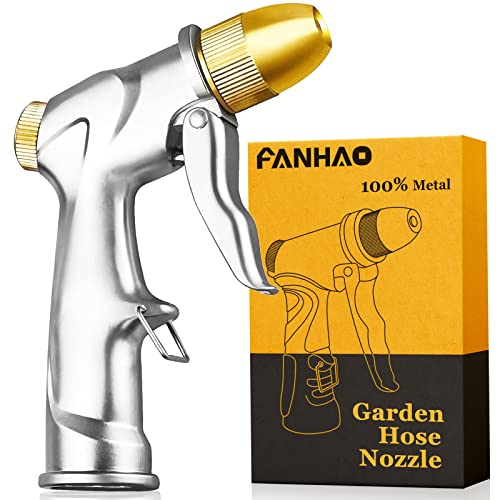
Best for patio furniture, bins, muddy boots and rinsing a car
- Solid metal body with a rubber over-mold
- Multiple spray patterns including a concentrated jet
- Fits any standard US hose thread
- No pump, no cord, no winterizing
Why buy it: if the honest answer is that your outdoor jobs are rinsing rather than cleaning, fifteen dollars here beats a hundred and seventy sitting behind the lawn mower.
The line where the hose stops being enough is when the dirt is bonded: algae rooted into concrete pores, mildew growing on siding, oxidized road film on paint, tannin staining on decking. None of those respond to volume. They need either pressure or chemistry, and usually both.
Who should not buy one
- Apartments and condos with no outdoor faucet. A machine needs a pressurized supply. Battery units that draw from a bucket exist but are a rinse tool, not a substitute.
- Nowhere to store it. A machine that has to be lifted over a bike every time will not get used. If storage is genuinely the problem, buy a compact upright with a carry handle or do not buy at all.
- A low-flow supply. Manufacturers typically want an inlet flow of at least twice the machine's rated GPM. If your faucet takes more than about 90 seconds to fill a five-gallon bucket, expect surging and disappointment.
- Only a balcony or a tiny courtyard. A brush, a bucket and a hose does that in less time than getting a machine out.
- Rented property you will leave soon. The value is spread over years of use.
- Restrictions. Some HOAs, drought-affected municipalities and shared-water communities limit outdoor washing or regulate wash-water discharge. Check before you buy.
The costs nobody budgets for
| Item | Cost | Is it optional? |
|---|---|---|
| Surface cleaner attachment | $50–$100 | Optional, but it is what makes a driveway look professional |
| Detergent | $15–$25 per gallon | Not optional if you want the clean to last |
| Outdoor-rated extension cord | $25–$50 | Effectively mandatory; factory cords are short |
| Pump antifreeze | $5–$10 per year | Cheapest insurance in the category |
| Replacement gun or hose | $25–$40 every few years | Expect it; these are the parts that fail |
| Storage space | Free, if you have it | The real constraint for a lot of households |
The single most valuable line there is the pump antifreeze. Water left in a pump through a hard freeze cracks the housing, and "it lost pressure over the winter" is by a wide margin the most common way a domestic pressure washer dies. A five-minute routine each autumn — drain the pump, run clear water through the detergent circuit, add antifreeze — is the difference between a five-year machine and a ten-year one.
The honest reality check
The most common failure mode of a pressure washer purchase is not that it was underpowered. It is that it sits behind the lawn mower and is used twice. Ask yourself plainly how many times a year you will genuinely get it out, and remember that the answer is strongly influenced by how much effort it takes to do so. Owners consistently report that a compact machine with a carry handle gets used several times more often than a heavy wheeled one of similar output, which is why we rank usability alongside performance.
If your honest answer is "once a year, for the driveway", buy a mid-range electric anyway — it still beats hiring on the second year. If your honest answer is "I would like the patio to look nicer", a bucket of outdoor cleaner and a stiff brush might genuinely be the better purchase.

One thing to know before you buy
These are not garden toys. A narrow jet can drive water and grit under the skin through a puncture that looks trivial and is a surgical emergency, and an analysis of CPSC injury-surveillance data published in 2024 attributed the large majority of high-pressure injection hand injuries in the United States to pressure washers rather than industrial equipment, concentrated on weekends and in the warm months. The CPSC has warned separately that power washers can cause serious injuries. If you buy one, leave the 0-degree red nozzle in the box, never brace a hand in front of the tip, and wear eye protection.
The verdict
Buy one if you have a driveway, path, deck, fence, siding or vehicles, a working outdoor faucet, and somewhere to put it. The break-even is one professional visit and everything after that is free.
Rent one if you have a single big project — stripping a whole driveway before sealing, say — and genuinely no storage.
Skip it if your outdoor cleaning is rinsing rather than cleaning, your space is small, or your water supply cannot feed a pump. A good metal hose nozzle and a bucket of outdoor cleaner will do more than people expect for a fraction of the money and none of the storage.
Where to go next
If you have decided to buy, the best pressure washers for home use covers the field, and the best portable pressure washers matters if storage or weight is your real constraint. What pressure washing costs has the current professional figures if you would rather hire.
More from this hub: leaf blowers & yard cleanup · best pressure washer · what soap to use · how we rank.