 Garden
Affiliate Disclosure
Some links on this page are affiliate links. As an Amazon Associate, we earn from qualifying purchases — at no extra cost to you. We do not buy, test, or physically handle the products we cover; our rankings come from aggregated owner reviews, ratings and expert consensus. Commissions never change our verdicts. How we rank · full disclosure.
The short version: the best paint for trim and baseboards is a hard-curing enamel in satin or semi-gloss, and INSL-X Cabinet Coat is the pick — its urethane-modified acrylic cures far harder than ordinary latex and bonds to old glossy trim without a separate primer. For bathroom and laundry trim, Zinsser Perma-White semi-gloss is better because its mildew resistance is built into the cured film. For one room on a budget, a quart of Rust-Oleum Painter’s Touch semi-gloss is honest value, and on radiators and steel door frames you want Rust-Oleum Stops Rust instead of any latex.
Trim is the one interior surface people physically abuse. Baseboards get kicked, vacuumed into and mopped against; door casings get shouldered; window stools get things put on them. That is why enamel hardness, not color or brand, is the property that decides whether your trim still looks painted in three years. For the technique, see how to paint trim and baseboards and how to caulk trim, and the paint and walls hub covers the rest of the room.
Top Picks at a Glance
Our #1 Pick: INSL-X Cabinet Coat
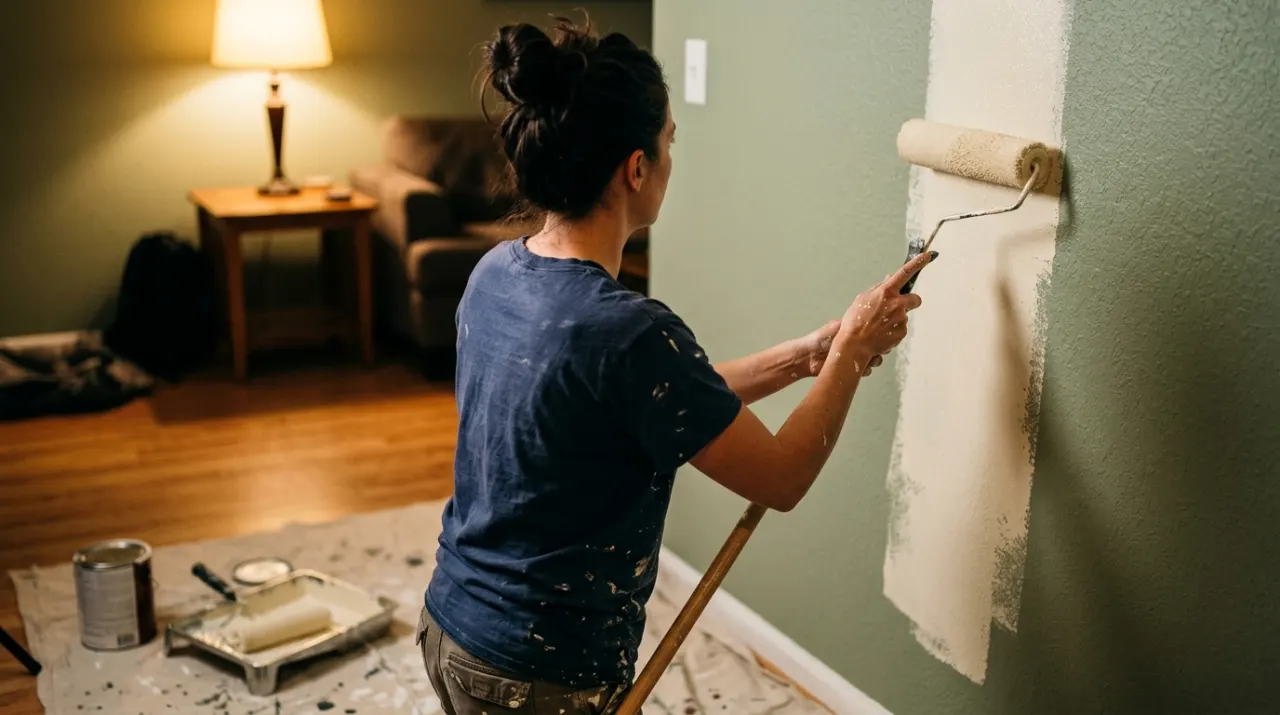
It is sold as a cabinet paint, but trim asks for exactly the same things: a film hard enough to be kicked, an adhesion package that will grip whatever gloss is already on the woodwork, and enough flow that brush marks disappear on a surface people look at from two feet away. Cabinet Coat delivers all three, which is why it turns up constantly in owner discussions about baseboards and door casings, not just kitchens.
The chemistry is a urethane-modified acrylic. Plain acrylic latex stays relatively soft and flexible — ideal on a wall that expands and contracts, poor on a baseboard that meets a vacuum cleaner. Adding urethane crosslinks the film into something considerably harder and more abrasion resistant, while keeping water cleanup and low odor — still worth pairing with EPA advice to provide maximum ventilation during painting, since trim work happens in closed rooms. In practice, owners consistently report that it stops showing scuffs from shoes and furniture where their previous latex trim paint had marked within months.
The other reason it earns the top spot is adhesion. Most trim in an occupied house already carries several coats, often including an old oil-based enamel, and it is glossy. Cabinet Coat is formulated to bond to glossy and previously varnished surfaces after a scuff sand, without a separate bonding primer — which removes an entire day from a trim project. It also flows and levels unusually well, so a brushed baseboard reads as smooth rather than striped.
Consensus Score █████████░ 8.7 — built from aggregated verified owner ratings, weighted for review volume.
The honest weaknesses: it costs noticeably more per gallon than general-purpose trim paint; the satin sheen is a specific look, so if you want traditional high gloss this is not it; and like all hard-curing enamels it needs real cure time before anything leans against it. It is also interior-only.
Check price on Amazon → (paid link)
The Ranked Field
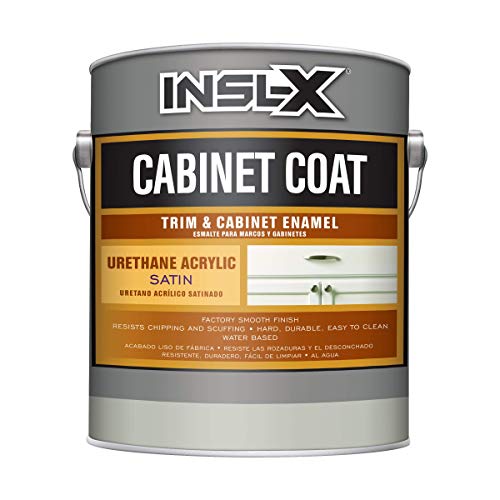
Best for a hard, furniture-grade finish on baseboards, casings and doors
- Urethane-modified acrylic cures very hard
- Bonds to glossy old finishes without a primer
- Outstanding flow and leveling
- Satin sheen, low odor, water cleanup
Why buy it: urethane-modified acrylic cures far harder than ordinary latex, which is the difference between baseboards that shrug off a vacuum cleaner and baseboards that scuff the first week.

Best for bathroom and laundry trim that keeps growing mildew
- Mildew-resistant dried film, guaranteed
- Self-priming on most sound surfaces
- Semi-gloss, fully washable
- Moisture and stain resistant
Why buy it: the mildew resistance lives in the cured film rather than in a surface treatment, so the black speckling in the corner behind the toilet stops coming back every spring.

Best for touching up or repainting trim in one or two rooms
- Interior and exterior rated
- Sticks to wood, metal and more
- Semi-gloss that wipes clean
- Fast dry, chip and fade resistant
Why buy it: a quart is the right amount for one room of baseboards, and buying a quart means the leftover is a touch-up bottle rather than three-quarters of a gallon in the garage.

Best for traditional high-gloss trim in older houses
- Full gloss latex enamel
- Bright white with minimal cast
- Hard, wipeable film
- Gallon size for a whole house of trim
Why buy it: a true gloss trim is the traditional look in older homes and it is the easiest of all sheens to wipe clean, which is why it survived a century of family hallways.

Best for a whole house of baseboards, casings and doors
- Semi-gloss latex, interior and exterior
- Bright white tone
- Good hide over existing white trim
- Gallon price for a big job
Why buy it: trim eats paint faster than people expect once you count both sides of every door casing, and a fairly priced gallon stops the second trip to the store.
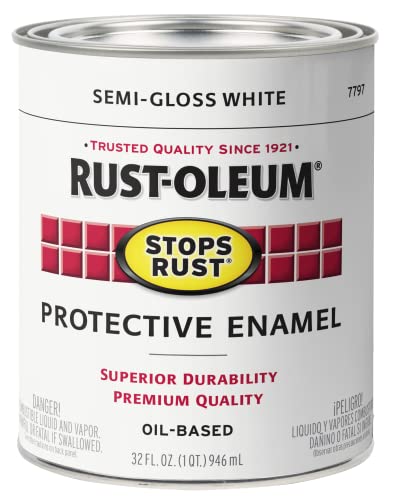
Best for radiators, metal door frames, railings and steel thresholds
- Oil-based rust-inhibiting enamel
- Bonds to lightly rusted metal
- Very hard, chip-resistant film
- Semi-gloss finish
Why buy it: painting a radiator or a steel door frame with latex traps moisture against bare metal, while a rust-inhibiting oil enamel actually stops the rust spreading underneath.
Quick Comparison
| Product | Best for | Rating | Price | Buy |
|---|---|---|---|---|
| INSL-X Cabinet Coat Urethane Acrylic Satin Sheen Enamel Cabinet Paint, White, 1 Gallon | Best Overall Trim Paint | — | Check (paid link) | |
| Zinsser 02754 PERMA-WHITE Mold and Mildew Proof Interior Paint, Quart, Semi-Gloss White | Best for Bathrooms | — | Check (paid link) | |
| Rust-Oleum Painter’s Touch Latex Brush-On Paint, Semi-Gloss White, Quart | Best Value | — | Check (paid link) | |
| Diamond Brite Latex Gloss Enamel Paint, Gloss White, 1 Gallon | Best High-Gloss | — | Check (paid link) | |
| Diamond Brite Semi Gloss Latex Paint, Brite White, 1 Gallon | Best Value Gallon | — | Check (paid link) | |
| Rust-Oleum 7797502 Stops Rust Brush On Paint, Quart, Semi-Gloss White | Best for Metal Trim | — | Check (paid link) |
How We Rank
We do not buy, test or physically handle these products. For trim paint we weight cured film hardness and scuff resistance, adhesion to existing glossy trim, flow and leveling on a surface viewed close up, sheen options, and cost per room. Rankings come from the aggregated owner-review record — ratings weighted by review volume, plus the complaints that repeat across large numbers of reviews. Prices were current at the time of writing. Full method on how we rank.
The Trim Paints, Reviewed
1. INSL-X Cabinet Coat — Best Overall
Covered above. What owners praise: the hardness of the cured film, adhesion over old gloss without priming, and excellent leveling. What owners complain about: the price, that satin is the only real sheen option, and a long cure before it can be leaned on. The choice if you want trim that stays looking painted.
2. Zinsser Perma-White Semi-Gloss — Best for Bathrooms
Bathroom trim fails differently from the rest of the house. It is not scuffing that gets it, it is mildew colonizing the caulk line and the bottom of the baseboard where steam condenses and sits. Perma-White carries a mildew-resistance guarantee on the dried film, meaning the biocide is in the coating rather than applied to it, and it self-primes on most sound surfaces. What owners praise: that recurring mildew genuinely stops, plus good hide and washability. What owners complain about: it is sold mostly by the quart so a whole bathroom works out expensive, and the film stays soft for a week or two while it cures. Buy it for the room that keeps failing, not for the whole house.
3. Rust-Oleum Painter’s Touch Semi-Gloss White — Best Value
A quart of a genuinely durable multi-surface enamel for less than the price of a good brush. For one room of baseboards, a set of window casings, or a repaint of trim that is already in decent shape, this is the sensible amount of paint to buy — and the leftover becomes your touch-up bottle rather than three-quarters of a gallon curing in the garage. It sticks to wood and metal, dries fast, and gives a semi-gloss that wipes clean. What owners praise: the price, the fast dry and the coverage from a quart. What owners complain about: it is thinner-bodied than a premium enamel so it takes two coats, and it shows brush marks if you overwork it. Excellent value on a small job.
4. Diamond Brite Latex Gloss Enamel, Gloss White — Best High-Gloss
Full gloss trim is the traditional look in older American houses, and it persists for a good reason: it is the easiest sheen in existence to wipe clean, and it makes crisp architectural woodwork look sharp. It is also the least forgiving finish you can apply. Every dent, every old drip, every place where forty years of paint has softened a profile will be lit up. What owners praise: the durability, the ease of cleaning and the clean bright white. What owners complain about: it demands genuinely good prep, and it shows every brush mark, so it needs a good brush and a light touch. For beautifully maintained trim only.
5. Diamond Brite Semi Gloss Latex, Brite White — Best Value Gallon
People routinely underestimate how much paint trim takes. Count both sides of every door casing, the baseboards in every room including closets, the window stools and aprons, and a modest house is well past a gallon. This is a fairly priced gallon of straightforward semi-gloss latex in a bright white that matches most standard trim. What owners praise: the price per gallon, the bright tone and that it covers existing white trim in two coats. What owners complain about: it is a general-purpose latex rather than a hard enamel, so it scuffs more readily than the urethane products above. The right buy when the job is large and the trim is not high-traffic.
6. Rust-Oleum Stops Rust, Semi-Gloss White — Best for Metal Trim
The specialist for the metal in your house: cast iron radiators, steel door frames, thresholds, stair railings, and the metal edge trim in older buildings. Latex on bare or lightly rusted steel is a mistake — it holds moisture against the metal and the rust simply continues underneath until the paint blisters. This is an oil-based rust-inhibiting enamel that bonds to lightly rusted metal after wire-brushing and cures very hard. What owners praise: that it genuinely stops rust spreading, and the toughness of the film. What owners complain about: a strong solvent smell, mineral-spirits cleanup and a slow dry. Ventilate properly and use a brush you can throw away.
What Owners Actually Complain About
Trim paint complaints cluster tightly, and nearly all of them are about hardness, cure time or prep.
“It scuffs and marks straight away.” Two causes. Either the paint is a wall paint or a soft latex being asked to do enamel work, or it is a proper enamel that has not finished curing. Give any trim enamel at least a week before furniture goes back against it, and a month before you judge its hardness.
“It peeled off in sheets.” Adhesion failure over old glossy trim that was not sanded or was not clean. Baseboards in particular carry a film of dust, mop water residue and household grime that no paint will bond through. Wash with a degreaser, scuff sand with 180 to 220 grit, wipe with a tack cloth, then paint. Old trim in a pre-1978 house deserves a second thought first: the EPA notes that lead dust forms when lead-based paint is scraped, sanded or heated, and a contractor paid to sand it has to be certified under the EPA Renovation, Repair and Painting Rule.
“It stuck to the door stop and tore.” Called blocking, and it is the classic soft-film failure. A door or window closed against freshly painted trim before the film has hardened will bond to it. Harder-curing enamels resist this far better, but nothing resists it in the first 48 hours.
“The brush marks show.” Trim is looked at from two feet, so it shows what a wall hides. Use a good angled sash brush — see our cut-in brush picks — work in short sections, and lay off in one direction with a lightly loaded brush. Do not go back over paint that has begun to set.
“The white does not match my walls.” Trim whites run cool to warm just like wall whites do, and a cool white trim against a warm white wall reads as dirty rather than deliberate. Sample both together before committing — our white wall paint roundup covers how to judge them.
How to Choose Trim Paint
Buy hardness first. The single spec that determines how trim looks in three years is how hard the film cures. Look for urethane-modified acrylics, alkyd-modified waterborne enamels, or traditional oil enamels. Anything described simply as interior latex in satin is a compromise.
Choose the sheen for the trim’s condition, not for fashion. Smooth, sound, well-maintained woodwork can carry semi-gloss or gloss and will look sharper for it. Old trim with dents, filled nail holes and a dozen previous coats looks far better in satin, which scatters light rather than raking across it.
Match the product to the substrate. Wood trim wants an enamel. Metal wants a rust-inhibiting metal enamel. MDF trim wants a primer that will not raise the fibers, applied to any cut edges. Painting all three with the same can is how radiators end up blistered.
Work out the quantity before you buy. Trim covers less per gallon than you expect, because you are painting narrow profiles from several angles and losing paint into the brush. A gallon covers a lot of baseboard but disappears quickly once door casings and windows are in scope. Buy one gallon for a whole floor of trim; a quart for one room.
Prep is most of the job. Fill the nail holes, caulk the gap where the trim meets the wall — that shadow line is what makes trim look unfinished — sand, degrease, and then paint. The caulking guide covers the step most people skip, and good painter’s tape protects the floor and the wall line while you work.
The Verdict
For trim and baseboards that still look painted in three years, buy INSL-X Cabinet Coat: it cures hard, sticks to old gloss without priming, and levels out brush marks. Use Zinsser Perma-White semi-gloss in the bathroom, Rust-Oleum Stops Rust on radiators and steel frames, and a quart of Rust-Oleum Painter’s Touch if the job is one room and the budget is tight. Whatever you buy, sand and degrease first, and keep the furniture off it for a week. Check price on Amazon → (paid link)