 Garden

Affiliate Disclosure
Some links on this page are affiliate links. As an Amazon Associate, we earn from qualifying purchases — at no extra cost to you. We do not buy, test, or physically handle the products we cover; our rankings come from aggregated owner reviews, ratings and expert consensus. Commissions never change our verdicts. How we rank · full disclosure.
Standard all-purpose drywall joint compound needs about 24 hours to dry before sanding; setting-type compound can be ready in 30 minutes to a few hours. Drying-type mud hardens only as its water evaporates, so time, temperature, humidity and how thick you applied it all move the number. Setting-type mud cures by a chemical reaction on the schedule printed on the bag, regardless of humidity. Do not go by the clock alone — the compound must be uniformly bright white and hard, with no darker gray damp patches, before you sand.
Why does the type of compound change everything?
Because the two families harden by different mechanisms, and that dictates the wait.
| Compound type | How it hardens | Ready to sand | Best for |
|---|---|---|---|
| All-purpose (pre-mixed tub) | Water evaporates | ~24 hours | General taping and coats; easy sanding |
| Lightweight all-purpose | Water evaporates | ~24 hours (a little faster) | Final coats; sands easily |
| Setting-type "20" (mix powder) | Chemical set, then dries | ~20–30 min set | Fast repairs, deep fills |
| Setting-type "45" / "90" | Chemical set, then dries | ~45–90 min set | More working time; humid rooms |
Setting-type compounds are labeled with a number — 20, 45, 90 — that is the working time in minutes before they harden. They set on that schedule even in a cold, damp room, which makes them the go-to for repairs you want to finish the same day or for basements and bathrooms where drying compound would take days. The trade-off is that they are harder and less pleasant to sand, so many people use setting-type for the fill coats and a drying-type all-purpose for the final skim.
What slows down drying-type mud?
Everything that slows evaporation. For pre-mixed all-purpose compound, the 24-hour figure assumes a warm, dry, ventilated room, and real conditions push it either way.
- Humidity. High humidity is the biggest brake — a damp basement can double or triple the time.
- Temperature. Cold rooms dry slowly; warm rooms speed it up.
- Airflow. Still air leaves a moist layer over the mud; a fan makes a real difference.
- Thickness. A thick fill holds water in its center long after the surface looks dry — the classic trap that leads to sanding into a still-wet core.
Running a fan, opening windows, warming the room or using a dehumidifier all shorten the wait for drying-type compound. Setting-type is largely immune to these, which is its whole advantage in poor conditions.
How do I tell it is actually dry?
Judge by the compound, not the clock. Wet joint compound is a darker gray; as it dries it turns a uniform bright, chalky white, so any patch that still looks gray is still damp underneath and not ready. It should also feel hard and cool-dry rather than cold and soft, and a fingernail pressed at an edge should not dent it. Thick fills are where people get caught: the surface skins white while the center stays wet, so give generous fills extra time and re-check. Sanding too early clogs the paper, gouges the surface and leaves a fuzzy finish you will have to redo — patience here is the same lesson as waiting between paint coats, covered in how long to wait between coats.
What comes after sanding?
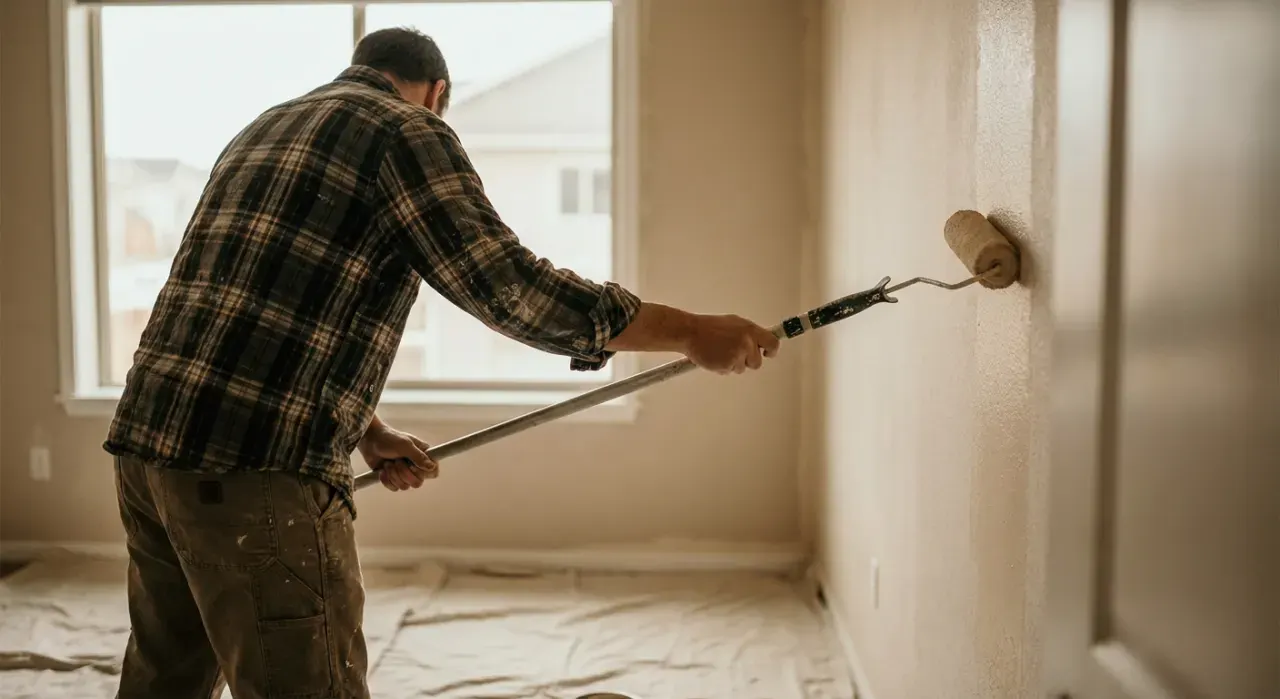
Prime before you paint, without exception. Dried joint compound is porous and absorbs paint quite differently from the surrounding drywall paper, so painting straight over sanded mud leaves dull, patchy "flashing" where the compound drank the paint — a common reason a repaired wall looks blotchy through the finish. A coat of drywall or PVA primer over the patched areas (or the whole wall) seals the compound so the topcoat covers evenly. This is the same reason repairs and bare drywall get primed generally, part of preventing the uneven results discussed in why paint peels and flashes. Then paint two coats, budgeting quantity with coverage per gallon.
We never buy, test or physically handle the products we rank. Recommendations come from aggregated owner reviews, star ratings, review volume and expert consensus — see how we rank.
More from this hub: Paint & Walls · Best interior paint · Why paint peels · Waiting between coats · How we rank