 Garden

Affiliate Disclosure
Some links on this page are affiliate links. As an Amazon Associate, we earn from qualifying purchases — at no extra cost to you. We do not buy, test, or physically handle the products we cover; our rankings come from aggregated owner reviews, ratings and expert consensus. Commissions never change our verdicts. How we rank · full disclosure.
Read this before you buy one: bug zappers do not control mosquitoes. The classic residential study, by Frick and Tallamy at the University of Delaware, collected everything six homeowner zappers killed across a summer — roughly 14,000 insects — and found that biting insects made up a fraction of one percent of the catch. The rest were non-target species, many of them beneficial. Zappers lure with ultraviolet light, and mosquitoes follow carbon dioxide, not UV. If your goal is mosquitoes, skip to best mosquito trap or best mosquito repellent for a yard.
Zappers are not useless. Against nuisance flies and moths around barns, stables, garages and large open properties, they do a real job, and that is the honest use case. We have ranked the field on that basis, and included the better alternatives alongside so nobody buys the wrong tool by accident.
Top Picks at a Glance

The Evidence, Plainly
The Frick and Tallamy work is the study everyone cites because nobody has produced a residential result that contradicts it. Six zappers, one summer, roughly 14,000 dead insects, and biting flies — the mosquitoes and biting midges people buy these for — accounted for well under one percent of them. Everything else was moths, beetles, midges, caddisflies, parasitic wasps and other night-flying species, a great many of them either harmless or actively useful in a garden.
The mechanism explains the result. Mosquitoes hunt by following a plume of carbon dioxide and then closing on body heat and skin odor. Ultraviolet light is not a strong cue for them, and a person sitting on a patio is a vastly more compelling target than a lamp. Mosquito-control professionals have said so consistently for decades, and the EPA's integrated approach to mosquito control puts source reduction and larval control at the top and does not include electrocution devices at all.
Our #1 Pick: Flowtron BK-40D
Judged as what it actually is — a fly and moth killer for open ground — the BK-40D is the model with the strongest ownership record. It is an old, simple, American-made design: a 40W ultraviolet tube, a 5,600-volt grid, a non-clogging design and a housing that survives years of weather. Owners routinely report keeping one running for a decade, which in this category is unusual.
Its coverage claim of one acre is optimistic in the way all zapper coverage claims are; treat it as the working radius around the unit rather than a protected perimeter. Site it 25 to 40 feet from where people sit, about six feet up, away from doors, food and competing light. An octenol attractant cartridge is sold separately and modestly improves the biting-fly catch — but modestly is the operative word, and it will not turn a zapper into a mosquito solution.
Check price on Amazon → (paid link)
The Ranked Field

Best for nuisance flies and moths over a large open property
- 40W UV bulb with a 5,600V killing grid
- Rated to about 1 acre of coverage
- Non-clogging grid and a shatterproof housing
- Optional octenol cartridge sold separately
Why buy it: if you have decided you want a zapper, this is the one owners keep for a decade — but understand up front that its mosquito catch will be a rounding error.

Best for farms, barns and properties well over an acre
- 80W UV bulb, roughly 1.5 acre coverage
- 5,600V grid, same durable Flowtron housing
- Built for continuous outdoor operation
- Mounted by chain, sited away from people
Why buy it: twice the light output for barns, paddocks and open acreage where nuisance flies genuinely are the problem — which is the one setting where a zapper makes real sense.

Best for a cheap, hangable unit for a deck or garage
- UV lure with a high-voltage grid
- Hangs by chain or sits on a flat surface
- Removable collection tray for cleaning
- Marketed for up to 2 acres
Why buy it: the low-cost entry point, and the coverage claim should be read with heavy skepticism — treat it as a deck or garage unit rather than an acreage one.

Best for targeted killing of the one mosquito in the bedroom
- Rechargeable electric swatter with a kill counter
- Targets a single insect rather than luring a crowd
- No standing power draw, no non-target catch
- Works indoors and out
Why buy it: the only device in this list with zero ecological cost, because it kills exactly what you aim it at — genuinely the most useful "zapper" most households will own.
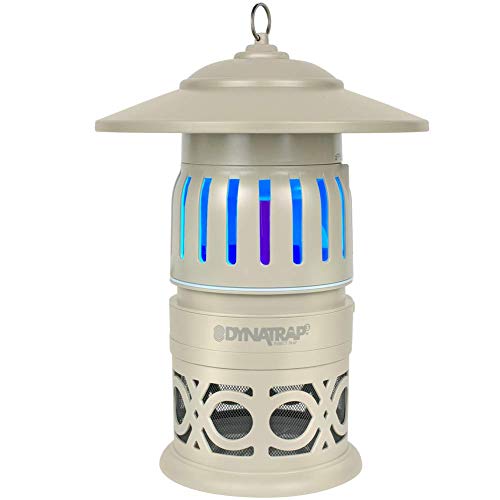
Best for people who bought a zapper for mosquitoes and want the right tool
- UV plus a titanium-dioxide surface releasing trace CO2
- Silent fan draws insects into a retaining cage
- No zapping noise, no electrocution grid
- Covers up to 1/2 acre
Why buy it: a fan trap catches insects alive rather than exploding them across the patio, and its CO2 element gives it a real, if modest, mosquito lure that a pure UV zapper lacks.
Best for indoor gnats and fruit flies without a zapping grid
- UV light, fan suction and a sticky glue board
- Completely silent, no zap, no smell
- Sized for a bedroom, kitchen or office
- Replaceable glue boards
Why buy it: nobody wants an electrocution grid crackling in a bedroom — this does the indoor job silently, and is outstanding on the gnats and fruit flies people actually fight indoors.

Quick Comparison
| Product | Best for | Rating | Price | Buy |
|---|---|---|---|---|
| Flowtron BK-40D Electronic Insect Killer, 1 Acre Coverage | Best Overall Zapper | — | Check (paid link) | |
| Flowtron BK-80D 80-Watt Electronic Insect Killer, 1.5 Acre Coverage | Best Large-Property Zapper | — | Check (paid link) | |
| BLACK+DECKER Bug Zapper, 2 Acre Coverage Electric UV Insect Killer | Best Value | — | Check (paid link) | |
| BLACK+DECKER Bug Zapper Fly Swatter, Electric Racket | Best Handheld | — | Check (paid link) | |
| DynaTrap DT1050 1/2 Acre Mosquito & Flying Insect Trap | Best Mosquito Alternative | — | Check (paid link) | |
| Katchy Indoor Insect Trap with UV Light and Fan | Best Indoor Non-Zapper | — | Check (paid link) |
Matching the Tool to the Actual Problem
| Your problem | Right tool | Is a zapper the answer? |
|---|---|---|
| Mosquitoes on the patio | Zone repeller plus a fan | No |
| Mosquitoes across the yard | Bti larvicide plus source reduction | No |
| Nuisance flies around a barn or stable | Zapper, sited away from animals | Yes |
| Moths swarming an outdoor light | Zapper, or switch to warm LED lighting | Yes |
| Fungus gnats and fruit flies indoors | Indoor UV-and-glue trap | No — buy the silent version |
| One mosquito in the bedroom at 2am | Electric swatter | Yes, the handheld kind |
How We Rank
We never buy, hang or run these devices. Rankings come from aggregated owner ratings across the most-owned zappers and their alternatives, weighted toward long-ownership reviews, and cross-checked against the published research on what zappers actually catch. Four factors carry the weight: durability, because zappers live outdoors year-round and the cheap ones die in a season; effectiveness on the insects they genuinely affect, meaning flies and moths rather than mosquitoes; non-target harm, which we treat as a real cost rather than ignoring it; and running and maintenance cost, mainly bulbs and cleaning. Prices were checked at the time of writing. Full method: how we rank.
The Field, Reviewed
1. Flowtron BK-40D — Best Overall Zapper
Covered above. Owners praise: extraordinary longevity, simple maintenance, and a real reduction in flies and moths on open property. Owners gripe about: almost no effect on mosquitoes, the constant snapping noise, cleaning the grid, and the pile of dead insects underneath. Check price (paid link).
2. Flowtron BK-80D — Best Large-Property Zapper
The 80-watt version for acreage, barns and paddocks. Double the light output, the same rugged housing, and the same honest limitation on mosquitoes.
Owners praise: genuinely useful fly control around livestock and outbuildings, and years of reliable service. Owners gripe about: the power draw, a louder and more frequent snap, and bulb replacement cost. Check price (paid link).
3. BLACK+DECKER 2-Acre Bug Zapper — Best Value
A cheap, hangable unit that does the basic job. The two-acre marketing claim is not a figure to plan around; think of it as a deck, patio or garage device.
Owners praise: the low price, easy hanging, and a removable tray that makes cleaning tolerable. Owners gripe about: lighter build than the Flowtrons, an inflated coverage claim, and the usual near-zero mosquito result. Check price (paid link).
4. BLACK+DECKER Electric Swatter — Best Handheld
The sleeper pick of the whole category. A rechargeable racket kills precisely the insect you aim at, catches nothing else, draws no standing power and costs less than twenty dollars. For the mosquito in the bedroom it is the correct answer, and it is the only device here with no ecological cost at all.
Owners praise: instant satisfaction, the kill counter, and USB charging. Owners gripe about: needing you to be present and awake, and that it obviously does nothing about a yard population. Check price (paid link).
5. DynaTrap DT1050 — Best Mosquito Alternative
If you came here for mosquitoes, this is where to spend the money instead. A silent fan trap with a titanium-dioxide surface that releases trace CO2, giving it a lure mosquitoes actually respond to, and a retaining cage rather than a grid.
Owners praise: silence, no chemicals, and a mosquito and gnat catch that a UV zapper cannot match. Owners gripe about: a large share of non-target catch of its own, bulb replacement, and needing to run continuously all season. Check price (paid link).
6. Katchy Indoor Insect Trap — Best Indoor Non-Zapper
Indoors, a crackling electrocution grid is the wrong appliance. This one is silent, uses a glue board instead of a grid, and is genuinely outstanding against fungus gnats and fruit flies.
Owners praise: near-elimination of gnats around houseplants, silence, and a discreet design. Owners gripe about: weak mosquito performance, glue-board replacement cost, and needing a darkened room to work well. Check price (paid link).
What Owners Actually Complain About
"It didn't touch the mosquitoes." By far the most common complaint, and the research says the buyer is right. This is a product-category mismatch, not a defective unit.
The noise and the mess. A zapper snapping every few seconds through a summer evening is not the ambience people imagined, and the debris pile beneath it needs sweeping.
Killing the good bugs. Gardeners increasingly raise this themselves after emptying a tray of moths, lacewings and beetles. It is a legitimate objection and the main reason we rank this category the way we do.
Placement pulling insects toward the patio. A zapper is an attractant. Hanging one above the dinner table achieves the opposite of what was intended.
The Verdict
If you have flies around a barn or moths swarming an outdoor light, the Flowtron BK-40D is the durable, sensible choice and will outlive most of what you own. If you came here for mosquitoes — which most people do — buy a pack of Bti dunks (paid link) for your standing water, put a fan on the patio, and read do bug zappers work on mosquitoes before you spend anything else. It is a cheaper answer and a truer one. Check price on Amazon → (paid link)
More from this hub: pest & weed control · best mosquito trap · do ultrasonic repellers work · outdoor living & grills · how we rank.