 Garden

Affiliate Disclosure
Some links on this page are affiliate links. As an Amazon Associate, we earn from qualifying purchases — at no extra cost to you. We do not buy, test, or physically handle the products we cover; our rankings come from aggregated owner reviews, ratings and expert consensus. Commissions never change our verdicts. How we rank · full disclosure.
No. Bug zappers do not meaningfully control mosquitoes, and the research on this is consistent. The best-known residential study, by Frick and Tallamy at the University of Delaware, identified the catch from six homeowner zappers over a summer — roughly 14,000 insects — and found that biting flies made up a fraction of one percent of the total. The rest were non-target species, many of them beneficial. Zappers lure with ultraviolet light; mosquitoes hunt by following carbon dioxide, body heat and skin odor. The device is answering a question mosquitoes never asked.
Why does UV light not attract mosquitoes?
Because mosquitoes are not primarily visual hunters, and what visual response they do have is not tuned to a purple lamp. A host-seeking mosquito detects the plume of carbon dioxide from a person's breath at a distance, flies upwind along it, then closes using body heat, water vapor and the skin-odor compounds produced by bacteria on your skin. Vision comes last and only at short range. Research from the University of Washington published in Nature Communications in 2022 found that mosquitoes ignore visual cues entirely until CO2 activates the system, and that once activated they favor red, orange, black and cyan — not ultraviolet.
Moths, beetles, caddisflies, lacewings and midges, by contrast, are strongly drawn to UV. So a bug zapper is a highly effective moth trap that occasionally, accidentally, kills a mosquito. Meanwhile you are sitting fifteen feet away broadcasting exactly the signal mosquitoes evolved to follow. In that competition, you win every time.
What do the numbers actually show?
The Delaware study remains the reference point because nobody has produced a residential result that contradicts it. Six zappers, one summer of nightly operation, and the catch sorted and identified.
| Finding | Result |
|---|---|
| Total insects killed across six residential zappers, one season | ~14,000 |
| Share that were biting insects (mosquitoes and biting midges) | Well under 1% |
| Share that were non-target species | The overwhelming majority |
| Measurable reduction in mosquito biting for the households | None demonstrated |
That last row is the one that matters to a buyer. Killing some mosquitoes is not the same as reducing bites, because a yard's mosquito population is replenished continuously from breeding sites and from neighboring properties. A device removing a handful of adults per night while a clogged gutter produces a new generation every eight to ten days is not going to change your evening.
What is the actual cost of running one?
The electricity is trivial; the ecological bill is not. Because ultraviolet light attracts broadly, a zapper running nightly through a season kills many thousands of moths, beetles, lacewings and parasitic wasps. Lacewings and parasitic wasps are predators of aphids and caterpillars — insects a gardener is usually trying to encourage. Moths are pollinators and a primary food source for birds raising young. Trading those for a device that does not solve your mosquito problem is a poor exchange.
There is a secondary concern worth knowing: research has found that electrocution ejects insect fragments and associated microbes into the air around the unit. Whether that matters in a backyard is arguable, but it is a solid reason not to hang one over a grill, an outdoor kitchen or a dining table.
What actually works on mosquitoes instead?
Three things, in order of how much they change the outcome.
- Eliminate standing water. The single most effective step by a wide margin. Every mosquito develops in water, and the CDC notes that a container holding as little as a bottle cap of water can produce them. Walk the yard weekly and empty, scrub, cover or throw out anything holding water. For water you cannot dump — a rain barrel, a pond, a low spot — a Bti larvicide kills the larvae for around 30 days and, per the EPA, has no toxicity to people and does not harm fish, birds or pets.
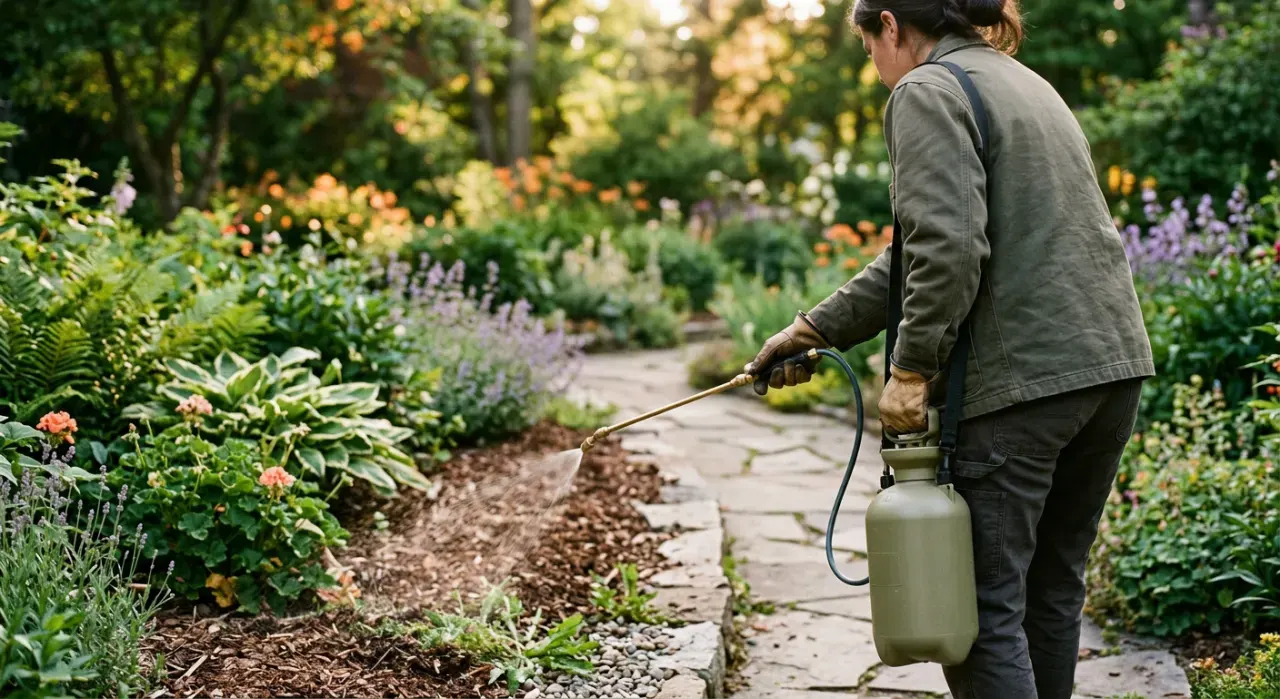
- Protect the seating area. A zone repeller builds a protected bubble roughly 10 to 15 feet across. An oscillating fan is even cheaper and works on physics: mosquitoes are weak fliers, and moving air both prevents landing and disperses the CO2 plume guiding them to you.
- Use an EPA-registered repellent on skin. The actives the CDC lists are DEET, picaridin, IR3535, oil of lemon eucalyptus (OLE) or PMD, and 2-undecanone. Note that OLE is a refined registered extract and is not the same as lemon eucalyptus essential oil from the aromatherapy aisle, which is not registered as a repellent and is not recommended for that use.
If a device is what you want, a propane trap that generates real carbon dioxide is the only consumer product that lures mosquitoes convincingly — we compare the field in best mosquito trap.
When is a zapper the right buy?
When the insects bothering you are the ones it is good at. Around barns, stables, garages, workshops and large open properties, nuisance flies and moths are the genuine complaint, and a zapper reduces them noticeably. Site it 25 to 40 feet from where people or animals gather, about six feet up, away from food and away from competing light. A handheld rechargeable swatter is also a legitimately useful tool with zero non-target cost, because it kills only what you point it at. We ranked the category honestly, alternatives included, in best bug zapper.
Read next: how to get rid of mosquitoes in the yard · what attracts mosquitoes · do ultrasonic pest repellers work · pest & weed control hub.
We never buy, install or physically handle the products we cover — our assessments come from aggregated owner reviews, published research and EPA and CDC guidance, and the method is on how we rank.