 Garden

Affiliate Disclosure
Some links on this page are affiliate links. As an Amazon Associate, we earn from qualifying purchases — at no extra cost to you. We do not buy, test, or physically handle the products we cover; our rankings come from aggregated owner reviews, ratings and expert consensus. Commissions never change our verdicts. How we rank · full disclosure.
The short version: the best temperature to spray weed killer is between 60°F and 85°F on a calm, dry day, with no rain forecast for at least six hours. In that range weeds are actively growing and pulling herbicide down to their roots, so systemic killers like glyphosate and selective lawn products work fully. Below 55°F growth slows and the spray sits uselessly on the leaf; above 85 to 90°F it evaporates fast, heat-stressed weeds take up less, and drift risk climbs. The one exception is vinegar-based contact killers, which actually burn weeds fastest in hot, bright sun.
Below we explain the why, then rank six weed killers that perform when you match them to the right conditions. For a straight ranking of the strongest all-purpose killers, see our best weed killer guide, and for turf-safe options, best weed killer for lawns.
The Temperature Guide
| Temperature | What happens | Verdict |
|---|---|---|
| Below 55°F | Weeds barely growing, poor uptake | Too cold — wait |
| 60–85°F | Active growth, full systemic uptake | Ideal for most killers |
| 85–90°F | Fast evaporation, heat stress, drift risk | Marginal — spray early morning |
| Above 90°F | Weak kill, high drift/volatility risk | Too hot for systemics (vinegar excepted) |
Two conditions matter alongside temperature. Rain: most systemics need a rain-free window of about six hours (glyphosate) up to 24 hours (some selective lawn products), so check the label and the forecast. Wind: calm air keeps the spray on the target; a breeze drifts it onto plants you want to keep. University of Minnesota Extension puts the preferred range at 3 to 7 mph, and warns that dead calm below 3 mph carries its own drift risk from temperature inversions. The sweet spot is a mild, dry, still mid-morning.
Top Picks at a Glance
Our #1 Pick: Roundup Ready-to-Use III with Comfort Wand
For most people spraying in the ideal window, a ready-to-use systemic killer is the most forgiving tool, and this is the one owners reach for. Glyphosate is a systemic — it is absorbed through the leaves and carried down to the roots, which only happens well when the plant is actively growing, precisely the condition the 60-to-85°F window creates. Because it comes pre-mixed with a wand applicator, there is no concentration to get wrong, so the only variable left to manage is the weather, and in mild conditions it kills weeds to the root within a week or two.
The honest limits are exactly the temperature story of this page. Sprayed in a heatwave it evaporates and underperforms; sprayed on a cold spring morning it sits on dormant weeds; and it is non-selective, so it kills any green plant it touches — the distinction Penn State Extension draws between selective and non-selective products — great for driveways and fence lines, dangerous near a flower bed on a windy day. Give it its six-hour rain-free window and a calm, mild morning and it does its job.
Check price on Amazon → (paid link)
The Ranked Field

Best for spot-killing on calm, mild, actively-growing days
- Ready to use, no mixing, with a wand applicator
- Glyphosate works best at 60–85°F on growing weeds
- Rainproof in a few hours
- Kills to the root
Why buy it: a systemic killer that travels to the root when weeds are actively growing in mild weather — the most forgiving pick for hitting the ideal temperature window without mixing.
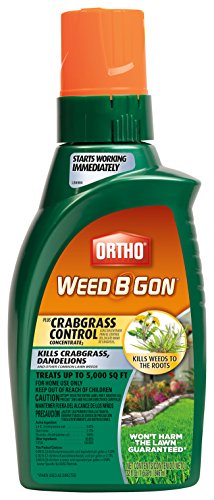
Best for broadleaf weeds and crabgrass in a lawn you want to keep
- Selective — kills weeds, not the grass
- Best applied at 60–85°F on growing weeds
- Concentrate for a tank sprayer
- Covers broadleaf weeds and crabgrass
Why buy it: a selective spray that clears weeds from turf when applied in the mild window — go too hot and it can stress the lawn it is meant to spare.

Best for large areas and fence lines, mixed to strength
- 41% glyphosate concentrate, mixes many gallons
- Most effective at 60–85°F on growing weeds
- Cheapest cost per treated area
- Systemic, root-killing action
Why buy it: the lowest cost per square foot for anyone with a sprayer, and like all glyphosate it performs best in mild weather when weeds are moving sugars to the roots.

Best for the one product that likes heat and full sun
- 20% acetic acid, contact (burn-down) killer
- Works fastest in hot sun
- Glyphosate-free, for patio cracks and paths
- Visible results in hours
Why buy it: a contact acid that actually wants heat and bright sun to scorch weeds fastest — the exception that thrives at the high end of the temperature range where systemics struggle.

Best for gravel, driveways and areas you want to stay bare
- Kills and prevents regrowth for months
- Apply in mild, dry conditions for uptake
- Concentrate for large bare areas
- Not for lawns or beds
Why buy it: a long-residual bare-ground killer best applied in dry, mild weather so the foliage takes it up before the soil barrier sets in — kills existing weeds and blocks new ones.

Best for no-mix spot treating of lawn weeds in mild weather
- Ready to use, selective for lawns
- Best at 60–85°F on actively growing weeds
- Covers dandelion, clover, crabgrass
- No mixing or measuring
Why buy it: the grab-and-spray option for lawn weeds, effective when used in the mild window and useless if sprayed in a heatwave or before rain.
Quick Comparison
| Product | Best for | Rating | Price | Buy |
|---|---|---|---|---|
| Roundup Ready-to-Use Weed & Grass Killer III with Comfort Wand (1.33 gal) | Best Overall | — | Check (paid link) | |
| Ortho Weed B Gon Plus Crabgrass Control Concentrate, 32 oz | Best Selective for Lawns | — | Check (paid link) | |
| Compare-N-Save 41% Glyphosate Concentrate (1 gal) | Best Value Concentrate | — | Check (paid link) | |
| Green Gobbler 20% Vinegar Weed & Grass Killer (1 gal) | Best for Hot Sunny Days | — | Check (paid link) | |
| Ortho GroundClear Year Long Vegetation Killer Concentrate (1 gal) | Best for Bare Ground | — | Check (paid link) | |
| Spectracide Weed Stop For Lawns Plus Crabgrass Killer (1 gal RTU) | Best Ready-to-Use for Lawns | — | Check (paid link) |
Specifications Side by Side
| Product | Type | Best temperature | Selective? | Use |
|---|---|---|---|---|
| Roundup RTU III | Systemic glyphosate | 60–85°F | No | Spot / bare ground |
| Ortho Weed B Gon | Selective systemic | 60–85°F | Yes (spares lawn) | Lawn weeds |
| Compare-N-Save | Systemic glyphosate | 60–85°F | No | Large areas |
| Green Gobbler Vinegar | Contact acid | Hot & sunny | No | Paths, cracks |
| Ortho GroundClear | Killer + residual | Mild & dry | No | Bare ground |
| Spectracide Weed Stop | Selective systemic | 60–85°F | Yes (spares lawn) | Lawn weeds |
How We Rank
We never buy or spray these products. The ranking comes from aggregated owner ratings, read with an eye for how much of the good and bad feedback tracks with application conditions. The factors that carry the weight: kill effectiveness in the right temperature window; forgiveness, how much a product tolerates less-than-perfect conditions; selectivity, whether it spares a lawn; and value per treated area. We flag the temperature each product actually wants, because the wrong weather sinks even a great herbicide. Prices were checked at the time of writing. Full method: how we rank.
The Weed Killers, Reviewed
1. Roundup Ready-to-Use III — Best Overall
Covered above. Owners praise: a dependable root kill in mild weather and no-mix convenience. Owners gripe about: poor results in heat or cold and its non-selective nature. Check price (paid link).
2. Ortho Weed B Gon Plus Crabgrass — Best Selective for Lawns
The turf-safe option: it clears broadleaf weeds and crabgrass without killing the grass, provided you spray in the mild window. Push it into a heatwave and it can stress the very lawn it is meant to spare, so temperature discipline matters more here than with a bare-ground killer.
Owners praise: effective selective control when timed right. Owners gripe about: lawn stress if sprayed too hot and slower results in cool weather. Check price (paid link).
3. Compare-N-Save 41% Glyphosate — Best Value Concentrate
The cheapest cost per treated area for anyone with a sprayer, and like all glyphosate it performs best at 60 to 85°F on actively growing weeds. Mix to the label rate and give it a rain-free window.
Owners praise: the value and strong systemic kill in the right conditions. Owners gripe about: the need to mix and the same weather sensitivity as any glyphosate. Check price (paid link).
4. Green Gobbler 20% Vinegar — Best for Hot Sunny Days
The exception to every rule on this page. Acetic acid is a contact killer that burns the foliage it touches, and it works fastest in hot, bright sun — exactly the conditions that weaken a systemic. If you have to spray on a scorcher, this is the tool, though it kills only what it contacts and does not reach the root.
Owners praise: fast visible results in heat and a glyphosate-free formula. Owners gripe about: regrowth from the roots and needing thorough coverage. Check price (paid link).
5. Ortho GroundClear — Best for Bare Ground
For gravel, driveways and areas you want to stay bare, this kills existing weeds and leaves a residual barrier for months. Apply in dry, mild conditions so the foliage takes up the herbicide before the soil barrier sets — never on a lawn or in a bed you want to replant.
Owners praise: long-lasting bare ground and a strong initial kill. Owners gripe about: soil residual that prevents planting and the need for dry weather at application. Check price (paid link).
6. Spectracide Weed Stop Plus Crabgrass — Best Ready-to-Use for Lawns
The no-mix, grab-and-spray option for lawn weeds, effective when used at 60 to 85°F on actively growing weeds and disappointing if sprayed in a heatwave or right before rain. Convenient for spot treatment.
Owners praise: the convenience and selective lawn action. Owners gripe about: weaker results outside the mild window and the same rain sensitivity. Check price (paid link).
What Owners Actually Get Wrong
Spraying in a heatwave. The commonest reason a weed killer seems not to work: high heat evaporates the spray and stresses the weeds so they take up less. Penn State Extension adds that ester formulations become more prone to volatilizing as temperatures rise, and recommends switching to an amine formulation in warm weather. Spray early morning or wait for milder days.
Spraying in the cold. Early-spring and late-fall applications on dormant weeds fail because there is no active growth to carry a systemic. Wait for warm spells.
Rain too soon. A shower before the herbicide is absorbed washes it off. Check the label's rainfast time and the forecast.
Wind drift. A breeze carries non-selective spray onto plants you want to keep. Spray in calm air, close to the target, with the nozzle low.
How to Match the Product to the Conditions
Read the thermometer first. Mild, 60–85°F, calm, dry? Any systemic here — Roundup or Compare-N-Save for bare ground, Ortho Weed B Gon or Spectracide for lawns. Hot and sunny with no cooler day coming? A vinegar contact killer, or spray a systemic in the cool early morning. Cold snap? Wait. Always give the label's rain-free window — EPA label directions are legally enforceable, not advisory — and spray in still air, and remember non-selective killers take out anything green they touch.
The Verdict
Match the tool to the thermometer. In the ideal 60-to-85°F window the ready-to-use Roundup III is the most reliable systemic for bare ground and spot work, with Compare-N-Save the value concentrate and Ortho Weed B Gon or Spectracide Weed Stop for lawns. When it is genuinely hot and sunny, reach for the Green Gobbler vinegar. Get the temperature, the rain window and the wind right, and any of these will do its job. Check price on Amazon → (paid link)
More from this hub: pest & weed control · best weed killer · best weed killer for lawns · best weed and feed for spring · how we rank.