 Garden
Affiliate Disclosure
Some links on this page are affiliate links. As an Amazon Associate, we earn from qualifying purchases — at no extra cost to you. We do not buy, test, or physically handle the products we cover; our rankings come from aggregated owner reviews, ratings and expert consensus. Commissions never change our verdicts. How we rank · full disclosure.
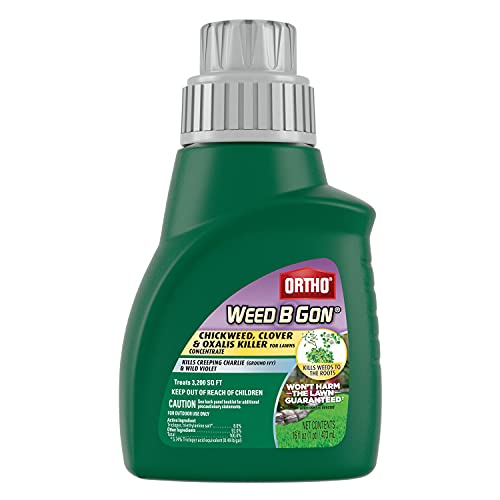
The short version: creeping Charlie needs triclopyr, not a plain broadleaf killer, and Ortho Weed B Gon Chickweed, Clover and Oxalis Killer Concentrate is our #1 pick because it is the cheapest reliable way to put triclopyr on a home lawn. Spray it in fall, from mid-September to the first hard frost, when the plant is pulling sugars down into its roots and carries the herbicide with them. Expect two applications, not one. If you would rather not mix anything, the same chemistry comes in a hose-end ready-to-spray bottle.
Ground ivy — the plant most people call creeping Charlie, and the name University of Minnesota Extension files it under — is the weed that makes homeowners doubt their weed killer, because a standard 2,4-D product will brown it and it will grow straight back. That is not a faulty bottle; it is the wrong active ingredient. For the wider lawn-weed picture see our best weed killer for lawns roundup, and if you are not certain what you are looking at, how to identify lawn weeds.
Top Picks at a Glance
Our #1 Pick: Ortho Weed B Gon Chickweed, Clover and Oxalis Killer
The name does not mention creeping Charlie, which is why so many people walk past it. The label does. This is a triclopyr-based selective herbicide, and triclopyr is the active ingredient UW-Madison Extension names as the effective one on creeping Charlie — it penetrates the thick, waxy, slightly hairy leaf of ground ivy and moves through the plant to the roots. Products built around 2,4-D alone tend to burn the top growth and leave the stolons alive underground, which is exactly the pattern behind the endless complaints that creeping Charlie is unkillable.
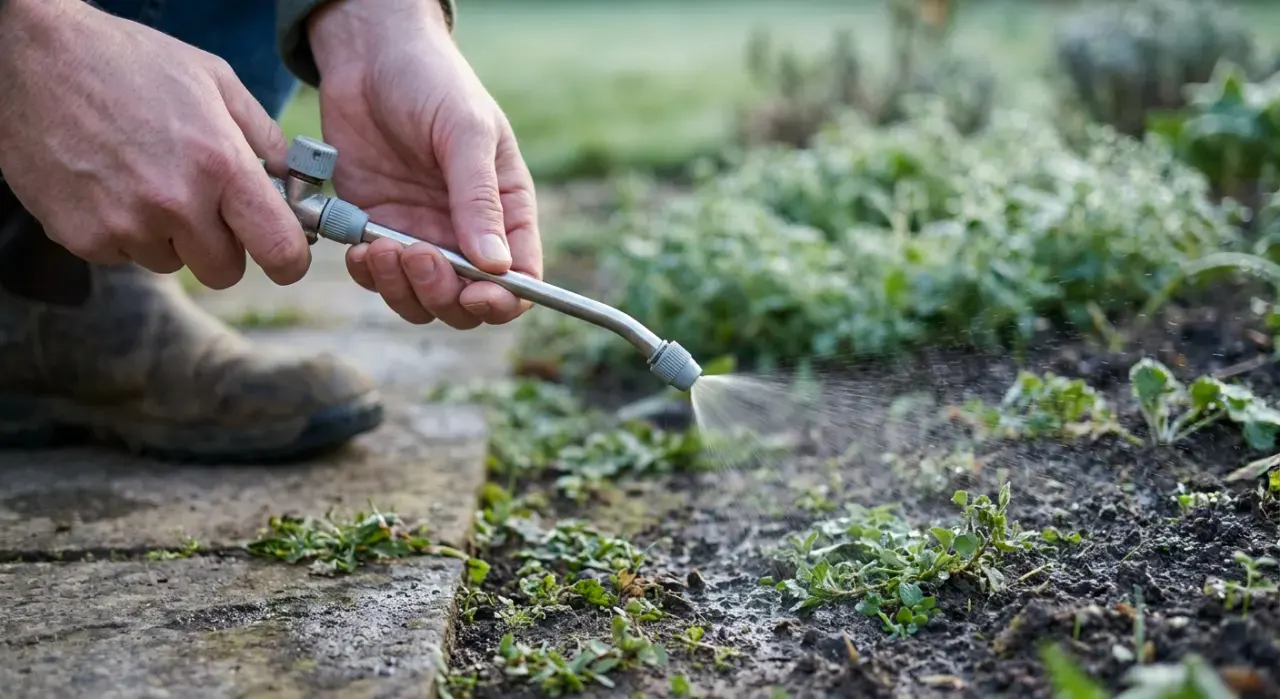
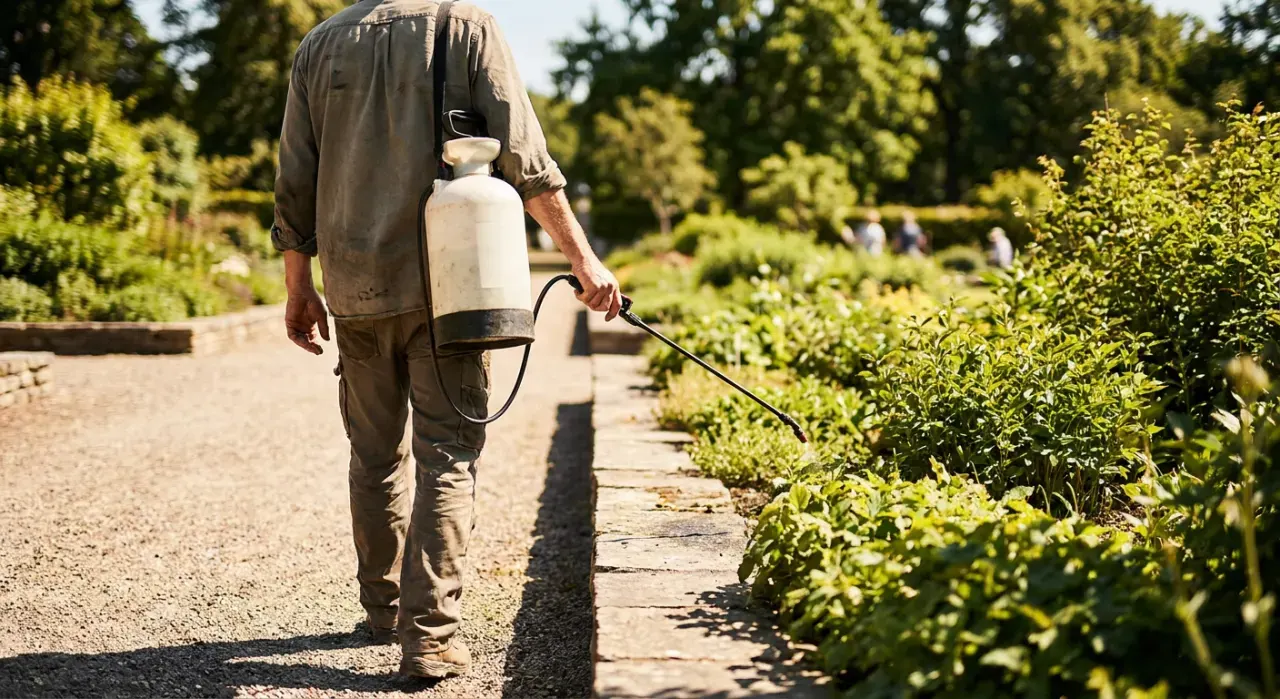
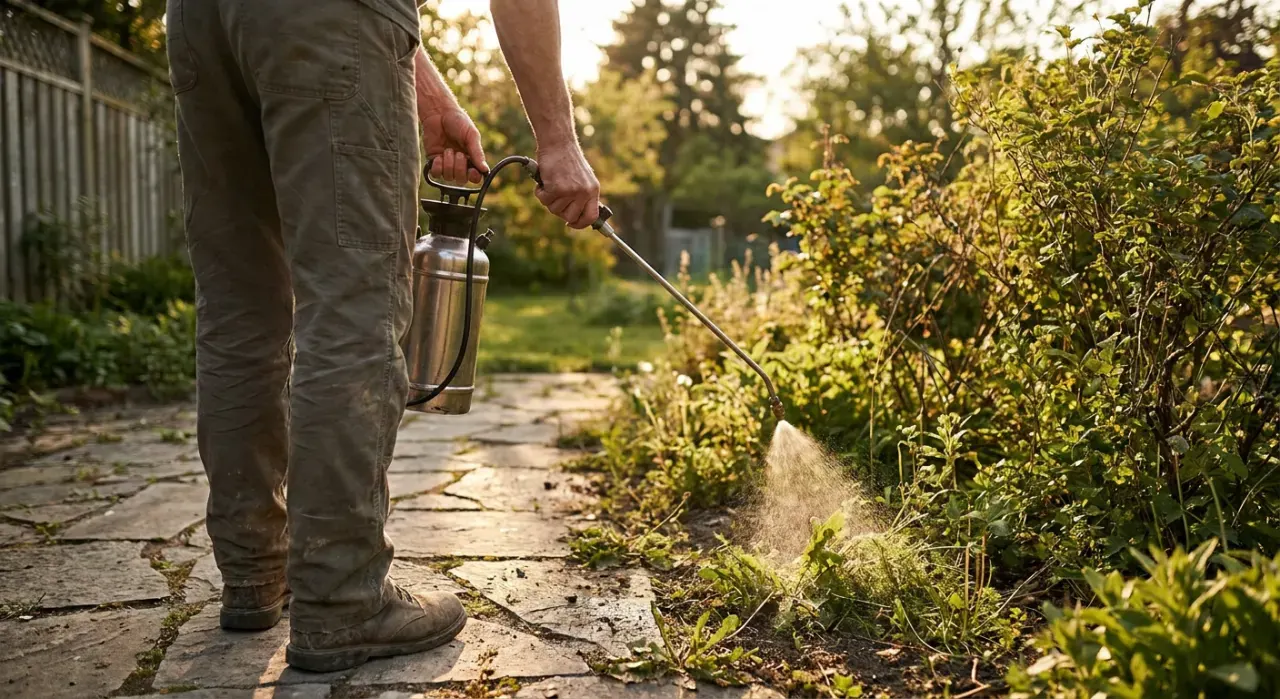
Practically, this is a concentrate you mix in a pump sprayer and apply to actively growing ground ivy. The 16 oz bottle treats roughly 3,200 square feet, it is rainproof in about six hours, and the label directs you not to mow for a day or two afterwards so the plant keeps a full leaf area to absorb through. Do not apply above roughly 90 degrees Fahrenheit — heat-stressed weeds absorb badly and heat-stressed turf takes the injury instead.
The honest limits: it is not instant. Owners consistently describe a week or more before the patch curls and yellows, and a second application is normally needed for a full kill. It is also selective only for the grasses listed on the label, so read that list before spraying — and if you have a warm-season lawn, check the label carefully rather than assuming.
Check price on Amazon → (paid link)
The Ranked Field
Best for ground ivy in a cool-season lawn, mixed in a tank sprayer
- Triclopyr-based formula listed for creeping Charlie
- Kills to the roots without harming listed lawn grasses
- 16 oz treats up to about 3,200 sq ft
- Rainproof in about 6 hours per label
Why buy it: triclopyr is the active that actually beats ground ivy, and this is the cheapest reliable way to put it on a home lawn from a pump sprayer.
Best for treating large patches without mixing anything
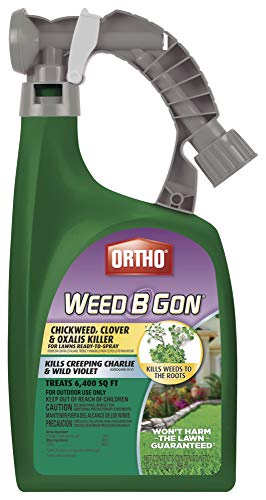
- Same chemistry in a hose-end applicator
- No measuring or mixing
- Covers a large lawn area quickly
- Listed for creeping Charlie and wild violet
Why buy it: the same result as the concentrate for anyone who does not own a sprayer or does not want to calibrate one.
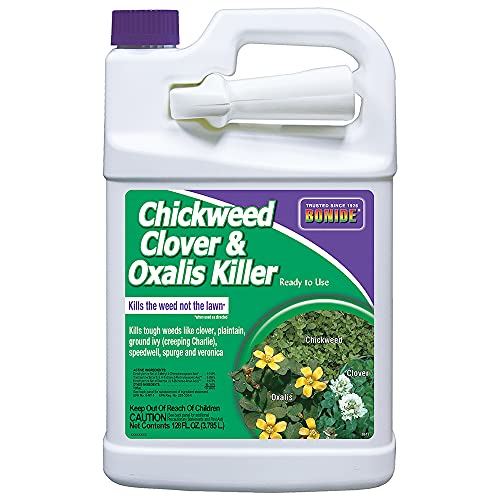
Best for walking the lawn and hitting patches as you find them
- One gallon ready-to-use, no dilution
- Controls weeds and roots without harming lawn grasses
- Trigger or pour-through applicator
- Good for scattered patches rather than blanket spraying
Why buy it: creeping Charlie usually arrives as distinct patches under trees, and a ready-to-use gallon is the least fussy way to treat them one at a time.
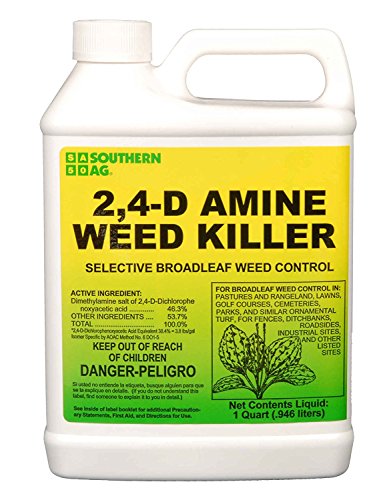
Best for broad broadleaf control at the lowest cost per gallon mixed
- 2,4-D amine concentrate, very high dilution ratio
- Covers a large area per bottle
- Standard broadleaf lawn herbicide
- Mix in a pump or backpack sprayer
Why buy it: cheap per treated acre and useful across the whole broadleaf spectrum, though ground ivy is genuinely tougher for 2,4-D alone than it is for triclopyr.
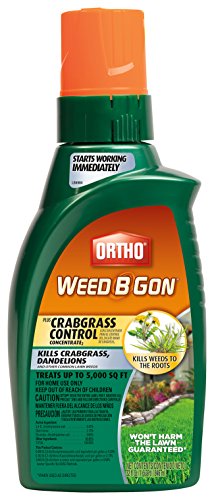
Best for creeping Charlie plus dandelion, clover and crabgrass in one pass
- Multi-active formula for broadleaf and grassy weeds
- Covers a wide weed list on one label
- Concentrate for a tank sprayer
- Does not harm listed lawn grasses when used as directed
Why buy it: if the lawn has ground ivy and everything else, this treats the whole mess in one application rather than three separate products.

Best for the cheapest way to cover a lot of ground with no equipment
- One gallon ready-to-use with a wand
- Very broad listed weed range
- No mixing, no separate sprayer
- Kills broadleaf and grassy weeds
Why buy it: the budget option: broad coverage and zero setup, at the cost of being less specifically effective on ground ivy than a triclopyr product.
Quick Comparison
| Product | Best for | Rating | Price | Buy |
|---|---|---|---|---|
| Ortho Weed B Gon Chickweed, Clover and Oxalis Killer for Lawns Concentrate, 16 oz | Best Overall | — | Check (paid link) | |
| Ortho Weed B Gon Chickweed, Clover and Oxalis Killer for Lawns Ready-To-Spray, 32 oz | Best No-Mix | — | Check (paid link) | |
| Bonide Chickweed, Clover and Oxalis Killer, 128 oz Ready-to-Use | Best for Spot Work | — | Check (paid link) | |
| Southern Ag Amine 2,4-D Weed Killer, 32 oz | Best Budget Concentrate | — | Check (paid link) | |
| Ortho Weed B Gon Plus Crabgrass Control Concentrate, 32 oz | Best All-Round Lawn Weed Killer | — | Check (paid link) | |
| Spectracide Weed Stop For Lawns Plus Crabgrass Killer, 1 Gallon | Best Ready-to-Use Gallon | — | Check (paid link) |
Specifications Side by Side
| Product | Form | Key active class | Listed for ground ivy | Applicator |
|---|---|---|---|---|
| Ortho Chickweed/Clover/Oxalis Conc. | Concentrate | Triclopyr blend | Yes | Tank sprayer |
| Ortho same, Ready-To-Spray | Hose-end | Triclopyr blend | Yes | Garden hose |
| Bonide Chickweed/Clover/Oxalis | Ready-to-use gallon | Broadleaf blend | Yes | Pour or trigger |
| Southern Ag Amine 2,4-D | Concentrate | 2,4-D amine | Broadleaf general | Tank sprayer |
| Ortho Weed B Gon Plus Crabgrass | Concentrate | Multi-active | Broad list | Tank sprayer |
| Spectracide Weed Stop Plus | Ready-to-use gallon | Multi-active | Broad list | Wand |
Always confirm your grass type appears on the label before spraying. Weed lists and grass tolerances differ between products.
Timing Beats Product Choice
If you take one thing from this page, take the calendar. Creeping Charlie is a perennial that spends late summer and autumn moving carbohydrates from its leaves down into its root system to overwinter. A systemic herbicide applied during that window is carried down the same pathway and reaches the roots, which is where the plant survives your first attempt. Fall applications, broadly mid-September through the first hard frost, are the ones extension programs point to — Penn State Extension reports fall applications translocate into crown tissue better than spring ones — and the ones the owner-review record quietly reflects — the people reporting a genuine kill are usually the ones who sprayed in autumn.
Spring is the second-best window, after the plant has flowered, roughly late April into May. Summer is the worst: high heat, a plant that is not translocating much, and most labels restricting application above about 90 degrees Fahrenheit. If a patch is driving you mad in July, the sensible move is to mark it and treat it in September.
The Products, Reviewed
1. Ortho Weed B Gon Chickweed, Clover and Oxalis Killer Concentrate — Best Overall
Covered above. Owners praise: that it works on ground ivy when everything else has not, and that a small bottle covers a lot of lawn. Owners complain about: the slow visible response, needing a second application, and the confusing product name that does not say creeping Charlie on the front. Check price (paid link).
2. Ortho Chickweed, Clover and Oxalis Ready-To-Spray — Best No-Mix
The same chemistry in a hose-end bottle for anyone who does not want to buy, calibrate and clean a sprayer. Coverage is quick over a big lawn, at the cost of the precision a tank sprayer gives you on individual patches.
Owners praise: speed of application and no measuring. Owners complain about: hose-end applicators that drip or run out unevenly, and using more product per treated area than the concentrate. Check price (paid link).
3. Bonide Chickweed, Clover and Oxalis Killer — Best for Spot Work
A ready-to-use gallon aimed squarely at the way creeping Charlie actually appears: distinct patches under trees and along shaded edges. Walk the lawn, treat the patches, done.
Owners praise: no mixing and good control on defined patches. Owners complain about: the cost per treated square foot compared with a concentrate, and needing repeat treatment on established patches. Check price (paid link).
4. Southern Ag Amine 2,4-D — Best Budget Concentrate
The cheapest broadleaf control per treated area on this page by a wide margin, and a staple for anyone spraying a large lawn. Be realistic about ground ivy specifically: 2,4-D alone is weaker on it than triclopyr, and results improve markedly with fall timing and a repeat application.
Owners praise: extraordinary value and broad usefulness across lawn weeds. Owners complain about: partial results on ground ivy and the need to measure carefully at high dilution. Check price (paid link).
5. Ortho Weed B Gon Plus Crabgrass Control — Best All-Round
The choice when creeping Charlie is one problem among several. A multi-active concentrate that covers a wide broadleaf list plus grassy weeds, so a lawn carrying ground ivy, dandelion, clover and crabgrass gets one treatment instead of three.
Owners praise: the breadth of the weed list and visible results across the whole lawn. Owners complain about: lawn yellowing when applied in heat and the usual need to repeat on the tougher perennials. Check price (paid link).
6. Spectracide Weed Stop For Lawns Plus Crabgrass Killer — Best Ready-to-Use Gallon
The lowest-effort option here: a gallon with a wand, a very wide listed weed range, and nothing to mix or clean. It is the least ground-ivy-specific product on the page, so treat it as general lawn weed control that includes creeping Charlie rather than a targeted fix.
Owners praise: convenience and price. Owners complain about: wands that leak or clog, and weaker results on established perennial patches. Check price (paid link).
What Owners Actually Complain About
It browned and came back. The defining creeping Charlie complaint. Either the wrong active, the wrong season, or a single application where two were needed. Usually all three.
Nothing visible for a week. Systemic herbicides are slow by design. Fast burndown means top growth only, which is precisely the failure mode with this weed.
Lawn damage in heat. Applied above about 90 degrees Fahrenheit, selective herbicides injure turf and underperform on the weed. Wait for a cooler stretch.
Rain too soon. Most of these need around six hours before rain. A shower two hours later wastes the application, and owners rarely connect the two.
Reinvasion from the neighbor. Ground ivy creeps across property lines, and a clean lawn beside an untreated one gets recolonised along the boundary every season. Plan on an annual edge treatment rather than a one-off cure.
How to Choose
Creeping Charlie is the main problem: the triclopyr-based Ortho concentrate, sprayed in fall, twice. You do not own a sprayer: the same chemistry in the ready-to-spray bottle, or the Bonide ready-to-use gallon for patch work. You are treating a big lawn on a budget: Southern Ag 2,4-D, with realistic expectations and a repeat pass. The lawn has everything: Ortho Weed B Gon Plus Crabgrass Control. And regardless of product, fix the conditions — ground ivy exploits shade, damp and thin turf, so raising the mowing height, overseeding and thinning overhanging branches does more for the next three years than any bottle.
Read the Label
These are EPA-registered herbicides and the EPA makes the label legally enforceable — using a product in a manner inconsistent with its labeling is a violation of federal law. The label carries the binding directions: the rate, the grasses it may be used on, the temperature limits, how long before rain, and how long before children and pets return to the treated area. Check your grass type appears on the label — a product safe on Kentucky bluegrass and fescue is not automatically safe on St. Augustine. Keep spray off garden beds, since triclopyr is very effective on broadleaf ornamentals as well as weeds, and never spray on a windy day near vegetables or flowering plants.
The Verdict
Creeping Charlie is beatable, but only with the right active and the right month. Ortho Weed B Gon Chickweed, Clover and Oxalis Killer Concentrate is the pick: a triclopyr-based selective that reaches the roots, applied in the fall and repeated. Choose the ready-to-spray version if you do not want to mix, or Ortho Weed B Gon Plus Crabgrass Control if ground ivy is one of half a dozen problems in the same lawn. Skip the borax remedy entirely. Check price on Amazon → (paid link)
More from this hub: pest & weed control · best weed killer for lawns · best weed killer for dandelions · best temperature to spray weed killer · how we rank.