 Garden
Affiliate Disclosure
Some links on this page are affiliate links. As an Amazon Associate, we earn from qualifying purchases — at no extra cost to you. We do not buy, test, or physically handle the products we cover; our rankings come from aggregated owner reviews, ratings and expert consensus. Commissions never change our verdicts. How we rank · full disclosure.
The short version: dandelions regrow from a deep taproot, so the only sprays that finish the job are selective and systemic — they spare the grass and they travel down into the root. Our #1 pick is Southern Ag 2,4-D Amine, the classic dandelion chemistry at professional economics. If you also have crabgrass, Ortho Weed B Gon Plus adds dicamba and quinclorac and handles both. For a handful of weeds, the Spectracide ready-to-use wand is a five-minute job. And the single change that improves results most costs nothing: spray in fall, not spring.
That timing point is worth more than the product choice. In autumn a dandelion pulls sugars down into its taproot to survive winter, and a systemic herbicide moves with that flow directly into the root. In spring the plant is pushing energy up into flowers, so the same spray tends to scorch the leaves and leave a root that re-sprouts in three weeks. University of Minnesota Extension also puts fall as the best window for perennial broadleaf weeds. Most of the “this product does not work” reviews on every bottle here were written in May.
Top Picks at a Glance
Our #1 Pick: Southern Ag Amine 2,4-D
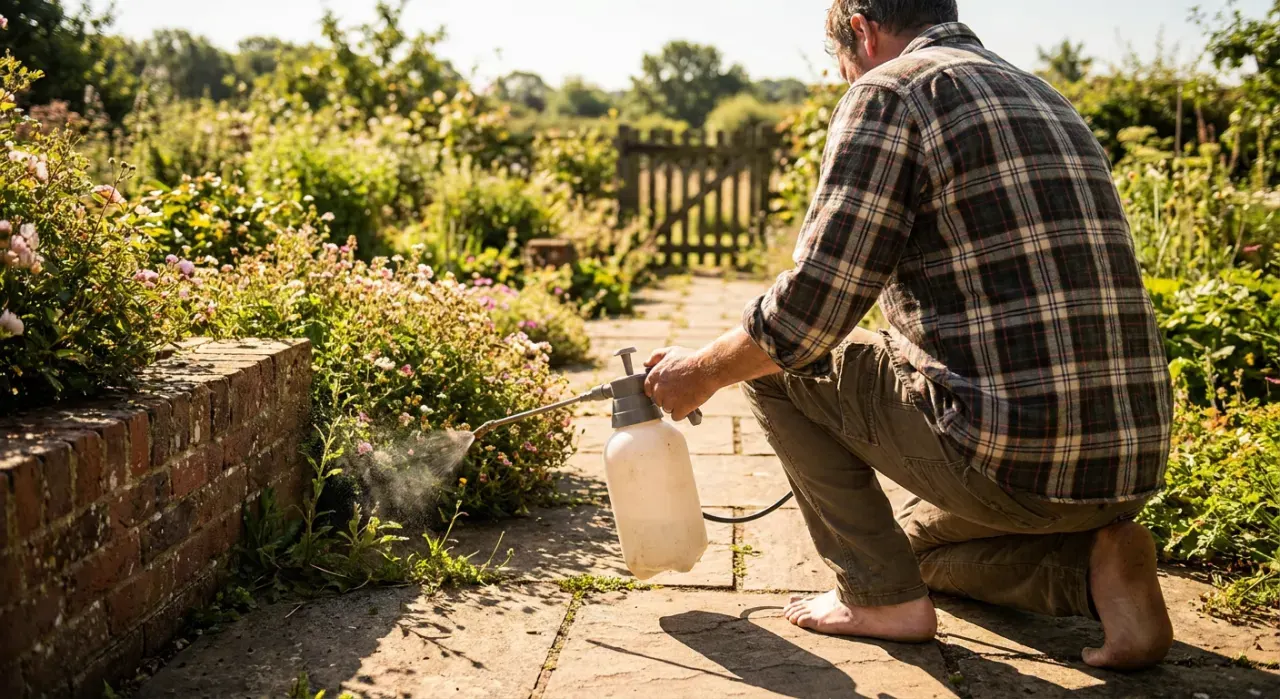
2,4-D is the herbicide that made selective lawn care possible. It mimics a plant growth hormone, causing uncontrolled growth that broadleaf plants cannot sustain, while grasses metabolize it and continue as normal. Dandelion is among the species it works on best — Penn State Extension names 2,4-D, dicamba and MCPP as the actives that kill dandelions while the plants are actively growing — and this low-volatile amine formulation is that active sold plainly, without the consumer packaging premium.
The economics are the headline. Use rates are low enough that a quart bottle treats a large lawn several times over, and the cost per thousand square feet is a fraction of any ready-to-use product. The amine formulation matters too: the older ester formulations were notorious for vapor drift on warm days, and amine reduces that risk considerably.
Three limitations to be clear about. It handles broadleaf weeds only and does nothing whatsoever to crabgrass, goosegrass or nutsedge. It is not for St. Augustine or centipede turf, where it can cause real damage — southern lawn owners should read our St. Augustine page instead. And it does not distinguish a dandelion from a rose, so drift onto beds does damage. Spray on a still morning with a coarse nozzle.
Check price on Amazon → (paid link)
The Ranked Field
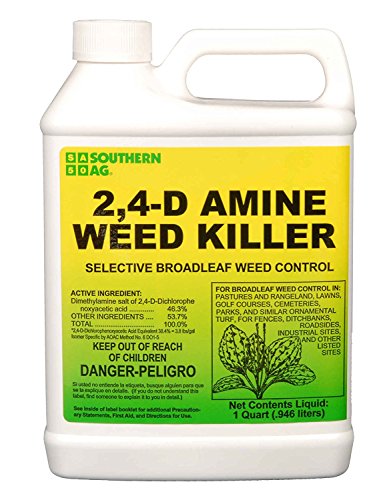
Best for killing dandelions across a whole lawn at the lowest cost
- Low-volatile amine 2,4-D — the classic dandelion active
- Systemic: moves down into the taproot
- A quart treats a large lawn several times over
- Also controls clover, plantain, chickweed and henbit
Why buy it: dandelion is exactly the weed 2,4-D was developed for, and this is that chemistry without the consumer markup.
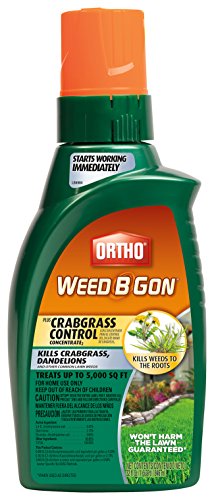
Best for a lawn with dandelions and grassy weeds at the same time
- 2,4-D, dicamba and quinclorac in one premix
- Handles broadleaf and grassy weeds together
- Dicamba improves control on tough perennials
- Widely stocked and simple to mix
Why buy it: the added dicamba does more against an established taproot than 2,4-D alone, and the quinclorac covers the crabgrass you also have.

Best for spot treating a few dandelions with no mixing at all
- No dilution, no sprayer, no measuring
- Comfort wand for spot treatment without bending
- Selective — spares most common lawn grasses
- Visible curling on dandelions within a day or two
Why buy it: a dozen dandelions in a front yard is a five-minute job with a wand and an afternoon job with a concentrate and a sprayer.

Best for lawns with pets or children where synthetic broadleaf herbicides are unwanted
- Chelated iron (FeHEDTA) — selective, spares grass
- Visible blackening within hours
- Also knocks back moss and algae
- Repeat applications usually needed on mature taproots
Why buy it: far faster to look effective than 2,4-D and far less likely to finish the job — a fair trade if the reason you want it is exposure.

Best for removing the taproot permanently, one weed at a time
- Four serrated claws grip and lift the whole root
- Foot platform — no kneeling, no bending
- Eject lever drops the weed without touching it
- Works best in soil moist from rain or watering
Why buy it: a dandelion taproot removed intact does not come back, which is more than most sprays can honestly claim.
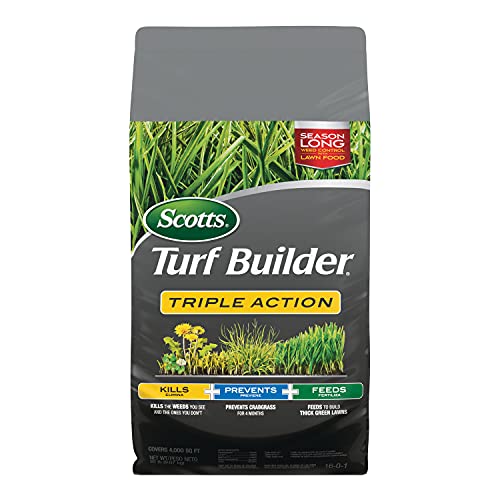
Best for killing this year’s dandelions and blocking next year’s seed
- Kills existing broadleaf weeds, prevents crabgrass, feeds the lawn
- One granular spreader pass
- Apply to a wet lawn so granules stick to weed leaves
- Not for use on newly seeded turf
Why buy it: a thicker fed lawn is the only dandelion control that improves every year instead of resetting every spring.
Quick Comparison
| Product | Best for | Rating | Price | Buy |
|---|---|---|---|---|
| Southern Ag Amine 2,4-D Weed Killer, 32 oz | Best Overall | — | Check (paid link) | |
| Ortho Weed B Gon Plus Crabgrass Control Concentrate, 32 oz | Best All-Rounder | — | Check (paid link) | |
| Spectracide Weed Stop For Lawns Plus Crabgrass Killer, 1 Gallon, Ready-To-Use | Best Ready-to-Use | — | Check (paid link) | |
| Bonide (BND321) - Weed Beater Fe, Ready to Use Weed Killer Derived from Iron, 32 oz | Best Lower-Toxicity Option | — | Check (paid link) | |
| Fiskars Stand-Up Weed Puller Tool, 4 Serrated Stainless Steel Claws | Best Zero-Chemical | — | Check (paid link) | |
| Scotts Turf Builder Triple Action - Weed Killer & Preventer, Lawn Fertilizer | Best Prevention | — | Check (paid link) |
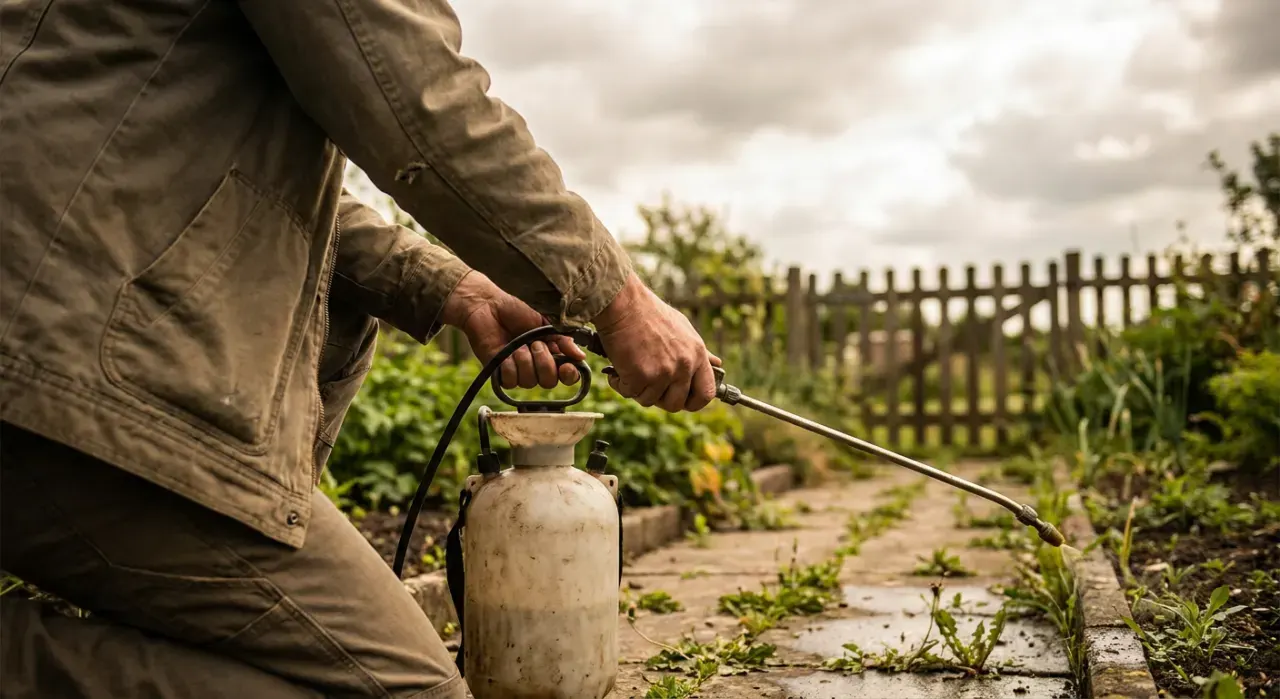
Specifications Side by Side
| Product | Active | Reaches the taproot? | Form | Grass caution |
|---|---|---|---|---|
| Southern Ag 2,4-D Amine | 2,4-D amine | Yes — systemic | Concentrate | Not for St. Augustine or centipede |
| Ortho Weed B Gon Plus | 2,4-D + dicamba + quinclorac | Yes — systemic | Concentrate | Check label for southern grasses |
| Spectracide RTU | Selective broadleaf premix | Partially | Ready to use, wand | Check label for southern grasses |
| Bonide Weed Beater Fe | Chelated iron (FeHEDTA) | No — foliage burn | Ready to use | Broadly turf safe |
| Fiskars Weed Puller | None — mechanical | Yes — removes it | Tool | None |
| Scotts Triple Action | Broadleaf herbicide + pre-emergent + fertilizer | Partially | Granular | Not for newly seeded lawns |
How We Rank
We do not buy or spray these products, and we would rather say that than invent a test plot. The ranking is built from aggregated owner ratings, weighted toward reviews written a month or more after application, because a dandelion killer looks successful on day three and the honest question is whether the plant came back on day thirty. Four factors carry the weight. Translocation to the root, determined by the active ingredient rather than by claims on the label front — this is the difference between control and cosmetics. Reported regrowth rates in long-horizon reviews. Rating strength weighed against review volume. And tolerance of user error, since mowing too soon and spraying at the wrong season cause more failures than any formulation difference. Prices were checked at the time of writing. Full method: how we rank.
Timing: Fall Beats Spring
A dandelion is a perennial with a taproot that commonly runs six to ten inches deep and stores the energy the plant needs to restart each year, as UW-Madison Extension describes. Whether a herbicide reaches that store depends on which way the plant is moving sugars when you spray:
| Season | What the plant is doing | Result of a systemic spray |
|---|---|---|
| Early spring, pre-bloom | Pushing energy upward into flowers | Good top kill, frequent regrowth from the root |
| Late spring to summer | Seeding, then slowing in heat | Weakest results; heat also limits when you can spray |
| Early to mid fall | Moving sugars down to the taproot for winter | Best control — the herbicide travels with the flow |
| Late fall, after hard frost | Dormant, leaves dying back | Too late; little uptake |
Practically, that means mid September through early November across most of the country — while the plants are still green and growing, but nights have cooled. Two supporting rules: do not mow for two or three days either side of application, because the plant needs leaf area to absorb the spray and time to move it downward, and water the lawn the day before rather than after, since actively growing weeds absorb far better than drought-stressed ones. Check the rainfast period on the label too, which our guide to weed killer and rain covers.
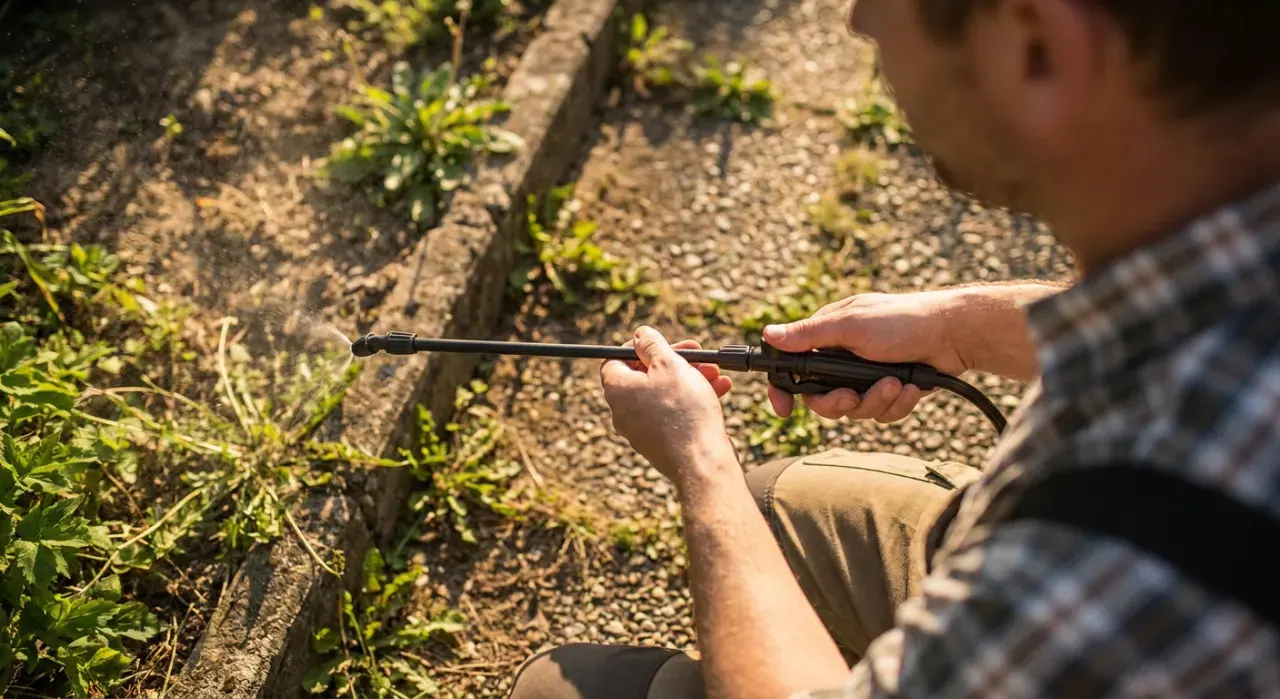
The Dandelion Killers, Reviewed
1. Southern Ag Amine 2,4-D — Best Overall
Covered above. Owners praise: outstanding value, a bottle that lasts years, thorough control of dandelion and clover, and reduced drift risk from the amine formulation. Owners gripe about: no effect on grassy weeds, a strong smell, needing to measure small volumes accurately, and turf damage when used on southern grasses. Check price (paid link).
2. Ortho Weed B Gon Plus Crabgrass Control — Best All-Rounder
Three actives in one bottle: 2,4-D for the standard broadleaf work, dicamba which adds real power against established perennial taproots, and quinclorac for crabgrass. On a typical lawn with dandelions in the middle and crabgrass along the driveway, it is one purchase and one mixing session rather than two of each.
Dicamba is the reason it edges 2,4-D alone on mature dandelions, and it is also the reason to be careful: dicamba can move as a vapor in warm weather and injure ornamentals some distance away. Respect the temperature range on the label, and keep it well away from tomatoes and roses.
Owners praise: covering broadleaf and grassy weeds together, fast visible curling, low price, and grass that comes through unharmed. Owners gripe about: mature crabgrass surviving one pass, turf yellowing when sprayed in heat, and drift damage to garden beds. Check price (paid link).
3. Spectracide Weed Stop For Lawns RTU — Best Ready-to-Use
Ready-to-use products cost several times more per treated square foot and are still the right answer for a dozen dandelions in a front yard. There is nothing to mix, no sprayer to clean, and the comfort wand means you can walk the lawn spot-treating without bending. A gallon covers a lot of individual weeds.
Do not buy it for a whole-lawn application — the math is dreadful and you will run out halfway. Reviews consistently report weaker results on mature weeds than a properly mixed concentrate, which is partly concentration and partly the fact that spot treatment tends to underwet the rosette. Get the whole leaf surface wet, not just the middle.
Owners praise: zero preparation, the wand, quick results on young weeds, and a low price per bottle. Owners gripe about: weak results on established dandelions, repeat applications, wand nozzles clogging, and poor coverage per dollar. There is a full Spectracide Weed Stop review for the detail. Check price (paid link).
4. Bonide Weed Beater Fe — Best Lower-Toxicity Option
Chelated iron is absorbed far more readily by broadleaf weeds than by grasses, so it is genuinely selective — it blackens a dandelion and leaves the turf. It is also dramatic: treated weeds darken within hours, which no synthetic selective does. For households that want to reduce exposure to synthetic broadleaf herbicides, it is the realistic in-lawn option.
Be clear about what it does not do. Iron is not fully systemic; it destroys the foliage it wets, and a mature dandelion with an established taproot very often pushes new leaves within two to three weeks. Repeat applications are normal, and for a heavily infested lawn that adds up. It also stains concrete, so keep it off the driveway.
Owners praise: real selectivity, striking speed of visible effect, comfort using it where pets and children play once dry, and moss control as a bonus. Owners gripe about: regrowth from the root, repeat applications, staining, and cost per treated area against a synthetic selective. Our pet-conscious roundup goes further into that trade. Check price (paid link).
5. Fiskars Stand-Up Weed Puller — Best Zero-Chemical
The only entry here that removes the problem rather than treating it. Four serrated claws drive into the soil around the crown, a twist grips the taproot, and the foot platform provides the leverage to lift it out whole. An eject lever drops the weed so you never touch it.
Soil moisture is everything. In ground that is moist from rain or a watering the day before, roots come out intact and the job is quick. In dry compacted clay the root snaps and the plant regrows from the fragment — which is exactly the failure mode people blame the tool for. Water first.
Owners praise: no bending or kneeling, clean root removal, permanent results, and no chemicals in the yard at all. Owners gripe about: struggling in dry or clay soil, the eject mechanism jamming with wet soil, leaving a visible plug in the turf, and being slow across a big infestation. Check price (paid link).
6. Scotts Turf Builder Triple Action — Best Prevention
Three jobs in one spreader pass: it kills existing broadleaf weeds including dandelion, lays down a pre-emergent barrier against crabgrass, and feeds the lawn. The fertilizer is not filler — a thick, well-fed stand of grass is the only dandelion control that gets better every year rather than resetting each spring, because dandelion seed needs bare sunlit soil to establish.
The instruction that decides whether it works: the lawn must be wet when you apply, so granules stick to weed foliage long enough to be absorbed. Apply to dry turf and you have spread expensive fertilizer.
Owners praise: three jobs in one pass, visible greening, easy spreader application, and fewer weeds the following season. Owners gripe about: poor weed control when applied dry, coverage falling short of the stated square footage, and the conflict with overseeding. Check price (paid link).
What Owners Actually Complain About
They came back. The defining complaint, and it has three distinct causes worth separating. Sprayed in spring, when the plant moves energy upward, so the herbicide never reached the root. Mowed within a day or two of spraying, removing the leaf area the plant needed to absorb and translocate it. Or treated with a contact product — iron, vinegar, or a burn-down spray — that was never going to reach a taproot in the first place.
Turf damage. Almost entirely a grass-type mismatch. 2,4-D products can thin St. Augustine and centipede badly, and the label on the back names the grasses it is safe on — EPA labels are legally enforceable, so that list is not a suggestion. Heat is the other cause: most labels cap application at about 85 to 90°F because heat-stressed turf absorbs more and recovers slower.
Drift onto garden plants. Broadleaf herbicides do not distinguish a dandelion from a tomato, and dicamba can travel as a vapor on a warm day. Spray on a still morning, use a coarse droplet setting rather than a fine mist, and shield bed edges with a piece of cardboard.
New dandelions in new places. Not a product failure at all. A single seed head releases well over a hundred seeds engineered to travel on the wind, and your neighbors' lawns are a permanent source. This is the argument for a thick lawn rather than for a stronger bottle.
How to Choose a Dandelion Killer
Start with your grass type. Cool-season lawns — fescue, bluegrass, ryegrass — tolerate everything on this page. St. Augustine and centipede do not tolerate 2,4-D products, and buying the wrong bottle costs a lawn rather than an afternoon.
Then count the weeds. Thirty dandelions is a spot-treatment problem: the ready-to-use wand or the weed puller. Three hundred is a whole-lawn problem, which means a concentrate and a sprayer, because ready-to-use products at that scale cost a fortune and run out.
Then look at the calendar. If it is September, spray. If it is May and you can wait, waiting will produce a better result than any product upgrade. If you cannot wait, spray now and plan the real treatment for fall.
Finally, close the door. Dandelions colonize thin, short-mown, hungry lawns. Mow high — three inches or more for cool-season grass — feed in fall, and water deeply and infrequently, and the seed blowing in from down the street finds nowhere to germinate. Our roundup of selective lawn weed killers covers the wider field, weed and feed products combine the feeding step, and killing weeds without chemicals is the route if you would rather not spray at all.
The Verdict
Southern Ag 2,4-D Amine is the dandelion killer we would recommend to most homeowners with a cool-season lawn: the right chemistry, systemic to the root, and cheap enough that a single bottle covers years of treatment. If crabgrass is in the mix, Ortho Weed B Gon Plus covers both and its dicamba component helps on stubborn taproots. For a handful of weeds, the Spectracide wand saves the whole mixing exercise. Bonide Weed Beater Fe is the lower-exposure option if that matters more to you than finishing the root, and the Fiskars puller is the only thing here that removes a dandelion for good. Whatever you buy, spray it in fall. Check price on Amazon → (paid link)
More from this hub: pest & weed control · best weed killers for lawns · identify lawn weeds · best pet-safe weed killers · how long weed killer takes to work · how we rank.