 Garden
Affiliate Disclosure
Some links on this page are affiliate links. As an Amazon Associate, we earn from qualifying purchases — at no extra cost to you. We do not buy, test, or physically handle the products we cover; our rankings come from aggregated owner reviews, ratings and expert consensus. Commissions never change our verdicts. How we rank · full disclosure.
It depends on the type of herbicide. Contact burndown sprays show visible browning within 1 to 24 hours, systemic glyphosate takes 2 to 4 days to yellow and 1 to 2 weeks to kill an annual weed, and selective broadleaf lawn herbicides take 5 to 14 days to visibly twist the weed and up to 4 weeks for a complete kill. Tough perennials often need 2 to 4 weeks or a second application. Warm, sunny conditions on young, actively growing weeds produce the fastest results; cool or drought-stressed conditions slow everything down.
How long does each type take?
Read the active ingredient on the label rather than the brand name — that is what sets the timeline.
| Herbicide type | Common actives | First symptoms | Full kill |
|---|---|---|---|
| Contact burndown | Pelargonic acid, ammonium nonanoate, acetic acid | 1–24 hours | Tops only; roots survive |
| Systemic non-selective | Glyphosate | 2–4 days | 7–14 days annual, 2–4 weeks perennial |
| Selective broadleaf | 2,4-D, dicamba, MCPP, triclopyr | 5–14 days | 2–4 weeks |
| Selective grass killer | Quinclorac, fluazifop, sethoxydim | 7–14 days | 3–4 weeks, often two passes |
| Pre-emergent | Prodiamine, pendimethalin, dithiopyr | No visible effect | Prevents germination only |
Pre-emergents are the outlier — they never kill anything you can see, because they work on germinating seeds. That distinction is spelled out in pre-emergent versus post-emergent herbicide.
Why is one instant and the other slow?
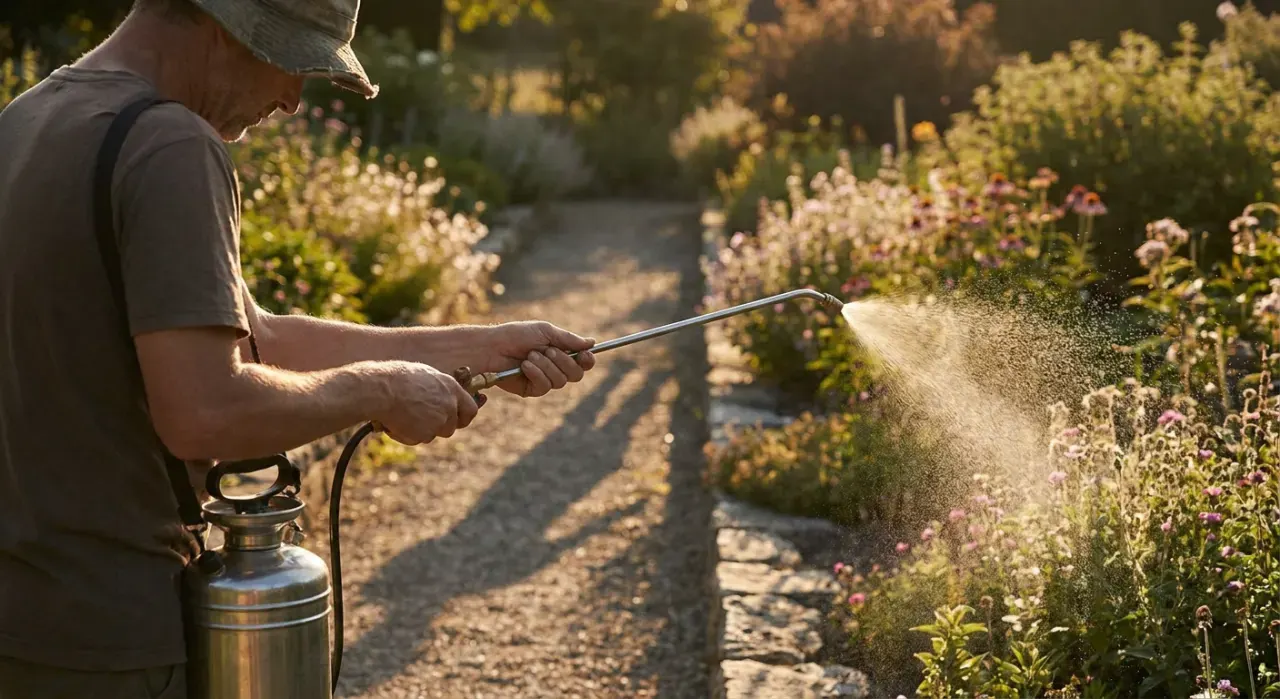
Contact and systemic herbicides do fundamentally different jobs. A contact product destroys only the tissue the spray physically wets — cell membranes rupture, and the leaf browns within hours. It looks devastating, and on a shallow-rooted annual it is enough. On a perennial with a root system, it amounts to mowing with chemicals: the top dies, the roots do not, and the weed returns in a fortnight. A systemic herbicide is absorbed through the leaf cuticle and moved internally, with the plant's own transport system, down to the roots and growing points before it interferes with a metabolic pathway. That journey is what costs the days, and it is also what makes the kill permanent. If you are treating dandelions or bindweed, slow is the feature. Glyphosate specifically is broken down day by day in how long glyphosate takes to kill weeds.
What speeds it up or slows it down?
Four variables move the timeline more than the brand does.
- Temperature. Most herbicides work best between roughly 60 and 85 degrees Fahrenheit. Below that the weed is barely growing and uptake crawls; above it many labels warn off spraying because of plant stress and, with some formulations, vapor drift. Our detail on this is in the best temperature to spray weed killer.
- Weed age. Young, actively growing weeds absorb far more than mature, seeding, waxy-leafed plants.
- Moisture. Drought-stressed weeds shut down and move very little internally. Weeds in moist soil take herbicide up much faster.
- Rain. Rainfall before the label rainfast period washes the product off — commonly 30 minutes to a few hours depending on formulation. See does weed killer work in the rain.
When can you mow, and when should you re-spray?
Wait at least 24 to 48 hours before mowing, and several days after a systemic application. Cutting removes the leaf surface the herbicide is still being absorbed through and moved from, which interrupts the trip to the roots and can leave a perennial alive. Many labels also ask you not to mow for a few days before spraying, so there is enough leaf area to catch the spray. On reapplication, resist the urge: re-spraying on day three because nothing looks dead is wasted product, and scorching the foliage early can actually reduce how much reaches the roots. Wait the label interval, usually 2 to 4 weeks, then decide. Perennials such as field bindweed, quackgrass and Canada thistle genuinely do often need a second pass, ideally in late summer or fall when the plant is moving resources downward.
Follow the label
In the United States the pesticide label is legally binding under federal law, and it carries the rainfast time, the reapplication interval, the temperature guidance and the re-entry period for people and pets. Read it before you mix. Your state land-grant university extension service publishes regionally specific timing guidance that is worth checking alongside it. If pets use the yard, start with weed killer and pet safety; for a chemical-free approach, see killing weeds without chemicals.
We never buy, apply or physically handle the products we rank — recommendations come from aggregated owner reviews and expert consensus, explained on how we rank.
More from this hub: Pest & Weed Control · Best weed killers · Best for lawns · How we rank