 Garden

Affiliate Disclosure
Some links on this page are affiliate links. As an Amazon Associate, we earn from qualifying purchases — at no extra cost to you. We do not buy, test, or physically handle the products we cover; our rankings come from aggregated owner reviews, ratings and expert consensus. Commissions never change our verdicts. How we rank · full disclosure.
Glyphosate is a slow, systemic herbicide. Expect visible yellowing in about 2 to 4 days, complete death of annual weeds in 1 to 2 weeks, and tough perennials like bindweed or Bermuda grass taking 2 to 4 weeks or a second application. It works by being absorbed through the leaves and translocated down to the roots, which is why it is effective but never instant. Warm, sunny weather and young, actively growing weeds speed it up; cool, dry or dormant conditions slow it down. Read the product label before you spray.
What is the full timeline from spray to dead weed?
The stages are predictable, and knowing them stops people from re-spraying prematurely.
| Stage | Typical timing | What you see |
|---|---|---|
| Absorption | First few hours | Nothing visible; herbicide entering leaves |
| First symptoms | 2–4 days | Newest growth yellows, wilts |
| Annual weeds die | 7–14 days | Whole plant browns and collapses |
| Perennial weeds die | 2–4 weeks | Roots killed; may need a second pass |
Temperature drives the pace. In warm weather the process runs at the fast end of these ranges; in cool spring or fall conditions it can take noticeably longer because the weed’s metabolism, and therefore its uptake and internal movement of the herbicide, slows down.
Why does it take longer than a burn-down spray?
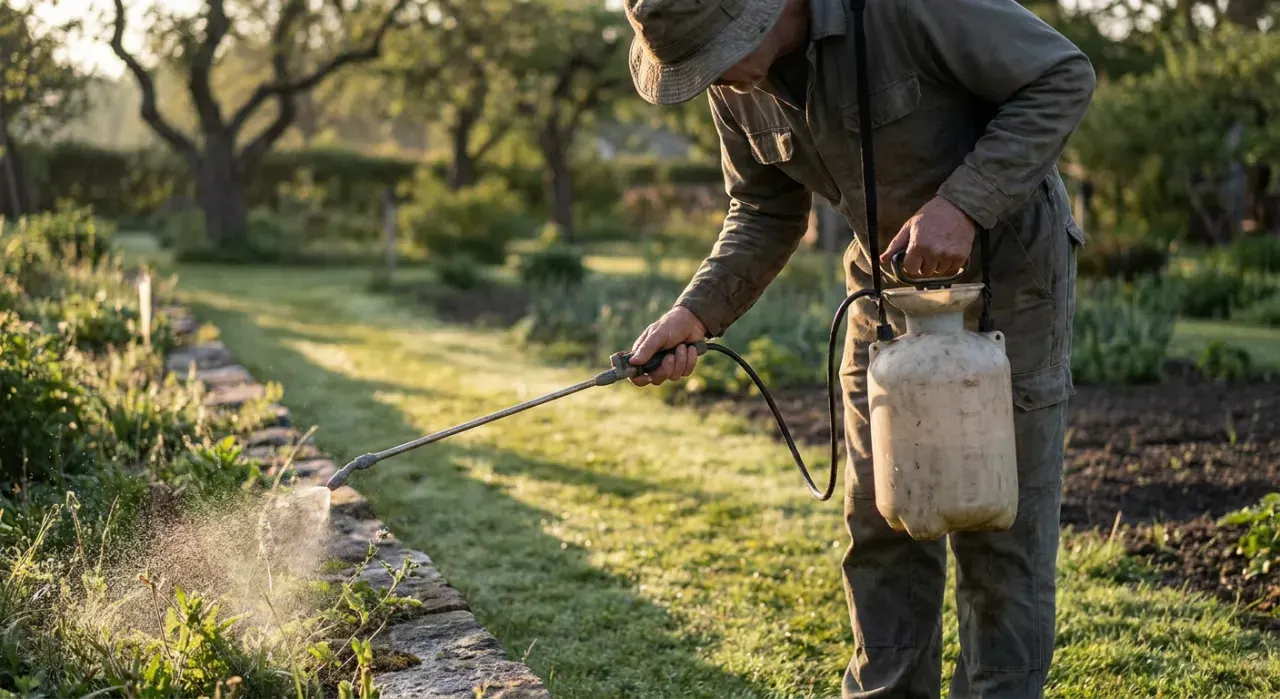
Glyphosate is systemic, not contact. The plant absorbs it through the foliage and moves it internally to the roots and growing points, where it inhibits an enzyme in the shikimate pathway that plants need to build essential amino acids. Killing the root system is precisely what makes glyphosate work on perennials that regrow from roots — but that internal journey is what costs the time. A contact herbicide burns only the tissue it touches and looks dramatically faster, yet on a perennial it leaves the roots alive and the weed comes back. The trade-off is speed versus a complete kill.
What conditions make it work best?
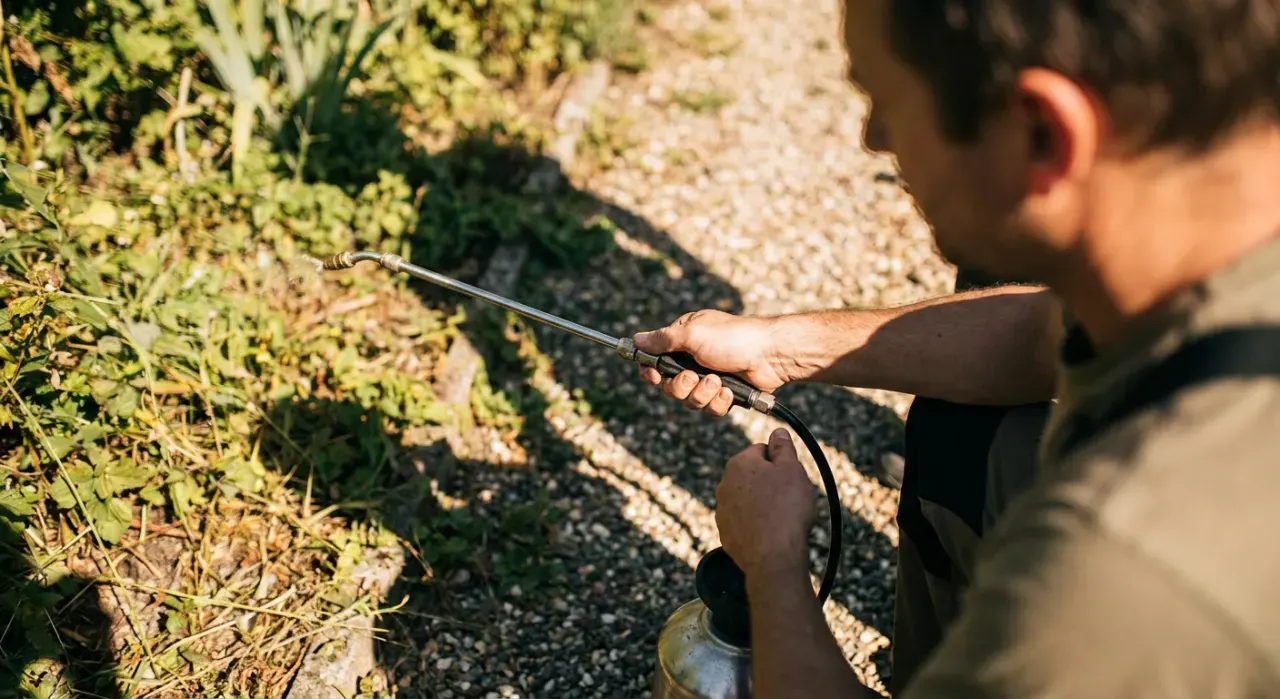
Spray young, actively growing weeds — not mature, seeding, dusty or drought-stressed ones — in warm, sunny weather with adequate soil moisture, and give it a rainfast window. Most labels state a rainfast period, commonly around 30 minutes to a few hours depending on formulation, and rain before that can wash the herbicide off and ruin the treatment. Wind matters too: glyphosate is non-selective and will kill any green plant it drifts onto, so spray on a calm day and shield desirable plants. After spraying, leave the weed alone — do not mow or pull it for several days, because it needs intact leaves to keep absorbing and moving the chemical to the roots.
Why do some weeds survive the first spray?
Established perennials with deep or extensive root systems — field bindweed, quackgrass, Bermuda grass, Canada thistle — often need a second application, or a spray timed for when the plant is naturally moving resources downward to the roots (late summer into fall for many perennials), because that is when the herbicide gets carried deepest. If the top dies but new shoots appear from the same root a few weeks later, that is not product failure; it is a perennial that needs another treatment. Woody plants and very mature weeds are similarly stubborn.
Reading the label and staying safe
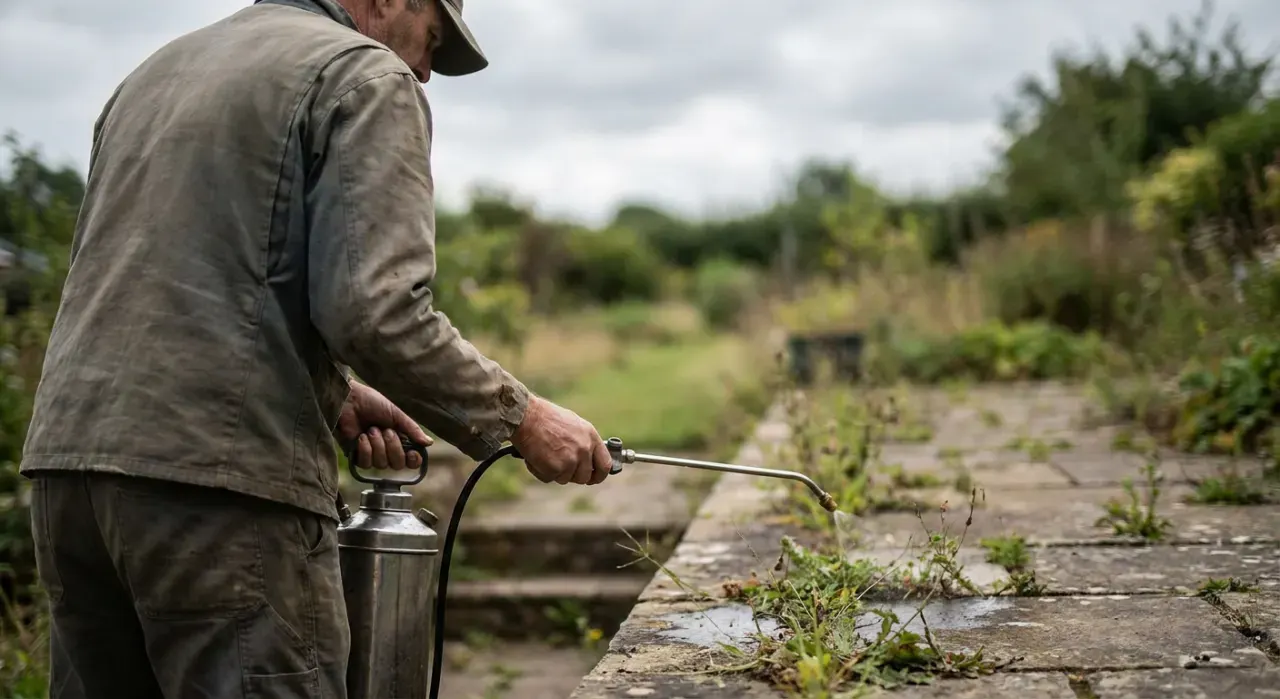
The product label is the law in the United States: it specifies the mixing rate, protective equipment, rainfast time and how long to keep people and pets off the treated area — usually until the spray has dried. Acute toxicity from properly applied glyphosate is low, but the long-term health debate is real and unresolved: IARC classified it as probably carcinogenic in 2015, while the EPA maintains it is not likely carcinogenic at label rates. Those are two separate questions from the acute how-long-until-it-is-dry one, and we do not give medical advice — follow the label and ask your doctor with health concerns. For a chemical-free route, see killing weeds without chemicals.
Where to go next
To choose a product, the best weed killer overall and the best weed killer for lawns rank the options, while selective versus non-selective herbicides explains why glyphosate kills grass too. If pets use the yard, read weed killer and pet safety first. Everything sits under the pest and weed control hub.
We never buy, apply or physically handle the products we rank — recommendations come from aggregated owner reviews and expert consensus, and the method is on how we rank. Follow the label and check your local extension service for regional timing.