 Garden

Affiliate Disclosure
Some links on this page are affiliate links. As an Amazon Associate, we earn from qualifying purchases — at no extra cost to you. We do not buy, test, or physically handle the products we cover; our rankings come from aggregated owner reviews, ratings and expert consensus. Commissions never change our verdicts. How we rank · full disclosure.
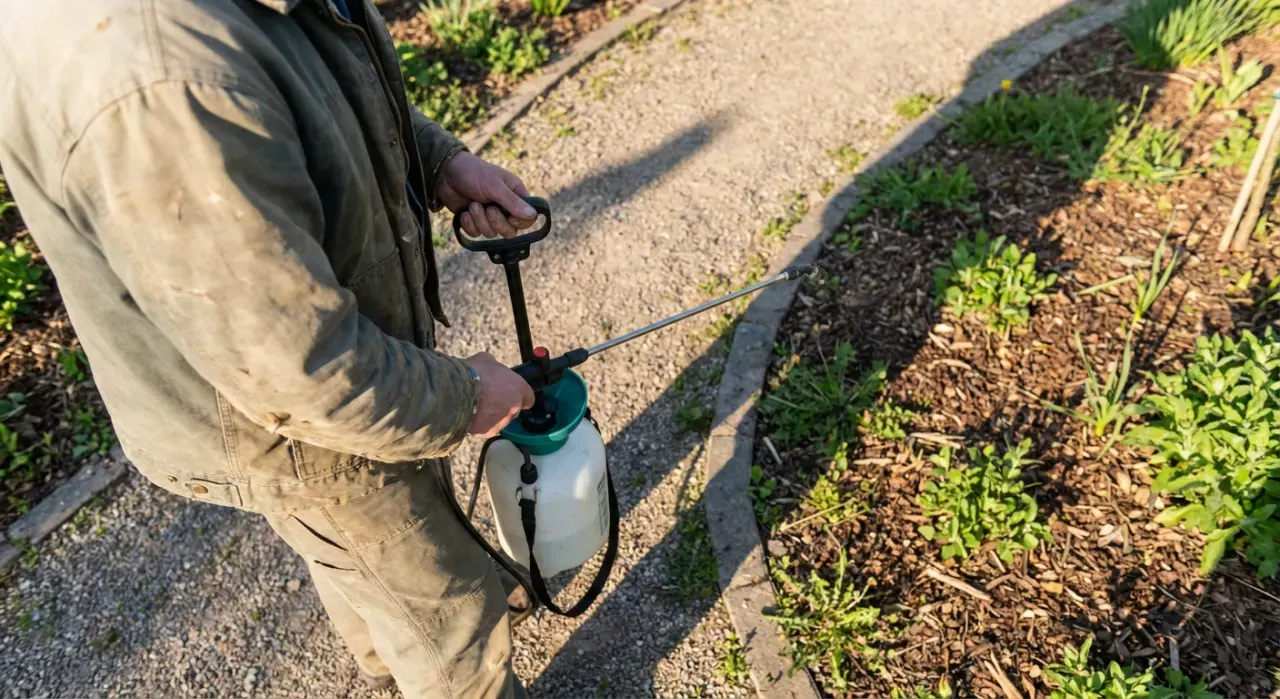
A selective herbicide kills certain plants and leaves others alive — in lawn products, it kills broadleaf weeds and spares the grass. A non-selective herbicide kills essentially anything green it touches, grass included. Get this backwards and you spray glyphosate on a dandelion in your lawn and get a dead patch the size of your spray pattern that stays bare for a month. It is the most common and most expensive mistake in yard care.
Why a Spray Can Tell a Weed From Grass
Selectivity is not the chemical recognizing a weed. It is a set of real biological differences between broadleaf plants and grasses that a well-chosen active ingredient exploits.
Grasses are monocots. Their growing point sits low, at the crown near the soil, and their leaves are narrow, upright and waxy. Broadleaf weeds are dicots — growing points at the tips of shoots, leaves wide and flat and held horizontally, with a much larger surface area pointing straight up at your sprayer. That geometry alone means a broadleaf weed catches several times more spray per square foot of ground than the grass around it.
The chemistry does the rest. The classic lawn actives — 2,4-D, MCPP (mecoprop), dicamba, MCPA — are synthetic auxins. They mimic a plant growth hormone and throw the plant into uncontrolled, disorganized growth: stems twist, leaves cup, transport tissue collapses, and the plant exhausts itself. Grasses metabolize these compounds quickly and shrug them off at label rates. Broadleaf plants cannot, and they die. That difference in metabolic tolerance is the whole basis of the lawn weed killer category.
Selectivity is dose-dependent, which is why label rates are not a suggestion. Push the rate high enough and 2,4-D will damage turf too. This is also why a warm-season lawn is a different problem: St. Augustine and centipede grasses are far more sensitive to 2,4-D and dicamba than tall fescue or Kentucky bluegrass, and a product perfectly safe on a northern lawn can thin or kill a southern one. The label lists which grasses are approved. That list is the real product specification.
Why Non-Selective Products Kill Everything
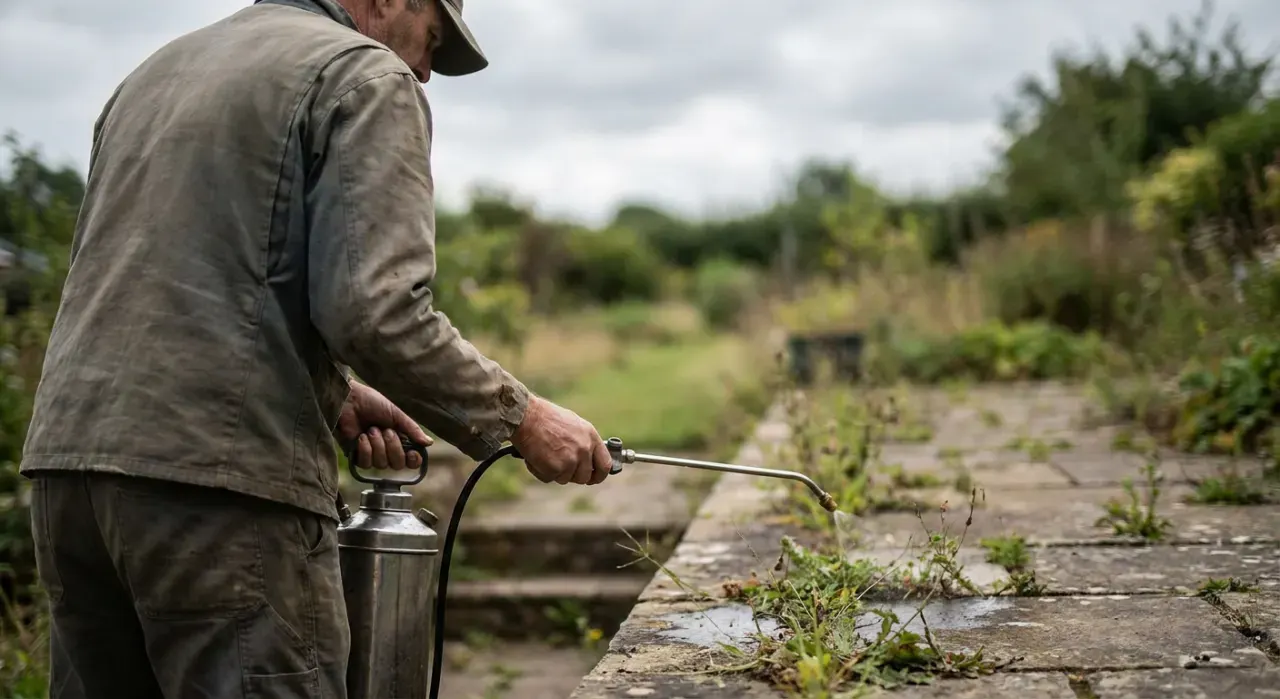
Non-selective herbicides target something every plant has in common.
Glyphosate blocks EPSP synthase, an enzyme in the shikimate pathway that plants use to build three essential amino acids. Every green plant on your property runs that pathway, so there is no tolerance to exploit. It is systemic — the plant absorbs it through green tissue and transports it down into roots and rhizomes, which is why it kills perennial weeds properly rather than just burning off the top. That also means it is slow: seven to fourteen days to full kill, and slower in cool weather. People who spray it and see nothing on day three often spray again, which wastes product.
Contact non-selectives work differently. Glufosinate, diquat, ammonium nonanoate (a fatty-acid soap) and horticultural vinegar destroy plant cell membranes wherever they land. They are dramatic — visible browning in hours on a warm day — and shallow. Nothing reaches the root, so perennials regrow from the crown within two or three weeks. If a product promises results in 24 hours, it is a contact killer and you should expect regrowth on anything with a deep root.
Total vegetation killers add a soil residual, usually imazapyr or a pre-emergent component, that keeps ground bare for three to twelve months. These are correct on a gravel driveway and a serious mistake in a yard, because residual actives move laterally with water and can be picked up by tree and shrub roots well outside the sprayed area. Do not use them under a canopy or uphill of a bed you care about.
The Four Categories at a Glance
| Category | Typical actives | Kills | Use on | Speed |
|---|---|---|---|---|
| Selective broadleaf | 2,4-D, MCPP, dicamba, MCPA, quinclorac, sulfentrazone | Broadleaf weeds; some crabgrass and sedge in newer blends | Lawns — check your grass type | 7–14 days |
| Selective grass killer | Sethoxydim, fluazifop, clethodim | Grasses only | Flower and shrub beds, groundcover | 10–21 days |
| Non-selective systemic | Glyphosate | Nearly all green plants, roots included | Driveways, fence lines, bed clearance | 7–14 days |
| Non-selective contact | Glufosinate, diquat, ammonium nonanoate, acetic acid | Whatever it wets — top growth only | Cracks, paths, young annual weeds | Hours to 3 days |
Row two surprises people. Selective grass killers are the mirror image of lawn products: they kill grass and leave broadleaf plants alone, which makes them the answer for bermudagrass invading a perennial border or crabgrass in a bed of hostas. Sethoxydim and fluazifop are the common home-garden actives. They are also the reason a blanket statement like "selective is the safe one" is meaningless — selective for what is the only question that matters.
What "For Lawns" Actually Means on a Bottle
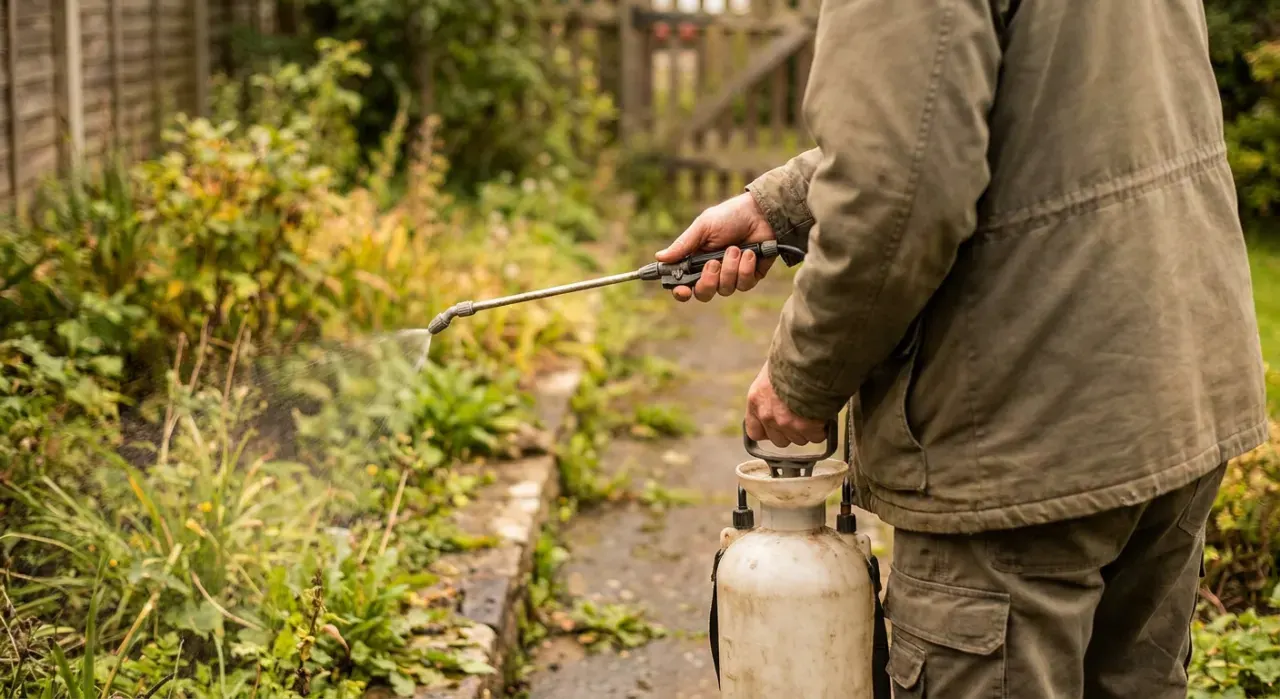
"For lawns" is a claim about selectivity, not about safety, gentleness or organic status. It means the formulation has been registered for application over the top of specific turfgrass species at a specific rate. It carries three pieces of fine print worth internalizing.
It is grass-specific. A bottle approved for Kentucky bluegrass, perennial ryegrass, tall fescue and zoysia may explicitly warn against use on St. Augustine, centipede, bahiagrass or dichondra. Southern lawns need southern-labeled products, and it is a common cause of accidental turf damage in the Gulf states and coastal Southeast.
The brand name tells you nothing. The most consequential example on any US shelf: the original glyphosate concentrate and the lawn-safe product share a brand, a color scheme and an aisle, and one of them will kill your lawn. Roundup For Lawns contains no glyphosate — it is built on selective broadleaf actives. The only reliable read is the active ingredient panel on the back label.
Selective does not mean it spares your garden. 2,4-D and especially dicamba are notoriously mobile. Dicamba can volatilize off treated turf on a hot day and injure tomatoes, grapes, redbuds and roses many yards away — cupped, strap-shaped new leaves on a tomato downwind of a freshly treated lawn is the classic signature. Spray below 85°F, on a still morning, with a coarse droplet setting.
Choosing in Thirty Seconds
- Weeds in a lawn you want to keep — selective broadleaf. See our ranked weed killers for lawns.
- Weeds in a driveway, path, gravel or fence line — non-selective. Systemic if the weeds are perennial, contact if they are young annuals.
- Clearing a bed before planting — non-selective systemic, then wait out the label re-plant interval.
- Grass invading a flower bed — selective grass killer.
- Stopping next season before it starts — a pre-emergent, which is a different tool entirely and does nothing to weeds already growing. Timing and products are in best pre-emergent herbicides.
- A few weeds, and you would rather not spray — pulling, mulch or boiling water. Covered in killing weeds without chemicals.
The Five Ways People Get This Wrong
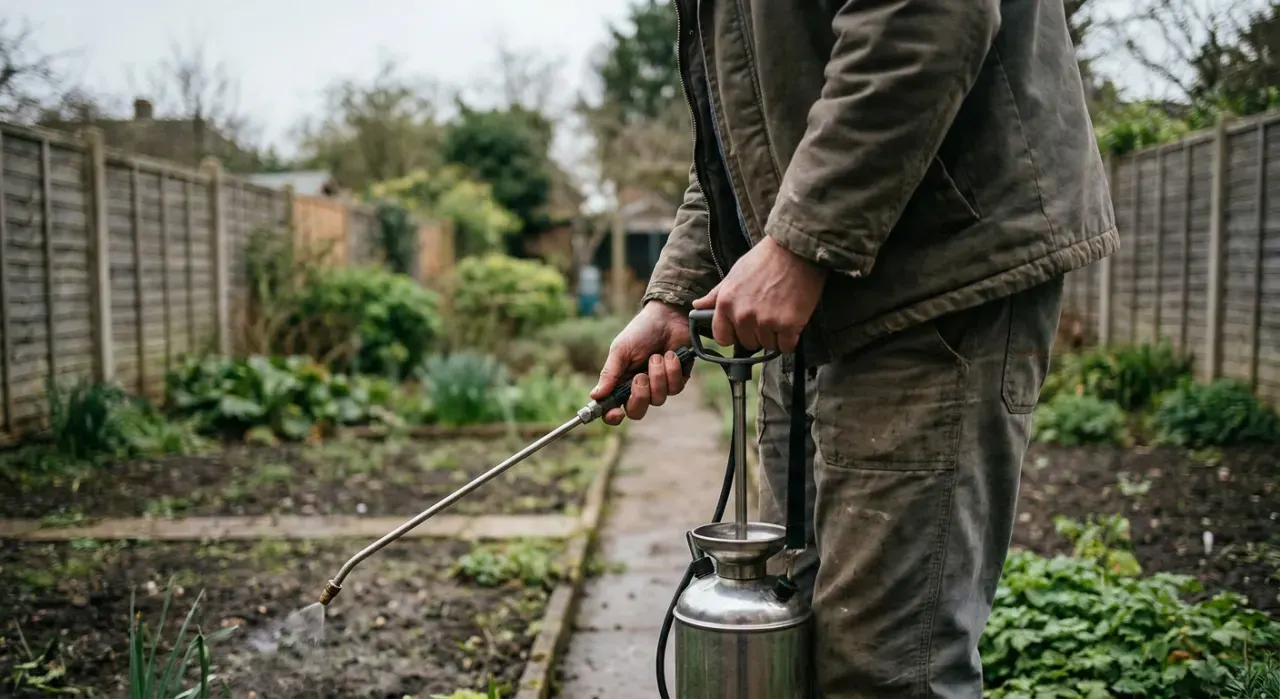
Spraying non-selective on a lawn weed. The dead patch is usually two to three times the diameter of the weed, because of drift and because grass roots interlace. Spot-treat with a selective product or pull it.
Not checking the grass list. Southern turf and northern products do not mix. Read the approved species.
Reusing a sprayer. Glyphosate residue in a tank sprayer that later carries a lawn product will burn streaks into turf. Dedicate one sprayer to non-selectives, label it in permanent marker, and never swap.
Expecting the wrong speed. Systemic products look like they failed for the first week — that is the active moving to the root, which is exactly what you paid for. Contact products look like they worked in a day and then the weed comes back. Judge each on its own timeline.
Spraying stressed or dormant weeds. Systemic herbicides move with the plant, so a drought-stressed weed that has shut down transport barely takes any in. Water a dry area a couple of days before you treat and the same product performs noticeably better.
Where to Go Next
If you are not certain what you are looking at, start with common lawn weeds identified — the control that works depends entirely on whether the weed is a broadleaf, a grass or a sedge, and sedges in particular are immune to most standard lawn products. Crabgrass has its own calendar, laid out in how to get rid of crabgrass. If pets use the yard, read weed killers and pet safety before you buy. The ranked field across every category is in best weed killers, and everything sits under the pest and weed control hub.
We never buy, apply or physically handle the products we rank — every recommendation comes from aggregated owner reviews and expert consensus, and the method is on how we rank. The product label is the legally binding instruction in the United States and it overrides anything written here.