 Garden

Affiliate Disclosure
Some links on this page are affiliate links. As an Amazon Associate, we earn from qualifying purchases — at no extra cost to you. We do not buy, test, or physically handle the products we cover; our rankings come from aggregated owner reviews, ratings and expert consensus. Commissions never change our verdicts. How we rank · full disclosure.
Rain that falls inside the rainfast window washes weed killer off before the plant absorbs it, and the treatment fails. Glyphosate formulations commonly state a rainfast period of 30 minutes to 6 hours, and selective broadleaf lawn herbicides based on 2,4-D or dicamba typically 4 to 8 hours. The exact figure is on your label and it differs between products with the same active. Once that period has passed, later rainfall does not reverse the treatment. Pre-emergents are the opposite — they need rain to work.
What is a rainfast period and how long is it?
Rainfast is the time a herbicide needs on the leaf surface before enough has moved through the waxy cuticle that rain can no longer wash it away. Before that point, water simply carries the spray off onto the ground. These are common label ranges, but read your own bottle, since surfactant packages and formulation change the number substantially even for the same active ingredient.
| Product type | Common actives | Typical rainfast period |
|---|---|---|
| Non-selective systemic | Glyphosate | 30 min – 6 hours by formulation |
| Selective broadleaf | 2,4-D, dicamba, MCPP | 4–8 hours |
| Contact burndown | Pelargonic acid, acetic acid | 1–3 hours; damage is already done |
| Pre-emergent | Prodiamine, pendimethalin | Rain required to activate |
Should you ever spray ahead of rain?
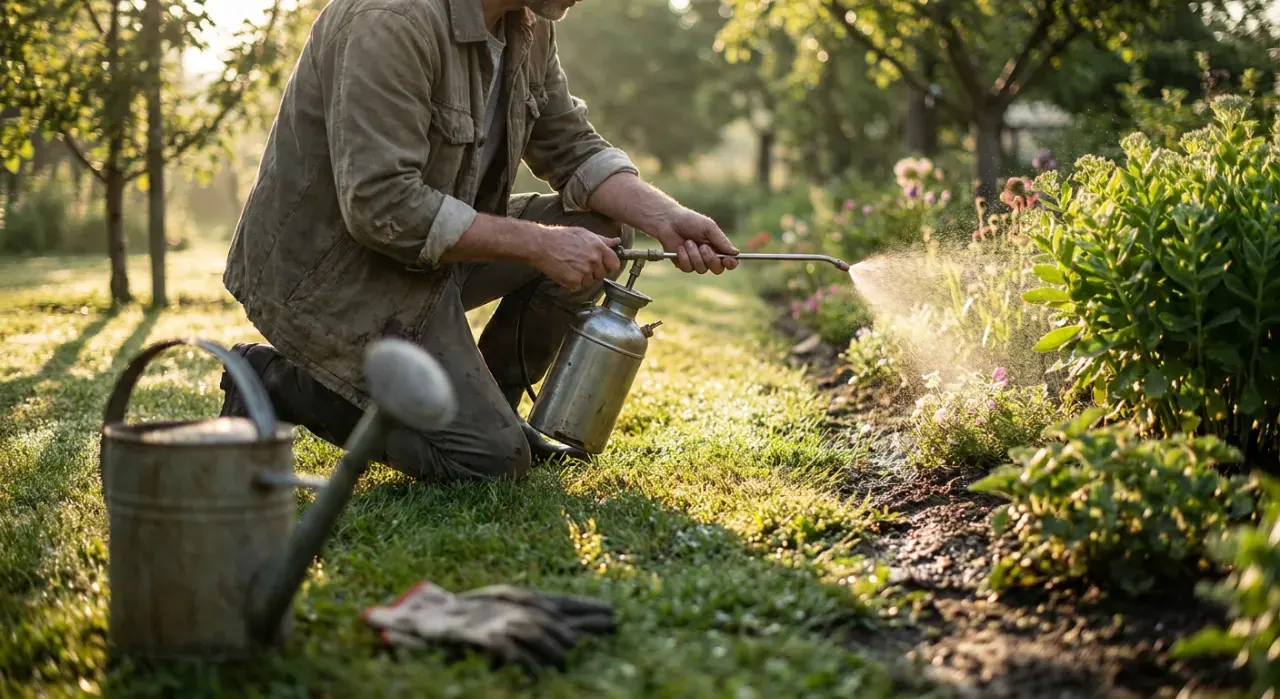
Only with a real margin. The forecast needs to give you the label rainfast period plus a buffer, because a shower that arrives an hour early can waste the whole application and the product with it. Two related points confuse people. Light dew on the foliage at spray time is generally fine and can even help spread coverage — it is a soaking wet plant, where droplets run straight off, that causes the problem. And moist soil is actively helpful: weeds growing in damp ground are metabolically active and take up and translocate systemic herbicides much faster than drought-stressed plants. Damp soil with dry leaves is close to ideal spraying conditions. Timing and temperature detail is in the best temperature to spray weed killer.
Rain came early. Do you re-spray?
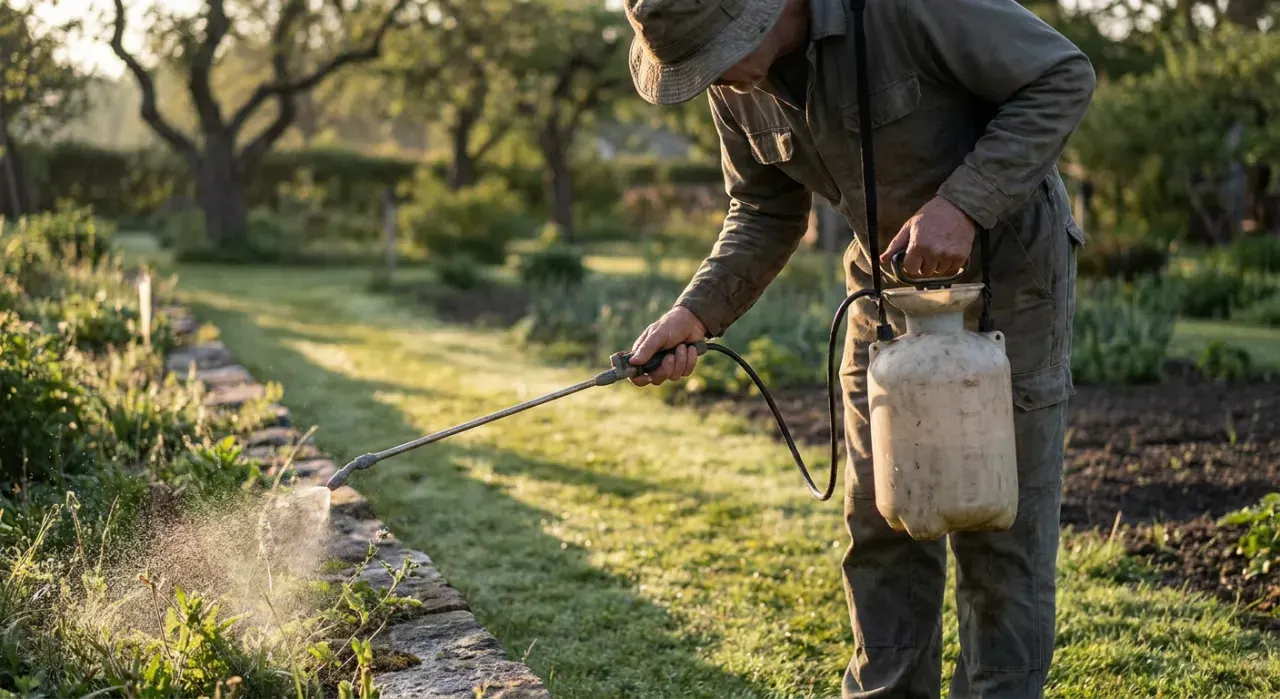
Wait before deciding. Even a washed-off application often achieves partial uptake, and systemic herbicides take 2 to 4 days to show any symptoms at all, so the lawn looking unchanged the next morning tells you nothing. Give it the normal symptom window, then judge. If the weeds are clearly unaffected after a week, reapply — but only within the label reapplication interval and the maximum annual rate, both of which are legally binding in the United States. Re-spraying immediately after rain risks exceeding those limits and often means treating plants that were already dying. The realistic timelines are in how long weed killer takes to work.
Why rain helps a pre-emergent
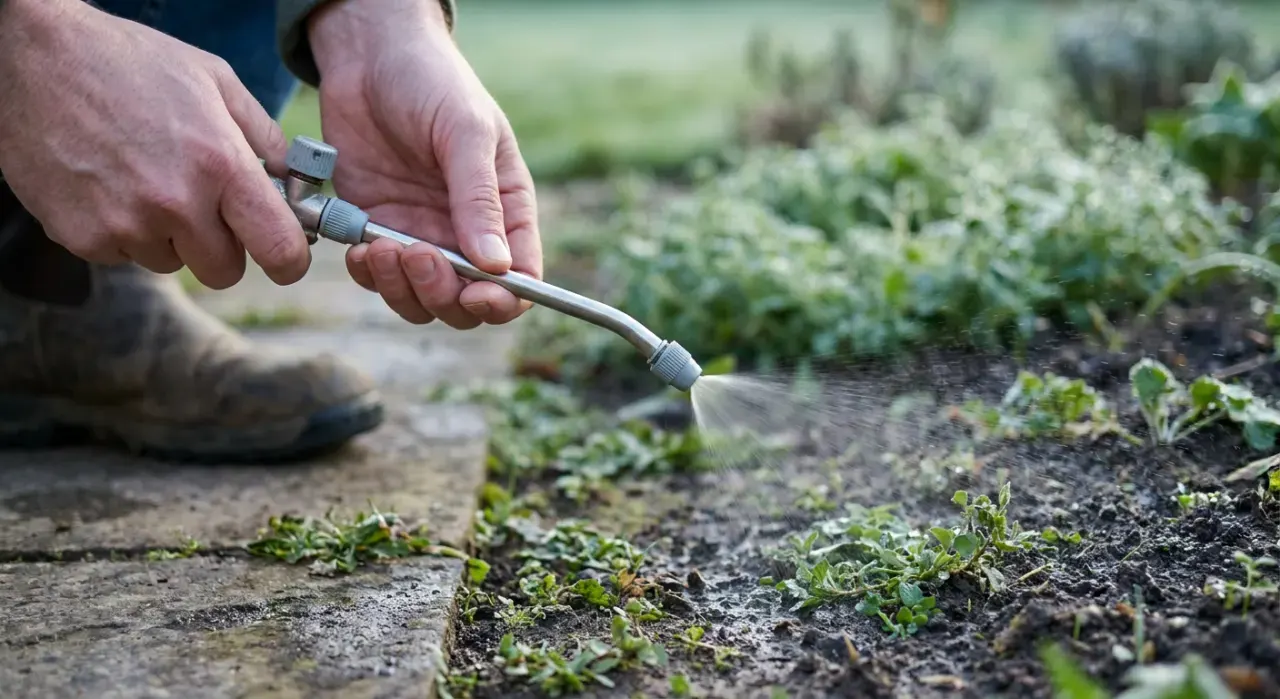
Pre-emergents work in soil rather than on foliage, so water is the activation step, not the enemy. Most granular products need about a quarter to a half inch of irrigation or rainfall within a few days to release the active from the granule and form the continuous barrier in the top inch of soil. Applying a pre-emergent ahead of a forecast soaking rain is good practice — the exception being a heavy downpour that causes surface runoff, which can carry granules onto driveways and into storm drains before they have a chance to move into the soil. Timing for those applications is set by soil temperature, covered in what temperature to apply pre-emergent.
The runoff question
There is an environmental reason to respect rainfall beyond whether your dandelions die. The U.S. Environmental Protection Agency and state extension services both warn that spraying immediately before heavy rain increases the risk of pesticide movement into storm drains, ditches and surface water. Labels frequently include a statement not to apply when heavy rain is forecast or when runoff is likely, and on hard surfaces such as driveways there is nothing to hold the product at all. If a storm is coming, wait. For approaches that remove the question, see killing weeds without chemicals, and if pets share the yard, weed killer and pet safety.
Follow the label, which is the law in the United States, and check your state extension service for local guidance. We never buy, apply or physically handle the products we rank — our method is on how we rank.
More from this hub: Pest & Weed Control · Best weed killers · Glyphosate timeline · How we rank