 Garden
Affiliate Disclosure
Some links on this page are affiliate links. As an Amazon Associate, we earn from qualifying purchases — at no extra cost to you. We do not buy, test, or physically handle the products we cover; our rankings come from aggregated owner reviews, ratings and expert consensus. Commissions never change our verdicts. How we rank · full disclosure.
The short version: on St. Augustine, the product label matters more than anything else on this page. Only buy something that names St. Augustine among its tolerated grasses. Our #1 pick is Celsius WG, because it is labeled for the grass, controls an enormous weed list, and carries no summer temperature cutoff — which is what separates it from every atrazine product in the Gulf South. For a far cheaper spring or fall application, the Southern Ag atrazine concentrate is the value choice, and the Spectracide southern formulation is the same chemistry from a shelf near you.
This page exists because St. Augustine is the one popular American lawn grass that punishes a wrong purchase immediately. A standard bottle of lawn weed killer — the kind that is completely safe on fescue or bluegrass — will thin, brown or kill it. Owners who have moved south from a cool-season state make this mistake constantly, and the lawn does not forgive it quickly, because St. Augustine spreads by stolons and takes a full season to fill damaged areas back in.
Top Picks at a Glance
Our #1 Pick: Celsius WG
Celsius WG combines thiencarbazone-methyl, iodosulfuron-methyl-sodium and dicamba in a dry granule that dissolves in water. Its label covers St. Augustine, centipede, bermuda and zoysia, and the controlled-weed list runs past 150 species including the southern specialists that defeat consumer products: doveweed, virginia buttonweed, dollarweed and spurge.
The property that justifies its place at the top is the missing temperature ceiling. Atrazine products — which is what most St. Augustine owners have historically used — tell you not to apply above about 90°F. Along the Gulf Coast that rules out roughly June through September, and southern weeds do most of their growing in exactly that window. Celsius has no such restriction, so it can be applied when the weeds are actually there.
The trade-offs are real. It is expensive to buy, even though it is cheap per application because the rate is a fraction of an ounce per gallon. That low rate is itself a hurdle: you need the supplied scoop or a gram scale and you need to respect the number, because pushing the rate does not speed anything up and does raise the risk of temporary yellowing. And it is deliberately slow — plan on two to three weeks, with the first week looking like nothing is happening at all.
Owners also consistently note that a non-ionic surfactant improves results markedly. It is not included, and reviews reporting weak control very often turn out to have skipped it.
Check price on Amazon → (paid link)
The Ranked Field

Best for St. Augustine lawns in summer, when atrazine products are off limits
- Labeled for St. Augustine, centipede, bermuda and zoysia
- No high-temperature restriction on the label
- Controls doveweed, dollarweed, virginia buttonweed and 150+ others
- Rate measured in fractions of an ounce per gallon
Why buy it: the only mainstream selective a St. Augustine owner can spray in a Gulf Coast July without expecting to lose turf.

Best for cool-season broadleaf weeds in St. Augustine and centipede, applied in spring or fall
- 4% atrazine — the classic southern turf herbicide
- Kills existing weeds and prevents some germinating ones
- Also suppresses crabgrass seedlings
- Very low cost per thousand square feet
Why buy it: atrazine is one of the few actives St. Augustine genuinely tolerates, and this is the cheapest honest way to buy it.
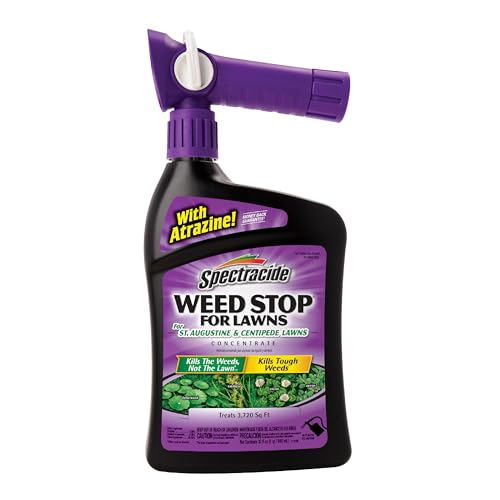
Best for homeowners who want the southern formulation from a big-box shelf
- Atrazine-based, written for southern turf
- Controls dollarweed, betony and common southern broadleaf weeds
- Widely stocked and inexpensive
- Apply below 90°F per the label
Why buy it: the bottle to grab when you need the right chemistry today rather than in two days from a supplier.
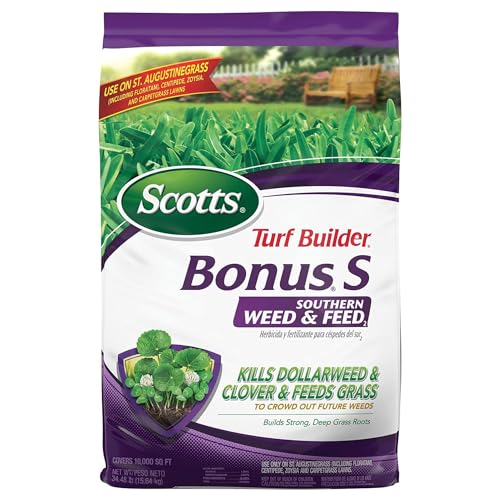
Best for feeding and weeding a southern lawn in one spreader pass
- Granular atrazine plus lawn fertilizer
- Formulated for St. Augustine, centipede and bahia
- Applied with an ordinary broadcast spreader
- Needs the lawn wet so granules stick to weed leaves
Why buy it: for anyone who will never own a sprayer, a spreader pass is the realistic way southern lawn weed control actually gets done.
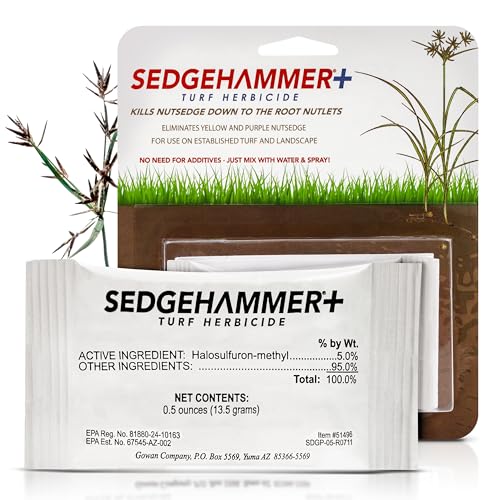
Best for yellow and purple nutsedge, which atrazine only suppresses
- Halosulfuron, specific to sedges
- Surfactant pre-blended into the packet
- Labeled safe on established St. Augustine
- Pre-measured — no scale needed
Why buy it: nutsedge is the weed southern lawns get worst and generic products miss entirely, and this is the chemistry written for it.
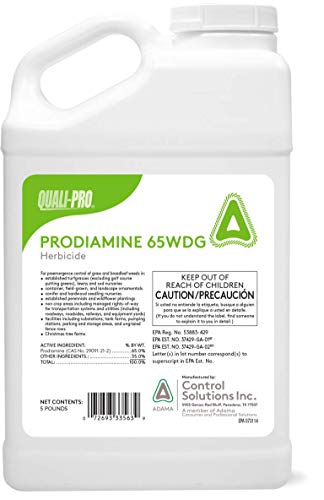
Best for stopping crabgrass and poa annua before they ever appear
- Prodiamine 65 WDG at professional strength
- Labeled for established St. Augustine turf
- One jug treats a home lawn for years
- Split applications hold the barrier through the season
Why buy it: preventing a weed costs a fraction of what killing it costs, and on sensitive turf it also removes the risk of the cure.
Quick Comparison
| Product | Best for | Rating | Price | Buy |
|---|---|---|---|---|
| Bayer Celsius WG Herbicide, 10 oz | Best Overall | — | Check (paid link) | |
| Southern Ag 006130 Atrazine St. Augustine Weed Killer, 32 oz | Best Value Concentrate | — | Check (paid link) | |
| Spectracide Weed Stop For Lawns For St. Augustine And Centipede Lawns Concentrate, 32 oz | Best Ready-to-Mix | — | Check (paid link) | |
| Scotts Turf Builder Bonus S Southern Weed & Feed2, 10,000 sq. ft. | Best Weed & Feed | — | Check (paid link) | |
| SedgeHammer Plus Turf Herbicide, 13.5 g Packets | Best for Nutsedge | — | Check (paid link) | |
| Quali-Pro Prodiamine, Pre-Emergent Herbicide, 5 lbs, Yellow Granules | Best Prevention | — | Check (paid link) |
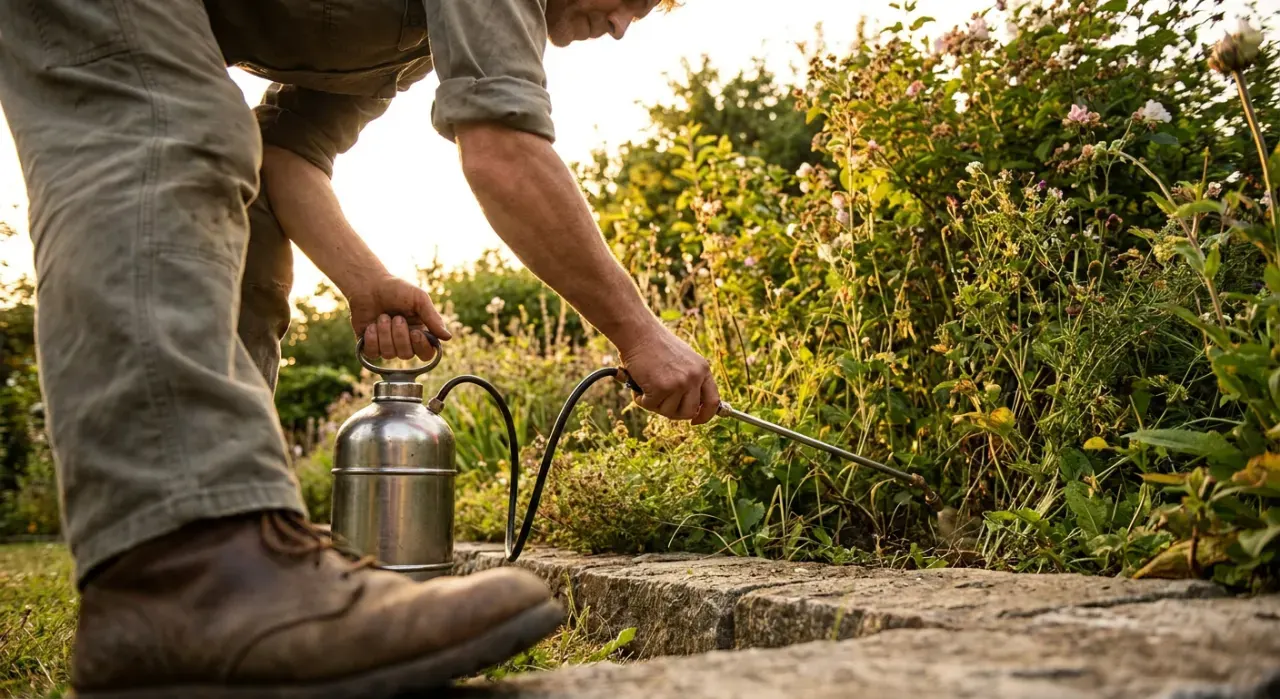
Specifications Side by Side
| Product | Active ingredient | Form | Heat limit | Best season |
|---|---|---|---|---|
| Celsius WG | Thiencarbazone + iodosulfuron + dicamba | Dry granule, mixed in water | None stated on label | Any time turf is actively growing |
| Southern Ag Atrazine | Atrazine 4% | Liquid concentrate | About 90°F | Spring and fall |
| Spectracide for St. Augustine | Atrazine | Liquid concentrate | About 90°F | Spring and fall |
| Scotts Bonus S | Atrazine plus fertilizer | Granular, spreader applied | About 90°F | Spring and fall |
| SedgeHammer Plus | Halosulfuron-methyl | Pre-measured packets | Broadly tolerant | Summer, when sedge is active |
| Quali-Pro Prodiamine | Prodiamine 65% | Water-dispersible granule | Applied before germination | Late winter and late summer |
How We Rank
We do not buy or spray these products. Rankings are built from aggregated owner ratings, weighted toward reviews written weeks after application rather than on delivery day, because a herbicide is only judged fairly once the weeds have had time to die or come back. On this page four factors carry the weight, and the first one dominates. Explicit St. Augustine label clearance — a product that does not name the grass is disqualified, whatever its ratings look like. Reported effectiveness against the weeds southern owners actually name: dollarweed, doveweed, betony, nutsedge, spurge. Rating strength weighed against review volume. And the size of the safe application window, since a product that can only be used on a mild morning in March is less useful than one that can be used when the weeds appear. Prices were checked at the time of writing. Full method: how we rank.
The St. Augustine Weed Killers, Reviewed
1. Celsius WG — Best Overall
Covered above. Owners praise: summer usability, the weed list, turf safety on floratam and other cultivars, and results on doveweed and buttonweed that nothing else touched. Owners gripe about: the up-front price, weighing tiny quantities, slow visible action, and needing to buy a surfactant separately. Check price (paid link).
2. Southern Ag Atrazine — Best Value Concentrate
Atrazine has been the backbone of southern lawn weed control for decades, for the straightforward reason that St. Augustine and centipede tolerate it while most broadleaf weeds do not. It also has a partial pre-emergent effect, so an application catches germinating weeds as well as established ones — unusual and genuinely useful.
The constraint is seasonal and absolute. Above roughly 90°F the turf-injury risk rises sharply, which in most of the Gulf South makes this a spring-and-fall product. Check your cultivar too: Texas A&M AgriLife Extension warns that Floratam St. Augustinegrass is not tolerant of atrazine and will be injured by it. Atrazine is also restricted or regulated in some jurisdictions and near some water bodies; check your state and county rules before buying, because they differ.
Owners praise: cost per treated area, effectiveness on dollarweed and betony, and the partial pre-emergent bonus. Owners gripe about: the temperature limit, slow action on established weeds, and needing a sprayer and accurate mixing. Check price (paid link).
3. Spectracide Weed Stop for St. Augustine & Centipede — Best Ready-to-Mix
Functionally the same chemistry as pick 2 in consumer packaging, which is worth something: it is on the shelf at most hardware stores in the South, and a homeowner who has just realized their regular weed killer is wrong for their lawn can fix the problem the same afternoon. The concentration is lower, so the cost per treated area is higher, but the bottle is small and the decision is easy.
Owners praise: availability, low price per bottle, and clear labeling for southern grasses. Owners gripe about: covering less ground than expected, the temperature restriction, and results that take a couple of weeks. Check price (paid link).
4. Scotts Turf Builder Bonus S Southern Weed & Feed — Best Weed & Feed
A large share of southern homeowners will never own a backpack sprayer, and for them a spreader pass is how lawn care actually happens. Bonus S puts atrazine and fertilizer down together, formulated for St. Augustine, centipede and bahia. Fed turf also crowds weeds out on its own, so the fertilizer is not just a bundling gimmick.
There is one instruction that decides whether it works, and it is the source of most of the negative reviews: the lawn must be wet when you apply, so the granules stick to weed foliage long enough to be absorbed. Apply to a dry lawn and the granules fall through the canopy to the soil and do very little. Water in the morning or apply to dew, then stay off irrigation for a day or two afterward.
Owners praise: one pass for feeding and weeding, no sprayer required, and visible lawn greening. Owners gripe about: poor weed control when applied to dry turf, coverage falling short of the stated square footage, and the same summer temperature restriction. There is a full Bonus S review if you want the detail. Check price (paid link).
5. SedgeHammer Plus — Best for Nutsedge
Nutsedge thrives in exactly the conditions St. Augustine lawns provide: warm, humid, frequently irrigated. Atrazine suppresses it at best. Halosulfuron actually kills it, moving down into the underground tubers that make sedge so persistent, and SedgeHammer Plus supplies it in pre-measured packets with the surfactant already included.
Expect yellowing at about a week and death over two to three, and expect a follow-up application later in the season on an established patch. That is normal for a plant that reproduces from tubers, not a product failure.
Owners praise: killing sedge nothing else touched, complete safety on St. Augustine, and no mixing math. Owners gripe about: slow results, repeat applications, and cost per packet. Check price (paid link).
6. Quali-Pro Prodiamine — Best Prevention
On a grass this sensitive, the cheapest and safest weed control is the weed that never germinates. Prodiamine forms a soil barrier that stops crabgrass, goosegrass and annual bluegrass seedlings as they emerge, and it is labeled for established St. Augustine. It does nothing to weeds already growing, so it is a calendar product rather than a rescue product.
Time it by soil temperature, not by date: the barrier needs to be in place before the soil holds around 55°F for several consecutive days — UW-Madison Extension puts crabgrass germination at 55 to 58°F in the top inch of soil at daybreak for four to five days. In the Deep South that can mean February. A split application, roughly half the annual rate then and half about eight to ten weeks later, covers the whole germination window.
Owners praise: a clean lawn all season, tiny cost per application, and a jug that lasts years. Owners gripe about: the calibration required, no effect on existing weeds, and a narrow correct timing window. Check price (paid link).
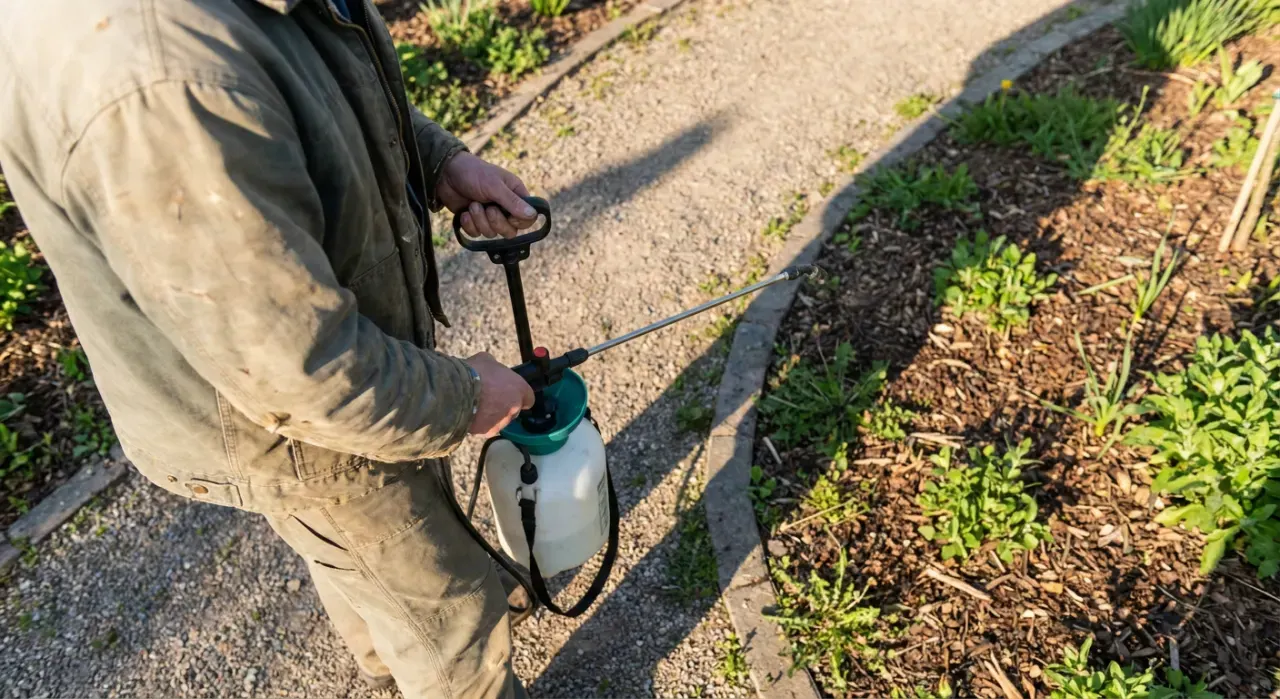
What Owners Actually Complain About
Killing the lawn with the wrong bottle. This is the dominant complaint in St. Augustine weed-killer reviews, and it is almost always a purchasing error rather than a product defect. A generic lawn weed killer formulated for cool-season grasses will thin or brown St. Augustine, and floratam is the least tolerant common cultivar. Read the tolerated-grasses list on the back before anything else; if St. Augustine is not printed there, put it down.
Spraying in summer heat. The 90°F ceiling on atrazine products is a real biological limit. Turf under heat stress takes up more herbicide and recovers slowly, and a July application on a lawn that is already struggling with drought is how people end up with dead patches shaped like their spray pattern. If the weeds are bad and it is August, that is the argument for Celsius rather than for spraying atrazine anyway.
Granules applied to a dry lawn. Every granular weed-and-feed depends on the granule sticking to a wet weed leaf. Applied dry, it becomes fertilizer. This single instruction accounts for a large share of the disappointed weed-and-feed reviews across the whole southern category.
Impatience. Celsius and halosulfuron both take two to three weeks, with very little visible in week one. Owners who re-spray at day five are the ones who then report turf yellowing — they doubled the rate without meaning to.
Treating a symptom. Dollarweed means the lawn is too wet. Nutsedge means the same thing plus warmth. Thin, weedy St. Augustine usually means shade, compaction or chinch bug damage rather than a herbicide problem. Our lawn weed identification guide is a faster route to the real cause than another bottle.
How to Choose for a St. Augustine Lawn
Read the label before the reviews. On this grass, that is the whole decision — and the EPA makes it a violation of federal law to use a product in a manner inconsistent with its labeling. A five-star product that does not list St. Augustine is a five-star product for someone else's lawn.
Then look at the calendar. If it is spring or fall and mild, atrazine does the job for a fraction of the cost. If it is summer, Celsius is effectively the only mainstream option that is safe to apply, and that is what you are paying for.
Then identify the weed. Dollarweed and betony are atrazine's specialty. Nutsedge needs halosulfuron. Doveweed and virginia buttonweed defeat most consumer products and are exactly where Celsius earns its price. Crabgrass in St. Augustine is a hard problem best solved by prevention rather than cure — see our pre-emergent herbicide picks.
Finally, fix the growing conditions. St. Augustine outcompetes most weeds when it is thick, but it goes thin in shade, in compacted soil and under chinch bug pressure — and thin turf is what weeds colonize. Mow high, at three to four inches, water deeply and infrequently rather than daily, and treat a recurring weed as a diagnosis rather than a nuisance. If you have pets on the lawn, read the pet-safety picks and what re-entry intervals actually mean before you spray anything. Bermuda owners have a very different and much more forgiving set of options — see the bermuda page.
The Verdict
Celsius WG is the weed killer we would recommend to a St. Augustine owner who wants one product that works whenever the weeds appear — labeled for the grass, effective on the southern weeds that defeat everything else, and free of the summer restriction that sidelines atrazine for a third of the year. If you are treating in spring or fall and want to spend a fifth as much, the Southern Ag atrazine concentrate is excellent value, and the Spectracide southern bottle is the same idea from a local shelf. Nutsedge needs SedgeHammer Plus specifically. And on a grass this sensitive, prodiamine in late winter is the safest weed control of all, because it removes the need to treat. Check price on Amazon → (paid link)
More from this hub: pest & weed control · best weed killers for lawns · best weed killer for bermuda · best weed killer for dandelions · selective vs non-selective · how we rank.