 Garden

Affiliate Disclosure
Some links on this page are affiliate links. As an Amazon Associate, we earn from qualifying purchases — at no extra cost to you. We do not buy, test, or physically handle the products we cover; our rankings come from aggregated owner reviews, ratings and expert consensus. Commissions never change our verdicts. How we rank · full disclosure.
The short answer: to get rid of spider mites on plants, first rinse the plant hard with water, aiming at the leaf undersides to blast off mites, eggs, and webbing, then spray with insecticidal soap, horticultural oil, or neem oil, coating the undersides thoroughly, and repeat every three to five days for two to three weeks. Isolate the plant from others while you treat it, and raise the humidity — spider mites thrive in hot, dry air, so a more humid environment slows them down. The repetition matters because sprays do not reliably kill the eggs, which hatch within days.
Spider mites are not insects but tiny arachnids, less than 1/50 inch across, that pierce leaf cells and drain their contents, causing fine stippling, bronzing, and eventually leaf drop. They are among the most damaging houseplant and garden pests because they reproduce explosively in warm, dry conditions and are often unnoticed until webbing appears. We do not test products first-hand; this guidance reflects horticultural and university-extension consensus, described in how we rank.
Confirm it is spider mites
Because the mites are nearly invisible, you identify them by their damage and webbing:
- Fine yellow or white speckling (stippling) on the upper leaf surface, giving leaves a dusty or faded look.
- Bronzed, dull, or grayish foliage as feeding intensifies.
- Fine silky webbing on leaf undersides, in leaf joints, and between stems in heavy infestations — the clearest sign.
- Moving specks when you tap a leaf over a sheet of white paper; a hand lens shows the eight-legged mites.
The University of California IPM program notes that spider mites, particularly the twospotted spider mite, become severe pests in hot, dry, dusty conditions and when their natural enemies are killed off by broad-spectrum insecticides. That last point is important: spraying the wrong product can make a mite problem worse.

The life cycle that makes them explode
In warm conditions, a spider mite can go from egg to reproducing adult in as little as a week, and a single female lays dozens of eggs over her life. Populations therefore double very fast, especially indoors in winter near a heat source, or outdoors in a hot, dry spell. The eggs are round and translucent and resist most contact sprays, which is exactly why one treatment never clears an infestation — the next generation hatches within days. Every effective program is built around repeat treatment timed to catch the mites as the eggs hatch.
Step one: isolate and rinse
- Isolate the plant immediately; mites spread easily to neighbors on air currents and contact.
- Rinse it hard in the sink, shower, or with a hose, directing the spray at the undersides of the leaves to physically remove mites, eggs, and webbing. This alone can cut the population dramatically.
- Prune heavily infested, webbed leaves and bag them.
- Wipe down the pot, saucer, and nearby surfaces where mites and eggs linger.
Step two: spray, and repeat
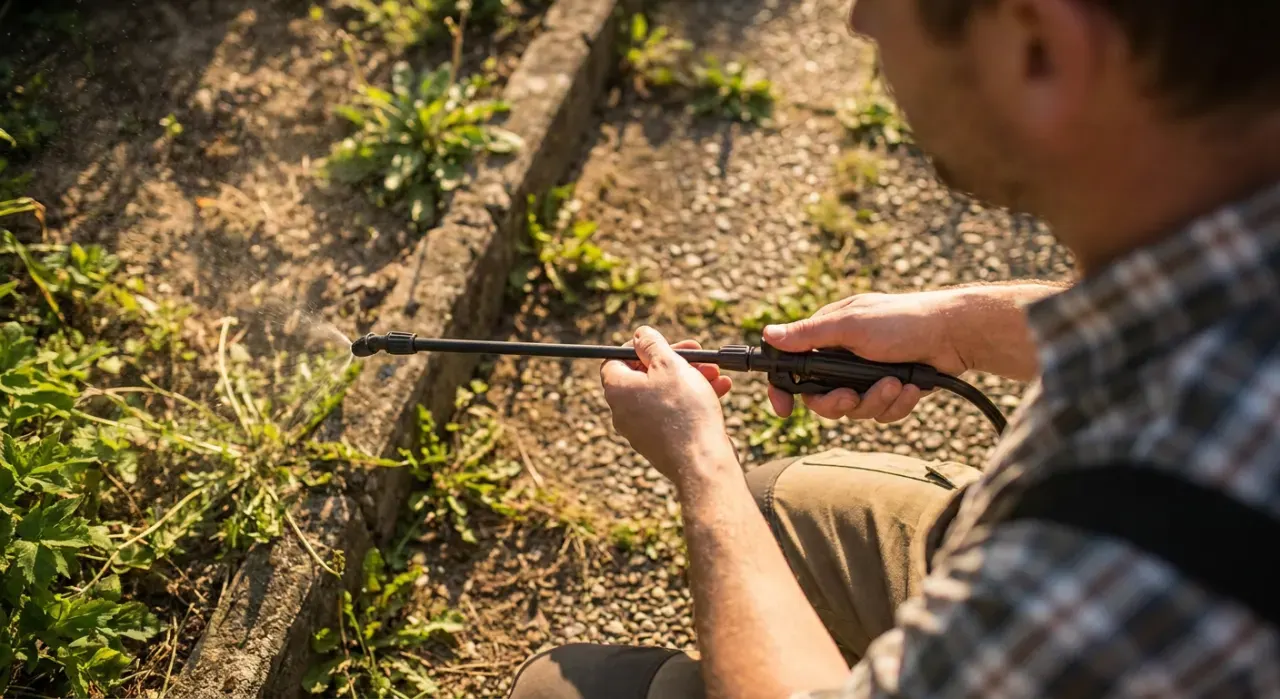
Follow the rinse with a targeted spray and stick to the schedule.
| Treatment | How it works | How to use it |
|---|---|---|
| Insecticidal soap | Contact kill of soft-bodied mites | Wet all undersides; repeat every 3 to 5 days |
| Horticultural oil | Smothers mites and coats eggs | Coat thoroughly; avoid heat and direct sun |
| Neem oil | Smothers, deters, and disrupts reproduction; some egg effect | Repeat every 5 to 7 days; rotate with soap or oil |
| Diluted rubbing alcohol | Contact kill | Wipe or lightly spray leaves; test one leaf first |
Coverage of the undersides is everything, and so is repetition — treat every three to five days for two to three weeks to outlast the hatching eggs. Rotate products, since mites are notorious for developing resistance when hit repeatedly with the same chemistry. Avoid broad-spectrum insecticides, which kill the predatory mites and other beneficials that naturally suppress spider mites and can trigger a worse rebound. For a related, more general treatment overview see how to get rid of spider mites.
Change the conditions spider mites love
Spider mites love it hot, dry, and dusty. You can make your plants far less hospitable:
- Raise humidity around houseplants — group plants, use a pebble tray or a humidifier, and mist occasionally. Dry indoor winter air is prime mite territory.
- Keep leaves clean and rinsed; dust and drought stress favor mites.
- Water adequately; drought-stressed plants are far more prone to serious infestations.
- Keep plants away from heat vents and hot, dry spots indoors.
Biological control outdoors
In gardens and greenhouses, predatory mites (such as Phytoseiulus persimilis) are commercially available and effective biological controls that hunt down spider mites, and lady beetles, lacewings, and minute pirate bugs also help. Protecting these natural enemies by avoiding broad-spectrum sprays is one of the most reliable long-term controls, because a healthy population of predators keeps spider mites from ever reaching outbreak levels. Reducing dust on plants near paths and driveways also supports the predators.
Preventing the next spider mite infestation
- Quarantine new plants for two weeks and inspect leaf undersides before adding them to your collection.
- Scout weekly, checking undersides and doing the paper-tap test, especially in hot, dry weather.
- Keep humidity up and plants unstressed, the environmental controls that matter most.
- Rinse foliage periodically to remove dust and early mites.
- Protect beneficials by favoring soaps and oils over broad-spectrum insecticides.
Spider mites are beatable with persistence and the right conditions. For other sap-sucking pests see how to get rid of aphids and how to get rid of whiteflies, and browse the full pest and weed control hub.